


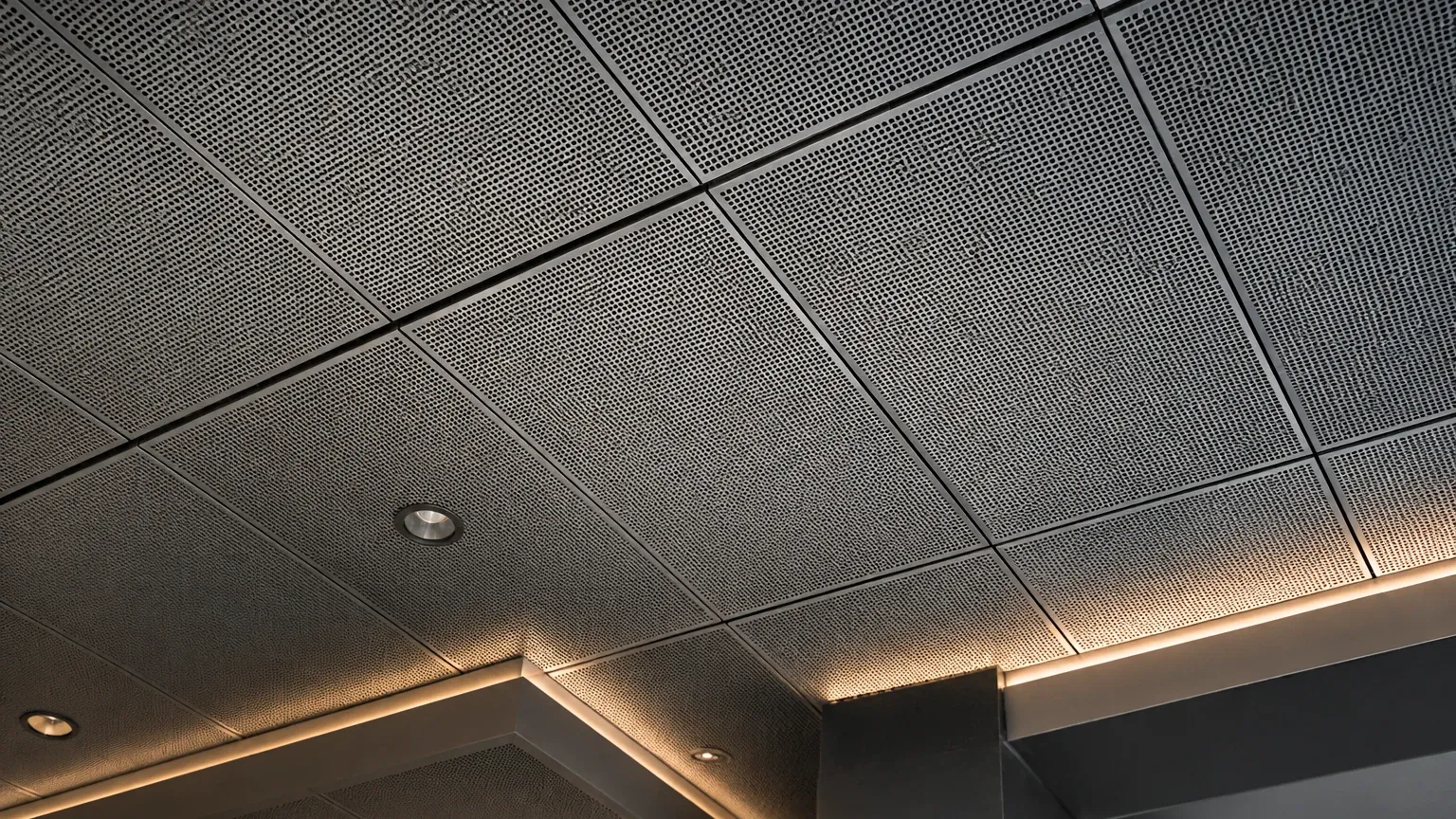
Hunter Douglas Perforated Metal Ceiling
In modern industrial and commercial architecture, the selection of ceiling systems involves a complex balance between aesthetic requirements, acoustic performance, and structural durability. The Hunter Douglas perforated metal ceiling has long been a benchmark in the industry, representing a sophisticated integration of metalwork and functional design. For engineers and procurement specialists, understanding the technical nuances of these systems—and the underlying Perforated & Expanded Metal technology—is essential for ensuring long-term project success.
Perforated metal ceilings are not merely decorative elements; they are engineered components designed to manage airflow, mitigate noise, and provide access to building services while maintaining a clean, industrial aesthetic. This guide examines the engineering principles, material considerations, and performance metrics that define high-quality perforated metal ceiling systems.
Technical Specifications of Perforated Metal Systems
The performance of a Hunter Douglas perforated metal ceiling is primarily dictated by the geometry and configuration of the perforations. When specifying these systems, technical professionals must evaluate several key geometric factors:
Hole Patterns and Pitch
Hole patterns are typically categorized into staggered or straight configurations. A 60-degree staggered pattern is the industry standard for architectural applications because it provides the highest degree of structural integrity and a uniform visual appearance. The "pitch"—the distance between the centers of adjacent holes—determines the density of the pattern and, consequently, the open area percentage.
Open Area Calculations
The open area is perhaps the most critical specification for a perforated panel. It is calculated as the ratio of the total area of the holes to the total area of the panel, expressed as a percentage. In ceiling applications, the open area usually ranges from 10% to 50%. This percentage directly impacts:
* Acoustic Transparency: The ability of sound waves to pass through the metal and be absorbed by backing materials.
* Airflow: The efficiency of HVAC systems that utilize the ceiling plenum for air distribution.
* Visual Opacity: The degree to which internal building components (wires, pipes, ducts) remain hidden from view.
Acoustic Engineering and Sound Absorption
One of the primary reasons for selecting a Hunter Douglas perforated metal ceiling is its acoustic versatility. Metal, by nature, is a reflective material. However, when perforated and combined with an acoustic medium, it becomes a highly effective sound absorber.
The Role of the NRC
The Noise Reduction Coefficient (NRC) measures the sound-absorbing effectiveness of a surface. A solid metal panel has an NRC near 0.00, meaning it reflects almost all sound. By introducing perforations—typically ranging from 1.0mm to 3.0mm in diameter—engineers allow sound energy to pass through the panel.
Behind the perforated metal, an acoustic fleece or mineral wool pad is installed. As sound waves pass through the holes, the friction between the air molecules and the edges of the perforations converts some sound energy into heat. The remaining energy is then trapped and dissipated by the acoustic backing. This configuration can achieve NRC ratings of 0.75 to 0.95, depending on the hole size, open area, and the thickness of the backing material.
Material Integrity and Environmental Resistance
While Hunter Douglas systems are available in various metals, the choice of substrate is critical for the longevity of the installation, especially in demanding industrial environments.
Aluminum vs. Stainless Steel
Aluminum is frequently used due to its lightweight nature and inherent corrosion resistance, making it ideal for large-span ceiling panels. However, in industrial settings—such as chemical processing plants or facilities with high humidity—stainless steel is often the preferred choice.
Stainless steel perforated panels offer superior mechanical strength and resistance to aggressive cleaning agents. For projects requiring maximum durability, specifying Grade 304 or Grade 316 stainless steel ensures that the ceiling remains structurally sound and aesthetically consistent over decades of use. The high strength-to-weight ratio of stainless steel also allows for thinner gauges without sacrificing the flatness of the panels.
Surface Finishes and Protection
To further enhance durability and aesthetics, perforated metal ceilings undergo various finishing processes. Powder coating is common for providing specific RAL colors and an extra layer of protection against oxidation. For stainless steel, finishes such as brushed, mirror-polished, or bead-blasted are utilized to achieve specific light-reflectance values (LRV), which can contribute to the overall energy efficiency of the building's lighting system.
Manufacturing Precision for Architectural Applications
The quality of a Hunter Douglas perforated metal ceiling depends heavily on the precision of the manufacturing process. High-speed CNC punching and laser cutting are the primary methods used to create the perforations.
Tolerance and Flatness
In large-scale ceiling installations, even minor deviations in hole alignment or panel flatness can result in visible "oil canning" or misaligned patterns across seams. Precision manufacturing ensures that the margins—the unperforated areas around the edges of the panel—are consistent. This is vital for the structural mounting of the panels into the grid system.
Customization and OEM Capabilities
Many industrial projects require customized perforation patterns to accommodate specific HVAC diffusers, sprinkler heads, or lighting fixtures. Working with a manufacturer that understands the complexities of Perforated & Expanded Metal allows for the creation of bespoke panels that meet exact engineering requirements while maintaining the structural integrity of the ceiling system.
Selection Criteria for Industrial and Commercial Projects
When evaluating a Hunter Douglas perforated metal ceiling for a B2B project, engineers should confirm several factors before procurement:
1. Load-Bearing Capacity: Ensure the selected gauge and material can support the weight of integrated fixtures and withstand the pressure differentials of HVAC systems.
2. Fire Safety Compliance: Metal ceilings are inherently non-combustible. However, the acoustic backing and finishes must also meet local fire codes (e.g., ASTM E84 Class A).
3. Accessibility Requirements: Determine how often maintenance teams will need to access the plenum. Systems should be specified as "swing-down," "clip-in," or "lay-in" based on the required frequency of access.
4. Environmental Conditions: Assess the presence of corrosive elements, high moisture, or extreme temperature fluctuations that might necessitate specific alloys or coatings.
Maintenance and Longevity of Metal Ceiling Panels
One of the significant advantages of metal ceiling systems over traditional mineral fiber tiles is their lifecycle cost. A Hunter Douglas perforated metal ceiling is a long-term investment that requires minimal maintenance.
Cleaning Protocols
In food and beverage or pharmaceutical environments, hygiene is paramount. Perforated stainless steel panels can withstand rigorous cleaning cycles, including the use of pressurized water or chemical disinfectants, provided the acoustic backing is properly sealed or protected. For standard commercial applications, simple dusting or wiping with a damp cloth is sufficient to maintain the surface.
Durability and Replacement Cycles
Unlike acoustic tiles that may sag, discolor, or crumble over time due to moisture absorption, metal panels maintain their shape and color indefinitely. This eliminates the need for frequent replacements, significantly reducing the total cost of ownership (TCO) for the facility. When a panel does need to be replaced—due to mechanical damage or building renovations—the metal is 100% recyclable, aligning with modern sustainability and LEED certification goals.
Conclusion
The Hunter Douglas perforated metal ceiling represents a sophisticated intersection of industrial engineering and architectural design. By understanding the technical variables of Perforated & Expanded Metal, including hole geometry, material properties, and acoustic mechanics, technical professionals can specify systems that provide superior performance in any environment. Whether the priority is sound attenuation in a busy terminal or corrosion resistance in a processing plant, the precision and durability of perforated metal remain the gold standard for modern ceiling solutions.
