


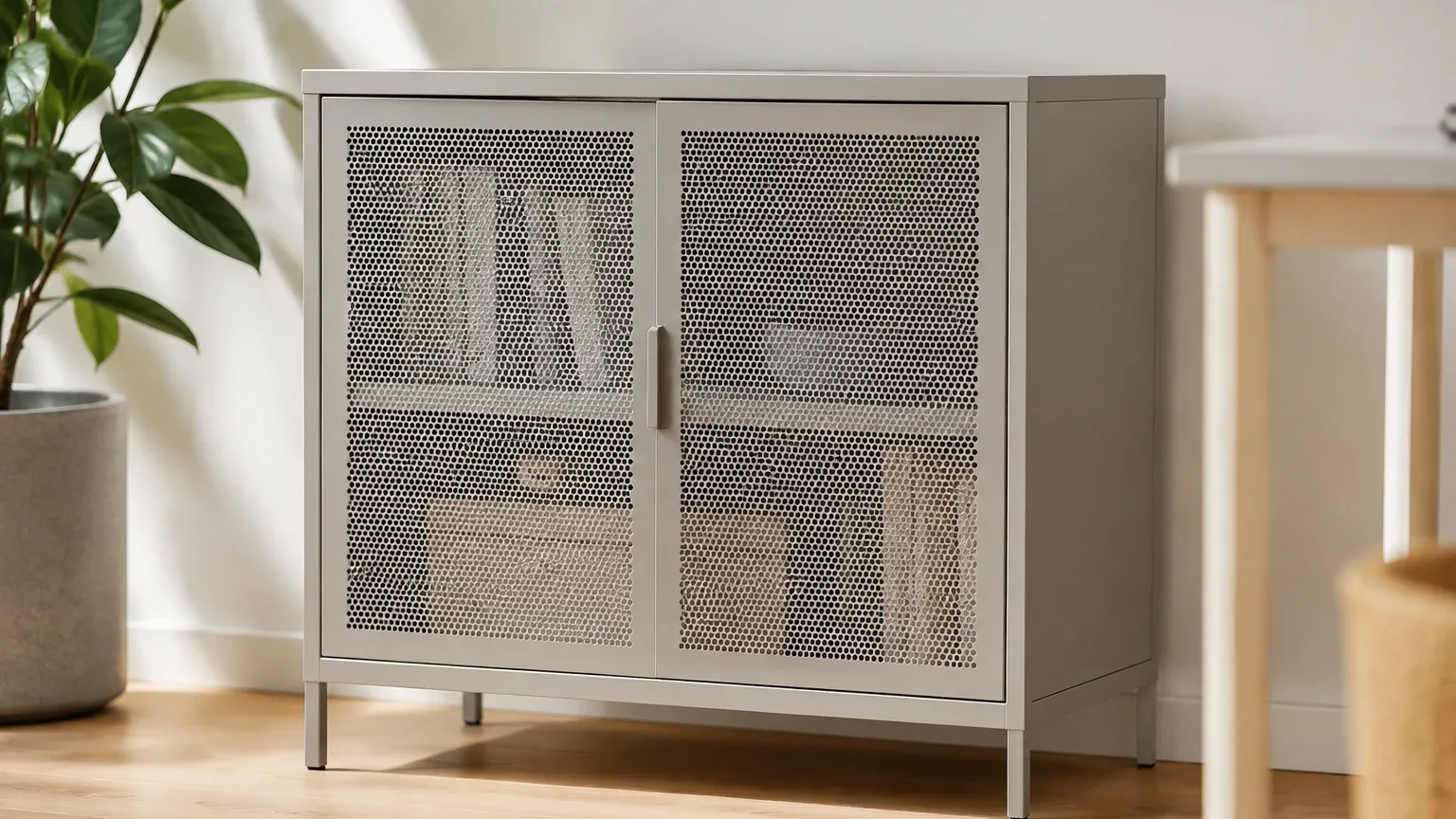
Ikea Perforated Metal Cabinet
In the world of contemporary furniture design, the Ikea perforated metal cabinet has become a recognizable staple, blending industrial aesthetics with functional home storage. While these consumer-grade products demonstrate the versatility of metal mesh and punched sheets, industrial applications for Perforated & Expanded Metal require a significantly higher level of engineering precision, material durability, and structural integrity. For engineers and procurement professionals, understanding the transition from decorative consumer metalwork to industrial-grade filtration and structural components is essential for selecting the right materials for demanding environments.
Industrial perforated metal serves as more than just a decorative facade; it is a critical component in filtration systems, acoustic dampening, and heavy-duty protective enclosures. This guide examines the technical specifications of perforated and expanded metal, contrasting mass-market consumer applications with the rigorous standards required in chemical processing, food production, and hydraulic systems.
Understanding Perforated and Expanded Metal in Industrial Contexts
To the casual observer, the mesh used in an Ikea perforated metal cabinet might appear similar to the metal used in industrial filters. However, the manufacturing processes and resulting mechanical properties differ vastly.
Perforated Metal Production
Perforated metal is created through a punching process where a series of holes are mechanically or laser-cut into a solid sheet of metal. This allows for extreme precision in hole size, shape, and spacing (pitch). In industrial settings, the accuracy of these holes is paramount, as they often determine the filtration rating or the flow rate of gases and liquids. Common hole shapes include round, square, slotted, and hexagonal, each offering different advantages for structural rigidity and open area.
Expanded Metal Production
Unlike perforated metal, expanded metal is produced by simultaneously slitting and stretching the material. This process creates a diamond-shaped pattern without any waste of material. Because the metal is stretched rather than punched, it retains its structural integrity while providing a high strength-to-weight ratio. While an Ikea perforated metal cabinet focuses on the aesthetic of punched holes, expanded metal is frequently used in industrial walkways, heavy-duty guards, and as a support substrate for finer mesh filters.
Material Selection: Consumer Grade vs. Industrial Specifications
One of the most significant differences between consumer furniture and industrial components lies in material science. A standard Ikea perforated metal cabinet is typically constructed from powder-coated carbon steel. While sufficient for indoor home environments, this material would fail rapidly in industrial applications.
Stainless Steel Grades
In industrial filtration and processing, stainless steel is the standard.
- SS 304: Offers excellent corrosion resistance and is the most common grade for general industrial use, including food and beverage applications.
- SS 316/316L: Contains molybdenum, which provides superior resistance to chlorides and chemicals, making it essential for marine environments and pharmaceutical processing.
- Specialty Alloys: For extreme temperatures or highly corrosive chemical baths, materials like Monel, Inconel, or Hastelloy may be used.
Surface Treatments and Finishes
While consumer products rely on decorative powder coating for color, industrial perforated metal often undergoes specialized treatments to enhance performance. These include electropolishing to remove surface impurities and improve hygiene in food-grade applications, or pickling and passivation to maximize the corrosion resistance of the stainless steel.
Engineering Considerations for Perforated Metal Structures
When designing a system that utilizes perforated metal—whether it is a custom industrial cabinet, a machine guard, or a filter housing—engineers must calculate several mechanical variables that a consumer-grade product like an Ikea perforated metal cabinet does not need to address.
Thickness and Gauge
The thickness of the metal sheet directly impacts the load-bearing capacity and the lifespan of the component. In industrial filtration, the perforated metal often acts as a "support tube" or outer cage for a delicate wire mesh filter. If the gauge is too thin, the pressure from high-viscosity fluids can cause the cylinder to collapse. Conversely, if it is too thick, it may add unnecessary weight and cost to the system.
Hole Pattern and Pitch
The arrangement of holes is typically either staggered or straight. A 60-degree staggered pattern is the most popular because it provides the highest open area and uniform strength across the sheet. In industrial applications, the "pitch" (the distance between the centers of adjacent holes) must be calculated to ensure the material can withstand the mechanical stresses of the specific application without deforming.
Comparing Perforation Patterns and Open Area Calculations
The "Open Area" is perhaps the most critical technical specification for any perforated metal product. It refers to the percentage of the sheet that is made up of holes versus solid metal. While an Ikea perforated metal cabinet uses a fixed open area designed for visibility and airflow in a bedroom or office, industrial designers must calculate open area to meet specific flow requirements.
The Formula for Open Area
For a standard 60-degree staggered round hole pattern, the formula for calculating the percentage of open area is:
Open Area % = (D² × 90.69) / P²
*Where D = Hole Diameter and P = Pitch.*
Why Open Area Matters
1. Flow Rate: In filtration, a higher open area reduces pressure drop, allowing fluids or air to pass through more efficiently.
2. Acoustics: Perforated metal is often used in sound-dampening enclosures. The hole size and open area determine which sound frequencies are absorbed or reflected.
3. Heat Dissipation: For electronic enclosures or industrial machinery guards, the open area must be sufficient to allow heat to escape while maintaining a physical barrier against debris.
Applications Beyond Cabinetry: Filtration and Protection
While the Ikea perforated metal cabinet serves the furniture market, industrial Perforated & Expanded Metal is utilized in sectors that demand high performance and reliability.
Industrial Filtration Systems
Perforated metal is the backbone of many industrial filter cartridges. It provides the structural rigidity necessary to support fine wire mesh or non-woven filter media. In high-pressure hydraulic systems, the perforated core prevents the filter element from bursting under the force of the fluid flow. These components must be manufactured with precise tolerances to ensure they fit perfectly within filter housings.
Chemical and Pharmaceutical Processing
In these industries, perforated metal trays and baskets are used for drying, sterilization, and material handling. Unlike consumer cabinets, these items must withstand repeated exposure to caustic cleaning agents and high-temperature autoclaves without degrading or leaching contaminants into the product.
Architectural and Safety Guarding
Industrial facilities use expanded and perforated metal for safety guards on rotating machinery. These guards must be designed to allow visual inspection of the equipment while preventing any human contact with moving parts. The strength requirements for these guards are strictly regulated by safety standards (such as OSHA), far exceeding the structural requirements of residential furniture.
Custom vs. Off-the-Shelf: When to Source Industrial Perforated Metal
For a DIY project or basic home organization, an off-the-shelf Ikea perforated metal cabinet is a cost-effective solution. However, for B2B applications and industrial engineering projects, custom-fabricated perforated metal is almost always necessary.
The Limitations of Retail Products
Retail metal cabinets are manufactured in bulk with fixed dimensions, hole patterns, and material grades. They cannot be modified for specific filtration ratings, they do not offer chemical compatibility certificates, and they lack the structural reinforcement needed for industrial loads. Furthermore, retail products do not provide the technical documentation (such as Material Test Reports or MTRs) required for compliance in regulated industries.
The Benefits of OEM Customization
Working with a professional manufacturer like Kaifil allows engineers to specify every detail of the perforated component:
- Custom Margins: Unlike mass-produced sheets, custom perforated metal can be manufactured with "blank" or unperforated margins to facilitate easier welding and assembly into larger structures.
- Precision Forming: Industrial perforated metal can be rolled into cylinders, bent into complex troughs, or welded into reinforced baskets.
- Specific Filtration Accuracy: When used as a primary filter, the hole size can be drilled or punched to micron-level precision to meet exact particle retention needs.
Total Cost of Ownership in Industrial Filtration
When purchasing perforated metal for industrial use, the initial price is only one factor. Engineers must consider the total cost of ownership (TCO), which includes the replacement cycle and maintenance requirements. A low-cost carbon steel perforated sheet may save money upfront but will require frequent replacement due to rust or mechanical failure.
Investing in high-quality stainless steel Perforated & Expanded Metal ensures that the component will last for years, even in harsh environments. This reliability reduces downtime in manufacturing plants and lowers the long-term costs associated with labor and replacement parts.
Conclusion: Selecting the Right Solution
While the Ikea perforated metal cabinet has popularized the look of industrial metal in the home, the requirements for true industrial applications are far more complex. Whether you are designing a new filtration system, a protective machine guard, or a heavy-duty storage solution for a laboratory, the choice of material, hole pattern, and manufacturing quality is paramount.
By focusing on technical specifications such as material grade (SS 304 vs. SS 316), open area percentages, and structural thickness, purchasing teams can ensure they are selecting components that will perform reliably under pressure. For those requiring precision-engineered solutions, partnering with an experienced manufacturer ensures that the final product meets the exact rigorous standards of the industrial sector.
