


Ketebalan Expanded Metal
In the realm of industrial filtration and structural engineering, specifying the correct dimensions for metal components is critical to ensuring system longevity and performance. One of the most vital parameters when selecting materials for support structures, filtration guards, or walkways is the thickness, often referred to in technical procurement as ketebalan expanded metal. This measurement determines not only the physical weight and cost of the material but also its mechanical strength, resistance to deformation under pressure, and suitability for specific chemical environments.
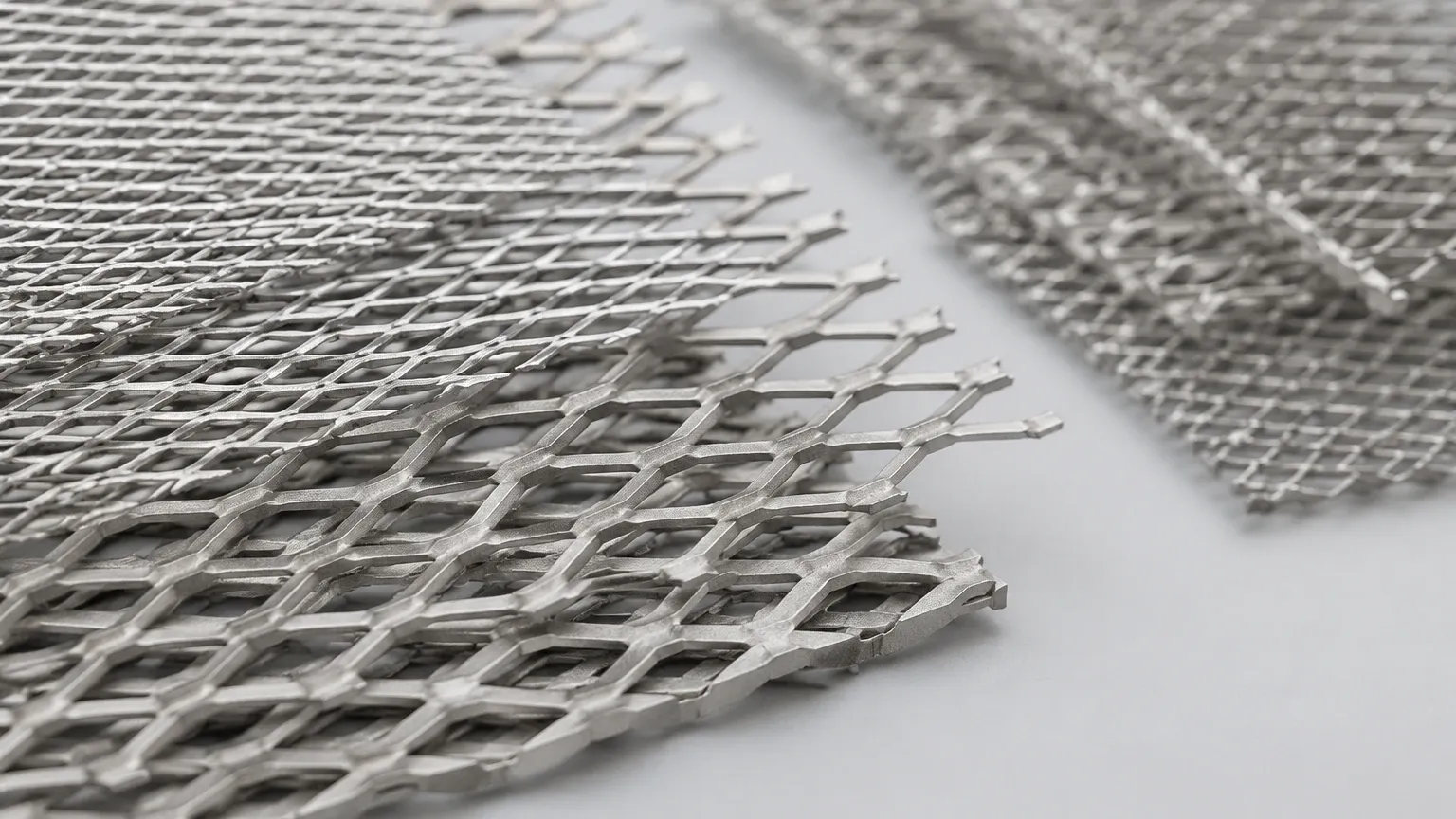
For engineers and procurement professionals working with Kaifil, understanding the nuances of Perforated & Expanded Metal is essential for optimizing filtration systems. Expanded metal is unique because it is manufactured by simultaneously slitting and stretching a solid sheet of metal, creating a diamond-shaped pattern without any waste of material. Unlike perforated metal, where holes are punched out, expanded metal retains the structural integrity of the original sheet while offering a high strength-to-weight ratio. This article explores the technical considerations of thickness in expanded metal and how it influences industrial applications.
Understanding the Fundamentals of Expanded Metal Thickness
When discussing ketebalan expanded metal, it is important to distinguish between the various dimensions involved in the manufacturing process. Unlike a flat sheet of steel, expanded metal has a three-dimensional profile that affects how thickness is measured and specified.
Gauge vs. Strand Thickness
The "thickness" of expanded metal typically refers to the thickness of the base material used before the expansion process. In industrial standards, this is often measured in gauges or millimeters. However, once the metal is slit and stretched, the "strand thickness" becomes the primary metric. The strand thickness is the thickness of the metal in the individual strands that make up the diamond pattern. In standard expanded metal, this remains the same as the original sheet thickness. In flattened expanded metal, the material is passed through a cold-rolling mill, which reduces the thickness slightly to create a smooth, flat surface.
Strand Width and Its Relation to Thickness
While thickness refers to the depth of the metal, the "strand width" refers to the amount of metal fed into the machine for each slit. The combination of strand thickness and strand width determines the overall cross-sectional area of the strand, which directly impacts the tensile strength and the total open area of the mesh. For filtration applications, balancing these two dimensions is key to achieving the desired flow rate and structural rigidity.
The Relationship Between Sheet Thickness and Structural Integrity
In heavy-duty industrial environments, such as chemical processing plants or hydraulic systems, the structural integrity of a filter cartridge or a support screen is non-negotiable. The ketebalan expanded metal chosen for these components must be capable of withstanding significant differential pressures.
Load-Bearing Capacity
Thicker expanded metal provides higher load-bearing capacity. In filtration, expanded metal is often used as an outer cage or inner core to support finer wire mesh. If the thickness is insufficient, the pressure of the fluid flow can cause the support structure to collapse or deform, leading to the failure of the entire filtration unit. Engineers must calculate the maximum expected pressure drop across the filter and select a thickness that provides an adequate safety factor.
Resistance to Vibration and Fatigue
Many industrial filtration systems are subject to mechanical vibrations or pulsating flows. A thicker strand profile offers better resistance to metal fatigue. By selecting the appropriate thickness, manufacturers can ensure that the filter components do not crack or fail prematurely due to the stress of continuous operation. This is particularly important in high-velocity gas filtration or high-pressure hydraulic circuits where the material is constantly under dynamic load.
Technical Parameters: SWD, LWD, and Strand Dimensions
To accurately specify Perforated & Expanded Metal, one must look beyond simple thickness. The geometry of the expansion determines the performance characteristics of the mesh.
1. SWD (Short Way of Design): This is the distance from the center of one bond to the center of the next bond measured across the short diamond diagonal. It influences the density of the mesh.
2. LWD (Long Way of Design): This is the distance measured across the long diamond diagonal. Together with SWD, it defines the opening size.
3. Opening Size: The clear space between the strands. While the ketebalan expanded metal provides the strength, the opening size determines what particles can pass through if the expanded metal is being used as a primary coarse filter.
4. Overall Thickness: In raised (or standard) expanded metal, the strands are set at an angle to the plane of the sheet. The "overall thickness" is the total depth of the finished product from the top of the strand to the bottom. This dimension is crucial when the metal must fit into a specific slot or housing within a filter assembly.
Material Selection and Its Impact on Final Thickness Performance
At Kaifil, we specialize in stainless steel filtration solutions. The choice of material significantly affects how a specific thickness performs in the field. While ketebalan expanded metal provides the physical barrier, the alloy provides the chemical resistance.
Stainless Steel 304 and 316L
Stainless steel is the preferred material for expanded metal in B2B industrial sectors due to its corrosion resistance. Grade 304 is suitable for general industrial use, while 316L is required for more corrosive environments, such as marine applications or acidic chemical processing. Because 316L has superior resistance to pitting and crevice corrosion, a slightly thinner 316L sheet may sometimes outperform a thicker carbon steel sheet over a long lifecycle, reducing the total cost of ownership.
High-Temperature Alloys
For filtration in exhaust systems or high-temperature chemical reactors, specialized alloys may be used. In these cases, the thickness must be carefully calibrated to account for thermal expansion. As metal heats up, its mechanical properties change; selecting a robust thickness ensures that the expanded metal maintains its shape and support function even at elevated temperatures.
Applications in Industrial Filtration and Support
Expanded metal is a versatile component in the design of complex filtration systems. Its role is often hidden but vital to the overall performance of the equipment.
Filter Cartridge Support Cores
In many stainless steel filter cartridges, a layer of expanded metal serves as the central core. The ketebalan expanded metal here must be sufficient to prevent the core from buckling under the external pressure of the fluid being filtered. By using expanded metal instead of perforated tubing, manufacturers can often achieve a higher open area, which reduces the initial pressure drop of the filter.
Outer Protective Guards
For filters used in harsh environments, such as mining or heavy manufacturing, an outer layer of expanded metal protects the delicate inner filter media from large debris and mechanical impact. Here, the thickness is chosen based on the expected size and velocity of potential impactors. A thicker gauge ensures that the internal pleated mesh remains undamaged even if the filter housing is subjected to rough handling.
Pre-filtration and Coarse Screening
In water treatment and large-scale HVAC systems, expanded metal acts as a pre-filter. The thickness and strand width are designed to capture large particulates while allowing high flow rates. The three-dimensional nature of standard expanded metal can also help in breaking up laminar flow, which can be beneficial in certain mixing or heat exchange applications.
Customization and Engineering Specifications for OEM Projects
One of the primary advantages of working with a professional manufacturer like Kaifil is the ability to customize the ketebalan expanded metal to meet exact engineering requirements. Off-the-shelf solutions often involve compromises in weight or performance that can be avoided through custom fabrication.
Precision Slitting and Stretching
Advanced manufacturing capabilities allow for precise control over the expansion ratio. This means we can produce expanded metal with a specific thickness and open area percentage that aligns with the fluid dynamics of a customer’s specific system. Whether the requirement is for a micro-mesh with very thin strands or a heavy-duty industrial grate, the manufacturing process can be tuned to the application.
Post-Processing and Finishing
Beyond the initial expansion, the material can undergo several finishing processes. Flattening is common when a smooth surface is required to prevent abrasion of adjacent filter media. Annealing can be performed to reduce internal stresses, making the material easier to form into cylinders or other complex shapes. These processes are influenced by the initial thickness of the metal, requiring expert knowledge to execute without compromising the material's integrity.
Maintenance, Durability, and Total Cost of Ownership
When evaluating Perforated & Expanded Metal for a project, engineers must consider the long-term implications of their thickness choice. While thinner material may reduce the initial purchase price and shipping costs, it may lead to higher maintenance costs over time.
Cleaning and Regeneration
In many industrial applications, stainless steel filters are cleaned and reused. Thicker expanded metal can withstand more aggressive cleaning cycles, including high-pressure backwashing, ultrasonic cleaning, or chemical baths. If the ketebalan expanded metal is too low, the cleaning process itself might cause the mesh to warp or tear, necessitating frequent replacements.
Lifecycle Analysis
A robustly designed filter component made with the correct thickness of high-grade stainless steel can last for years, even in demanding environments. By investing in the correct specifications upfront, companies reduce downtime and the labor costs associated with frequent filter changes. This focus on durability is a hallmark of high-quality industrial filtration engineering.
Selection Guide: Confirming Specifications Before Purchase
Before finalizing an order for expanded metal components, technical teams should confirm several key pieces of information to ensure the product meets their needs:
* Original Material Thickness: Specify the gauge or millimeter thickness of the base sheet.
* Strand Width: Determine the width of the strand required to meet strength and open area needs.
* Style (Raised or Flattened): Decide if the application requires the three-dimensional grip of raised metal or the smooth surface of flattened metal.
* Material Grade: Ensure the alloy (e.g., SS304, SS316L) is compatible with the process fluid.
* Dimensional Tolerances: Define the acceptable variance in SWD, LWD, and overall thickness, especially if the part must fit into a precision-machined housing.
* Open Area Percentage: Calculate the required open area to maintain the desired flow rate and pressure drop characteristics.
By focusing on these technical details, engineers can leverage the unique properties of expanded metal to create efficient, durable, and cost-effective filtration solutions. Kaifil remains committed to providing the technical expertise and manufacturing precision necessary to support these critical industrial applications, ensuring that every component—down to the specific ketebalan expanded metal—is optimized for its intended environment.
