


Large Expanded Metal
In the landscape of industrial materials, expanded metal stands out as a versatile and resource-efficient solution for structural, filtration, and protective applications. When projects scale up in size or require enhanced load-bearing capabilities, engineers often turn to large expanded metal. Unlike standard mesh, large expanded metal is characterized by its significant diamond openings and heavier strand thicknesses, making it an essential component in heavy-duty industrial environments.
At Kaifil, we specialize in precision-engineered Perforated & Expanded Metal solutions. Understanding the technical nuances of large-scale expanded metal is critical for engineers and procurement teams who must balance structural integrity with functional performance, such as flow rates in filtration or safety in industrial walkways.
Understanding Large Expanded Metal in Industrial Contexts
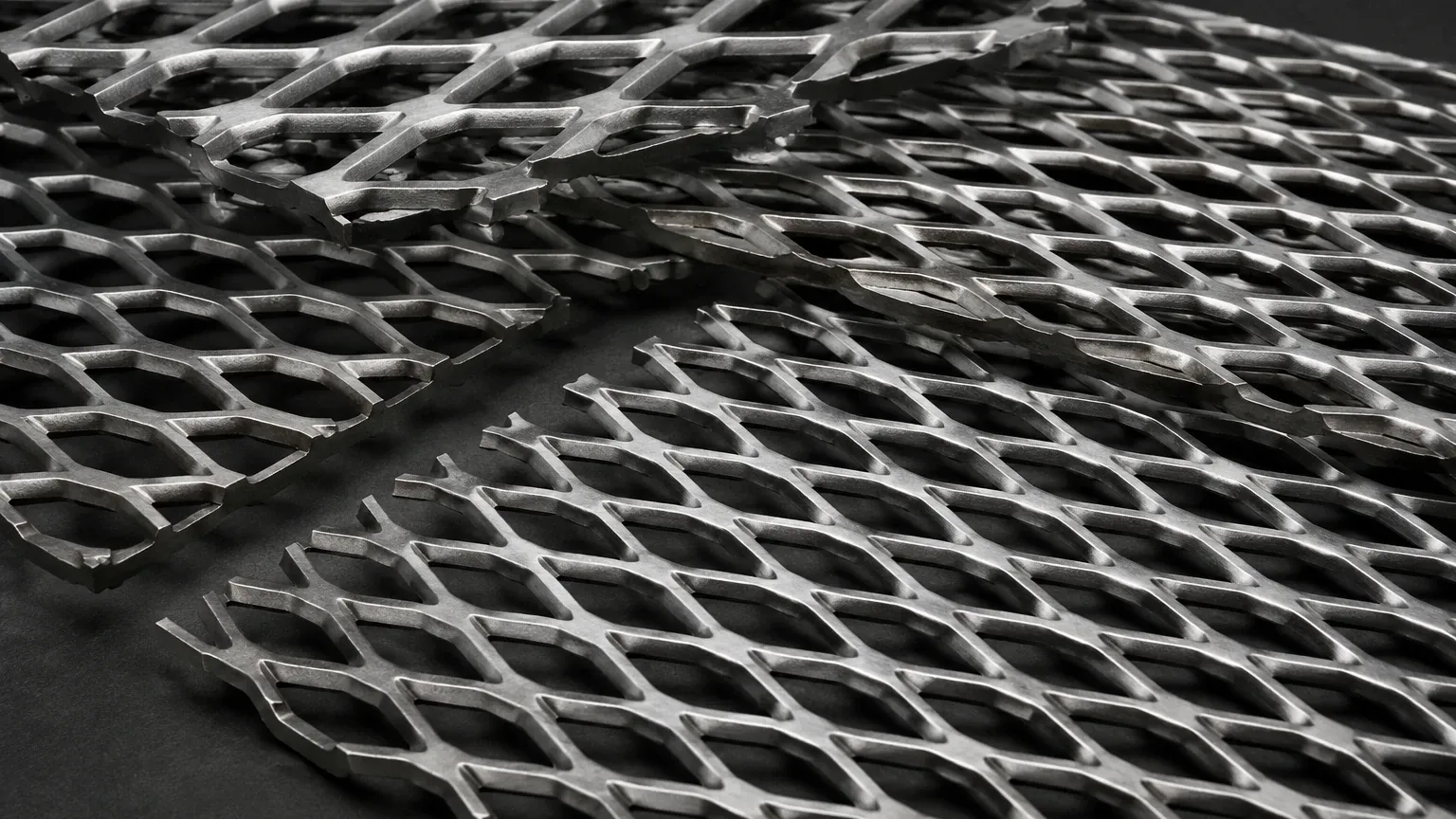
Expanded metal is manufactured through a process of slitting and stretching a solid metal sheet or plate. This process creates a series of diamond-shaped openings. The term "large" typically refers to the dimensions of these diamonds—specifically the Long Way of the Diamond (LWD) and the Short Way of the Diamond (SWD)—as well as the gauge of the material used.
In industrial applications, large expanded metal is often selected when standard wire mesh or lighter expanded patterns lack the necessary rigidity. It is frequently utilized in sectors such as chemical processing, water treatment, and heavy machinery manufacturing. Because the manufacturing process involves stretching rather than punching (as seen in perforated metal), there is zero material waste, making it a cost-effective choice for large-scale projects without sacrificing strength.
Technical Specifications and Geometry
When specifying large expanded metal, engineers must be precise with several geometric variables. These dimensions dictate the material's behavior under stress and its suitability for specific filtration or structural tasks.
SWD and LWD
* SWD (Short Way of Diamond): The distance from the middle of the bond on one side to the middle of the bond on the opposite side, measured across the short axis.
* LWD (Long Way of Diamond): The distance measured across the long axis of the diamond.
For large expanded metal, the LWD can range significantly, often exceeding 50mm to 100mm or more, depending on the application. The ratio between SWD and LWD affects the "open area" percentage, which is a critical metric for filtration efficiency and airflow.
Strand Width and Thickness
Unlike woven wire mesh, where the wire diameter is constant, expanded metal features "strands." The strand thickness refers to the thickness of the base metal, while the strand width refers to the amount of metal fed into the machine for each stroke. In large-scale variants, these strands are significantly thicker to provide the necessary mechanical strength for load-bearing applications like industrial flooring or heavy-duty filter cages.
Raised vs. Flattened
Large expanded metal is available in two primary forms:
1. Raised (Standard): The strands and bonds are set at a uniform angle to the plane of the sheet. This provides maximum strength and rigidity, as well as a slip-resistant surface.
2. Flattened: The raised expanded metal is passed through a cold-rolling reducing mill. This results in a smooth, flat surface. Flattened large expanded metal is often preferred when the material must be in close contact with other filter media or when a smooth aesthetic is required.
Material Selection: Why Stainless Steel Dominates
While expanded metal can be produced from carbon steel or aluminum, stainless steel is the preferred material for high-performance industrial applications. Kaifil focuses on stainless steel due to its superior mechanical properties and resistance to environmental degradation.
Grade 304 Stainless Steel
This is the most common grade used for large expanded metal. It offers excellent corrosion resistance and is suitable for most industrial environments, including food processing and general manufacturing. It maintains its structural integrity at high temperatures and provides a clean, professional finish.
Grade 316 and 316L Stainless Steel
For more demanding environments, such as chemical processing plants, marine applications, or pharmaceutical production, Grade 316 is the standard. The addition of molybdenum enhances resistance to pitting and crevice corrosion in chloride-rich environments. For applications involving welding, 316L (low carbon) is used to prevent sensitization and maintain corrosion resistance at weld joints.
Applications in Heavy-Duty Filtration and Support
One of the primary uses of large expanded metal is as a support structure for finer filtration media. In complex filtration systems, a fine wire mesh or filter cloth may not have the structural strength to withstand high differential pressures.
Filter Element Support
In large-scale industrial filter cartridges, large expanded metal serves as the inner or outer core. It provides the "skeleton" that prevents the filter media from collapsing or bursting under the force of the fluid flow. The large openings ensure that the support structure does not significantly contribute to pressure drop, allowing the primary filter media to function at peak efficiency.
Pre-Filtration and Trash Racks
In water treatment and intake systems, large expanded metal acts as a primary barrier. It captures large debris—such as branches, plastic waste, or stones—before the water reaches finer filtration stages. The durability of stainless steel ensures these components can withstand constant immersion and the physical impact of debris.
Industrial Sieving and Sorting
In mining and aggregate industries, large expanded metal is used in vibratory screens and sieves. The rigidity of the strands allows the material to handle heavy loads of raw material while maintaining the accuracy of the diamond openings for consistent sorting.
Manufacturing Advantages: Perforated vs. Expanded Metal
When deciding between perforated metal and expanded metal for a project, engineers must consider both performance and cost.
1. Material Integrity: In expanded metal, the strands are interconnected, meaning the material remains a single piece of metal. This often results in a better strength-to-weight ratio compared to perforated metal, where holes are punched out, potentially creating stress points.
2. Cost Efficiency: Since no material is removed during the expansion process, there is no scrap. For large projects requiring expensive alloys like 316L stainless steel, the cost savings can be substantial.
3. Flow Dynamics: The angled strands of raised expanded metal can assist in directing fluid or airflow, which can be an advantage in specific cooling or mixing applications.
Engineering Considerations for Selection and Customization
Selecting the right large expanded metal requires a thorough analysis of the application's physical and chemical demands. Engineers should confirm the following before finalizing a specification:
Load-Bearing Requirements
If the material is intended for walkways or heavy-duty guards, the concentrated and uniform load requirements must be calculated. The orientation of the LWD is crucial here; expanded metal is significantly stronger when the LWD spans the width of the support rather than the length.
Open Area and Pressure Drop
For filtration applications, the percentage of open area is paramount. A larger open area reduces resistance to flow but may decrease the structural rigidity of the mesh. Finding the "sweet spot" involves balancing strand width with diamond size.
Environmental Compatibility
Will the material be exposed to caustic chemicals, high heat, or abrasive particles? This dictates the choice of material grade and any necessary post-processing, such as pickling, passivating, or electropolishing to enhance corrosion resistance.
Customization Options
At Kaifil, we understand that off-the-shelf solutions rarely meet the precise needs of specialized industrial equipment. Customization options for large expanded metal include:
* Specific Sheet Sizes: Reducing the need for on-site cutting and welding.
* Variable Strand Widths: Tailoring the strength of the mesh to specific pressure zones.
* Edge Finishing: Providing u-edging or specialized borders for easier installation into filter housings or frames.
Maintenance and Longevity in Demanding Environments
The longevity of large expanded metal depends largely on the initial material selection and the operating conditions. Stainless steel variants are generally low-maintenance, but in filtration applications, they must be monitored for fouling or scaling.
Because expanded metal has many "nooks" at the bonds of the diamonds, cleaning processes such as backwashing or ultrasonic cleaning must be verified to ensure they can effectively reach these areas. In structural applications, regular inspections should focus on the weld points where the expanded metal is attached to the frame, as these are the most common sites for stress-related failure.
Conclusion
Large expanded metal is more than just a heavy-duty mesh; it is a precision-engineered component that provides critical support and protection in the world's most demanding industries. By understanding the geometric specifications, material properties, and manufacturing advantages, engineers can specify solutions that offer long-term reliability and cost-effectiveness.
Whether you are designing a high-pressure filtration system, a protective industrial grille, or a structural walkway, selecting the right Perforated & Expanded Metal is essential. Kaifil remains committed to providing the technical expertise and high-quality manufacturing necessary to meet these rigorous industrial standards, ensuring that every component performs exactly as intended in the field.
