


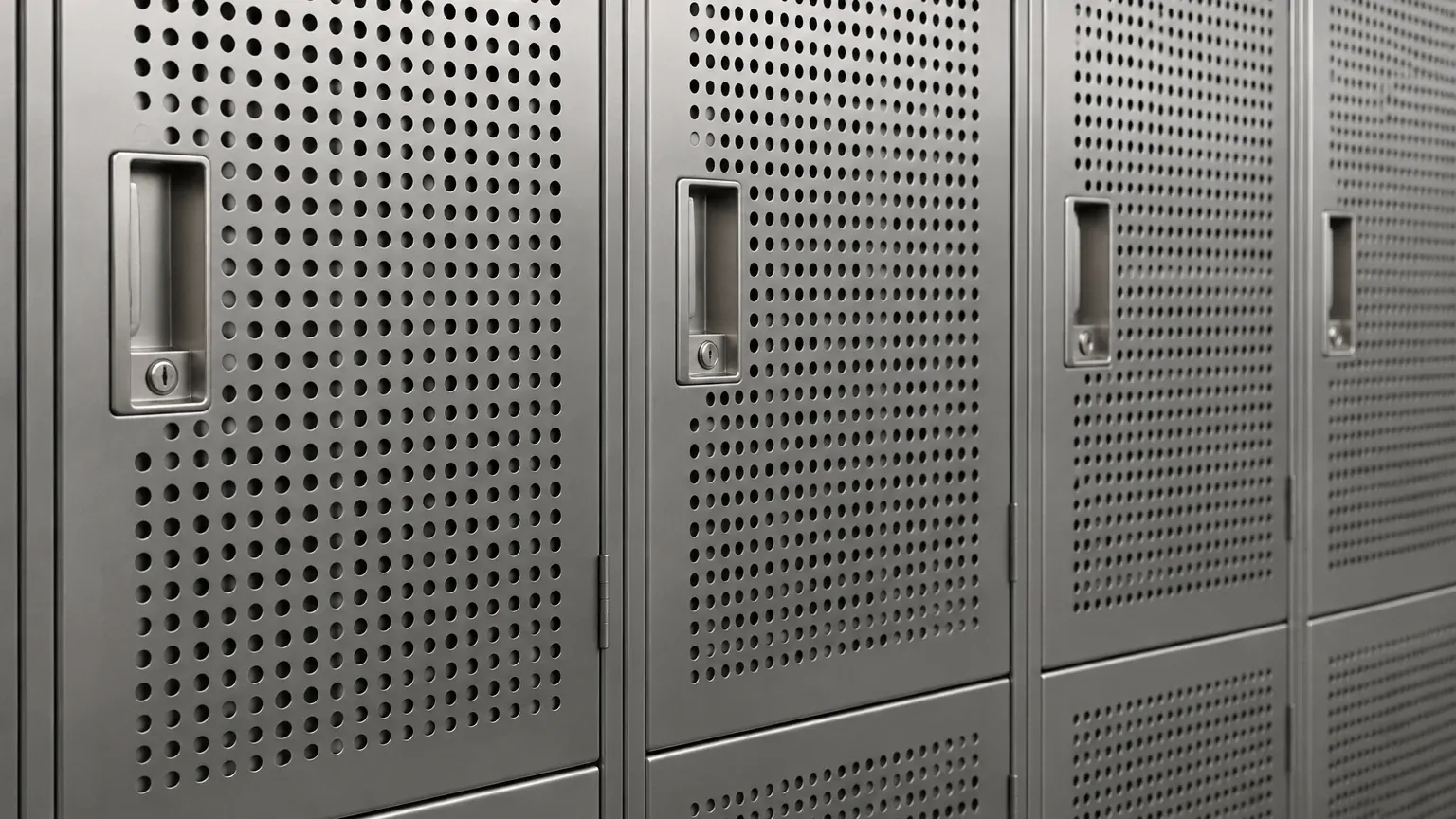
Locker Group Perforated Metal
In the landscape of industrial material science, the selection of rigid media for filtration, separation, and structural support is a critical engineering decision. For many procurement teams and design engineers, identifying high-quality sources for perforated and expanded metal is the first step toward ensuring the longevity of a processing system. While brands like Locker Group perforated metal are well-recognized in the industry for their broad range of architectural and industrial patterns, technical professionals must evaluate these materials through the lens of specific application requirements—particularly when they involve the demanding environments of chemical processing, pharmaceutical manufacturing, and high-pressure hydraulic systems.
Perforated and expanded metals serve as the backbone of many filtration assemblies. Whether used as a protective outer shroud for a pleated filter element or as a primary coarse strainer, the mechanical properties of these materials dictate the efficiency and safety of the entire system. This guide explores the technical nuances of Perforated & Expanded Metal and the criteria engineers should use to evaluate these components for industrial use.
Technical Foundations of Perforated Metal
Perforated metal is produced through a cold-stamping process where sheets or coils of metal are fed through a press equipped with specific die sets. This process creates a series of holes, slots, or decorative shapes. In industrial filtration, the geometry of these perforations is not merely aesthetic; it determines the flow rate, pressure drop, and particle retention capabilities of the media.
Hole Patterns and Pitch
The arrangement of holes—typically staggered or straight—impacts the structural integrity of the sheet. A 60-degree staggered pattern is the most common industrial configuration because it provides the highest open area and uniform strength across the sheet. Engineers must specify the "pitch," which is the distance from the center of one hole to the center of the adjacent hole. The relationship between hole diameter and pitch determines the "Open Area Percentage."
Calculating Open Area
For a standard staggered round hole pattern, the open area is calculated using the formula:
Open Area % = (D² × 90.69) / P²
*Where D = Hole Diameter and P = Pitch.*
Achieving the optimal balance between a high open area (for low flow resistance) and sufficient ligament width (the material between holes) is essential to prevent the media from collapsing under differential pressure. When sourcing materials similar to locker group perforated metal, it is vital to confirm that the ligament width can withstand the mechanical stresses of the specific application.
Expanded Metal: The Slit and Stretch Process
Unlike perforated metal, which involves removing material to create openings, expanded metal is manufactured by simultaneously slitting and stretching the sheet. This process creates diamond-shaped openings and results in no material waste, making it a cost-effective alternative for certain structural and filtration support roles.
Raised vs. Flattened Expanded Metal
Expanded metal is available in two primary forms:
1. Standard (Raised): The strands are set at an angle to the plane of the sheet. This provides a high strength-to-weight ratio and excellent grip, often used in gratings or as a pre-filter to break up laminar flow.
2. Flattened: The raised expanded metal is passed through a cold rolling mill, resulting in a smooth, flat surface. Flattened expanded metal is often preferred in filtration as an outer support layer for delicate wire mesh, as the smooth surface prevents abrasion of the finer filter media.
In filtration contexts, expanded metal is frequently characterized by its LWD (Long Way of Diamond) and SWD (Short Way of Diamond) dimensions. These measurements, along with strand width and thickness, define the mesh's performance characteristics.
Material Selection for Corrosive and High-Temperature Environments
The performance of perforated and expanded metal is heavily dependent on the alloy selected. In the B2B industrial sector, where Kaifil operates, the focus is almost exclusively on stainless steel and high-performance alloys due to their resistance to corrosion and thermal degradation.
Stainless Steel Grades
* Grade 304/304L: The standard choice for general industrial applications. It offers good corrosion resistance and excellent formability for creating cylindrical filter cartridges.
* Grade 316/316L: Contains molybdenum, which provides superior resistance to chlorides and pitting. This is the baseline requirement for pharmaceutical and marine applications.
* Duplex and Super Duplex: Used in highly aggressive chemical environments where both high strength and extreme corrosion resistance are required.
Surface Treatments
To enhance the performance of these materials, several post-production treatments are often applied:
* Passivation: A chemical process that removes free iron from the surface, enhancing the natural chromium oxide layer that prevents rust.
* Electropolishing: Removes a microscopic layer of material, resulting in a burr-free, ultra-smooth finish that is essential for food and beverage or pharmaceutical applications to prevent bacterial growth.
* Degreasing: Crucial for oxygen service or high-purity hydraulic systems where residual manufacturing oils could contaminate the fluid stream.
Engineering Considerations for Filtration Support
When using perforated or expanded metal as a support core for a filter cartridge, several engineering factors must be addressed to ensure system reliability.
Differential Pressure (Delta P)
The support core must be capable of withstanding the maximum expected differential pressure across the filter element. If a filter becomes clogged, the pressure upstream will rise; if the perforated core is too thin or has too high an open area, it may buckle, leading to catastrophic system failure and downstream contamination.
Media Compatibility
When wrapping fine wire mesh or non-woven media around a perforated core, the edges of the perforations must be burr-free. Burrs can puncture the primary filtration layer, creating bypass paths. This is a common quality control point where premium industrial manufacturers distinguish themselves from general-purpose metal suppliers.
Welding and Fabrication
Perforated sheets are often rolled into cylinders and welded. The "margin" (the unperforated area along the edges of the sheet) is a critical specification. For automated longitudinal welding, a consistent margin ensures a strong, clean weld seam without burning through the thin ligaments of the perforated pattern.
Quality Evaluation and Sourcing Risks
Sourcing locker group perforated metal or similar products requires a rigorous evaluation of the supplier's quality management system. In a B2B context, the risks of substandard material go beyond simple part failure; they include production downtime, product recalls, and safety hazards.
Common Quality Risks
* Inconsistent Hole Pitch: Variations in the distance between holes can lead to uneven flow distribution and structural weak points.
* Camber and Out-of-Flatness: If a sheet is not perfectly flat or has a "camber" (a curve along the edge), it becomes difficult to roll into a precise cylinder, leading to assembly issues in filter housings.
* Material Substitution: Without proper Material Test Reports (MTRs), there is a risk of receiving lower-grade alloys that may fail prematurely in corrosive environments.
What to Confirm Before Purchasing
Before finalizing a specification, purchasing teams should confirm the following with their technical partner:
1. Tolerances: What are the allowable variances in hole diameter, pitch, and sheet dimensions?
2. Edge Conditions: Are the sheets supplied with "safe edges" (margins) or are they perforated to the edge?
3. Flatness Requirements: Is the material leveled after the perforation process to remove internal stresses?
4. Compliance: Does the material meet ASTM or ISO standards relevant to the industry (e.g., ISO 9001 for manufacturing quality)?
The Role of Customization in Industrial Filtration
While standard patterns are available for many applications, custom filtration solutions often require specific perforation designs that are not found in a general catalog. Customization allows engineers to optimize the "void volume" and structural stiffness for specific flow velocities and fluid viscosities.
Kaifil specializes in bridging the gap between raw material supply and finished filtration components. By understanding the end-use application—whether it is a basket strainer for a water treatment plant or a support tube for a high-viscosity chemical polymer filter—manufacturers can provide tailored advice on hole geometry and material thickness.
For example, in high-viscosity applications, a tapered hole (where the exit diameter is larger than the entry diameter) can help reduce the risk of particle bridging and facilitate easier cleaning during backwash cycles. Such technical nuances are where an experienced manufacturing partner adds significant value over a commodity metal vendor.
Conclusion: Selecting the Right Partner
Whether you are seeking the specific characteristics of locker group perforated metal or require a highly customized stainless steel filtration component, the priority should always be technical precision and material integrity. Perforated and expanded metals are more than just "sheets with holes"; they are engineered components that must perform reliably under pressure, temperature, and chemical stress.
By focusing on exact specifications—from the precise alloy grade to the burr-free finish of a flattened expanded mesh—engineers can ensure that their filtration systems operate at peak efficiency with minimal maintenance requirements. When the cost of failure is high, the value of a professional, quality-focused manufacturer becomes the most important factor in the procurement process.
