


Metal Perforated Plate
In the landscape of industrial filtration and structural engineering, the metal perforated plate serves as a foundational component for diverse applications ranging from chemical processing to food and beverage production. Selecting the right perforated material involves more than simply choosing a hole size; it requires a deep understanding of material science, fluid dynamics, and mechanical integrity. As a specialized manufacturer, Kaifil provides high-precision Perforated & Expanded Metal solutions designed to meet the rigorous demands of global industrial sectors.
This guide explores the technical specifications, engineering considerations, and selection criteria essential for engineers and procurement teams when integrating metal perforated plates into their systems.
Engineering Fundamentals of Metal Perforated Plates
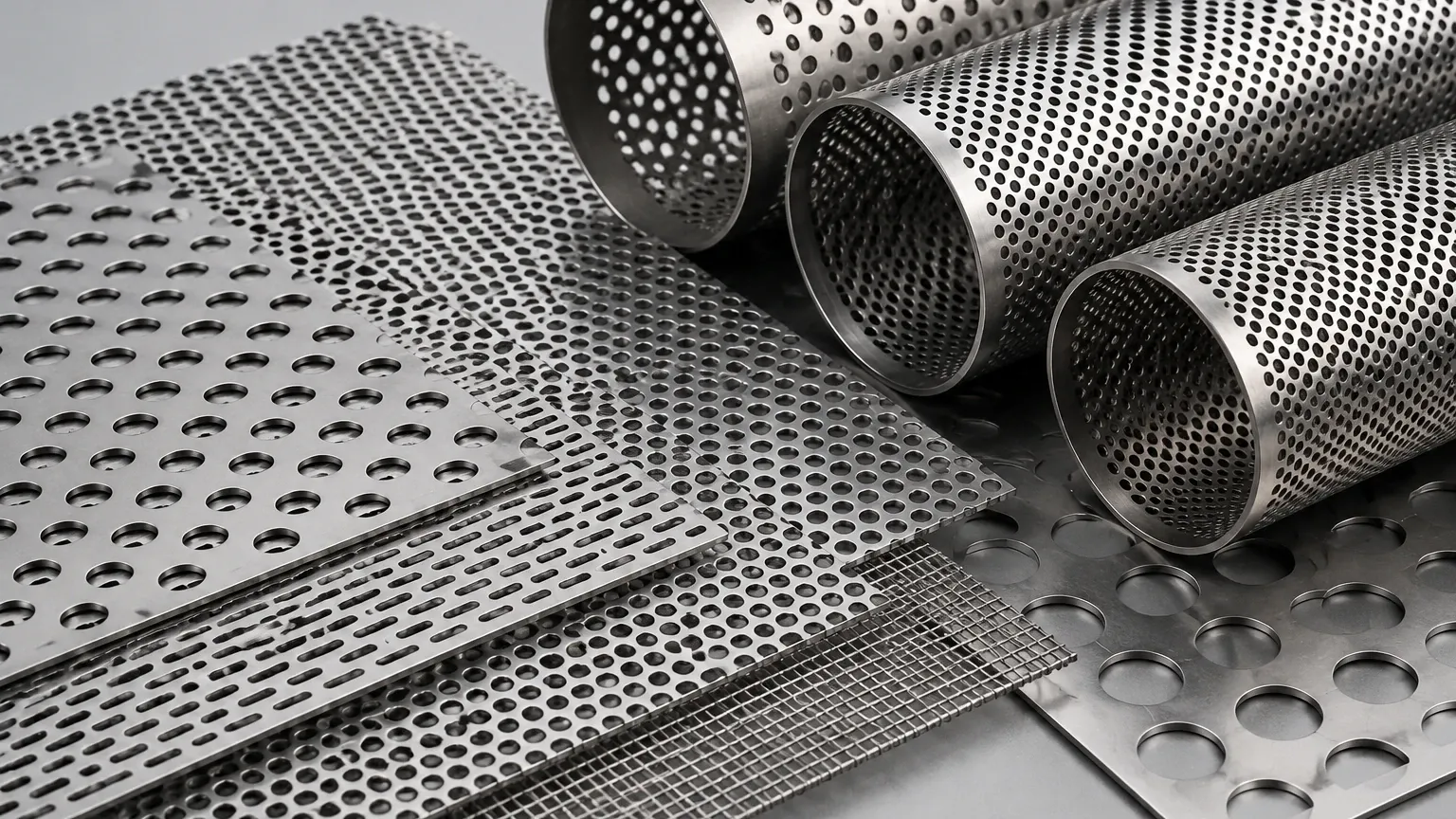
A metal perforated plate is produced through a punching process where a series of holes are mechanically or laser-cut into a sheet of metal. The geometry of these perforations significantly influences the plate's performance in filtration, separation, and structural support.
Hole Patterns and Geometries
The most common hole shapes include round, square, slotted, and hexagonal. Round holes are the industry standard due to their versatility and the ease with which they can be manufactured with high precision. They offer the best balance between structural strength and open area.
* Staggered Patterns: Usually set at a 60-degree angle, staggered patterns maximize the open area and provide uniform strength across the plate. This is the preferred configuration for high-flow filtration applications.
* Straight Patterns: Holes are aligned in parallel rows and columns. While easier to align with structural frames, straight patterns generally offer lower open area and reduced structural rigidity compared to staggered layouts.
* Slotted Perforations: Often used in sieving and sorting applications, particularly where elongated particles or specific flow directions are required.
The Importance of Pitch and Ligament
In perforation terminology, the "pitch" is the distance from the center of one hole to the center of the adjacent hole. The "ligament" is the solid metal remaining between the holes. Engineers must carefully calculate the ligament width to ensure the plate can withstand the operating pressure (differential pressure) without deforming or failing. A ligament that is too narrow may lead to structural failure under high-viscosity flow or mechanical stress.
Material Selection for Industrial Environments
The choice of material for a metal perforated plate is dictated by the chemical environment, temperature fluctuations, and mechanical requirements of the application. Kaifil specializes in stainless steel alloys, which are the gold standard for industrial filtration due to their corrosion resistance and durability.
Stainless Steel Grades
* Grade 304: The most common stainless steel used for general industrial applications. It offers excellent corrosion resistance and formability, making it suitable for food processing and standard water treatment.
* Grade 316/316L: Containing molybdenum, these grades provide superior resistance to chlorides and acids. Grade 316L (low carbon) is preferred for welded components in pharmaceutical and chemical processing to prevent intergranular corrosion.
* Specialty Alloys: For extreme environments involving high temperatures or highly aggressive chemicals, alloys like Duplex stainless steel or Monel may be required to ensure the longevity of the filtration media.
Carbon Steel and Aluminum
While stainless steel is dominant in filtration, carbon steel perforated plates are often used in structural or architectural applications where corrosion is not a primary concern or where protective coatings (like galvanization) are applied. Aluminum provides a lightweight alternative with decent corrosion resistance, often used in HVAC and acoustic dampening.
Calculating Open Area and Flow Dynamics
One of the most critical specifications for any engineer is the "Percentage Open Area." This value determines the flow rate and the pressure drop across the metal perforated plate.
The Open Area Formula
For a standard 60-degree staggered round hole pattern, the formula is:
Open Area % = (D² × 90.69) / P²
*(Where D = Hole Diameter and P = Pitch)*
For a straight square hole pattern, the formula is:
Open Area % = (L² × 100) / P²
*(Where L = Side length of the square)*
Impact on Filtration Efficiency
A higher open area reduces the resistance to flow (lower pressure drop), which improves energy efficiency in pumping systems. However, increasing the open area reduces the structural integrity of the plate. Engineers must find the "sweet spot" where the plate provides sufficient throughput while maintaining the mechanical strength necessary to support the filter cake or withstand hydraulic shocks.
Perforated & Expanded Metal: Comparative Analysis
While often grouped together, perforated metal and expanded metal are manufactured differently and serve distinct purposes in industrial settings. Understanding these differences is vital for correct specification.
Manufacturing Process
* Perforated Metal: Created by punching holes into a solid sheet. This process allows for extreme precision in hole size and placement, making it ideal for fine filtration and high-accuracy separation.
* Expanded Metal: Produced by simultaneously slitting and stretching the metal sheet. This creates a diamond-shaped mesh. There is no waste material in this process, making it a cost-effective solution for structural supports, walkways, and coarse filtration.
Structural Characteristics
Expanded metal is typically more rigid than a perforated plate of the same weight because the strands and bonds are set at an angle, providing a truss-like structure. However, perforated metal offers a flat surface and more predictable flow characteristics, which is essential for precision filter cartridges and chemical reactors.
Customization and Manufacturing Capabilities
Standard off-the-shelf perforated sheets rarely meet the specific needs of complex industrial systems. Customization is where Kaifil provides significant value to engineering teams.
Precision Tolerances
In high-end filtration, tolerances as tight as +/- 0.1mm are often required. Achieving this requires advanced CNC punching equipment and rigorous quality control. Engineers should confirm that their supplier can maintain these tolerances across large production runs to ensure consistent performance in the field.
Secondary Processes
A metal perforated plate is often just one component of a larger assembly. Kaifil offers various secondary services to provide ready-to-install solutions:
* Leveling: Ensuring the plate is perfectly flat after the punching process, which can introduce internal stresses.
* Degreasing and Cleaning: Essential for food-grade and pharmaceutical applications where residual oils from the manufacturing process must be removed.
* Forming and Welding: Rolling perforated sheets into cylinders for filter cartridges or welding them into custom frames.
* Surface Finishing: Electropolishing or passivating stainless steel to enhance corrosion resistance and provide a smooth, cleanable surface.
Performance Evaluation and Selection Criteria
When specifying a metal perforated plate for a new project, engineers should evaluate the following criteria to avoid common pitfalls:
1. Media Compatibility: Does the metal grade react with the fluid being filtered? In pharmaceutical applications, 316L is often non-negotiable.
2. Pressure Differential: What is the maximum pressure the plate will face? This determines the required thickness and ligament width.
3. Particle Retention: The hole size must be smaller than the particles intended for removal. For very fine filtration, perforated plates often serve as a support structure for finer wire mesh layers.
4. Cleaning Cycles: Will the filter be cleaned via backwashing or manual scrubbing? The plate must be durable enough to withstand repeated cleaning without hole deformation.
5. Total Cost of Ownership: While carbon steel is cheaper upfront, the longevity and reduced maintenance of stainless steel often result in a lower total cost over the system's lifecycle.
Common Risks and Quality Assurance
Poorly manufactured perforated plates can lead to significant operational issues. One of the primary risks is the presence of burrs—sharp edges left over from the punching process. In a filtration system, burrs can trap debris, hinder cleaning, or even break off and contaminate the downstream fluid.
Another risk is "oil canning" or lack of flatness. If a plate is not properly leveled after perforation, it may buckle under pressure, leading to bypass or mechanical failure of the filter housing. Engineers should request material certifications (MTRs) and quality inspection reports to verify that the delivered product meets the specified standards for flatness and finish.
Conclusion: Selecting a Technical Partner
The procurement of a metal perforated plate is a technical decision that impacts the efficiency and reliability of industrial processes. By focusing on precise hole geometries, appropriate material grades, and rigorous manufacturing standards, engineers can optimize their filtration systems for long-term performance.
Kaifil’s expertise in custom stainless steel filtration solutions ensures that every metal perforated plate is engineered to meet the specific demands of the application. From initial design consultation to final production and secondary forming, a technical partnership with an experienced manufacturer is the most effective way to achieve reliable, high-performance filtration outcomes.
