


Morin Perforated Metal Panels
In the realm of industrial architecture and precision engineering, perforated metal serves as a critical component that balances structural integrity with functional permeability. Morin perforated metal panels are widely recognized in the architectural sector for their aesthetic versatility and performance in building envelopes. However, for engineers and procurement specialists, understanding the technical nuances of these panels—and how they relate to broader industrial Perforated & Expanded Metal solutions—is essential for ensuring long-term reliability in demanding environments.
Whether used for ventilation, acoustic dampening, sun shading, or specialized filtration support, perforated panels must be evaluated based on material science, geometric precision, and mechanical properties. This guide examines the technical specifications of perforated metal systems, the engineering considerations for selection, and the factors that influence performance in industrial applications.
Understanding the Engineering Behind Perforated Metal Panels
Perforated metal is produced through a cold-punching process where a series of holes are mechanically pressed into a metal sheet. While morin perforated metal panels are frequently specified for architectural facades, the underlying engineering principles remain consistent across industrial sectors. The performance of a perforated panel is primarily defined by its hole pattern, hole size, and pitch (the distance between the centers of adjacent holes).
In industrial contexts, these panels often serve as the primary support structure for finer filtration media or as standalone guards and screens. The precision of the perforation process determines the uniformity of the open area, which directly impacts airflow, fluid dynamics, and structural load distribution. Engineers must consider the "staggered" versus "straight" hole patterns. Staggered patterns (usually at 60 degrees) are the industry standard because they provide the highest open area and superior structural strength compared to straight-line configurations.
Material Selection for Demanding Environments
Material choice is the most significant factor in determining the lifespan and maintenance requirements of perforated metal systems. While aluminum is common in architectural applications due to its weight-to-strength ratio, industrial environments often necessitate more robust materials.
1. Stainless Steel (Grade 304 and 316): For chemical processing, pharmaceutical, and marine environments, stainless steel is the preferred choice. Grade 316, containing molybdenum, offers superior resistance to pitting and chloride-induced corrosion. This is critical when perforated panels are exposed to harsh cleaning agents or saltwater.
2. Carbon Steel: Suitable for indoor applications or environments where the metal is protected by specialized coatings. It offers high tensile strength but requires galvanization or painting to prevent oxidation.
3. Aluminum Alloys: Preferred for lightweight structures. When specifying morin perforated metal panels for exterior use, high-grade aluminum alloys are often treated with PVDF or anodic coatings to withstand UV exposure and atmospheric corrosion.
From a manufacturing perspective, the thickness of the material (gauge) must be compatible with the hole diameter. A general engineering rule of thumb is that the hole diameter should not be smaller than the material thickness to avoid excessive tool wear and internal stresses in the metal sheet.
Calculating Open Area and Its Impact on Performance
One of the most critical metrics for any engineer specifying Perforated & Expanded Metal is the percentage of open area. This figure represents the ratio of the total area of the holes to the total area of the sheet. It dictates the pressure drop in filtration systems and the transparency in architectural screens.
The formula for a 60-degree staggered round hole pattern is:
Open Area % = (D² × 90.69) / P²
*(Where D = Hole Diameter and P = Pitch)*
For morin perforated metal panels used in ventilation or acoustic applications, the open area must be carefully balanced. Too high an open area can compromise the panel's ability to resist wind loads or mechanical impact. Conversely, too low an open area may cause excessive backpressure in HVAC systems or industrial exhaust units. In filtration applications, the open area determines the "face velocity" of the fluid passing through the media, which affects the efficiency of particle capture and the frequency of cleaning cycles.
Structural Integrity and Mechanical Properties
When perforated metal is integrated into a building's exterior or an industrial machine's housing, it must be treated as a structural element. The perforation process inherently reduces the stiffness of the metal sheet. Engineers must account for the "equivalent solid material" properties when performing stress analysis.
Key considerations include:
* Yield Strength: Perforated sheets have a lower yield strength than solid sheets of the same thickness. This must be factored into calculations for span lengths and support spacing.
* Margins: Standard panels often include unperforated borders (margins) along the edges. These margins add significant structural rigidity and facilitate easier welding or mechanical fastening to subframes.
* Flatness and Tension: High-speed punching can introduce internal stresses that cause the metal to curl or warp. Industrial-grade panels undergo leveling processes to ensure they meet strict flatness tolerances, which is vital for seamless installation in large-scale facade systems or precision filter assemblies.
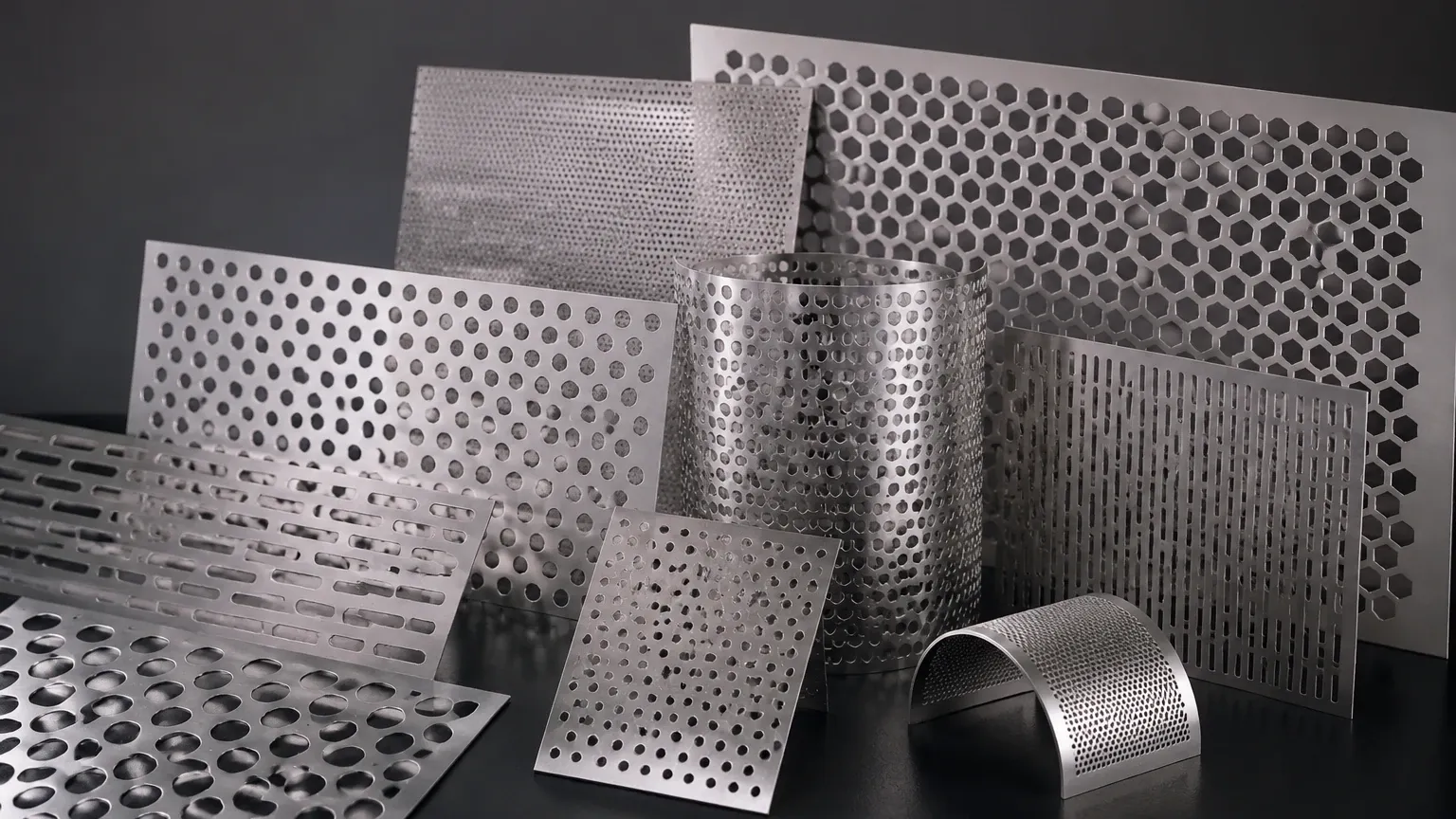
Customization: Moving Beyond Standard Specifications
While standard patterns are readily available, many industrial and architectural projects require customized solutions. Customization allows engineers to optimize the panel for specific functional requirements that off-the-shelf products cannot meet.
In the context of morin perforated metal panels, customization often involves varying the hole density across a single panel to create visual gradients or to manage airflow more precisely in specific zones. For industrial filtration, customization might involve creating unique hole shapes—such as slots or hexagons—to improve the release of filter cakes or to accommodate specific flow characteristics.
OEM manufacturers like Kaifil specialize in these tailored solutions, working with technical teams to determine the optimal material gauge, hole geometry, and finishing treatments. This collaborative approach ensures that the perforated component integrates perfectly with the rest of the system, whether it is a complex hydraulic filter or a large-scale architectural screen.
Installation and Maintenance in Industrial Applications
Proper installation is paramount to preventing premature failure of perforated metal systems. In architectural settings, morin perforated metal panels are typically installed using specialized clip systems or concealed fasteners that allow for thermal expansion and contraction. In industrial settings, the method of attachment—whether bolting, welding, or clamping—must be chosen based on the vibration levels and thermal fluctuations of the environment.
Maintenance Considerations:
* Cleaning Cycles: In filtration and ventilation, dust and debris can accumulate in the perforations. The design should allow for easy access for pressure washing or ultrasonic cleaning.
* Corrosion Monitoring: Even stainless steel can suffer from crevice corrosion if debris is allowed to sit in the holes for extended periods. Regular inspections are necessary to ensure the integrity of the protective oxide layer.
* Fastener Integrity: In high-vibration industrial environments, fasteners should be checked for torque retention to prevent rattling or structural fatigue at the attachment points.
Total Cost of Ownership and Selection Criteria
When evaluating morin perforated metal panels or industrial Perforated & Expanded Metal, the initial purchase price is only one component of the total cost of ownership (TCO). Engineers should also consider:
* Durability: A higher initial investment in Grade 316 stainless steel or specialized coatings can significantly reduce replacement costs and downtime in corrosive environments.
* Efficiency: Optimizing the open area can lead to lower energy consumption in fans and pumps due to reduced pressure drops.
* Ease of Integration: Custom-fabricated panels that arrive ready-to-install with pre-drilled holes and finished edges can drastically reduce on-site labor costs.
Before finalizing a specification, technical professionals should confirm the environmental conditions (temperature, chemical exposure), the required mechanical loads, and the specific functional goals (filtration grade, airflow volume, or acoustic NRC rating). Consulting with a manufacturer early in the design phase allows for the identification of potential manufacturing constraints and the optimization of the design for both performance and cost-effectiveness.
By focusing on these factual engineering boundaries, procurement and technical teams can ensure that their choice of perforated metal panels provides the necessary reliability and performance for their specific industrial or architectural application.
