


Non Perforated Metal
In the landscape of industrial filtration and precision engineering, the selection of materials often focuses on the "open area"—the percentage of a surface that allows for the passage of fluids or gases. However, the structural integrity and functional success of a filtration system are equally dependent on the strategic use of non perforated metal. While perforated and expanded metals provide the necessary media for separation, solid, non-perforated sections serve as the backbone, providing the containment, pressure resistance, and mounting interfaces required for high-performance industrial applications.
For engineers and procurement specialists, understanding the technical nuances of non perforated metal is essential when designing custom filtration assemblies. This guide explores the engineering fundamentals, material considerations, and application-specific roles that solid metal components play alongside Perforated & Expanded Metal solutions.
Engineering Fundamentals of Non Perforated Metal
Non perforated metal, often referred to as solid sheet or plate, is defined by its continuous, uninterrupted surface. In an industrial filtration context, this material is typically sourced in the form of cold-rolled or hot-rolled sheets, which are then fabricated into specific components. Unlike perforated sheets, which are engineered for permeability, non-perforated metal is selected for its mechanical strength and fluid-tight properties.
Material Composition and Grades
The performance of solid metal components is dictated by their alloy composition. In demanding environments such as chemical processing or pharmaceutical manufacturing, stainless steel is the industry standard. Common grades include:
* AISI 304/304L: The most common grade, offering excellent formability and standard corrosion resistance suitable for food and beverage or general industrial water treatment.
* AISI 316/316L: Contains molybdenum, which significantly enhances resistance to chlorides and pitting. This is the preferred choice for marine environments and aggressive chemical filtration.
* Specialty Alloys: For high-temperature or highly corrosive applications, materials like Hastelloy, Monel, or Inconel may be utilized in non-perforated forms to ensure the longevity of the filter housing or structural supports.
Mechanical Properties
Engineers must account for the tensile strength, yield strength, and elongation of the metal. Non perforated metal provides the maximum theoretical strength of the alloy, as there are no holes to act as stress concentrators. This makes it the ideal material for components that must withstand high differential pressures or mechanical vibrations within a filtration circuit.
The Role of Non Perforated Metal in Filtration Systems
A complete filtration solution is rarely composed of a single material. Instead, it is a hybrid assembly where different components perform distinct functions. While the filter media (such as wire mesh or perforated tubes) does the work of separation, non perforated metal provides the necessary infrastructure.
Filter Housings and Pressure Vessels
The most prominent use of non perforated metal is in the construction of the filter housing. These vessels must contain the fluid under pressure without leaking. The walls of the housing are fabricated from solid plate to ensure a hermetic seal. Engineering calculations for wall thickness are critical here, often following ASME or PED standards to ensure safety under peak operating pressures.
End Caps and Flanges
In a stainless steel filter cartridge, the ends of the perforated core or the pleated mesh must be sealed to prevent "bypass"—the process where unfiltered fluid escapes around the media. Non-perforated end caps are precision-machined or stamped to fit the cartridge dimensions perfectly. These caps are then TIG welded or bonded to the media. Similarly, flanges used to connect the filter to the piping system are made from solid forged or plate metal to provide a flat, stable surface for gaskets.
Flow Diversion and Baffles
In complex filtration systems, fluid must often be directed to specific areas of the filter media to prevent localized blinding or erosion. Solid metal baffles are installed within the housing to manage flow velocity and distribution. By using non perforated metal for these internal components, designers can create controlled turbulence or laminar flow patterns that optimize the efficiency of the entire system.
Comparing Perforated vs. Non Perforated Metal
When designing a component, the choice between a perforated surface and a solid one depends entirely on the functional requirements of that specific part of the assembly. Understanding the trade-offs is key to cost-effective and reliable engineering.
| Feature | Perforated & Expanded Metal | Non Perforated Metal |
| :— | :— | :— |
| Primary Function | Filtration, straining, airflow | Containment, structural support |
| Pressure Handling | Limited (permeable) | High (pressure-tight) |
| Weight | Lower (due to material removal) | Higher (full density) |
| Fabrication | Requires care to avoid hole deformation | Standard welding and forming |
| Fluid Dynamics | Encourages passage/diffusion | Blocks or redirects flow |
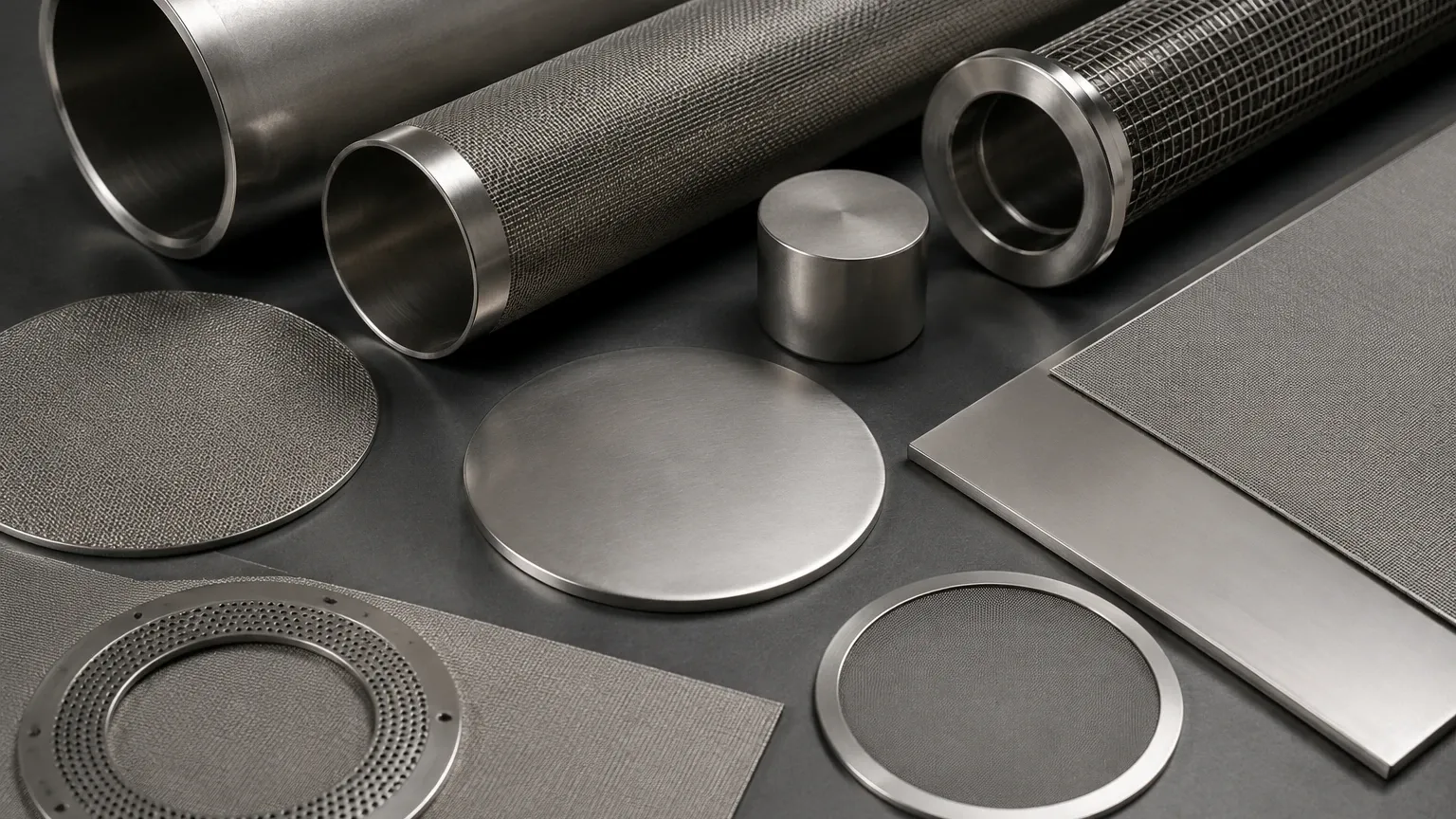
In many cases, a single component may feature both types. For example, a heavy-duty filter basket may have a non-perforated top ring for structural mounting and a perforated body for filtration. This hybrid approach allows for a balance between weight, flow rate, and mechanical durability.
Selection Criteria for Industrial Applications
Choosing the right non perforated metal involves more than just picking a thickness. Engineers must evaluate several factors to ensure the component survives the intended lifecycle of the filtration system.
Surface Finish and Cleanability
In the pharmaceutical and food industries, the surface finish of the metal is paramount. Non perforated metal can be polished to specific Ra (Roughness Average) values. A smooth, electropolished surface prevents bacterial growth and makes the system easier to clean during CIP (Clean-In-Place) cycles. Perforated sections are inherently harder to clean, making the solid sections of the assembly critical for maintaining overall hygiene.
Corrosion Allowance
While stainless steel is resistant to corrosion, it is not immune. Engineers must calculate a "corrosion allowance"—additional thickness added to the solid metal parts to account for gradual material loss over years of exposure to corrosive media. This ensures that the structural integrity of the housing or support remains intact even as the surface undergoes minor chemical attack.
Thermal Expansion
In high-temperature filtration, such as steam filtration or hot gas recovery, the thermal expansion coefficient of the non perforated metal must be matched with the filter media. If a solid end cap expands at a significantly different rate than the perforated core it is welded to, the resulting thermal stress can lead to weld failure or media deformation.
Customization and Manufacturing Precision
At Kaifil, the integration of non perforated metal into custom filtration solutions is handled with the same precision as our wire mesh and perforated products. Manufacturing custom components requires a suite of advanced capabilities to ensure that solid and perforated parts interface seamlessly.
1. Precision Cutting: Utilizing laser or waterjet cutting to produce solid components with tight tolerances, ensuring they align perfectly with perforated tubes or mesh layers.
2. Advanced Welding: Specialized TIG and plasma welding techniques are used to join non-perforated end caps to thin-gauge filter media without causing burn-through or compromising the alloy's corrosion resistance.
3. Forming and Rolling: Solid sheets are rolled into cylinders for housings or stamped into complex shapes for specialized fittings, maintaining consistent wall thickness throughout the part.
By controlling the production of both the perforated elements and the solid structural components, a manufacturer can guarantee the total performance of the filter assembly. This vertical integration reduces the risk of assembly errors and ensures that material certifications (MTRs) are consistent across the entire product.
Common Risks and Quality Assurance
When sourcing non perforated metal for B2B applications, several risks must be mitigated through rigorous quality control. The most common issues include:
* Material Substitution: The use of lower-grade alloys that look identical to specified materials but fail prematurely in corrosive environments. Verification through PMI (Positive Material Identification) testing is essential.
* Internal Defects: Laminations or inclusions within the solid metal sheet that can lead to leaks under high pressure. Ultrasonic testing (UT) is often used for critical pressure-retaining components.
* Welding Stress: Improper heat treatment or welding of solid metal to perforated sections can create heat-affected zones (HAZ) that are susceptible to stress corrosion cracking.
To ensure reliability, purchasing teams should confirm that their supplier provides full material traceability and adheres to international standards such as ISO 9001. For filtration components, confirming the pressure rating and the compatibility of the surface finish with the process fluid is a mandatory step before finalizing a purchase order.
Conclusion
Non perforated metal is the silent partner to Perforated & Expanded Metal in the world of industrial filtration. While it does not perform the actual separation of particles, its role in providing structural stability, pressure containment, and precise flow control is indispensable. By selecting the correct grade, thickness, and finish for these solid components, engineers can build filtration systems that are not only efficient but also durable enough to withstand the rigors of modern industrial processing.
When evaluating a filtration partner, it is vital to look for expertise that spans both permeable and solid metal fabrication. This holistic understanding of material science and mechanical engineering ensures that every part of the filter—from the finest mesh to the heaviest solid flange—is optimized for the specific demands of the application.
