


Number 3 Expanded Metal
In industrial manufacturing and filtration engineering, the selection of structural support materials is as critical as the selection of the primary filtration media itself. Expanded metal, a versatile material created by slitting and stretching metal sheets, offers a unique combination of structural rigidity, high open area, and cost-efficiency. Among the various specifications available, number 3 expanded metal stands out as a specific designation often utilized in heavy-duty filtration, safety guarding, and industrial partitions.
Understanding the technical nuances of number 3 expanded metal—including its dimensional tolerances, material compatibility, and mechanical properties—is essential for engineers and purchasing teams tasked with optimizing system performance and longevity. This guide provides a technical overview of this material within the broader context of Perforated & Expanded Metal solutions.
Technical Definition and Manufacturing Process
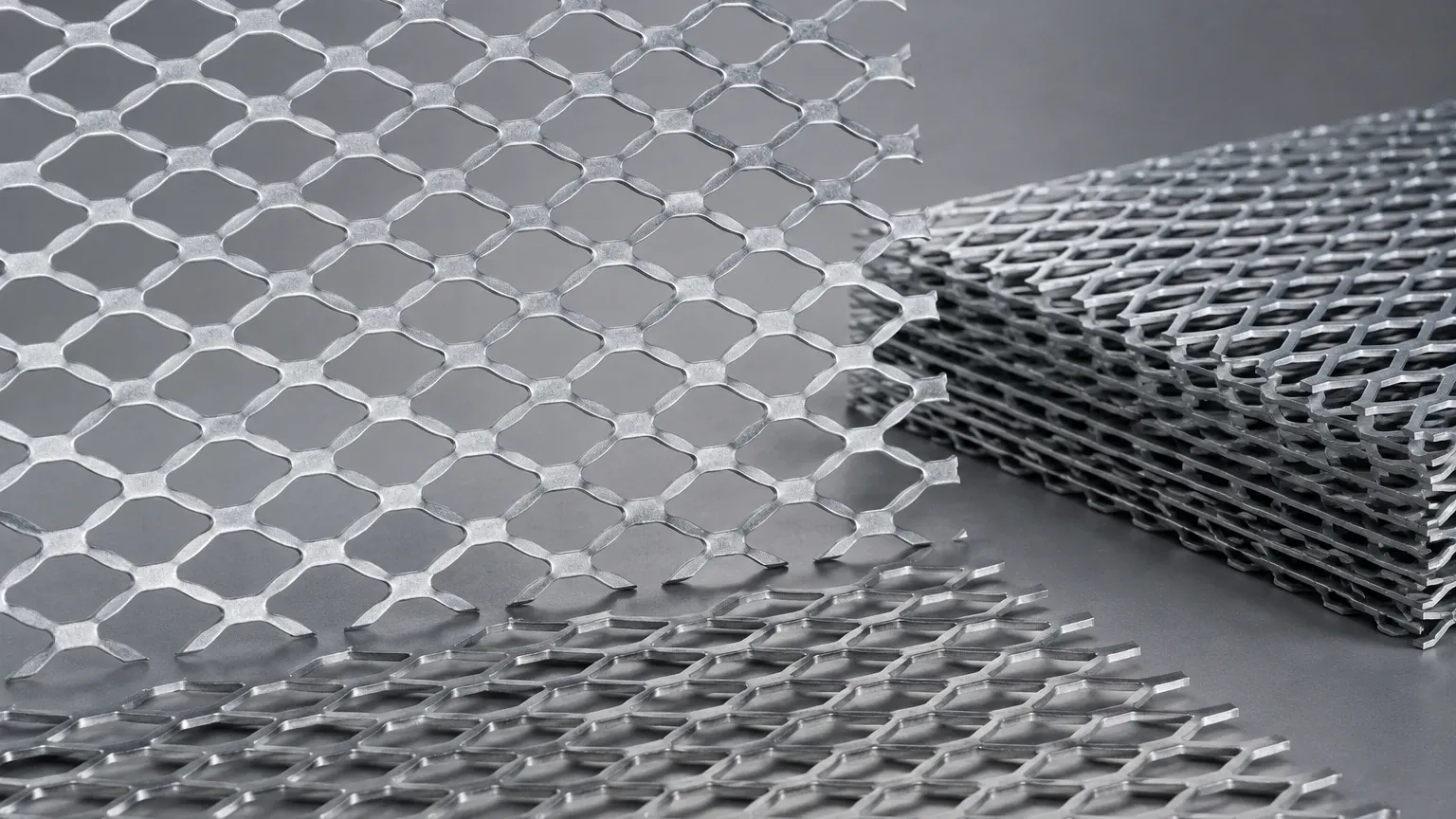
Unlike perforated metal, which is produced by punching holes out of a solid sheet and creating scrap material, expanded metal is manufactured through a continuous process of slitting and stretching. This process expands the original sheet into a diamond-shaped pattern without any material loss, making it an environmentally and economically efficient choice.
Number 3 expanded metal typically refers to a specific weight or gauge designation within industry standards. In many industrial contexts, the "number" refers to the nominal weight per square foot or a specific gauge thickness associated with a particular diamond size. For example, in heavy-duty grating or industrial mesh, a #3 designation might indicate a weight of approximately 3.0 pounds per square foot, or it may refer to a specific strand thickness and width configuration designed for high-load applications.
Key Dimensional Parameters
When specifying number 3 expanded metal, engineers must evaluate four primary dimensions:
1. SWD (Short Way of Design): The distance from the center of one bond to the center of the next bond measured across the short diamond diagonal.
2. LWD (Long Way of Design): The distance from the center of one bond to the center of the next bond measured across the long diamond diagonal.
3. Strand Width: The amount of metal fed into the expanding machine for each stroke, which determines the thickness of the "ribs" of the mesh.
4. Strand Thickness: The original thickness of the base metal sheet.
For number 3 expanded metal, these dimensions are engineered to provide a specific balance of open area (for fluid or air flow) and mechanical strength (to resist deformation under pressure).
Material Selection for Number 3 Expanded Metal
While expanded metal can be produced from various alloys, stainless steel is the preferred choice for industrial filtration and demanding chemical environments. As a specialist in stainless steel filtration, Kaifil emphasizes the importance of matching the alloy to the operating conditions.
Stainless Steel (304 and 316L)
Stainless steel 304 is the standard for general industrial applications, offering excellent strength and basic corrosion resistance. However, for applications involving marine environments, high-chloride concentrations, or aggressive chemical processing, 316L stainless steel is required. The addition of molybdenum in 316L provides superior resistance to pitting and crevice corrosion, ensuring that the number 3 expanded metal structure maintains its integrity over long service cycles.
Specialty Alloys
In extreme environments, such as high-temperature petrochemical processing or highly acidic pharmaceutical manufacturing, specialty alloys like Monel, Inconel, or Hastelloy may be used. These materials ensure that the expanded metal does not succumb to thermal expansion fatigue or chemical degradation, which could otherwise lead to structural failure and downstream contamination.
Structural Applications in Industrial Filtration
Number 3 expanded metal is frequently employed as a support component in complex filtration systems. Its primary role is to provide a rigid "skeleton" that prevents the primary filtration media—such as fine wire mesh or synthetic membranes—from collapsing under high differential pressures.
Filter Cartridge Support Cores
In large-scale industrial filter cartridges, number 3 expanded metal is rolled into cylinders to serve as internal support cores or external protective cages. The diamond pattern provides multi-directional strength, which is superior to simple perforated tubes in resisting torsional stress. Engineers must ensure that the edges of the expanded metal are properly deburred or hemmed to prevent damage to the delicate filter media during assembly or operation.
Pre-filtration and Coarse Screening
Due to its robust nature, number 3 expanded metal can also serve as a primary screen for coarse filtration. It is often used in water treatment intakes or industrial sumps to capture large debris before the fluid reaches finer filtration stages. The high open area ensures minimal pressure drop, which is critical for maintaining pump efficiency and system flow rates.
Standard vs. Flattened Number 3 Expanded Metal
One of the most important decisions an engineer must make when selecting expanded metal is whether to use the "Standard" (raised) or "Flattened" version.
Standard Expanded Metal
Standard expanded metal is the product as it comes off the expanding machine. The strands and bonds are set at a uniform angle to the plane of the sheet. This creates a three-dimensional surface that offers several advantages:
* Enhanced Rigidity: The angled strands act like structural trusses, providing high strength-to-weight ratios.
* Flow Turbulence: In some filtration applications, the angled strands can induce beneficial turbulence, preventing the rapid buildup of a filter cake on the media surface.
* Slip Resistance: When used for industrial walkways or platforms, the raised pattern provides essential grip.
Flattened Expanded Metal
Flattened expanded metal is produced by passing the standard expanded sheet through a cold-roll reducing mill. This process flattens the strands and bonds into a single plane, resulting in a smooth, flat surface. The benefits of flattened number 3 expanded metal include:
* Surface Uniformity: A flat surface is easier to bond or weld to other components, such as fine wire mesh.
* Reduced Thickness: Flattening reduces the overall profile of the material, which is useful in space-constrained filter housings.
* Safety: The smooth surface eliminates the sharp edges inherent in the raised pattern, reducing the risk of injury during manual handling and maintenance.
Engineering Considerations: Open Area and Pressure Drop
The performance of any filtration system is dictated by the relationship between flow rate and pressure drop. Number 3 expanded metal must be evaluated for its percentage of open area, which typically ranges from 40% to 70% depending on the specific strand width and diamond size.
A common mistake in procurement is selecting a mesh that is too dense in an effort to maximize strength. While a thicker strand increases durability, it also reduces the open area, leading to higher initial pressure drops and shorter filter life cycles. Engineers should utilize flow modeling or empirical testing to determine the optimal balance for their specific viscosity and flow velocity requirements.
Quality Control and Procurement Best Practices
When sourcing number 3 expanded metal for critical industrial applications, technical professionals should confirm several key factors with their manufacturer to avoid common pitfalls.
Dimensional Tolerances
Industrial standards for expanded metal allow for certain variances in SWD and LWD. However, in precision filtration components, tighter tolerances may be required to ensure proper fitment within a housing or to maintain consistent support across a pleated media surface. Always specify the required tolerances during the RFQ (Request for Quote) process.
Camber and Out-of-Squareness
Camber refers to the bow in a sheet of expanded metal. For automated assembly processes, excessive camber can lead to misfeeds and production delays. Similarly, ensuring the sheet is "square" is vital if the material is to be welded into a frame or rolled into a cylinder. Quality manufacturers like Kaifil implement stringent leveling and shearing processes to minimize these issues.
Surface Finish and Cleanliness
For the food and beverage or pharmaceutical industries, the surface finish of the number 3 expanded metal is paramount. The material must be free of lubricants, scale, and metal slivers. Passivation is often recommended for stainless steel components to remove free iron from the surface and enhance the protective oxide layer, preventing premature corrosion in sensitive environments.
Customization and OEM Solutions
Standard off-the-shelf expanded metal often fails to meet the exact requirements of specialized industrial equipment. Customization options allow engineers to tailor the material to the application. These options include:
* Custom Diamond Sizes: Adjusting the SWD and LWD to match specific particulate sizes or support requirements.
* Variable Strand Widths: Increasing the strand width for higher mechanical loads or decreasing it to maximize flow.
* Edge Treatments: Providing solid borders (random or bond sheared) to facilitate easier welding and safer handling.
* Fabrication Services: Many projects benefit from the manufacturer providing pre-cut, rolled, or welded components, reducing the complexity of the final assembly.
For those seeking comprehensive data on available patterns and technical specifications, reviewing Perforated & Expanded Metal options is a necessary step in the design phase.
Conclusion
Number 3 expanded metal is a fundamental component in the toolkit of the industrial engineer. Whether used as a protective guard, a structural support for high-pressure filtration, or a coarse screen in water treatment, its performance is a direct result of precise manufacturing and informed material selection. By understanding the trade-offs between standard and flattened profiles, selecting the appropriate stainless steel alloy, and insisting on rigorous quality control, purchasing teams can ensure they receive a product that enhances system reliability and reduces total cost of ownership.
As industrial processes become more demanding, the role of high-quality expanded metal continues to grow, providing the structural integrity necessary for modern filtration and mechanical systems to operate at peak efficiency.
