


Perforated 2×2
In the landscape of industrial filtration and structural engineering, the term "perforated 2×2" frequently appears as a standard specification for modular components, filtration supports, and protective screening. Whether referring to a 2-foot by 2-foot panel dimension or a specific hole-and-pitch configuration, understanding the technical nuances of these components is essential for engineers and procurement teams. Selecting the right Perforated & Expanded Metal requires a deep dive into material properties, structural integrity, and fluid dynamics to ensure long-term performance in demanding environments.
At Kaifil, we recognize that industrial filtration is rarely a one-size-fits-all endeavor. Components like a perforated 2×2 panel serve as the backbone for complex filtration systems, providing the necessary rigidity to withstand high pressure while maintaining the flow characteristics required for chemical processing, water treatment, and food production.
Defining the Perforated 2×2 Specification
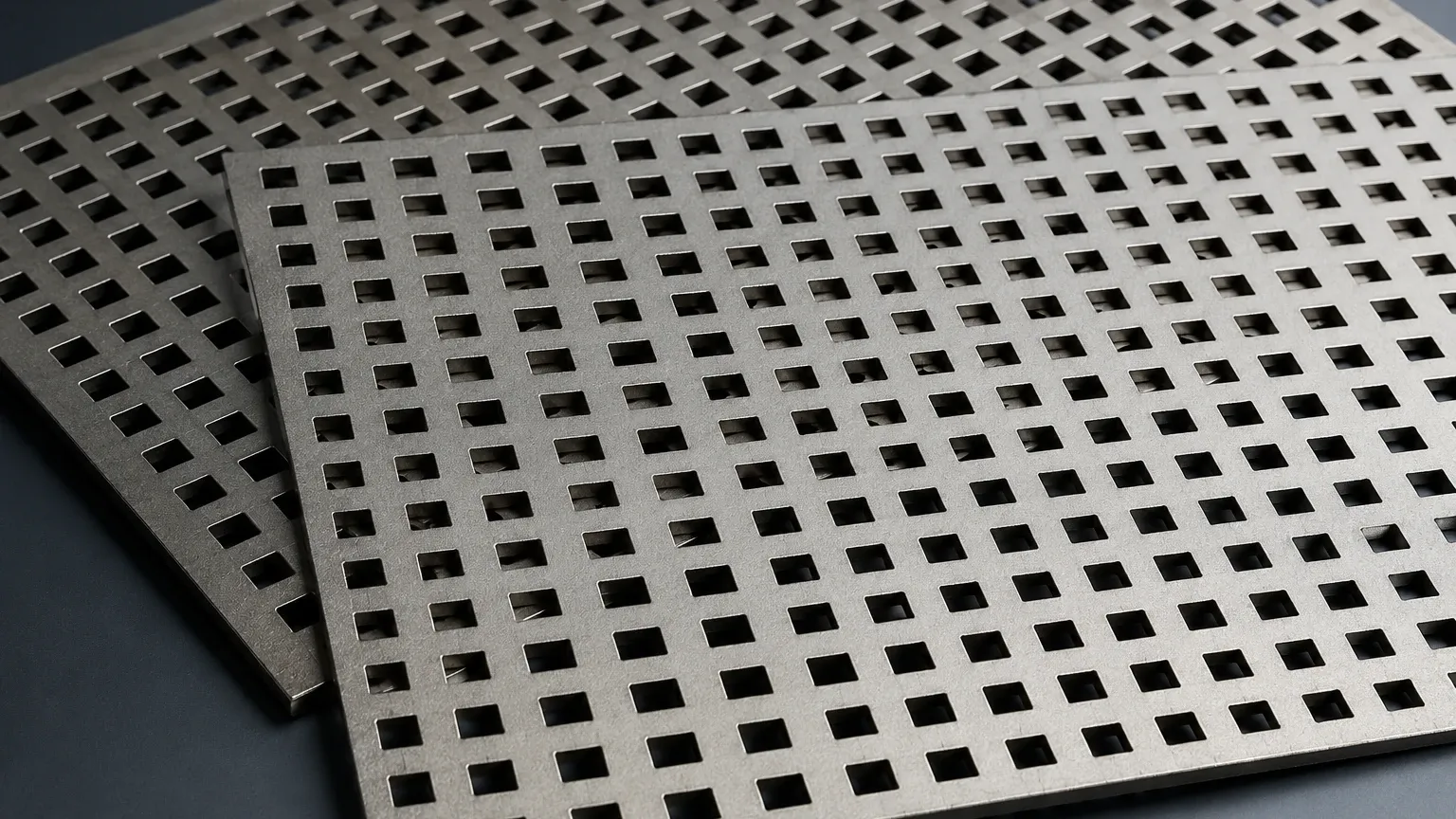
When engineers specify a "2×2" perforated product, the context usually falls into two categories: dimensional sizing or pattern geometry. In most industrial B2B contexts, a perforated 2×2 refers to a standard panel size (24 inches by 24 inches). This size is ubiquitous in modular filtration units, drop-in basket strainers, and architectural safety guards because it offers a balance between ease of handling and surface area coverage.
However, in more specialized filtration applications, "2×2" may refer to the spacing of the perforations—such as 2-inch centers. Understanding the distinction is critical during the design phase. A panel with 1/4-inch holes on a 2×2-inch staggered centers pattern will have a significantly different open area percentage compared to a standard 60-degree staggered pattern. For filtration purposes, the panel size is typically the primary concern, as it must interface perfectly with housing units or support frames without bypassing fluids.
Material Science: Selecting Alloys for Industrial Longevity
The performance of a perforated 2×2 component is largely dictated by the alloy from which it is fabricated. Because these components are often exposed to corrosive chemicals, high temperatures, or high-pressure steam cleaning, material selection is the first line of defense against premature failure.
Stainless Steel 304 vs. 316L
Stainless steel is the industry standard for most filtration applications. Grade 304 provides excellent durability and basic corrosion resistance for general industrial use. However, for pharmaceutical and chemical processing, Grade 316L is preferred. The addition of molybdenum in 316L enhances resistance to pitting and crevice corrosion, particularly in chloride-rich environments.
Specialty Alloys
In extreme environments, such as those found in desalination or aggressive chemical synthesis, standard stainless steels may not suffice. In these instances, duplex stainless steels or nickel-based alloys are utilized. These materials offer superior yield strength and thermal stability, ensuring that the perforated 2×2 panel maintains its geometric tolerances even under fluctuating thermal loads.
The Structural Role of Perforated & Expanded Metal
In many high-pressure filtration systems, a fine wire mesh is responsible for the actual particle capture. However, wire mesh lacks the structural rigidity to withstand the differential pressure (ΔP) generated as the filter becomes loaded with contaminants. This is where Perforated & Expanded Metal becomes indispensable.
A perforated 2×2 stainless steel sheet acts as a support cage or "skeleton" for the finer filter media. By pleating or wrapping the mesh around a perforated core, the system can handle significantly higher flow rates and pressure surges. The thickness of the perforated metal (the gauge) must be calculated based on the maximum expected pressure drop to prevent the core from collapsing or deforming, which could lead to media migration and downstream contamination.
Expanded metal, created by slitting and stretching the sheet, offers an alternative with a higher strength-to-weight ratio. While perforated metal provides precise hole sizes, expanded metal creates a diamond-shaped aperture that can be more cost-effective for large-scale protective screening or primary filtration of large debris.
Engineering Calculations: Open Area and Flow Dynamics
For any filtration component, the "Open Area" percentage is a critical metric. This value represents the portion of the sheet that is comprised of holes, directly influencing the flow rate and pressure drop across the panel. For a perforated 2×2 panel, the open area is calculated based on the hole diameter (D) and the center-to-center spacing (P).
For a standard 60-degree staggered pattern, the formula is:
Open Area % = (D² × 90.69) / P²
Engineers must balance the need for a high open area (to minimize pressure drop) with the need for structural strength. A perforated 2×2 panel with a 60% open area will allow for high throughput but may lack the stiffness required for a high-pressure hydraulic return line. Conversely, a 20% open area provides immense strength but may cause excessive turbulence or restricted flow, leading to pump cavitation or system inefficiency.
Custom Fabrication and OEM Integration
Standard off-the-shelf perforated sheets rarely meet the exacting requirements of specialized industrial equipment. This is why Kaifil emphasizes custom OEM solutions for perforated 2×2 components. Customization goes beyond simply cutting a sheet to size; it involves precision engineering at every step:
1. Margin Specifications: In many filtration housings, a "blank" or unperforated margin is required around the edges of the 2×2 panel to facilitate welding or to provide a seating surface for gaskets. Custom-punched panels ensure these margins are exact, preventing leaks.
2. Forming and Bending: A perforated 2×2 sheet may need to be rolled into a cylinder for a cartridge filter or bent into a U-shape for a drainage channel. Precision CNC forming ensures that the hole pattern is not distorted during the bending process.
3. Surface Finishing: For food and beverage or pharmaceutical applications, the perforated metal must undergo secondary processes. Electropolishing is commonly used to remove burrs and create a microscopically smooth surface that prevents bacterial growth and facilitates easier cleaning.
Industry-Specific Applications for Perforated Components
The versatility of the perforated 2×2 format allows it to be utilized across a wide spectrum of industrial sectors:
* Food and Beverage: Used as dewatering screens or as support structures in large-scale juice and beverage filtration. The use of 316L stainless steel ensures compliance with sanitary standards.
* Chemical Processing: Perforated panels serve as catalyst support grids in reactors. Here, the material must withstand both chemical attack and high temperatures.
* Water Treatment: In municipal and industrial water systems, perforated 2×2 grates are used as primary intake screens to prevent large debris from entering sensitive pumping equipment.
* Pharmaceuticals: Precision-perforated components are used in fluid bed dryers and centrifuge baskets, where exact hole sizes are necessary to ensure consistent product quality and prevent material loss.
Maintenance, Cleaning, and Operational Lifecycle
One of the primary advantages of using stainless steel perforated 2×2 components is their longevity and cleanability. Unlike disposable polymer filters, metal filtration components are designed for multi-cycle use. However, their lifecycle is dependent on proper maintenance.
In many systems, Clean-in-Place (CIP) protocols are used to remove accumulated solids from the perforated surface. If the perforated metal is supporting a fine mesh, backwashing or ultrasonic cleaning may be required. It is vital to inspect the perforated support for signs of fatigue or stress corrosion cracking, especially in systems subject to frequent pressure cycles or thermal shock. A well-maintained stainless steel perforated panel can last for years, significantly reducing the total cost of ownership compared to frequent replacements of lower-quality materials.
Procurement Considerations for Engineering Teams
When sourcing a perforated 2×2 solution, procurement teams should confirm several technical details with the manufacturer to ensure the component is fit for purpose:
* Hole Shape: While round holes are the most common and provide the best structural integrity, square or slotted holes may be required for specific material separation tasks.
* Gauge Thickness: Ensure the material thickness is sufficient for the mechanical load. A common mistake is selecting a gauge that is too thin, leading to panel bowing under load.
* Flatness Requirements: For panels that must be clamped or gasketed, specifying a high degree of flatness is essential to prevent bypass.
* Compliance Standards: Depending on the industry, you may require material mill certificates, FDA compliance statements, or specific ISO quality certifications.
By focusing on these technical parameters, engineers can ensure that their perforated 2×2 components provide reliable service. Whether used as a standalone screen or as a critical support layer in a multi-stage filtration system, the quality of the perforated metal is a fundamental determinant of overall system efficiency.
For those seeking specialized designs or high-performance materials, exploring the full range of Perforated & Expanded Metal options is the best way to find a solution tailored to your specific industrial needs. Kaifil remains committed to providing the engineering support and manufacturing precision required to turn these technical specifications into high-performance filtration reality.
