


Perforated M
In the landscape of industrial filtration and structural engineering, perforated metal—often referred to in technical specifications as perforated m—serves as a critical component for fluid dynamics, particle separation, and mechanical support. Unlike standard decorative materials, industrial-grade perforated metal is engineered with precise tolerances to withstand high-pressure environments, corrosive chemicals, and extreme temperatures. For engineers and procurement specialists, understanding the technical nuances of these components is essential for optimizing the performance and longevity of filtration systems.
As a specialized manufacturer, Kaifil provides high-performance Perforated & Expanded Metal solutions tailored to the rigorous demands of the chemical, pharmaceutical, and food processing industries. This guide explores the engineering principles, material considerations, and selection criteria necessary for integrating perforated metal into industrial applications.
The Fundamental Role of Perforated M in Industrial Filtration
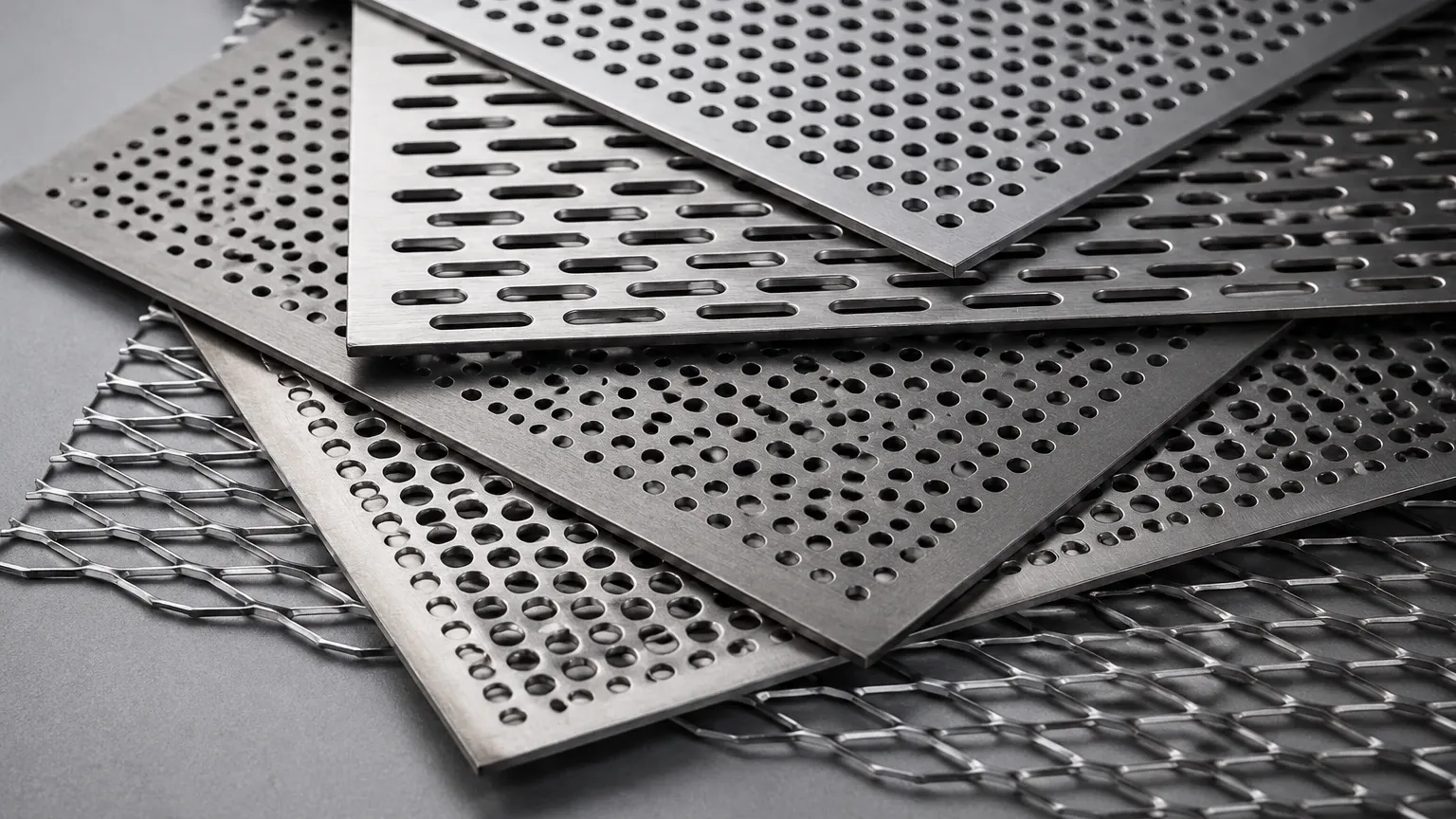
Perforated metal is essentially a metal sheet that has been mechanically stamped or punched to create a pattern of holes, slots, or decorative shapes. In an industrial context, the "perforated m" component is rarely chosen for aesthetics; instead, it is selected for its functional ability to allow the passage of gas, liquid, or light while blocking specific solids.
In many filtration assemblies, perforated metal acts as the primary filter for coarse particles. However, its most vital role is often as a support structure. Because fine wire mesh lacks the inherent rigidity to withstand high differential pressures, it is frequently wrapped around or bonded to a perforated metal core. This composite structure ensures that the filter maintains its shape under the force of the flow, preventing the delicate mesh from collapsing or tearing.
Kaifil’s manufacturing process focuses on creating these robust skeletons, ensuring that the burr-free finish and precise hole alignment required for high-end industrial applications are met. Whether used in hydraulic systems or large-scale water treatment plants, the integrity of the perforated base determines the overall reliability of the filtration unit.
Engineering Specifications: Hole Patterns and Open Area Calculations
The performance of perforated m is dictated by its geometric configuration. Engineers must balance the need for high flow rates (which require a large open area) with the need for structural strength (which requires more solid metal).
Hole Patterns
There are three primary hole arrangements used in industrial filtration:
1. Staggered (60-degree): This is the most popular pattern due to its inherent strength and high open area. The 60-degree orientation provides the most efficient use of space, allowing for a higher density of holes without compromising the sheet's structural integrity.
2. Straight Line: Holes are aligned in both horizontal and vertical rows. This pattern is easier to manufacture but generally offers lower strength than staggered configurations.
3. Staggered (45-degree): An alternative to the 60-degree pattern, often used for specific aesthetic or directional flow requirements.
Calculating Open Area
The "Open Area" is the percentage of the sheet that is comprised of holes. This is a critical metric for calculating pressure drop across the filter. For a standard 60-degree staggered round hole pattern, the formula is:
Open Area % = (D² × 90.69) / P²
*Where:*
* D = Hole Diameter
* P = Pitch (the distance from the center of one hole to the center of the adjacent hole)
If the open area is too low, the system will experience a significant pressure drop, increasing energy costs and strain on pumps. Conversely, if the open area is too high, the perforated metal may fail under mechanical stress. Kaifil works with engineering teams to determine the optimal balance based on the specific viscosity and flow rate of the media being processed.
Material Selection: Why Stainless Steel Dominates Perforated M Production
Material compatibility is the most frequent cause of premature filter failure. In industrial filtration, stainless steel is the gold standard for perforated m due to its mechanical strength and resistance to various forms of degradation.
Stainless Steel 304 vs. 316L
* SS304: Suitable for general-purpose applications where moisture is present but chemical exposure is limited. It is widely used in the food and beverage industry for non-acidic processing.
* SS316L: Contains molybdenum, which provides superior resistance to chlorides and pitting corrosion. This makes it the mandatory choice for pharmaceutical manufacturing, chemical processing, and marine environments. The "L" stands for low carbon, which improves weldability and reduces the risk of intergranular corrosion near weld joints.
Specialized Alloys
For environments involving extreme temperatures or highly aggressive chemicals (such as concentrated sulfuric acid), specialized alloys like Monel, Inconel, or Hastelloy may be required. Kaifil’s expertise in material selection ensures that the chosen metal can withstand the specific pH levels and thermal cycles of the application, thereby extending the replacement cycle and reducing total cost of ownership.
Perforated M as a Support Structure for Multi-Layer Filters
In advanced filtration, perforated metal is rarely used in isolation. It is typically part of a multi-layer assembly designed to achieve high filtration accuracy (down to 1 micron) while maintaining industrial-scale durability.
The Sintered Mesh and Perforated Plate Composite
One of the most effective uses of perforated m is in sintered filter elements. In this design, multiple layers of stainless steel wire mesh are vacuum-sintered together with a perforated metal plate. The perforated plate provides the "backbone," allowing the filter to operate in high-pressure hydraulic systems or high-viscosity polymer filtration where standard mesh would fail.
Inner and Outer Guards
In cylindrical filter cartridges, perforated metal is used for both the inner core and the outer guard. The inner core prevents the filter media from collapsing inward under external pressure, while the outer guard protects the media from mechanical damage during installation and maintenance. Kaifil’s precision manufacturing ensures that these perforated cylinders are perfectly round and welded with high-strength seams to maintain concentricity throughout the filter's life.
Customization and OEM Considerations for Industrial Applications
Standard off-the-shelf perforated sheets often fail to meet the specific requirements of custom industrial machinery. OEM (Original Equipment Manufacturer) solutions are necessary when the filtration environment demands unique dimensions, non-standard hole shapes, or specific margin requirements.
Custom Margins and Blank Areas
In many applications, the perforated m must have solid metal borders (margins) for welding or mounting purposes. Standard perforated sheets are often "perforated all over," which leaves jagged edges when cut. Kaifil provides custom-punched sheets where the hole pattern stops exactly where needed, leaving clean, solid margins that simplify the assembly process and improve the structural integrity of the final product.
Specialized Hole Shapes
While round holes are the standard for filtration, square holes, slotted holes, or hexagonal patterns may be required for specific types of particle separation or to achieve a specific flow profile. Slotted holes, for instance, are often used in the pulp and paper industry or for vibrating screens where elongated particles need to be oriented in a specific direction.
Evaluating Total Cost of Ownership and Maintenance
When purchasing perforated m components, procurement teams should look beyond the initial unit price and consider the total cost of ownership (TCO). A lower-quality perforated component can lead to significant downstream costs.
Risks of Poor Quality Perforation
* Burrs and Sharp Edges: If the punching process is not precisely controlled, burrs can remain on the underside of the holes. These burrs can trap particles, making the filter difficult to clean, or they can tear the fine wire mesh layers in a composite filter.
* Inconsistent Pitch: Variations in the distance between holes can lead to "blind spots" in the filtration surface, causing uneven flow and localized high-pressure zones that accelerate wear.
* Material Impurities: Low-grade stainless steel may contain inclusions that act as initiation sites for corrosion, leading to premature failure in chemical environments.
Maintenance and Cleaning
Perforated metal is generally easier to clean than wire mesh due to its smooth surface. In many industrial systems, these components are cleaned via backpulsing or ultrasonic baths. The durability of stainless steel perforated m allows for repeated cleaning cycles, provided the cleaning agents are chemically compatible with the metal grade. Engineers should establish a replacement cycle based on pressure drop indicators; once the permanent pressure drop (after cleaning) exceeds a certain threshold, the component should be replaced to maintain system efficiency.
Conclusion
Perforated m is a foundational element in the world of industrial filtration, providing the necessary balance of permeability and structural strength. By carefully selecting the appropriate hole pattern, material grade, and customization options, engineers can ensure their systems operate at peak efficiency with minimal downtime.
As a dedicated partner in filtration technology, Kaifil offers the engineering expertise and manufacturing precision required to deliver high-quality Perforated & Expanded Metal products. From initial material selection to the production of complex, multi-layered filter components, Kaifil supports global industries in achieving reliable and cost-effective filtration performance. When designing your next filtration system, confirming the mechanical requirements and environmental constraints of your perforated components is the first step toward long-term operational success.
