


Perforated Metal 10mm
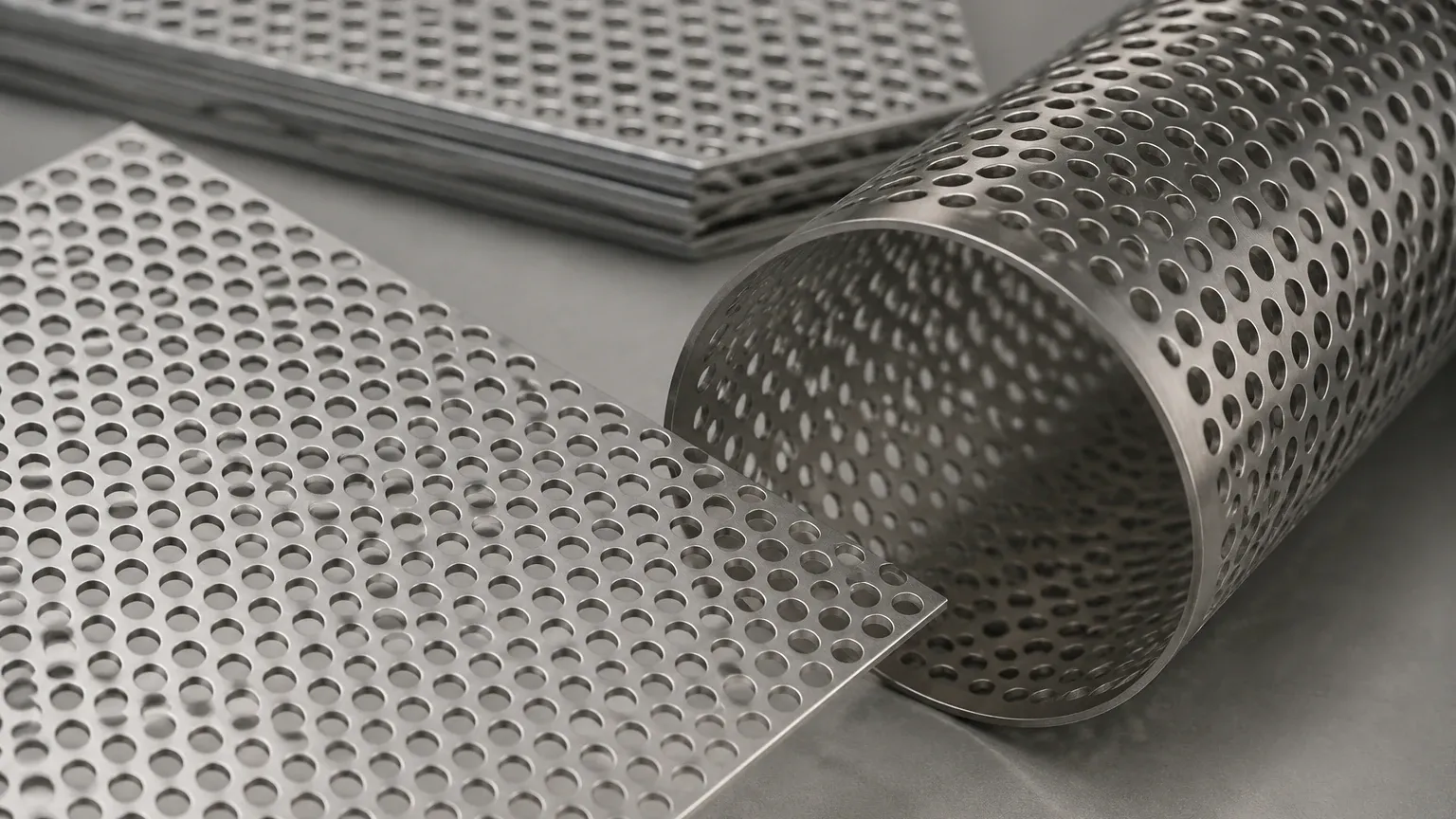
In industrial filtration and structural engineering, the specification of perforated metal components requires a balance between mechanical strength, flow dynamics, and material longevity. When engineers discuss perforated metal 10mm, they are typically referring to a specific aperture size or, in some cases, the center-to-center pitch of the perforations. This dimension serves as a critical threshold for medium-to-coarse filtration applications, providing a robust solution for protecting sensitive downstream equipment or acting as a primary separation stage in high-volume fluid processing.
Selecting the correct Perforated & Expanded Metal configuration involves more than just identifying a hole size. It requires an understanding of open area percentages, material thickness ratios, and the chemical compatibility of the substrate. For technical professionals, the goal is to optimize the filtration system to ensure minimal pressure drop while maintaining the structural integrity of the filter element under operational stress.
Technical Specifications of Perforated Metal 10mm
The performance of a perforated metal sheet is governed by its geometric configuration. For a 10mm aperture, several factors influence how the material will behave in a liquid or gas stream.
Hole Patterns and Pitch
The most common configuration for perforated metal 10mm is the 60-degree staggered round hole pattern. This layout is preferred in industrial environments because it provides the highest degree of structural uniformity and the most efficient use of surface area. In a staggered pattern, the "pitch" (the distance from the center of one hole to the center of the adjacent hole) must be calculated to determine the open area. For example, a 10mm hole with a 13mm pitch will yield a significantly different flow rate than one with a 15mm pitch.
Calculating Open Area
The open area percentage is a vital metric for engineers. It determines the flow capacity and the potential for pressure buildup across the filter. For a 60-degree staggered round hole pattern, the formula is:
Open Area % = (D² × 90.69) / P²
Where:
* D = Hole diameter (10mm)
* P = Pitch
If the pitch is 12mm, the open area is approximately 63%. Increasing the pitch to 15mm reduces the open area to roughly 40%, which increases the structural strength of the sheet but also increases the resistance to flow. Choosing the right balance is essential for maintaining system efficiency.
Material Selection for Industrial Environments
The longevity of perforated metal 10mm components depends heavily on the material grade. In industrial filtration, stainless steel is the industry standard due to its resistance to corrosion, oxidation, and mechanical wear.
Stainless Steel 304 vs. 316L
* Grade 304: This is the most common choice for general industrial applications. It offers excellent formability and good corrosion resistance for water treatment and standard chemical processing.
* Grade 316L: For more demanding environments, such as pharmaceutical manufacturing or marine applications, 316L is preferred. The addition of molybdenum provides superior resistance to chlorides and pitting, which is essential when the perforated metal is exposed to aggressive cleaning agents or saline solutions.
Specialty Alloys
In high-temperature or highly acidic environments, specialty alloys like Duplex stainless steel or Monel may be required. These materials ensure that the 10mm apertures remain dimensionally stable and free from corrosive bypass, which could compromise the entire filtration sequence.
Engineering Considerations: Hole Size vs. Plate Thickness
A fundamental rule in the manufacturing of perforated metal is the relationship between the hole diameter and the thickness of the material. In standard CNC punching processes, it is generally recommended that the hole diameter should not be smaller than the material thickness.
For perforated metal 10mm, this means the plate thickness can range from 0.5mm up to 10mm. However, as the thickness approaches the hole diameter, the punching process becomes more difficult, increasing the risk of tool breakage and surface distortion.
* Thin Gauge (under 3mm): Ideal for lightweight filter cages or decorative architectural panels where high flow is prioritized over extreme pressure resistance.
* Heavy Gauge (5mm to 10mm): Used for heavy-duty industrial strainers, vibrating screens, and support cores for fine wire mesh. These thicker plates provide the necessary rigidity to withstand hydraulic shocks and high differential pressures.
Applications of 10mm Perforated Metal in Filtration
Perforated metal with a 10mm aperture is versatile and serves various roles across different sectors. Its primary function is often to act as a "trash screen" or a coarse filter to remove large debris before the fluid reaches finer filtration stages.
Chemical and Petrochemical Processing
In these industries, perforated metal 10mm is frequently used as an internal component in large pressure vessels. It can serve as a catalyst support grid or a distributor plate, ensuring that gas or liquid flows evenly across a bed of media. The 10mm size is large enough to prevent significant pressure drops while small enough to retain specific types of pelletized catalysts.
Food and Beverage Industry
In food processing, hygiene is paramount. Perforated stainless steel 10mm sheets are used in sorting and washing equipment. The smooth, punched edges (when properly deburred) prevent the accumulation of organic matter, making the components easier to clean via CIP (Clean-in-Place) systems. Common uses include fruit washing screens and large-scale grain drying floors.
Water Treatment and Intake Screens
Municipal and industrial water intake systems use 10mm perforated panels to prevent aquatic life, leaves, and large debris from entering pumps and turbines. The durability of stainless steel ensures that these screens can remain submerged for years with minimal maintenance.
Manufacturing Processes and Customization
Quality manufacturing is what distinguishes a reliable industrial filter from a generic metal sheet. At Kaifil, the production of perforated metal 10mm involves precision engineering to ensure that every aperture meets the required tolerances.
CNC Punching and Laser Cutting
While high-speed CNC punching is the standard for producing large volumes of perforated metal, laser cutting may be used for thicker materials or complex edge configurations. Punching creates a "die side" and a "punch side," which results in a slight taper in the hole. For precision filtration, this taper must be accounted for in the flow calculations.
Post-Processing and Finishing
Industrial filters must be free of burrs and sharp edges that could cause turbulence or trap contaminants. Standard post-processing steps include:
* Deburring: Removing the small metal shards left behind by the punch.
* Leveling: Ensuring the sheet is perfectly flat after the stress of the perforation process.
* Degreasing and Passivation: Removing manufacturing oils and enhancing the protective oxide layer on stainless steel to prevent rust.
Evaluating Performance and Total Cost of Ownership
When specifying perforated metal 10mm for an OEM project or a facility upgrade, purchasing teams must look beyond the initial unit price. The total cost of ownership (TCO) is influenced by the component's durability and the frequency of replacement.
Maintenance and Replacement Cycles
A well-engineered stainless steel perforated plate can last for decades if matched correctly to the environment. However, if the material is too thin or the alloy is inappropriate for the chemical load, the holes may enlarge due to erosion or clog due to corrosion buildup. Regular inspection for "blinding" (clogging of the holes) is necessary to maintain system efficiency.
Customization Options
Standard stock sheets are often insufficient for specialized industrial equipment. Customization options include:
* Margin Zones: Leaving unperforated areas around the edges for welding or bolting into a frame.
* Forming: Rolling the perforated sheet into a cylinder for use as a filter cartridge core.
* Bolt Holes: Pre-drilled mounting holes to simplify installation in the field.
Conclusion: Selecting the Right Solution
Perforated metal 10mm is a foundational component in many industrial systems. Whether it is used as a stand-alone coarse filter or as a structural support for a multi-layered filtration assembly, its performance depends on precise geometry and high-quality material selection.
Engineers should confirm the required open area, the maximum differential pressure the plate will encounter, and the specific chemical environment before finalizing a specification. By working with a manufacturer that understands the nuances of Perforated & Expanded Metal, technical teams can ensure they receive components that offer the best balance of performance and longevity.
For those in the chemical, food, or water treatment sectors, the transition from a standard specification to a customized, application-specific perforated solution can result in significant improvements in process uptime and overall equipment effectiveness.
