


Perforated Metal 1mm
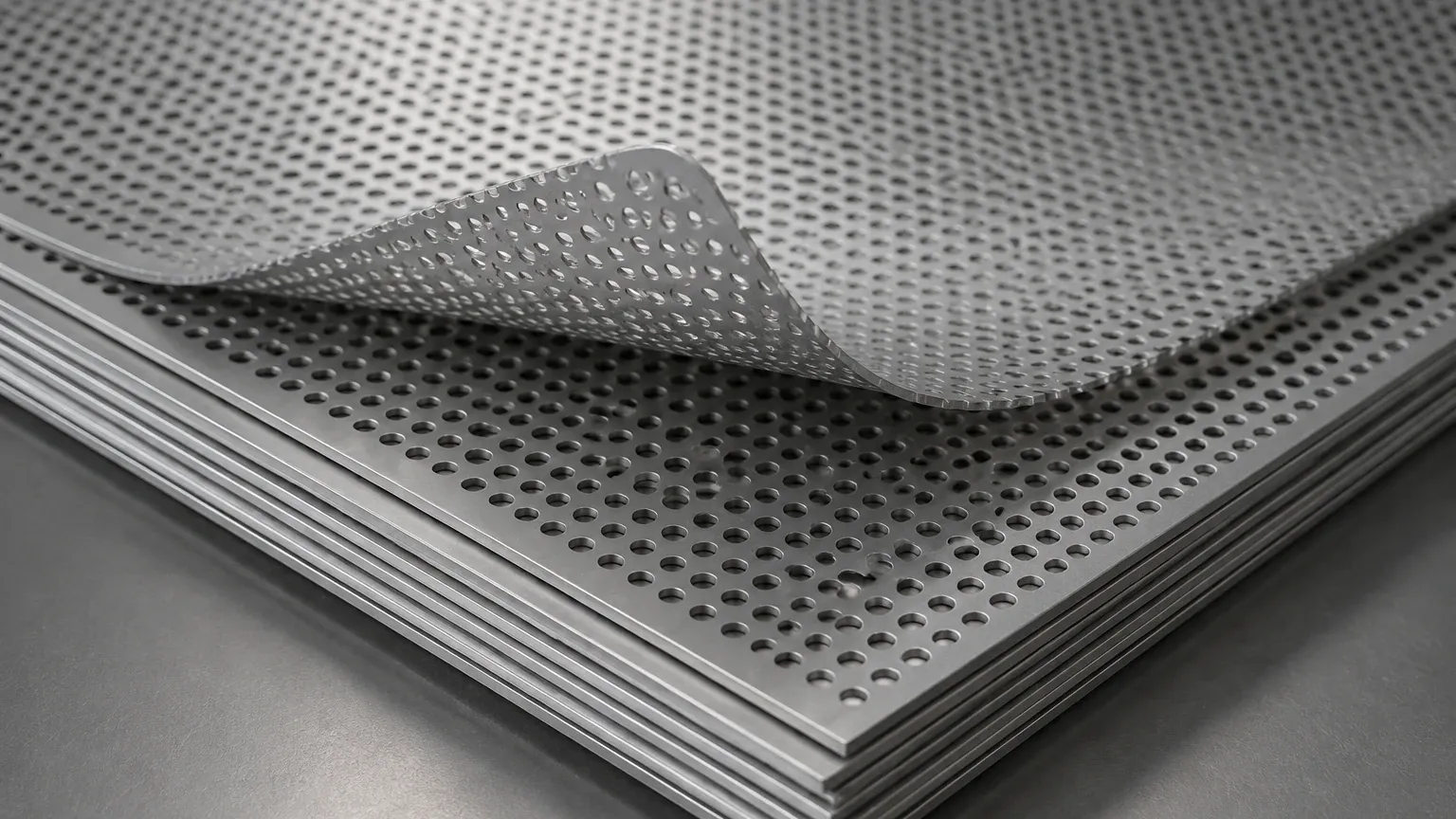
In industrial filtration and precision engineering, perforated metal 1mm specifications represent a critical threshold where mechanical strength meets fine-particle separation. Whether the 1mm measurement refers to the aperture diameter or the sheet thickness, these components are foundational in sectors ranging from chemical processing to food production. Selecting the correct Perforated & Expanded Metal requires a deep understanding of material properties, hole patterns, and the fluid dynamics associated with small-scale apertures.
For engineers and procurement specialists, the transition to 1mm perforated metal often marks a move away from general-purpose screening toward high-precision industrial applications. This guide examines the technical nuances of 1mm perforated metal, focusing on its role in filtration systems, structural support, and custom industrial components.
Technical Specifications and Geometry of 1mm Perforations
When specifying perforated metal 1mm, the primary technical consideration is the geometry of the holes and their arrangement. For a 1mm hole diameter, the most common configuration is a 60-degree staggered pattern. This arrangement is preferred in industrial environments because it provides the highest open area and structural uniformity.
Open Area Calculations
The open area percentage is a vital metric for determining flow rates and pressure drops. For a standard 1mm round hole with a 2mm pitch (the distance from the center of one hole to the center of the next), the open area is approximately 22.6%. Increasing the pitch to 2.5mm reduces the open area to roughly 14.5%. Engineers must balance the need for a high flow rate with the requirement for sheet rigidity; a higher open area typically results in a less rigid sheet, which may require additional support structures in high-pressure hydraulic or gas filtration systems.
Hole Patterns
While round holes are the industry standard for 1mm specifications due to their ease of manufacturing and structural integrity, other patterns are available for specialized applications:
* Square Holes: Offer a higher open area but are more prone to structural failure under high stress.
* Slotted Holes: Useful for filtering elongated particles or fibers, often used in the pulp and paper or textile industries.
* Hexagonal Patterns: Provide a maximum open area for airflow and heat dissipation, though they are more complex to punch at a 1mm scale.
Material Selection for 1mm Perforated Components
The performance of perforated metal 1mm is heavily dependent on the alloy selected. In industrial filtration, stainless steel is the predominant choice due to its mechanical properties and resistance to environmental degradation.
Stainless Steel 304 vs. 316L
* Grade 304: This is the standard industrial grade, offering excellent formability and resistance to atmospheric corrosion. It is suitable for food and beverage applications where high-temperature sterilization is required but where chloride exposure is minimal.
* Grade 316L: For chemical processing, pharmaceutical manufacturing, or marine environments, 316L is the preferred choice. The addition of molybdenum provides superior resistance to pitting and crevice corrosion in chloride-rich environments. The "L" (low carbon) designation ensures better weldability, which is essential when the perforated sheet is formed into filter cartridges or cylinders.
Special Alloys and Coatings
In specific high-temperature or highly corrosive environments, alloys such as Monel, Inconel, or Hastelloy may be used. Additionally, for 1mm perforated metal used in architectural or protective roles, surface treatments like powder coating or anodizing (for aluminum) can be applied, although these are less common in core industrial filtration components where material purity is paramount.
Engineering Considerations: Pressure Drop and Filtration Efficiency
Integrating perforated metal 1mm into a filtration system requires an analysis of how the media will interact with the process fluid. Because a 1mm aperture is relatively small, it can significantly influence the system's total head loss.
Fluid Dynamics
As fluid passes through 1mm holes, the velocity increases at the aperture, creating potential turbulence. Engineers must calculate the "face velocity" to ensure it does not exceed the limits that could cause media migration or damage to sensitive downstream components. In liquid filtration, 1mm perforated metal often serves as a "trash strainer" or a pre-filter, protecting finer mesh layers from large debris that could cause mechanical tearing.
Structural Support
In many high-pressure applications, a 1mm perforated sheet serves as the support core for finer wire mesh or pleated filter media. In these designs, the perforated metal provides the necessary burst strength to withstand high differential pressures (ΔP). The thickness of the sheet—often also 1mm in these cases—must be sufficient to prevent collapsing under the vacuum or pressure loads encountered during backwashing or normal operation.
Manufacturing Precision and Quality Control
Producing perforated metal 1mm requires high-precision CNC punching presses. At this scale, the ratio between the hole diameter and the sheet thickness is a critical manufacturing constraint. Generally, the hole diameter should not be smaller than the sheet thickness (a 1:1 ratio) to avoid excessive tool wear and ensure clean, burr-free perforations.
Tolerance Standards
Industrial-grade perforated metal must adhere to strict tolerances. For 1mm holes, standard tolerances usually fall within +/- 0.05mm. Deviations in hole size or pitch can lead to uneven flow distribution, which in turn causes localized clogging and premature filter failure. Quality control processes at Kaifil involve rigorous inspection of hole diameters and sheet flatness to ensure compatibility with automated assembly lines.
Burr Removal and Surface Finish
The punching process naturally creates a "die side" and a "punch side." The punch side may have slight burrs that can trap particles or cause turbulence. For pharmaceutical or food-grade applications, secondary processes such as electropolishing or mechanical deburring are employed to ensure a smooth, hygienic surface that is easy to clean and resistant to bacterial growth.
Applications of 1mm Perforated Metal in Industry
The versatility of perforated metal 1mm allows it to be used across diverse industrial sectors:
1. Food and Beverage: Used in centrifugal screens for sugar processing, grain drying, and as support structures in beverage carbonation systems.
2. Chemical Processing: Acts as a catalyst support grid in reactors or as a primary filter in chemical strainers.
3. Water Treatment: Serves as the intake screen for water filtration plants, preventing small stones and organic debris from entering sensitive pump systems.
4. Acoustics and Ventilation: In industrial machinery, 1mm perforated sheets are used for sound attenuation and as protective guards that allow for heat dissipation while preventing the ingress of small objects.
5. Pharmaceuticals: Used in fluid bed dryers and as sizing screens for granulated medications, where precise aperture control is necessary for product uniformity.
Customization and Secondary Fabrication
Rarely is perforated metal 1mm used as a flat sheet in its final application. Most industrial use cases require secondary fabrication to integrate the material into a larger system.
Forming and Welding
Perforated sheets can be rolled into cylinders or formed into cones. When working with 1mm perforations, precision welding (such as TIG or plasma welding) is required to ensure the seam does not obstruct the filtration area or introduce weak points. For filter cartridges, the perforated metal is often welded to solid end caps or flanges.
Margin Specifications
Engineers must specify "margins"—the unperforated areas along the edges of the sheet. Proper margins are essential for welding and mounting. A "finished end" means the pattern is complete to the edge, whereas "unperforated margins" provide a solid metal border for easier handling and structural integration.
Procurement Guide: What to Confirm Before Ordering
To ensure the successful procurement of perforated metal 1mm, purchasing teams and engineers should confirm the following technical details with their manufacturer:
* Hole Diameter and Shape: Confirm 1mm round, square, or custom shape.
* Pitch and Pattern: Specify staggered (60° or 45°) or straight rows.
* Sheet Thickness: Ensure the thickness is compatible with the 1mm hole size (ideally 1mm or less for standard punching).
* Material Grade: Specify 304, 316L, or other specialty alloys based on the chemical environment.
* Dimensions and Margins: Provide exact sheet or coil dimensions and the width of required solid margins.
* Flatness Requirements: High-speed automated assembly often requires stricter flatness tolerances than standard industrial sheets.
* Secondary Processing: Indicate if the material needs to be degreased, deburred, annealed, or formed into specific shapes like Perforated & Expanded Metal cylinders.
By addressing these factors, industrial operators can ensure that their perforated metal components provide the durability and filtration accuracy required for demanding applications. Kaifil’s expertise in custom stainless steel fabrication ensures that each 1mm perforated component is engineered to meet specific performance benchmarks, reducing the total cost of ownership through extended service life and optimized flow efficiency.
