


Perforated Metal 3d Model
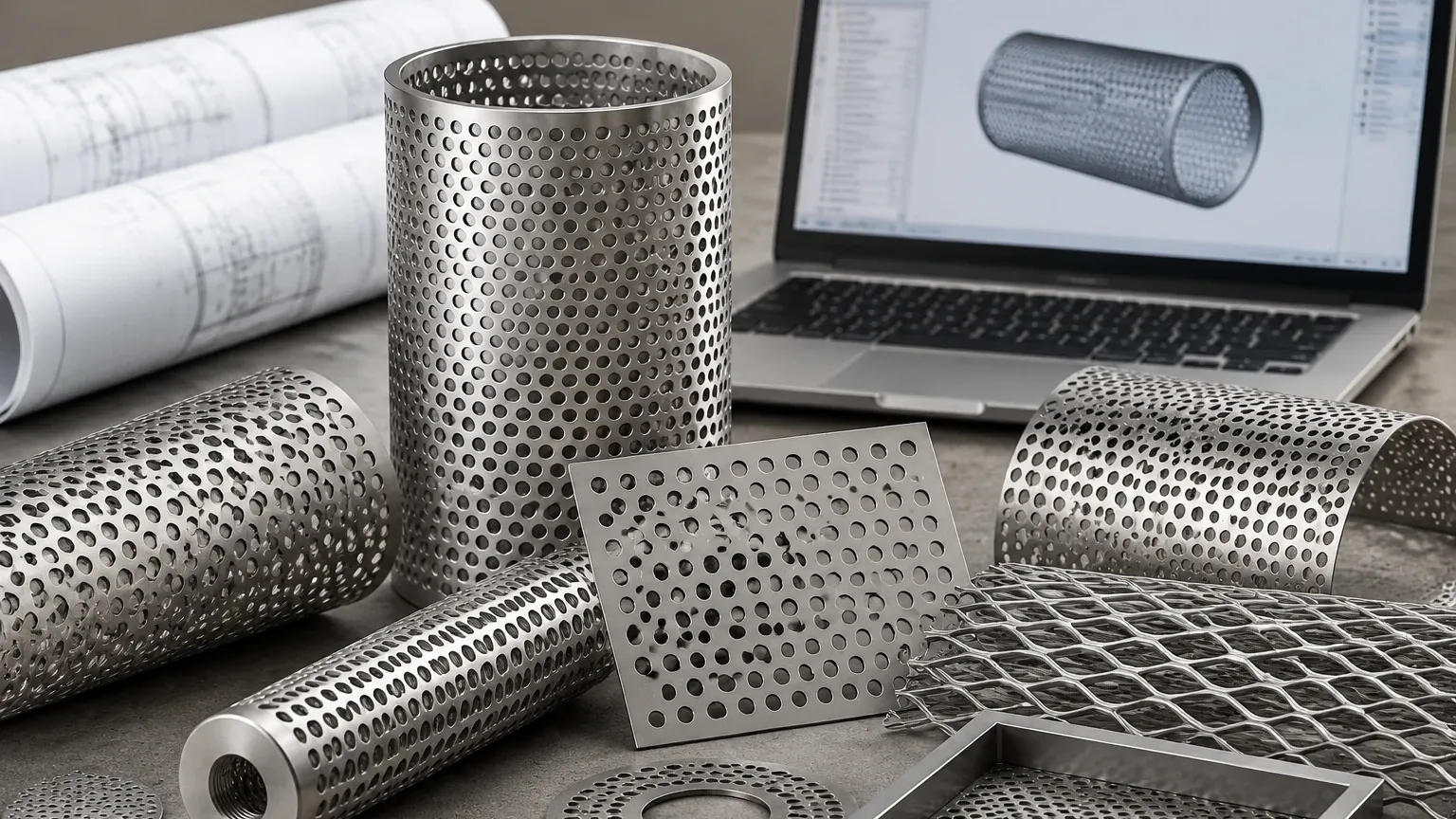
In the realm of industrial filtration and structural engineering, the transition from a conceptual design to a functional component requires high-precision digital prototyping. A perforated metal 3d model serves as the foundational blueprint for engineers and designers working across chemical processing, pharmaceutical manufacturing, and hydraulic systems. These digital representations are not merely visual aids; they are critical tools for calculating flow rates, assessing structural integrity, and ensuring that custom-fabricated components fit perfectly within complex industrial assemblies.
At Kaifil, we understand that the accuracy of a digital model directly impacts the performance of the final product. Whether you are designing a high-pressure filter cartridge or a protective screen for heavy machinery, understanding the technical nuances of Perforated & Expanded Metal in a 3D environment is essential for optimizing filtration efficiency and operational longevity.
The Significance of 3D Modeling in Filtration Engineering
Modern industrial engineering relies heavily on Computer-Aided Design (CAD) to streamline the manufacturing process. A perforated metal 3d model allows engineering teams to simulate how a specific material will behave under real-world conditions before a single sheet of stainless steel is punched or expanded.
Digital Prototyping and Fitment
In complex systems like hydraulic power units or large-scale water treatment plants, space is often at a premium. Using a precise 3D model ensures that the filtration component—whether it is a cylindrical perforated basket or a flat expanded metal panel—integrates seamlessly with housings, gaskets, and piping. This prevents costly design revisions during the installation phase.
Computational Fluid Dynamics (CFD)
For filtration applications, the most critical use of a 3D model is for fluid flow simulation. Engineers use these models to predict pressure drops across the filter media. By adjusting hole sizes, shapes, and pitch within the digital model, they can determine the optimal balance between filtration accuracy and flow capacity. A well-constructed model accounts for the "open area" percentage, which is a primary driver of performance in liquid and gas separation.
Technical Parameters for Perforated & Expanded Metal
When developing or selecting a perforated metal 3d model, several technical specifications must be accurately represented to reflect the physical reality of the product. These parameters define the mechanical properties and filtration capabilities of the material.
Hole Patterns and Geometry
The geometry of the perforations determines the media's functionality. Common patterns include:
* Round Holes: The most versatile and common pattern, offering a balance of strength and open area. In 3D modeling, these are typically arranged in a 60-degree staggered pattern to maximize structural rigidity.
* Square Holes: Often used when a larger open area is required, though they may offer less structural strength than round holes under high-pressure conditions.
* Slotted Holes: Ideal for vibrating screens and specialized filtration where elongated particles must be separated.
* Expanded Metal Diamonds: Unlike perforated metal, expanded metal is created by slitting and stretching the material, resulting in a diamond-shaped aperture. Modeling this requires accounting for the "strand width" and "bond," which influence the 3D depth of the mesh.
Material Thickness and Gauge
The thickness of the metal sheet (gauge) is a vital component of the model. In industrial filtration, stainless steel (304, 316, or 316L) is the standard due to its corrosion resistance. The 3D model must reflect the exact gauge to ensure the component can withstand the differential pressure (ΔP) encountered during operation without deforming.
Computational Fluid Dynamics (CFD) and the Perforated Metal 3D Model
One of the most advanced applications of a perforated metal 3d model is within CFD software. Engineers use these simulations to visualize the velocity vectors and pressure gradients as fluid passes through the media.
Predicting Pressure Drop
In any filtration system, the pressure drop is the energy loss caused by the resistance of the filter. A high-fidelity 3D model allows for the calculation of the resistance coefficient. If the model shows an excessive pressure drop, the designer can increase the open area or change the hole pattern in the digital space, saving significant time compared to physical trial-and-error.
Turbulence and Flow Distribution
In chemical reactors and food processing lines, uniform flow distribution is essential. 3D modeling helps identify potential "dead zones" where fluid might stagnate, leading to bacterial growth or inconsistent chemical reactions. By refining the perforation layout in the model, engineers can ensure a laminar flow profile that enhances the overall efficiency of the process.
Manufacturing Realities: Translating CAD to the Factory Floor
While a perforated metal 3d model can be mathematically perfect, manufacturing involves physical tolerances and material behaviors that must be considered. Bridging the gap between the digital design and the physical product is where Kaifil’s expertise becomes invaluable.
Margin Requirements
In a digital model, it is easy to place holes right up to the edge of a sheet. However, in manufacturing, "margins" (blank areas around the edges) are often necessary for welding, forming, or structural stability. When providing a 3D model for production, engineers should specify whether they require "finished ends" (a complete pattern) or "unfinished ends" (where the pattern is sheared through the holes).
Flatness and Stress Relieving
The process of punching thousands of holes into a metal sheet introduces internal stresses, which can cause the material to curl or bow. While a 3D model appears perfectly flat, the physical manufacturing process often requires leveling or annealing to restore flatness. Engineers should confirm these requirements during the design phase to ensure the final component meets the assembly's tolerances.
Burrs and Surface Finish
For pharmaceutical and food-grade applications, the surface finish is paramount. A 3D model might not show the microscopic burrs created by the punching die, but the physical specification must include deburring, electropolishing, or pickling to ensure a smooth, cleanable surface that meets sanitary standards.
Material Selection and Durability in Industrial Environments
The choice of material for Perforated & Expanded Metal is as important as the hole pattern itself. The 3D model should be paired with a rigorous material specification based on the operating environment.
* Stainless Steel 304: Suitable for general industrial use, providing good corrosion resistance and formability.
* Stainless Steel 316/316L: The preferred choice for marine environments, chemical processing, and pharmaceutical applications due to its superior resistance to pitting and chloride corrosion.
* Specialty Alloys: For high-temperature or extremely corrosive environments, materials like Monel, Inconel, or Hastelloy may be required.
When designing a perforated metal 3d model, the density and mechanical properties of these specific alloys should be used in any structural or weight-loading simulations to ensure the model accurately predicts the behavior of the finished part.
Customization and Procurement: From Design to Delivery
Kaifil specializes in transforming complex digital designs into high-performance filtration solutions. Our OEM capabilities allow us to work closely with engineering teams to refine their perforated metal 3d model for manufacturability and cost-effectiveness.
Custom Hole Configurations
Beyond standard patterns, we can produce custom perforation layouts designed for specific acoustic, aesthetic, or filtration needs. This includes varied hole sizes on a single sheet or complex graduated patterns that help manage flow distribution in large-scale systems.
Secondary Processing
A 3D model often represents a component that requires further fabrication. Kaifil provides a full suite of secondary services, including:
* Rolling and Welding: Turning perforated sheets into filter cylinders or baskets.
* Bending and Punching: Creating mounting flanges or structural reinforcements.
* Coating and Plating: Applying protective or functional finishes to the metal surface.
What to Confirm Before Production
Before moving from a perforated metal 3d model to full-scale production, purchasing and engineering teams should confirm the following:
1. Open Area Calculation: Does the digital model's open area match the flow requirements of the system?
2. Tolerance Specifications: Are the dimensional tolerances in the CAD file achievable with standard punching or expanding equipment?
3. Material Certification: Does the physical material meet the chemical and mechanical standards (e.g., ASTM, ISO) required for the application?
4. Cleaning Requirements: For sensitive industries, what level of post-production cleaning is necessary to remove oils and particulates?
Conclusion
The use of a perforated metal 3d model is a standard practice in modern industrial design, enabling higher precision, better performance prediction, and faster development cycles. By understanding the technical relationship between the digital geometry and the physical characteristics of Perforated & Expanded Metal, engineers can develop more efficient and durable filtration systems.
Kaifil remains committed to supporting global industries with expert manufacturing and engineering guidance. Our focus on quality and customization ensures that whether you are working from a complex 3D assembly or a simple technical drawing, the resulting filtration components will meet the most demanding industrial standards. For technical support or to discuss your specific project requirements, we invite you to review our capabilities and explore how our precision metal components can optimize your filtration performance.
