


Perforated Metal 3d Texture
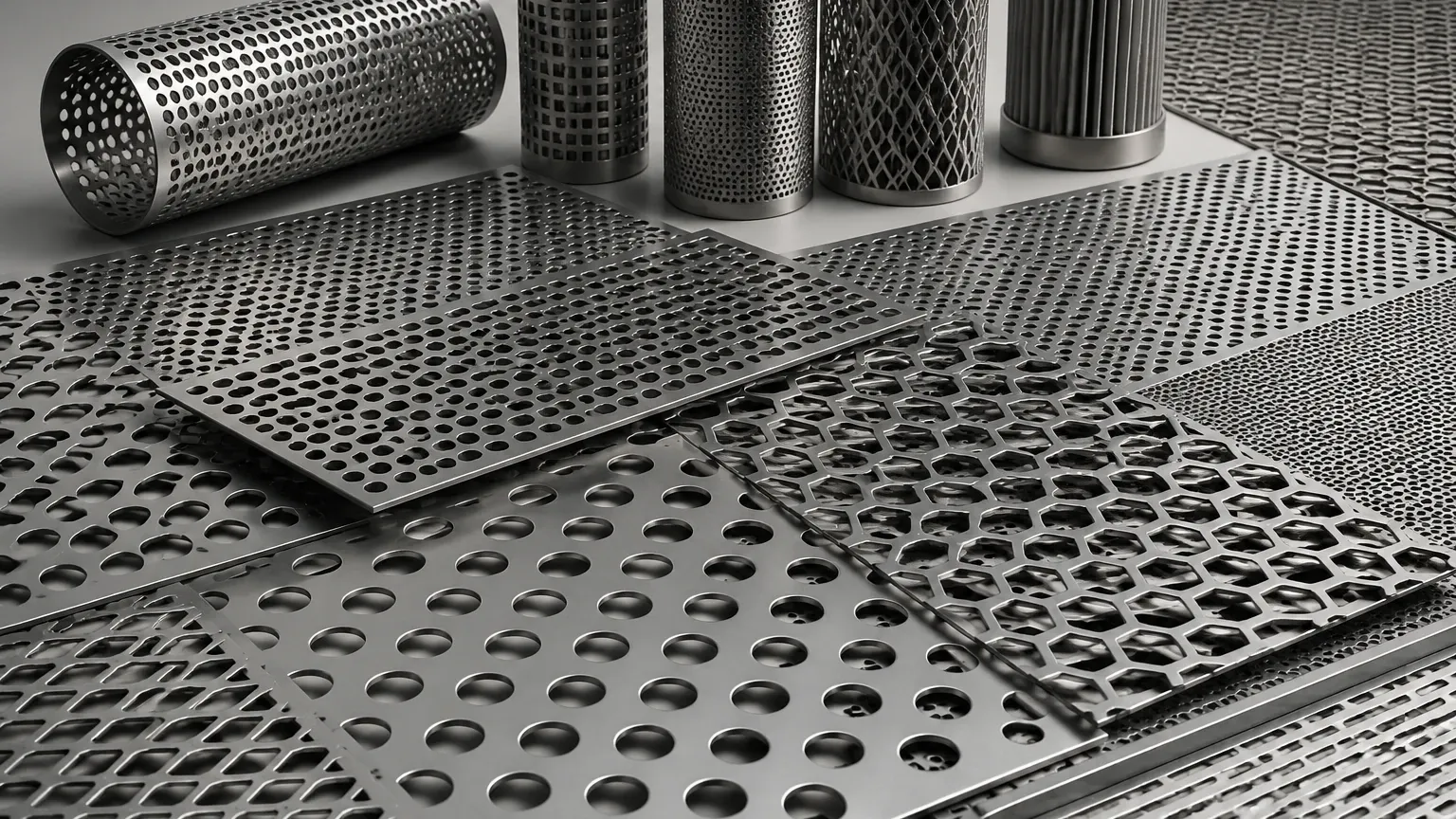
In the realm of industrial design and filtration engineering, the term "texture" extends far beyond visual aesthetics. When discussing a perforated metal 3d texture, engineers and procurement specialists are typically referring to the physical depth, surface profile, and structural topography of a metal sheet. These three-dimensional characteristics are critical in determining how a material interacts with fluids, gases, light, and mechanical stress.
For manufacturers like Kaifil, providing high-performance Perforated & Expanded Metal involves a deep understanding of how surface geometry influences filtration efficiency and structural integrity. This guide explores the technical nuances of 3D textures in perforated and expanded metals, offering actionable insights for industrial applications.
Understanding the Technical Definition of 3D Texture in Metal
In a B2B context, a perforated metal 3d texture is not merely a pattern printed on a surface; it is a functional modification of the substrate. This texture can be achieved through several mechanical processes, including specialized punching, embossing, or the inherent stretching involved in creating expanded metal.
Physical Depth and Dimensionality
Unlike standard flat-punched sheets, 3D-textured metals feature variations in height across the Z-axis. In expanded metal, this is a natural byproduct of the manufacturing process where the metal is slit and pulled, resulting in angled strands. In perforated metal, 3D effects are often achieved through secondary forming operations such as corrugation, dimpling, or the use of specialized tooling that creates raised edges around the perforations.
Functional Implications
The primary reason for specifying a 3D texture in industrial environments is to enhance performance. For example, a raised texture can increase the surface area of a filter cartridge without increasing its footprint. It can also serve to create turbulence in fluid flow, which can be beneficial in certain chemical processing heat exchange applications, or to provide non-slip surfaces in industrial flooring.
Manufacturing Processes: Perforation vs. Expansion
Choosing between perforated and expanded metal requires an understanding of how their respective manufacturing processes create different 3D profiles.
The Perforation Process and 3D Forming
Perforated metal is created by punching a series of holes into a solid metal sheet. To achieve a 3D texture, the material may undergo:
* Embossing: Raising specific sections of the metal to create a tactile pattern.
* Flanging: Creating a rim or lip around the punched hole, which adds structural rigidity and depth.
* Corrugation: Folding the perforated sheet into waves or pleats, significantly increasing the effective filtration area.
The Expansion Process
Expanded metal is manufactured by simultaneously slitting and stretching the material. This process does not remove any metal (unlike perforation), making it a highly resource-efficient option. The resulting "diamonds" are set at an angle to the original plane of the sheet. This creates a natural 3D texture that provides excellent strength-to-weight ratios and unique flow-control properties. Engineers must decide between "raised" expanded metal, which retains this 3D profile, and "flattened" expanded metal, which has been cold-rolled to return to a 2D plane.
The Role of Material Selection in Industrial Applications
The effectiveness of a perforated metal 3d texture is heavily dependent on the alloy used. Kaifil specializes in stainless steel solutions due to the material's superior performance in demanding environments.
Stainless Steel Grades (304, 316, 316L)
* Grade 304: The standard industrial choice, offering good corrosion resistance and excellent formability for 3D texturing.
* Grade 316: Contains molybdenum, providing enhanced resistance to chlorides and acids, making it ideal for marine or chemical processing environments.
* Grade 316L: The low-carbon version of 316, essential for components that require welding, as it prevents carbide precipitation and maintains corrosion resistance at the weld sites.
Durability and Mechanical Properties
When a metal sheet is textured into a 3D profile, its mechanical properties change. The process of expansion or embossing work-hardens the material, often increasing its stiffness. Engineers must account for this when calculating load-bearing capacities or when designing filter housings that must withstand high differential pressures.
Engineering Advantages of Textured Metal Surfaces
Integrating a 3D texture into metal components offers several distinct engineering advantages that flat materials cannot match.
Enhanced Filtration and Surface Area
In filtration applications, a 3D texture—particularly through pleating or corrugation—dramatically increases the "active" area of the filter. This allows for higher flow rates and a greater dirt-holding capacity. For precision metal filter components, this means longer service intervals and lower total cost of ownership.
Improved Flow Dynamics and Turbulence
In heat exchangers or chemical reactors, a perforated metal 3d texture can be used to disrupt laminar flow. By inducing controlled turbulence, the texture ensures better mixing of fluids and more efficient heat transfer. The angle of the strands in expanded metal can also be used to deflect or direct flow in a specific direction.
Structural Rigidity and Weight Reduction
A 3D-textured sheet is inherently more rigid than a flat sheet of the same gauge. This allows engineers to specify thinner, lighter materials while maintaining the necessary structural integrity. This is particularly valuable in the aerospace and automotive sectors, where weight reduction is a primary KPI.
Acoustic and Light Diffusion
Beyond fluid dynamics, 3D textures are utilized for sound attenuation and light diffusion. The multifaceted surfaces of expanded metal can break up sound waves or scatter light, making them useful in industrial HVAC silencers or architectural shielding where both airflow and privacy are required.
Selection Criteria for Industrial Filtration and Support
When selecting a Perforated & Expanded Metal solution with a specific 3D texture, engineers should evaluate the following criteria:
1. Open Area Percentage: This is the ratio of the holes to the total area of the sheet. It determines the flow rate and pressure drop. For 3D textures, the "effective" open area may change depending on the angle of approach of the fluid.
2. Aperture Size and Shape: Whether round, square, hexagonal, or diamond-shaped, the aperture must be sized according to the particles being filtered. In 3D textures, the depth of the aperture can also influence particle retention.
3. Pitch and Orientation: The distance between holes (pitch) and their orientation (staggered vs. straight) affects both the strength of the sheet and the uniformity of the flow.
4. Strand Width and Thickness (for Expanded Metal): These dimensions dictate the robustness of the 3D profile and its ability to withstand mechanical impact or high-pressure cleaning cycles.
Customization and OEM Capabilities for Precision Components
Industrial filtration often requires bespoke solutions that off-the-shelf products cannot satisfy. Customizing a perforated metal 3d texture involves close collaboration between the design engineer and the manufacturer.
Tooling and Precision Manufacturing
Advanced CNC punching and expansion machinery allow for the creation of highly specific textures. OEM providers like Kaifil can adjust the height of raised features, the angle of expanded strands, and the precision of the aperture to meet exacting micron ratings. This level of customization ensures that the filtration component integrates perfectly with the existing system architecture.
Prototyping and Performance Validation
Before full-scale production, it is standard practice to produce prototypes. These samples allow engineers to test the 3D texture's performance in real-world conditions, verifying pressure drop calculations and particle capture efficiency. This phase is crucial for identifying potential issues such as "blinding" (clogging) or structural fatigue under cyclic loading.
Maintenance, Cleaning, and Replacement Cycles
The longevity of a textured metal filter depends on its environment and the maintenance protocols in place. While 3D textures provide more surface area, they can also be more challenging to clean than flat surfaces if the wrong methods are used.
Cleaning Methods
* Backwashing: Effective for removing surface cakes from corrugated or expanded metal filters.
* Ultrasonic Cleaning: High-frequency sound waves can penetrate the crevices of a 3D texture, removing fine particulates that manual scrubbing cannot reach.
* Chemical Cleaning: Stainless steel's resistance to harsh chemicals allows for the use of solvents or acids to dissolve stubborn contaminants without damaging the 3D profile.
Monitoring Performance
Engineers should monitor the differential pressure across the textured metal component. A steady increase in pressure indicates that the texture is reaching its dirt-holding capacity and requires cleaning or replacement. Because 3D-textured metals are often more durable, they typically offer a longer service life than synthetic alternatives, contributing to a more sustainable industrial operation.
Conclusion: The Strategic Value of 3D Texture
Specifying a perforated metal 3d texture is a strategic decision that impacts the efficiency, durability, and cost-effectiveness of industrial systems. Whether it is the natural 3D profile of expanded metal or the engineered depth of a corrugated perforated sheet, these materials provide solutions that flat surfaces simply cannot.
By focusing on material grade, manufacturing precision, and application-specific geometry, engineers can leverage these textures to optimize filtration performance and structural integrity. For those seeking reliable, high-performance filtration components, understanding the intersection of material science and 3D geometry is the key to successful system design.
