


Perforated Metal Australia
In the landscape of industrial manufacturing and infrastructure, the demand for high-performance materials that balance structural integrity with functional permeability is constant. For engineers and procurement specialists sourcing perforated metal Australia, understanding the technical nuances between different manufacturing processes, material grades, and application-specific designs is critical to ensuring long-term operational efficiency.
As a specialized manufacturer of stainless steel filtration and precision metal components, Kaifil provides a comprehensive range of Perforated & Expanded Metal solutions designed to meet the rigorous standards of various industrial sectors. This guide explores the engineering considerations, material selection criteria, and technical specifications necessary for selecting the right metal components for demanding environments.
Understanding Perforated and Expanded Metal Engineering
While often grouped together, perforated and expanded metals are produced through distinct manufacturing processes that result in different mechanical properties and performance characteristics. Choosing between them requires a clear understanding of the intended application’s physical requirements.
Perforated Metal
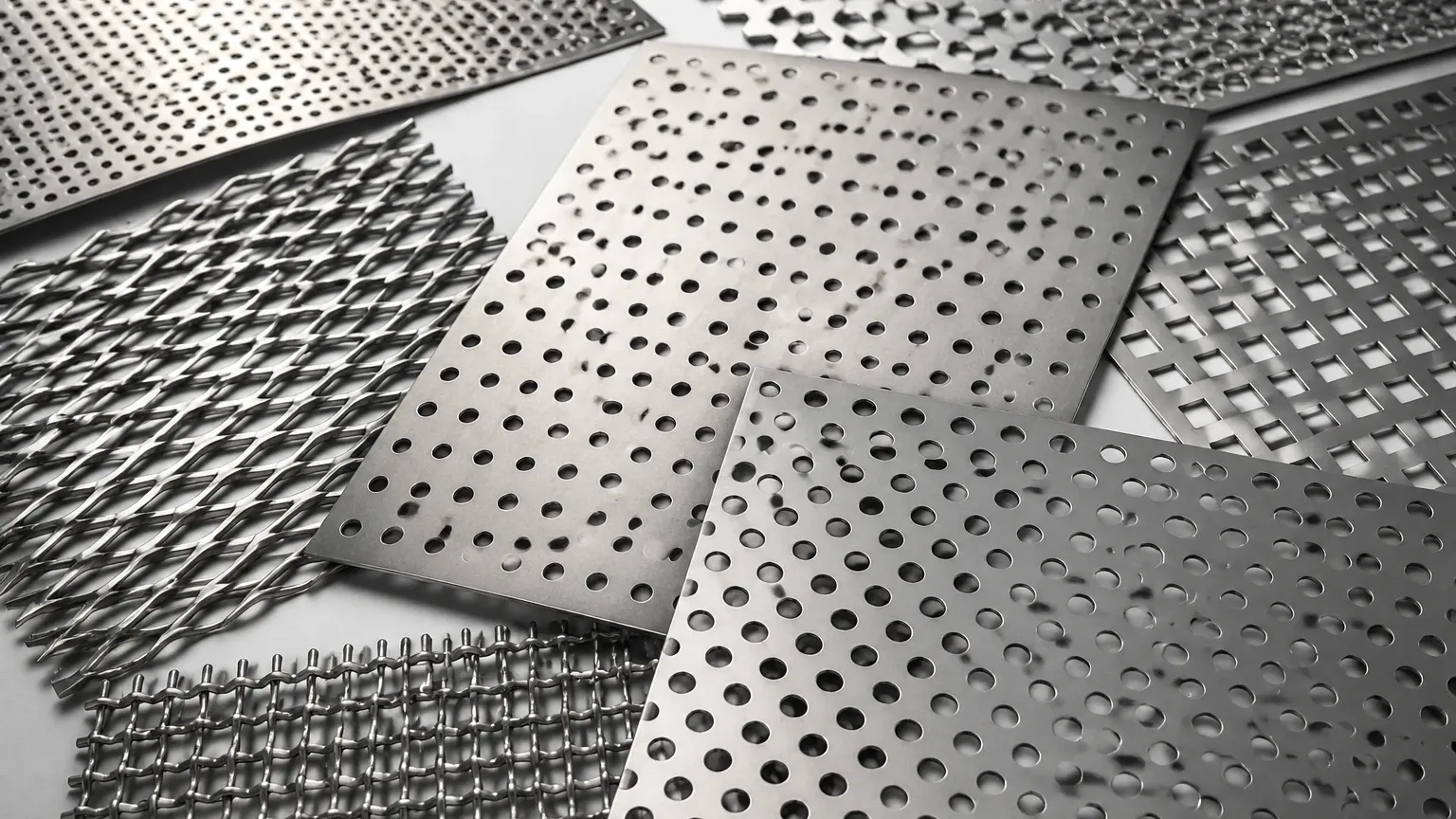
Perforated metal is created through a punching process where a series of holes are mechanically or laser-cut into a solid sheet. This method allows for extreme precision in hole size, shape, and distribution. Engineers can specify exact open area percentages, which is vital for applications requiring precise flow control or specific filtration ratings. The punching process leaves a "border" of solid material around the edges of the sheet if required, which enhances structural stability and simplifies installation into frames or housings.
Expanded Metal
In contrast, expanded metal is produced by simultaneously slitting and stretching a solid metal sheet. This process creates a diamond-shaped mesh pattern without any material waste. Because the metal is stretched rather than punched, the resulting mesh is often lighter per square meter than perforated metal of the same thickness, yet it retains significant structural strength. The "strands" and "bonds" of expanded metal are set at a sharp angle to the plane of the sheet, which can be advantageous for providing grip (in walkways) or diffusing light and sound.
Material Selection: Why Stainless Steel Dominates Industrial Applications
For industrial projects involving perforated metal Australia, material selection is perhaps the most significant factor in determining the lifespan of the component. Australia’s diverse climate—ranging from highly corrosive coastal environments to arid, dust-heavy mining regions—demands materials that can withstand chemical exposure, oxidation, and mechanical wear.
Stainless Steel Grade 304
Grade 304 is the most common stainless steel used in perforated applications. It offers excellent formability and weldability, making it ideal for custom-fabricated filter cartridges and machine guards. While it provides good corrosion resistance in most indoor and mild outdoor environments, it may be susceptible to pitting in high-chloride or marine settings.
Stainless Steel Grade 316 and 316L
For the chemical processing, pharmaceutical, and marine industries, Grade 316 is the standard. The addition of molybdenum enhances its resistance to chloride-induced corrosion and pitting. In applications involving welding, Grade 316L (low carbon) is preferred to prevent carbide precipitation and ensure the integrity of the filtration system or structural component.
Specialized Alloys
In high-temperature environments, such as exhaust systems or industrial kilns, grades like 310S or duplex stainless steels may be required. These materials maintain their mechanical strength and oxidation resistance at temperatures where standard grades would fail.
Technical Specifications and Performance Metrics
When specifying perforated metal for industrial use, engineers must define several key metrics to ensure the component performs as expected. These specifications directly impact flow rates, pressure drops, and structural load-bearing capacity.
Hole Patterns and Pitch
* Round Holes: The most common and versatile pattern, offering a balance of strength and open area. They are typically arranged in a 60-degree staggered pattern, which provides the highest structural integrity.
* Square Holes: Used primarily when a higher open area is required for airflow or visibility, though they offer less structural strength than round holes.
* Slotted Holes: Ideal for sorting and grading applications in the agricultural and mining sectors, where elongated materials must be filtered or separated.
Calculating Open Area
The open area percentage is the ratio of the total area of the holes to the total area of the sheet. This is a critical calculation for filtration and ventilation. For a 60-degree staggered round hole pattern, the formula is:
Open Area % = (D² x 90.69) / P²
*(Where D is the hole diameter and P is the pitch/center-to-center distance)*
Accurate open area calculations allow engineers to predict the pressure drop across a filter or the cooling efficiency of an equipment enclosure.
Industrial Applications Across Australia
The versatility of Perforated & Expanded Metal makes it indispensable across several key Australian industries. Each sector has unique requirements for filtration accuracy and durability.
Mining and Mineral Processing
In the Australian mining sector, perforated metal is used extensively in vibrating screens, trommels, and centrifugal liners. These components must withstand extreme abrasion and heavy loads. Stainless steel perforated sheets are often preferred over synthetic alternatives due to their ability to maintain precise aperture sizes under mechanical stress.
Food and Beverage Production
Hygiene and cleanability are paramount in food processing. Stainless steel perforated components are used for grain drying, fruit juice filtration, and brewery lauter tun screens. The smooth surface finish of high-quality stainless steel prevents bacterial growth and allows for effective Clean-in-Place (CIP) cycles.
Water Treatment and Desalination
Given Australia’s reliance on water management, perforated metal plays a vital role in intake screens and pre-filtration systems for desalination plants and municipal water treatment facilities. Grade 316 stainless steel is typically mandated here to resist the corrosive effects of seawater and treatment chemicals.
Architectural and Acoustic Solutions
Beyond industrial filtration, perforated metal is used in Australian architecture for sun shading, facade cladding, and acoustic dampening. By varying the hole size and spacing, architects can control light transmission and airflow while providing a modern aesthetic.
Customization Options for Precision Filtration
Standard off-the-shelf perforated sheets rarely meet the specific needs of complex industrial systems. Customization is often necessary to integrate the material into existing machinery or to achieve a specific filtration rating. Kaifil specializes in providing OEM solutions that go beyond simple sheet production.
Precision Fabrication
Customization includes more than just hole patterns. It involves secondary processes such as:
* Leveling: Ensuring the sheet is perfectly flat after the stress of the punching process.
* Shearing and Notching: Cutting the sheets to exact dimensions for seamless integration.
* Rolling and Welding: Forming perforated sheets into cylinders or cones for use as filter cartridges or strainers.
* Surface Finishing: Options such as electropolishing or passivating to enhance corrosion resistance and aesthetic appeal.
Engineering Collaboration
Working with a manufacturer that understands filtration dynamics allows engineering teams to optimize their designs. For instance, varying the pitch of the perforations can provide extra strength in high-pressure zones of a filter while maintaining high flow rates elsewhere.
Maintenance, Durability, and Total Cost of Ownership
When evaluating perforated metal Australia, it is essential to look beyond the initial purchase price and consider the total cost of ownership (TCO). High-quality stainless steel components may have a higher upfront cost but offer significantly lower maintenance requirements and longer replacement cycles.
Preventing Clogging and Blinding
In filtration applications, "blinding" occurs when particles become trapped in the openings, reducing flow. Selecting the correct hole geometry (such as tapered holes) can mitigate this issue. Regular inspection and appropriate cleaning protocols—such as ultrasonic cleaning or high-pressure backwashing—are necessary to maintain performance.
Structural Integrity Over Time
In high-vibration environments, such as mining screens, fatigue failure is a risk. Specifying the correct thickness and material grade ensures that the perforated metal can withstand cyclic loading without cracking. Engineers should also consider the orientation of the perforations relative to the direction of stress to maximize the lifespan of the component.
Conclusion: Selecting the Right Partner
Sourcing perforated and expanded metal for industrial applications requires a partner that combines manufacturing capability with deep technical expertise. Whether the application involves fine chemical filtration, heavy-duty mining screens, or architectural facades, the choice of material and design has a direct impact on the success of the project.
Kaifil’s commitment to quality and precision ensures that our Perforated & Expanded Metal products meet the most demanding specifications. By focusing on stainless steel excellence and customized OEM solutions, we help engineers and purchasing teams across Australia and the globe achieve reliable, high-performance filtration and structural outcomes.
When planning your next project, confirm your requirements for filtration accuracy, material grade, and environmental conditions. Reviewing these factors early in the design phase will prevent costly downtime and ensure that your filtration systems operate at peak efficiency for years to come.
