


Perforated Metal Background
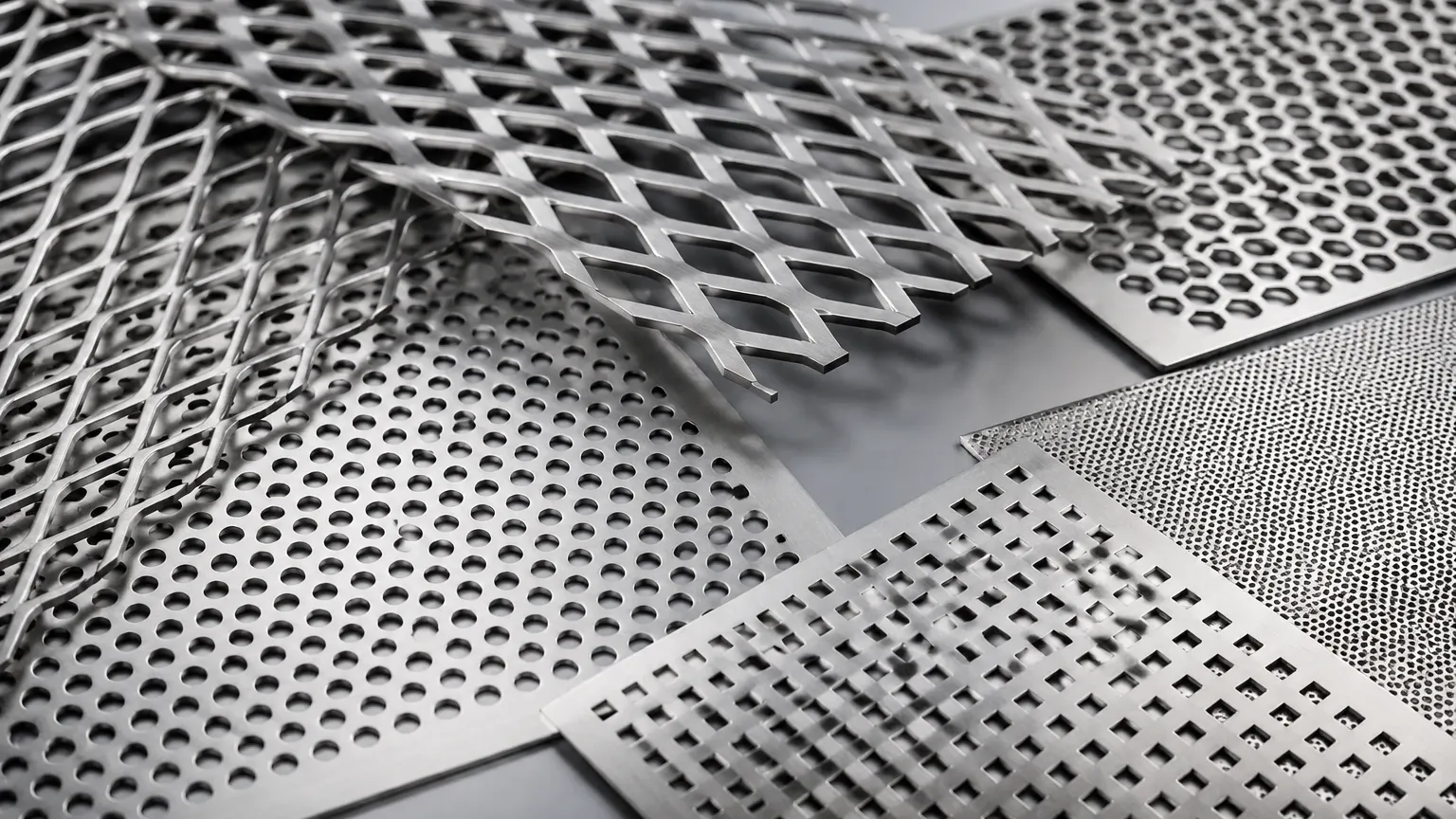
In industrial engineering and filtration design, the term "perforated metal background" refers to more than just an aesthetic choice. It represents the structural and functional foundation of many high-performance filtration systems. Perforated metal is a sheet or coil of material—most commonly stainless steel—that has been mechanically stamped, punched, or laser-cut to create a specific pattern of holes, slots, or decorative shapes. For engineers and procurement specialists, understanding the technical background of these materials is essential for ensuring system longevity, flow efficiency, and structural integrity.
At its core, perforated metal serves as a versatile medium that balances open area for fluid or gas passage with the mechanical strength required to withstand industrial pressures. Whether utilized as a primary filter, a protective screen, or a support structure for finer wire mesh, the selection of the correct perforated metal background is a critical step in the design of chemical processing, pharmaceutical, and food-grade equipment.
The Technical Foundation of Perforated Metal Backgrounds
To evaluate a perforated metal background for industrial use, one must first understand the mechanical properties imparted during the manufacturing process. Unlike expanded metal, which is slit and stretched to create a diamond pattern without material waste, perforated metal is created by removing material. This allows for a higher degree of precision in hole placement and size, which is vital for applications requiring specific flow rates or particle retention.
Structural Integrity and Load Bearing
The "background" or substrate of a filtration assembly often bears the brunt of hydraulic or pneumatic pressure. When a fine wire mesh is used for precision filtration, it lacks the inherent stiffness to resist deformation under high flow velocities. In these instances, a heavy-gauge perforated metal cylinder or plate acts as the structural backbone. The thickness of the sheet, the alloy used, and the hole pattern all contribute to the moment of inertia and the overall yield strength of the component.
Precision and Tolerances
Industrial applications demand tight tolerances. A perforated metal background must maintain consistent hole diameters and center-to-center distances (pitch) to ensure uniform flow distribution. Variations in the punching process can lead to "blind spots" or areas of high stress, which may eventually lead to fatigue failure. Modern CNC punching and laser technology allow manufacturers to produce components with minimal dimensional deviation, ensuring that the Perforated & Expanded Metal components fit perfectly within larger housings or assemblies.
Material Properties and Selection Criteria
The environment in which a perforated metal background operates dictates the material selection. In the B2B sector, where durability and hygiene are paramount, stainless steel remains the industry standard.
Stainless Steel Grades
1. Grade 304: The most common choice for general industrial applications. It offers excellent formability and weldability with reasonable corrosion resistance. It is often used in food processing and architectural backgrounds where exposure to harsh chemicals is limited.
2. Grade 316/316L: Containing molybdenum, these grades offer superior resistance to chlorides and acids. This makes them the preferred choice for chemical processing, marine environments, and pharmaceutical filtration where rigorous cleaning protocols (CIP/SIP) are standard.
3. Specialty Alloys: For extreme environments, materials like Monel, Inconel, or Hastelloy may be used to provide resistance to high temperatures or highly oxidizing fluids.
Surface Finishes and Treatments
The background surface of the metal can be treated to enhance performance. Electropolishing is frequently used in the pharmaceutical and food industries to remove surface imperfections and create a microscopically smooth finish. This reduces the risk of bacterial growth and makes the filter easier to clean. Other treatments, such as pickling and passivation, are essential to restore the protective oxide layer after the punching or welding process, preventing localized pitting corrosion.
Mechanical Specifications: Hole Patterns and Open Area
The functionality of a perforated metal background is largely defined by its geometric configuration. Engineers must calculate the "open area percentage" to predict pressure drop and flow capacity.
Common Hole Patterns
* Round Holes (Staggered): The 60-degree staggered pattern is the most popular due to its inherent strength and high open area. It provides a uniform distribution of stress across the sheet.
* Round Holes (Straight): Used when specific alignment is required, though this pattern offers lower structural strength than staggered configurations.
* Square and Slotted Holes: These are often selected for specific screening applications or when a higher open area is required for high-viscosity fluids.
Calculating Open Area
The open area is the ratio of the total area of the holes to the total area of the sheet. For a standard 60-degree staggered round hole pattern, the formula is:
Open Area % = (D² × 90.69) / P²
Where *D* is the hole diameter and *P* is the pitch (center-to-center distance).
Selecting the right open area is a trade-off. A higher open area reduces pressure drop but decreases the mechanical strength of the perforated metal background. Conversely, a low open area provides a robust support structure but may lead to excessive energy consumption due to restricted flow.
Integrating Perforated Metal in Filtration Assemblies
In many industrial settings, the perforated metal background is one component of a multi-layer filtration solution. Understanding how it interacts with other elements is key to optimizing performance.
Support for Wire Mesh
In high-pressure hydraulic or water treatment systems, fine stainless steel wire mesh is often sintered or mechanically wrapped around a perforated core. The perforated core provides the necessary burst strength, while the mesh provides the micron-rated filtration. This combination allows for precise filtration without the risk of the mesh collapsing under the force of the fluid.
Pre-Filtration and Debris Removal
Before a fluid reaches a sensitive secondary filter or a downstream pump, a perforated metal background can act as a coarse pre-filter. By capturing large particulates, it protects more expensive components from mechanical damage and prevents premature clogging. This staged approach to filtration extends the overall service life of the system and reduces maintenance frequency.
Flow Diffusion
In chemical reactors or gas processing units, perforated plates are often used as flow diffusers. The background pattern breaks up high-velocity streams, ensuring that the fluid or gas is distributed evenly across the entire surface of a catalyst bed or a secondary filter media. This prevents "channeling," where the fluid takes the path of least resistance, leading to inefficient processing.
Customization and Manufacturing Precision
Every industrial application has unique requirements, making customization a vital aspect of the perforated metal background. Standard off-the-shelf sheets rarely meet the specific needs of complex engineering projects.
Custom Hole Geometries
While round holes are standard, custom applications may require micro-perforations or specific slot shapes to handle non-spherical particles. Advanced CNC equipment allows for the creation of complex patterns that can be tailored to the specific rheology of the fluid being processed.
Forming and Fabrication
A perforated metal background is rarely used as a flat sheet in filtration. It must be rolled into cylinders, formed into cones, or welded into pleated structures. The weldability of the material is therefore a critical factor. Using low-carbon versions of stainless steel (like 316L) helps prevent carbide precipitation during welding, ensuring that the joints remain as corrosion-resistant as the base metal.
Edge Configurations
Engineers must specify "margins"—the unperforated areas along the edges of the sheet. Proper margins are necessary for welding the perforated background into a housing or for providing a solid surface for gaskets and seals. Without specified margins, the structural integrity of the welded joint may be compromised.
Performance Evaluation and Quality Standards
When sourcing Perforated & Expanded Metal for critical industrial backgrounds, quality assurance protocols must be strictly followed. Failure of a support structure can lead to catastrophic system failure and costly downtime.
Flatness and Stress Relieving
The punching process introduces significant internal stresses into the metal sheet, which can cause warping or "oil-canning." For precision assemblies, the perforated metal must be leveled or stress-relieved to ensure it meets flatness specifications. This is particularly important when the background is used as a mounting surface for other components.
Burr-Free Requirements
In the pharmaceutical and food industries, the presence of burrs (small metal fragments) is unacceptable. Burrs can break off and contaminate the product stream or damage delicate filter mesh layers. High-quality perforated backgrounds undergo deburring processes, such as vibratory finishing or chemical milling, to ensure all edges are smooth and safe.
Material Certification
B2B buyers should always request Mill Test Reports (MTRs) to verify the chemical composition and mechanical properties of the steel. This documentation ensures that the material meets ASTM or ISO standards and will perform as expected in corrosive or high-pressure environments.
Strategic Sourcing and Total Cost Considerations
While the initial purchase price of a perforated metal background is an important factor, technical buyers must consider the total cost of ownership (TCO). A lower-quality component may save money upfront but lead to higher costs over time due to frequent replacements, energy loss from high pressure drops, or product contamination.
Durability vs. Replacement Cycles
Investing in a higher grade of stainless steel or a thicker gauge for the perforated background can significantly extend the replacement cycle. In abrasive environments, such as mining or pulp and paper processing, the wear resistance of the background material is a primary driver of maintenance costs.
Energy Efficiency
The design of the hole pattern directly impacts the energy required to pump fluids through the system. By optimizing the open area and hole geometry, engineers can reduce the system's total pressure drop, leading to substantial energy savings over the life of the equipment.
Customization ROI
Working with a manufacturer that offers OEM and customized filtration solutions allows for the development of components that are perfectly matched to the application. Custom-designed perforated backgrounds can simplify the assembly process, reduce the number of required parts, and improve the overall efficiency of the filtration system.
In conclusion, the perforated metal background is a fundamental element in industrial design, providing the necessary balance of strength, precision, and flow characteristics. By carefully considering material grades, hole patterns, and manufacturing quality, engineers can ensure that their filtration systems operate at peak performance in even the most demanding environments.
