


Perforated Metal Edmonton
In the industrial landscape of Edmonton, where oil and gas, chemical processing, and heavy manufacturing drive the local economy, the demand for high-precision metal components is constant. Among these, perforated and expanded metals serve as critical elements in both structural and filtration applications. Whether used as a support core for high-pressure hydraulic filters or as a protective screen in a processing plant, understanding the technical nuances of Perforated & Expanded Metal is essential for engineers and procurement specialists tasked with maintaining operational efficiency.
Selecting the right material and configuration for perforated metal edmonton projects requires a deep dive into mechanical properties, filtration efficiency, and environmental resistance. This guide examines the engineering considerations, material science, and application-specific requirements that define successful industrial implementation.
The Functional Role of Perforated and Expanded Metal in Industry
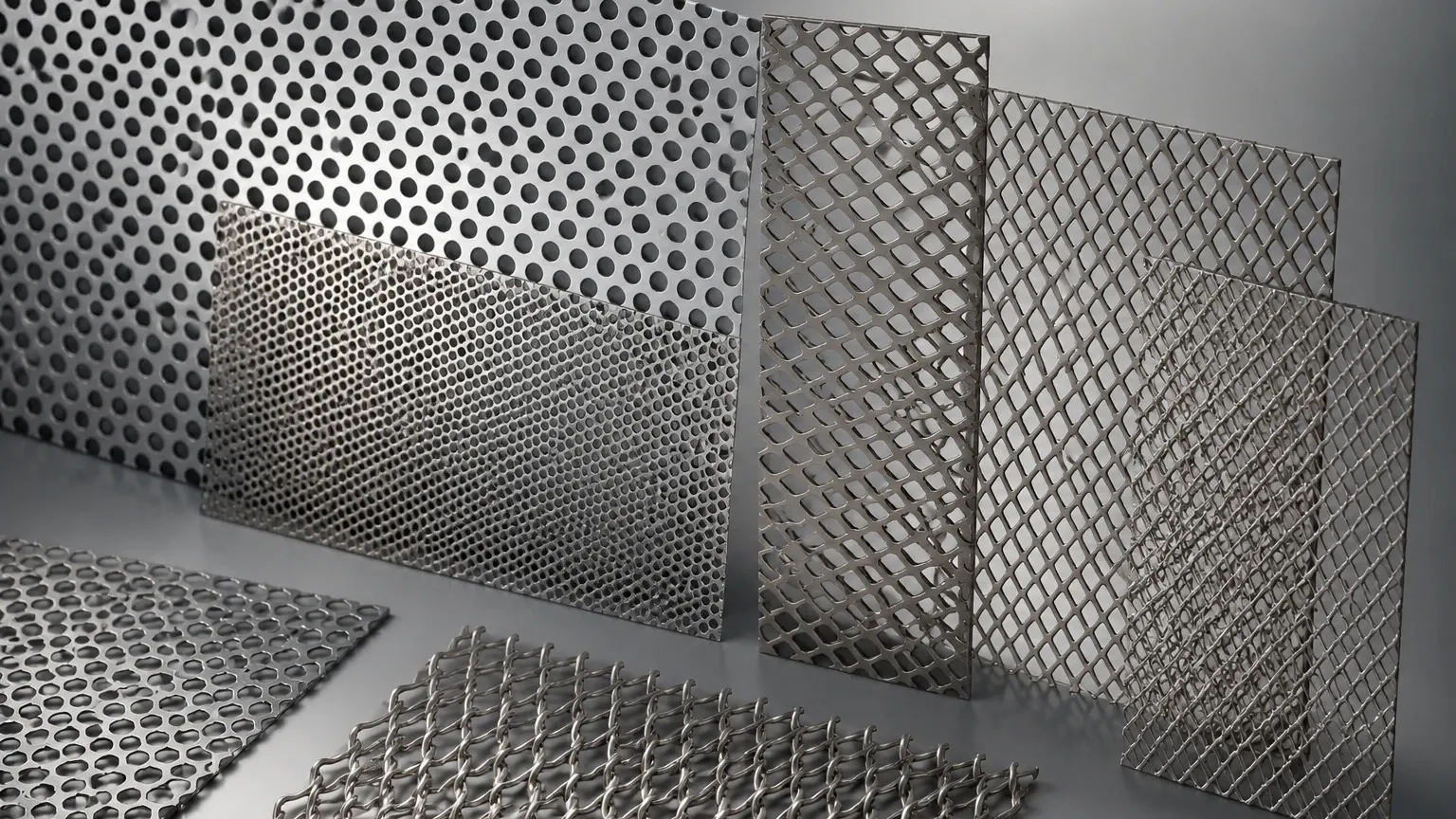
Perforated metal and expanded metal are often grouped together, yet they are manufactured through distinct processes that yield different mechanical characteristics. Perforated metal is produced by punching a series of holes into a solid sheet of metal, typically stainless steel, carbon steel, or aluminum. This process allows for extreme precision in hole size, shape, and spacing, making it ideal for applications requiring specific flow rates or particle retention.
Expanded metal, conversely, is manufactured by simultaneously slitting and stretching a metal sheet. This creates a diamond-shaped mesh pattern without any material waste. Because the metal is stretched rather than punched, the resulting mesh is often stronger per pound than the original sheet. In industrial settings, expanded metal is frequently used for walkways, safety guards, and as a reinforcement layer in composite filtration media.
For industries in Edmonton, these materials must withstand rigorous conditions, including extreme temperature fluctuations and exposure to corrosive chemicals. Consequently, the choice between perforated and expanded options often hinges on the balance between structural rigidity and the required open area percentage.
Technical Specifications and Geometry of Perforated Metal
When specifying perforated metal for industrial use, engineers must define several geometric parameters that dictate the performance of the component. The most common patterns include round holes, square holes, and slotted holes, each offering different advantages for flow dynamics and structural integrity.
Hole Patterns and Pitch
Round holes are the most versatile and cost-effective pattern. They can be arranged in a 60-degree staggered, 45-degree staggered, or straight-line configuration. The 60-degree staggered pattern is the industry standard because it provides the highest open area and the greatest structural strength. The "pitch" refers to the distance from the center of one hole to the center of the adjacent hole. Careful calculation of the pitch is necessary to ensure the material can handle the mechanical loads of the application without deforming.
Calculating Open Area
The open area percentage is a critical metric for filtration and ventilation. It determines the pressure drop across the screen and the volume of fluid or air that can pass through in a given time. For a 60-degree staggered round hole pattern, the formula for calculating the percentage of open area (PA) is:
`PA = (d² × 90.69) / p²`
Where `d` is the hole diameter and `p` is the pitch. For engineers sourcing perforated metal edmonton solutions, ensuring these calculations align with the system’s pump capacity or airflow requirements is vital to preventing equipment failure.
Understanding Expanded Metal: Manufacturing and Structural Benefits
Expanded metal offers a unique set of benefits, particularly in heavy-duty industrial environments. Because the manufacturing process involves stretching the metal, the strands and bonds are set at a sharp angle to the original plane of the sheet. This creates a "truss-like" structure that provides exceptional strength-to-weight ratios.
Standard vs. Flattened Expanded Metal
There are two primary forms of expanded metal: raised (standard) and flattened. Raised expanded metal features a textured surface that provides excellent grip, making it suitable for industrial flooring and ramps. Flattened expanded metal is produced by passing the standard expanded sheet through a cold-roll reducing mill, resulting in a smooth, flat surface. Flattened expanded metal is often preferred in filtration applications where a low-profile support structure is needed to prevent damage to delicate filter media.
Structural Integrity
Unlike woven wire mesh, expanded metal is a single piece of material with no joins or welds. This eliminates the risk of unraveling and ensures that the material maintains its shape even when cut into irregular sizes. This durability is particularly valuable in the Edmonton oil and gas sector, where components are subjected to high-vibration environments.
Material Selection: Corrosion Resistance and Mechanical Properties
The performance of perforated and expanded metal is heavily dependent on the alloy used. In industrial filtration and processing, stainless steel is the preferred material due to its longevity and resistance to oxidation.
1. Stainless Steel 304: This is the most common grade, offering good corrosion resistance and excellent formability. It is suitable for most general industrial applications, including food processing and HVAC systems.
2. Stainless Steel 316/316L: Containing molybdenum, Grade 316 provides superior resistance to chlorides and acids. This is the standard choice for chemical processing plants and marine environments where 304 might suffer from pitting corrosion.
3. Specialty Alloys: For high-temperature or highly acidic environments, alloys such as Monel, Inconel, or Hastelloy may be required. These materials maintain their mechanical properties under extreme stress, though they come at a higher cost.
When evaluating perforated metal edmonton suppliers, it is important to confirm the material certifications (MTRs) to ensure the alloy meets the specific chemical and physical requirements of the project.
Integration into Industrial Filtration Systems
Kaifil specializes in utilizing perforated and expanded metals as foundational components in high-performance filtration solutions. In many industrial filter cartridges, perforated metal serves as the inner support core or the outer protective shroud.
Support Cores
In high-pressure hydraulic or liquid filtration, the filter media (such as wire mesh or fiber felt) lacks the structural strength to withstand the differential pressure. A perforated metal core provides the necessary rigidity to prevent the media from collapsing. The hole size of the core must be large enough to minimize pressure drop but small enough to provide continuous support to the media.
Pre-Filtration and Strainers
Perforated metal is also used as a primary filtration stage. In large-scale water treatment or chemical piping, perforated baskets and strainers remove large particulates before the fluid reaches finer filtration stages. The durability of stainless steel perforated metal allows these components to be cleaned and reused multiple times, reducing the total cost of ownership compared to disposable filters.
Engineering Considerations for Custom Fabrication
Off-the-shelf perforated sheets rarely meet the exact needs of complex industrial systems. Customization is often required to ensure a perfect fit and optimal performance. Key considerations during the design phase include:
* Margins: These are the unperforated areas along the edges of the sheet. Specifying exact margins is necessary for welding the sheet into a cylinder or bolting it into a frame.
* Flatness: The punching process can introduce internal stresses that cause the metal to curl. Precision leveling is required to ensure the final product is flat and meets dimensional tolerances.
* Burr Removal: Punching holes creates sharp edges (burrs) on the exit side of the metal. For filtration applications, these burrs must be removed through deburring or polishing to prevent them from damaging the filter media or contaminating the process fluid.
* Surface Finishes: Depending on the application, the metal may require electropolishing, pickling, or powder coating to enhance corrosion resistance or aesthetic appeal.
Sourcing Perforated Metal for Edmonton’s Industrial Requirements
Procurement teams in Edmonton must navigate the challenges of lead times and quality assurance when sourcing metal components. While local distribution provides immediate availability for standard sizes, custom engineering often requires working with a manufacturer that understands the technical demands of industrial filtration.
When evaluating a partner for perforated metal edmonton needs, engineers should confirm the following:
* Manufacturing Capabilities: Can the supplier handle the required gauge thickness and hole patterns?
* Quality Control: Does the manufacturer adhere to ISO standards? Are there rigorous inspection processes for hole alignment and dimensional accuracy?
* Technical Support: Can the supplier provide engineering guidance on open area calculations and material compatibility?
By focusing on these technical benchmarks, Edmonton-based companies can ensure they receive components that not only meet the immediate specifications but also provide long-term reliability in the field. Whether the application involves heavy-duty screening in the oil sands or precision filtration in a pharmaceutical lab, the choice of Perforated & Expanded Metal remains a cornerstone of industrial engineering success.
Kaifil continues to support global industrial sectors by providing customized stainless steel filtration solutions. By combining advanced manufacturing techniques with deep engineering expertise, Kaifil ensures that every perforated and expanded metal component is optimized for its specific environment, helping technical teams achieve superior filtration performance and structural durability.
