


Perforated Metal Enscape
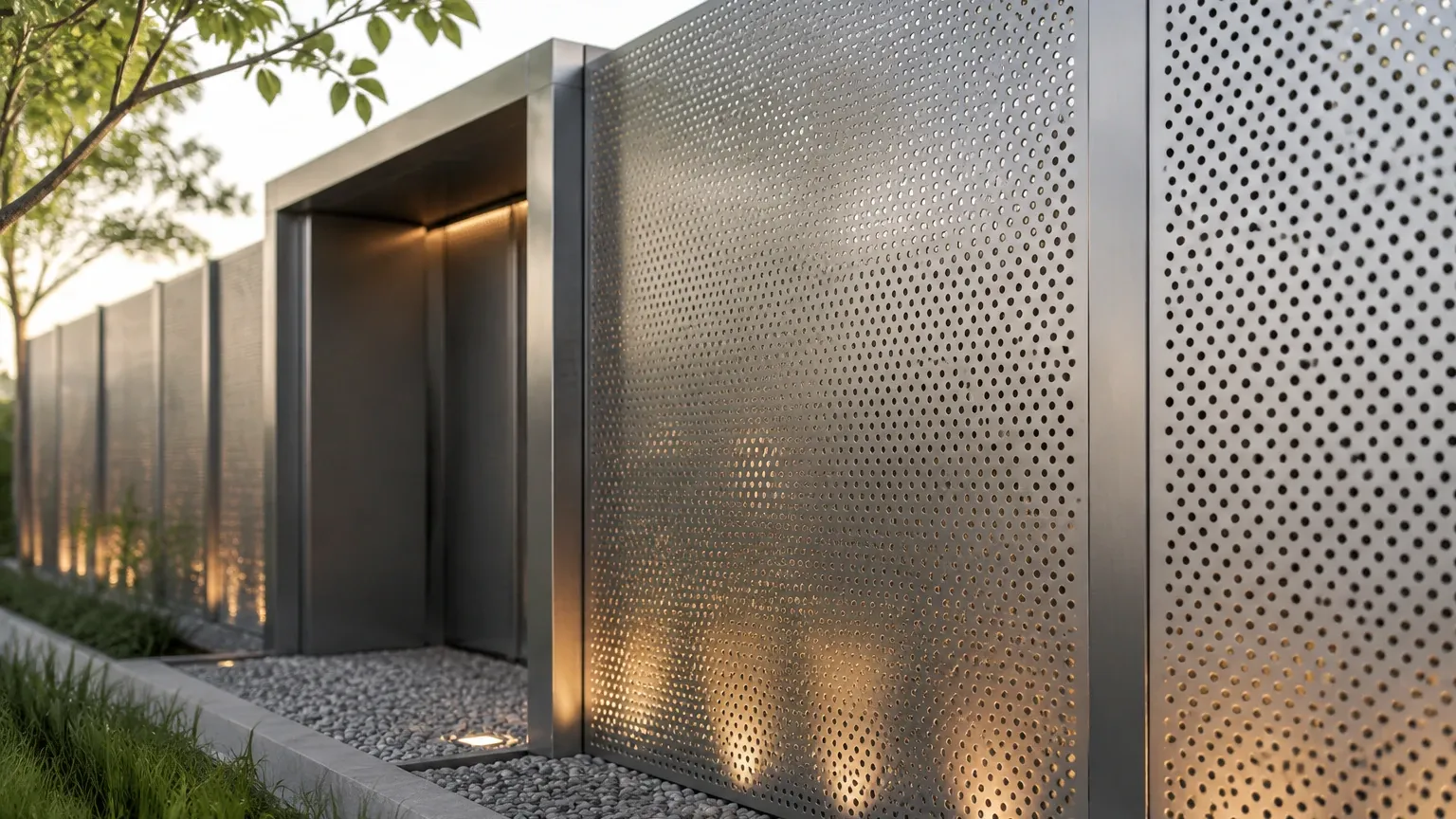
In the realm of industrial design and filtration engineering, the selection of materials involves a complex balance between structural integrity, fluid dynamics, and environmental integration. The term perforated metal enscape often surfaces when architects and engineers seek to bridge the gap between high-performance industrial components and their visual or environmental representation in complex projects. Whether used as a protective outer sleeve for a filter cartridge or as a primary screening element in a large-scale industrial enclosure, Perforated & Expanded Metal serves as a foundational material that dictates the efficiency and longevity of the system.
For technical professionals, understanding the nuances of these materials is essential for optimizing system performance. This guide examines the engineering specifications, material properties, and selection criteria for perforated and expanded metal components within industrial applications.
Technical Foundations of Perforated and Expanded Metal
While often grouped together, perforated and expanded metals are manufactured through distinct processes that result in different mechanical properties and performance characteristics.
Perforated Metal Manufacturing
Perforated metal is produced by mechanically punching or laser-cutting holes into a solid metal sheet. This process allows for extreme precision in hole size, shape, and distribution. Common patterns include round, square, slotted, and hexagonal holes. In industrial filtration, round holes with a 60-degree staggered pitch are the industry standard due to their inherent structural strength and uniform distribution of open area.
Expanded Metal Manufacturing
Expanded metal is created by simultaneously slitting and stretching a metal sheet. This process expands the material into a diamond-shaped mesh. Because no material is removed during the process, expanded metal is often a more cost-effective and sustainable option for applications where a high strength-to-weight ratio is required. The strands and bonds of the diamond pattern are set at a sharp angle, which can be advantageous for controlling airflow or providing a non-slip surface in industrial walkways.
Engineering Considerations for Industrial Environments
When specifying perforated metal enscape solutions, engineers must evaluate several critical factors to ensure the material performs reliably under operational stresses. The interaction between the fluid (liquid or gas) and the metal surface determines the overall efficiency of the filtration or ventilation system.
Open Area Calculations
The percentage of open area is the most critical metric for determining flow rates and pressure drops. For a standard 60-degree staggered round hole pattern, the open area is calculated using the formula:
Open Area % = (D² × 90.69) / P²
*Where D is the hole diameter and P is the center-to-center pitch.*
A higher open area reduces pressure drop but may compromise the structural rigidity of the sheet. Engineers must find the "sweet spot" that allows for maximum flow while maintaining the ability to withstand differential pressures without deforming.
Material Selection and Corrosion Resistance
In industries such as chemical processing, pharmaceuticals, and food and beverage, the choice of alloy is non-negotiable. Kaifil primarily utilizes high-grade stainless steel to ensure durability:
* Stainless Steel 304: Suitable for general industrial use with good corrosion resistance in most non-acidic environments.
* Stainless Steel 316L: The preferred choice for marine environments, pharmaceutical processing, and chemical filtration due to its superior resistance to pitting and crevice corrosion, particularly in the presence of chlorides.
* Specialty Alloys: For high-temperature or extremely corrosive applications, materials like Monel or Inconel may be specified.
The Role of Visualization and Precision in Specification
The integration of perforated metal enscape into modern engineering workflows often involves advanced 3D modeling and rendering. Tools like Enscape allow designers to visualize how perforated sheets will interact with light and airflow in a digital twin of the industrial site. However, from a B2B and engineering perspective, this visualization must be backed by factual manufacturing tolerances.
When transitioning from a digital model to a physical component, engineers must confirm:
1. Hole Tolerance: Standard commercial tolerances vs. precision tolerances required for fine filtration.
2. Edge Margins: The unperforated area around the edges of the sheet, which is vital for welding or mechanical fastening into a filter housing.
3. Flatness Requirements: Post-perforation leveling is often required to ensure the sheet can be rolled into a perfectly cylindrical filter core.
Comparison: Perforated vs. Expanded Metal for Filtration
Choosing between these two forms of Perforated & Expanded Metal depends largely on the specific role the component plays within the filtration assembly.
| Feature | Perforated Metal | Expanded Metal |
| :— | :— | :— |
| Structural Strength | High (especially in thick gauges) | High strength-to-weight ratio |
| Filtration Accuracy | Highly predictable and uniform | Variable depending on strand width |
| Flow Characteristics | Laminar flow support | Turbulent flow promotion |
| Material Waste | High (slugs are removed) | Zero waste |
| Common Use Case | Filter support cores, strainers | Outer protective guards, grates |
In many high-pressure hydraulic applications, perforated metal is used as the inner core of a filter cartridge to provide the necessary collapse strength, while expanded metal may be used as an outer wrap to protect the delicate pleated filter media from mechanical damage during installation or backwashing.
Selection Criteria for Demanding Applications
To ensure the successful implementation of perforated metal components, purchasing teams and engineers should address the following technical questions before procurement:
1. Pressure Differential and Collapse Strength
Will the perforated sheet be subjected to high-pressure spikes? For internal filter cores, the thickness of the metal and the hole pattern must be engineered to prevent buckling. Thicker gauges (up to 5mm or more) are often required for heavy-duty industrial strainers.
2. Media Compatibility
If the perforated metal is acting as a support for a fine wire mesh or a synthetic membrane, the surface finish must be burr-free. Sharp edges from the punching process can puncture delicate media, leading to bypass and system failure. Kaifil employs specialized deburring and polishing processes to ensure smooth contact surfaces.
3. Cleaning and Maintenance Cycles
In food and beverage or pharmaceutical applications, "cleanability" is paramount. Perforated metal with a high-quality surface finish (such as electropolishing) prevents bacterial growth and allows for more effective Clean-in-Place (CIP) cycles. The geometry of the holes should be selected to minimize particle entrapment.
Customization and OEM Capabilities
Industrial filtration is rarely a one-size-fits-all field. Customization is often the key to optimizing a system's total cost of ownership. When working with a specialized manufacturer like Kaifil, several customization options are available to meet specific project requirements:
* Custom Hole Patterns: Beyond standard round holes, custom shapes can be engineered to influence fluid velocity or to act as a unique identifier for OEM replacement parts.
* Fabrication Services: Perforated and expanded metals can be supplied as flat sheets, or fully fabricated into cylinders, cones, or baskets. This includes precision longitudinal welding and the attachment of end caps or flanges.
* Surface Treatments: Options such as pickling, passivating, or powder coating can be applied to enhance the material's resistance to specific environmental threats.
Conclusion: Achieving Optimized Filtration Performance
Selecting the right perforated metal enscape solution requires a deep understanding of both the material's physical properties and the operational demands of the application. By focusing on precise hole geometries, appropriate alloy selection, and rigorous manufacturing standards, engineers can ensure that their filtration components provide reliable service over a long operational lifespan.
For those in the process of designing or upgrading industrial filtration systems, the focus should remain on factual performance data and verified material certifications. Whether the goal is to provide structural support for a multi-stage filter or to create a durable environmental enclosure, the quality of the Perforated & Expanded Metal is the determining factor in the system's ultimate success. Working closely with a manufacturer that understands these technical boundaries allows for the development of solutions that are not only functional but also cost-effective and durable in the most demanding industrial environments.
