


Perforated Metal for Stairs
In industrial and architectural engineering, the selection of materials for vertical circulation systems—specifically stairs, landings, and walkways—requires a balance between structural integrity, safety compliance, and environmental durability. Perforated metal has emerged as a primary choice for these applications due to its high strength-to-weight ratio and customizable physical properties. When specifying perforated metal for stairs, engineers must look beyond aesthetics to evaluate technical factors such as load-bearing capacity, slip resistance (COF), and the specific metallurgical requirements of the installation site.
As a specialized manufacturer of precision metal components, Kaifil provides high-performance Perforated & Expanded Metal solutions designed to meet the rigorous demands of industrial environments. This guide examines the engineering considerations and material specifications necessary for implementing perforated metal in stair systems.
Understanding the Role of Perforated Metal in Industrial Stair Systems
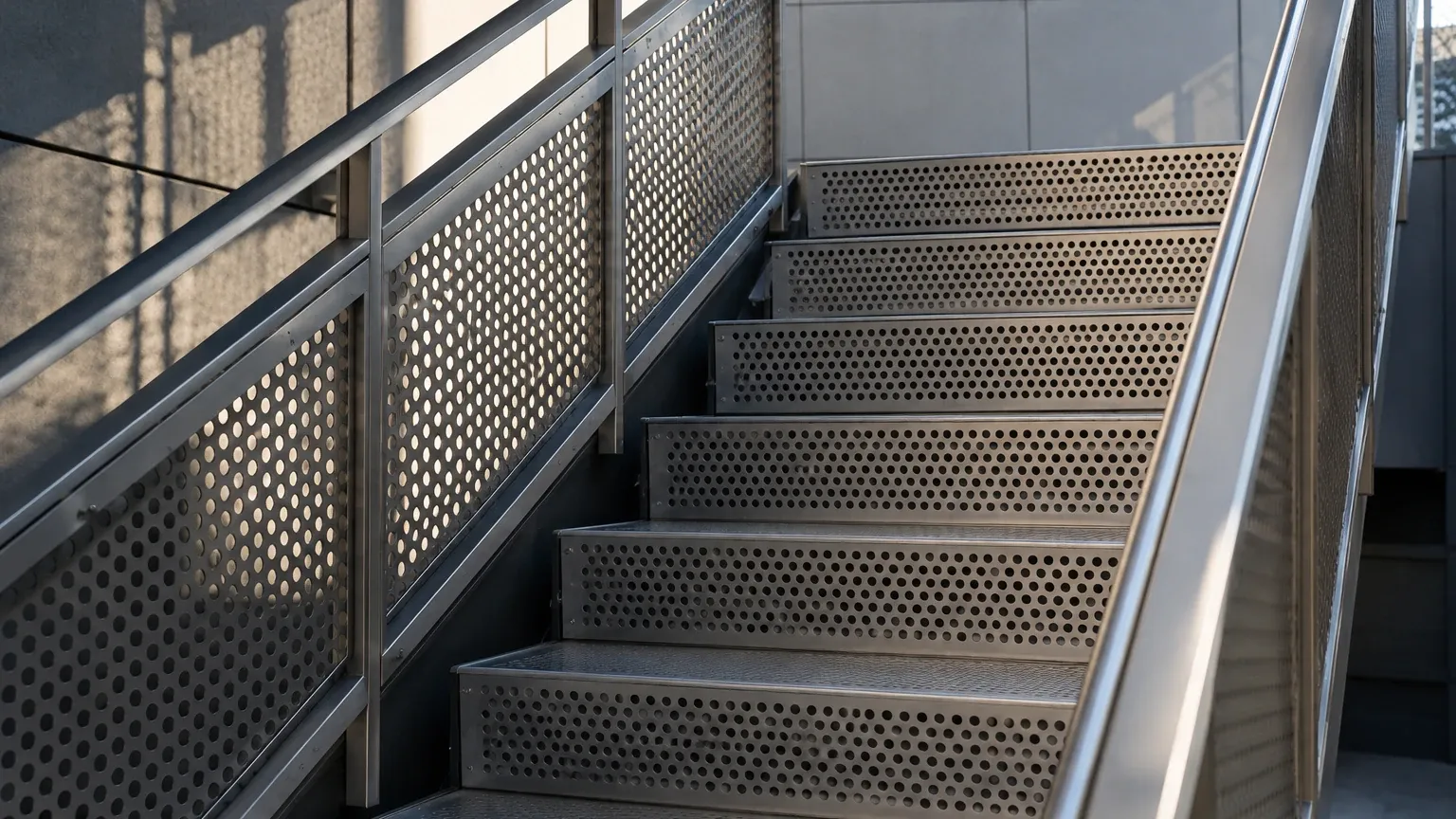
Perforated metal is not merely a decorative element; in an industrial context, it serves as a functional component that addresses several operational challenges. Unlike solid plate steel, perforated sheets allow for the passage of light, air, and liquids. This is particularly critical in outdoor environments or industrial processing plants where moisture, oil, or chemical spills could create hazardous pooling on solid surfaces.
The use of perforated metal for stairs provides a self-draining surface that minimizes the risk of hydroplaning and ice accumulation. Furthermore, the transparency offered by perforated treads improves visibility in multi-level facilities, allowing for better light penetration and enhancing the effectiveness of fire suppression systems (sprinklers) by allowing water to pass through the levels rather than being deflected.
Key Engineering Considerations for Stair Treads and Risers
When designing stair systems with perforated metal, engineers must calculate the mechanical stresses the material will undergo. The primary considerations include:
1. Load-Bearing Capacity and Deflection
The removal of material to create perforations naturally affects the structural stiffness of the sheet. Engineers must calculate the "equivalent solid thickness" to determine how the perforated plate will behave under concentrated and uniformly distributed loads. For stair treads, the material must resist permanent deformation under the weight of personnel and equipment. Factors such as the hole pattern (staggered vs. straight), hole size, and the width of the "bars" (the metal remaining between holes) all influence the final load capacity.
2. The Open Area Ratio
The open area ratio is the percentage of the sheet that is comprised of holes. While a higher open area improves drainage and airflow, it can reduce the overall strength of the tread. For industrial stairs, an open area between 30% and 50% is often the "sweet spot," providing sufficient transparency and drainage without compromising the structural integrity required for heavy-duty use.
3. Slip Resistance and Safety Standards
Safety is the paramount concern for any stair installation. Perforated metal for stairs can be manufactured with raised or embossed edges around the perforations to increase the Coefficient of Friction (COF). In environments prone to oil or grease, such as chemical processing plants or offshore platforms, specifying a pattern that provides multi-directional slip resistance is essential for OSHA and ADA compliance.
Material Selection: Balancing Durability and Environment
The choice of alloy is perhaps the most significant factor in the total cost of ownership and the lifespan of the stair system. Kaifil specializes in high-grade alloys that withstand corrosive industrial atmospheres.
* Stainless Steel (304 and 316 Grades): For pharmaceutical, food processing, and marine environments, stainless steel is the standard. Grade 316, containing molybdenum, offers superior resistance to chlorides and acidic environments. Stainless steel perforated metal for stairs is preferred where hygiene and corrosion resistance are non-negotiable.
* Carbon Steel: Often used in dry, indoor industrial warehouses. While cost-effective, carbon steel requires secondary treatments such as hot-dip galvanizing or powder coating to prevent oxidation.
* Aluminum: Selected for applications where weight reduction is critical, such as in mobile industrial platforms or aerospace facilities. Aluminum offers natural corrosion resistance through its oxide layer but has a lower modulus of elasticity compared to steel, requiring thicker gauges for the same load requirements.
Technical Specifications: Hole Patterns and Performance
The geometry of the perforation significantly impacts the performance of the stair tread. While round holes are the most common due to their manufacturing efficiency and uniform stress distribution, other patterns serve specific functional needs:
* Round Perforations: These offer the best structural stability and are the easiest to clean. They are typically arranged in a 60-degree staggered pattern to maximize strength.
* Square Perforations: Provide a high open area and a modern aesthetic, but they can be more prone to stress concentrations at the corners if not engineered correctly.
* Slotted Perforations: Ideal for drainage of larger debris or specific directional airflow requirements. In stair applications, slots are usually oriented perpendicular to the direction of travel to enhance grip.
At Kaifil, we ensure that the margins (the solid areas around the edges of the perforated sheet) are precisely calculated. For stair treads, having solid margins on the leading edge (the nosing) and the attachment points is critical for welding or bolting the treads to the stringers.
Customization and Fabrication for Industrial Projects
Industrial projects rarely rely on "off-the-shelf" solutions. Customization is necessary to ensure the perforated metal integrates seamlessly with the existing structural steel. Key customization options include:
* Precision Cutting and Notching: Utilizing CNC technology to ensure that every tread fits the specific dimensions of the stair tower without the need for on-site modifications, which can compromise protective coatings.
* Forming and Bending: Perforated sheets can be formed into "C-channels" or other profiles to create self-supporting treads. The bending process must account for the perforation pattern to avoid cracking or distortion along the bend line.
* Nosing Options: The leading edge of a stair tread receives the most wear and is the most common site for slips. Custom perforated metal for stairs can include integrated abrasive nosing or specialized hole patterns at the edge to highlight the step transition for safety.
Maintenance and Longevity in Demanding Environments
One of the primary benefits of using Perforated & Expanded Metal from a maintenance perspective is the ease of cleaning. In food and beverage or pharmaceutical facilities, the ability to perform "wash-downs" without water pooling is a major operational advantage.
To ensure longevity, engineers should consider the following maintenance protocols:
* Inspection for Clogging: In environments with heavy particulate matter, perforations should be checked periodically to ensure drainage remains functional.
* Integrity of Coatings: For galvanized or coated carbon steel, any scratches or mechanical damage should be repaired immediately to prevent sub-film corrosion.
* Fastener Check: In high-vibration environments (such as near heavy machinery), the bolting points between the perforated tread and the stringer should be inspected for tension.
Essential Checklist for Specifying Perforated Metal for Stairs
Before finalizing a purchase order for industrial stair components, purchasing teams and engineers should confirm the following data points with their manufacturer:
1. Gage/Thickness: Is the material thick enough to handle the maximum anticipated load without excessive deflection?
2. Hole Size and Pitch: Does the pattern provide the necessary balance of open area and structural support?
3. Material Grade: Is the alloy compatible with the chemical exposure of the site (e.g., 316 stainless for salt spray environments)?
4. Slip Resistance Rating: Does the surface texture meet the required safety standards for the specific industry?
5. Edge Requirements: Are specific margins or solid areas required for mounting and structural reinforcement?
Conclusion
Perforated metal for stairs represents a sophisticated engineering solution that addresses the complex needs of modern industrial infrastructure. By selecting the correct material, hole pattern, and fabrication method, facilities can achieve a stair system that is safe, durable, and low-maintenance.
Kaifil’s expertise in manufacturing custom stainless steel and metal components ensures that every project benefits from precision engineering and high-quality materials. Whether you are designing a chemical processing plant, a water treatment facility, or a high-traffic industrial warehouse, our team provides the technical support needed to select the ideal filtration and structural metal components.
For more information on material specifications and custom fabrication options, Review product options and application support to find the right solution for your industrial requirements.
