


Perforated Metal Infill Panels
In industrial engineering and architectural design, perforated metal infill panels serve as a critical bridge between structural integrity and functional performance. These components, often fabricated from high-grade stainless steel or aluminum, are utilized to provide safety, ventilation, and aesthetic consistency across a wide range of applications. From machinery guarding in chemical processing plants to protective balustrades in commercial facilities, the selection of the right perforated metal is a decision rooted in technical specifications and environmental demands.
As a specialized manufacturer of filtration and precision metal components, Kaifil provides high-performance Perforated & Expanded Metal solutions tailored to the rigorous standards of industrial sectors. Understanding the nuances of material behavior, hole patterns, and structural loads is essential for engineers and procurement teams tasked with integrating these panels into larger systems.
Technical Fundamentals of Perforated Metal Infill Panels
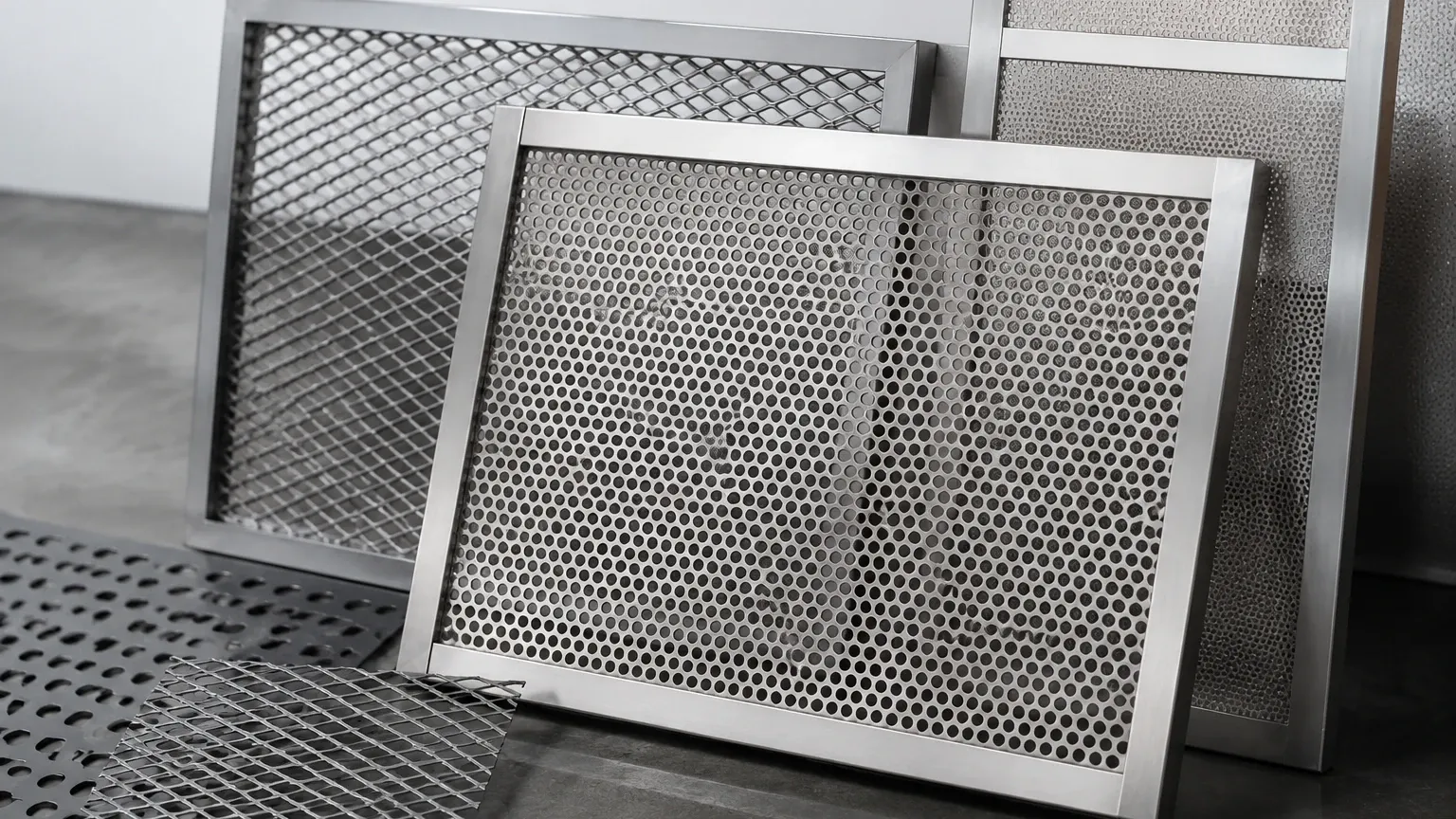
Perforated metal infill panels are essentially sheets of metal that have been mechanically stamped or punched to create a pattern of holes, slots, or decorative shapes. Unlike expanded metal, which is slit and stretched, perforated metal maintains a flat surface and offers precise control over the "open area" percentage. This precision is vital when the panel must meet specific airflow requirements or filtration benchmarks.
Hole Patterns and Geometry
The geometry of the perforation dictates both the strength of the panel and its functional utility. The most common patterns include:
* Round Holes: The most versatile and cost-effective option. Round holes can be arranged in a 60-degree staggered pattern, which provides the highest strength-to-weight ratio and is ideal for structural infill applications.
* Square Holes: Often selected for high open-area requirements, square holes provide a modern aesthetic and are frequently used in ventilation grilles where maximum airflow is prioritized over sheer structural rigidity.
* Slotted Holes: These are typically employed in filtration and sorting processes. In an infill context, they allow for directional visibility and airflow while maintaining a barrier against larger objects.
The Importance of the Open Area
The "open area" is the percentage of the total sheet area that is occupied by holes. For an engineer, calculating the open area is non-negotiable. It determines the pressure drop in ventilation systems, the amount of light transmission, and the effectiveness of the panel as a safety barrier. A higher open area reduces the weight of the panel but may compromise the structural stiffness if the gauge of the metal is not increased accordingly.
Material Selection for Industrial Durability
The environment in which the perforated metal infill panels will reside dictates the material choice. Because Kaifil specializes in custom stainless steel solutions, the focus often remains on alloys that can withstand corrosive or high-temperature conditions.
Stainless Steel (304 and 316 Grades)
Stainless steel is the industry standard for infill panels in chemical processing, food and beverage, and pharmaceutical facilities.
* Grade 304: Offers excellent corrosion resistance and formability for most indoor and moderate outdoor applications.
* Grade 316/316L: Contains molybdenum, providing superior resistance to chlorides and acidic environments. This is the preferred choice for panels used in marine environments or wastewater treatment plants where chemical exposure is a constant factor.
Aluminum and Carbon Steel
While stainless steel is prioritized for its longevity, aluminum is often selected for its lightweight properties and natural resistance to atmospheric corrosion, making it suitable for large-scale architectural infills. Carbon steel, typically galvanized or powder-coated, offers a cost-effective alternative for indoor machinery guarding where moisture and chemical exposure are minimal.
Engineering Considerations for Installation and Safety
When specifying perforated metal infill panels, engineering teams must look beyond the hole pattern and focus on the physical integration of the panel into the frame or support structure.
Gauge and Thickness
The thickness of the metal (gauge) must be sufficient to prevent oil-canning—a visible waviness in the metal—and to resist impact loads. For industrial walkways or safety partitions, a heavier gauge is required to ensure the panel does not deform under pressure.
Margins and Unperforated Borders
A critical technical detail often overlooked is the "margin." These are the unperforated areas along the edges of the sheet. For infill panels, custom margins are often necessary to facilitate welding, bolting, or clamping into a frame. Specifying "finished margins" ensures that the pattern is centered and that the edges are solid, which significantly increases the durability of the attachment points.
Flatness and Stress Relieving
The process of perforating metal introduces internal stresses into the material, which can cause the sheet to curl or bow. High-quality manufacturing involves a leveling process to ensure the panels remain perfectly flat. This is particularly important for infill panels that must fit precisely into pre-fabricated channels or frames.
Applications Across Industrial Sectors
Perforated metal infill panels are multi-functional components. Their application varies depending on whether the primary goal is protection, filtration, or environmental control.
1. Machinery Guarding: In manufacturing environments, perforated panels allow operators to visually inspect equipment while remaining protected from moving parts. The perforation ensures that heat generated by the machinery can dissipate, preventing system overheating.
2. Industrial Partitions and Caging: In warehouses and chemical storage areas, infill panels create secure zones that do not obstruct the building’s HVAC or fire suppression systems (sprinklers).
3. Filtration Support: In large-scale filtration housings, perforated metal acts as a support structure for finer wire mesh media. The infill panel provides the mechanical strength required to withstand high-pressure differentials while the mesh performs the actual separation.
4. Architectural Facades and Sunscreens: In modern industrial architecture, these panels are used to reduce solar heat gain on building exteriors while maintaining natural light and airflow.
Customization and OEM Capabilities
Standard off-the-shelf perforated sheets rarely meet the exact requirements of complex industrial projects. Customization is where technical expertise becomes a value-add. When working with a manufacturer like Kaifil, engineers can specify exact dimensions, hole diameters, and pitch (the distance between the centers of the holes).
Precision Manufacturing
Advanced CNC punching and laser cutting technologies allow for the creation of complex patterns and precise margins. This ensures that every panel in a large project is identical, facilitating easier installation and replacement. Furthermore, secondary processes such as bending, rolling, and surface finishing (electropolishing, pickling, or coating) can be integrated into the production cycle to deliver a ready-to-install component.
Total Cost of Ownership (TCO)
When evaluating the cost of perforated metal infill panels, it is vital to consider the total cost of ownership rather than just the initial purchase price. A lower-grade material or an inadequately leveled panel may save costs upfront but lead to premature failure due to corrosion or installation difficulties. High-quality stainless steel panels, while requiring a higher initial investment, offer a significantly longer service life and lower maintenance requirements in demanding industrial environments.
Selection Checklist for Procurement and Engineering
Before finalizing a purchase order for perforated metal infill panels, the following technical details should be confirmed with the manufacturer:
* Material Grade: Is the alloy suitable for the chemical and thermal environment?
* Hole Size and Pitch: Does the pattern meet the required open area for airflow or visibility?
* Sheet Thickness: Is the gauge sufficient to handle the expected mechanical loads?
* Margin Requirements: Are specific solid borders needed for mounting?
* Flatness Tolerances: Does the application require precision leveling?
* Surface Finish: Is a specific finish required for sanitation (in food/pharma) or corrosion resistance?
By addressing these factors during the design phase, engineers can ensure that the Perforated & Expanded Metal components they receive will perform reliably over the long term.
Conclusion
Perforated metal infill panels are more than just decorative or protective screens; they are engineered components that play a vital role in the safety and efficiency of industrial operations. Whether used in high-pressure filtration systems or as safety barriers in a chemical plant, the quality of the perforation and the suitability of the material are paramount. By focusing on technical specifications—such as open area calculations, material grades, and precise margins—engineers can optimize their systems for both performance and durability. Kaifil remains committed to supporting these industrial needs through precision manufacturing and deep expertise in metal filtration and fabrication solutions.
