


Perforated Metal J Trim
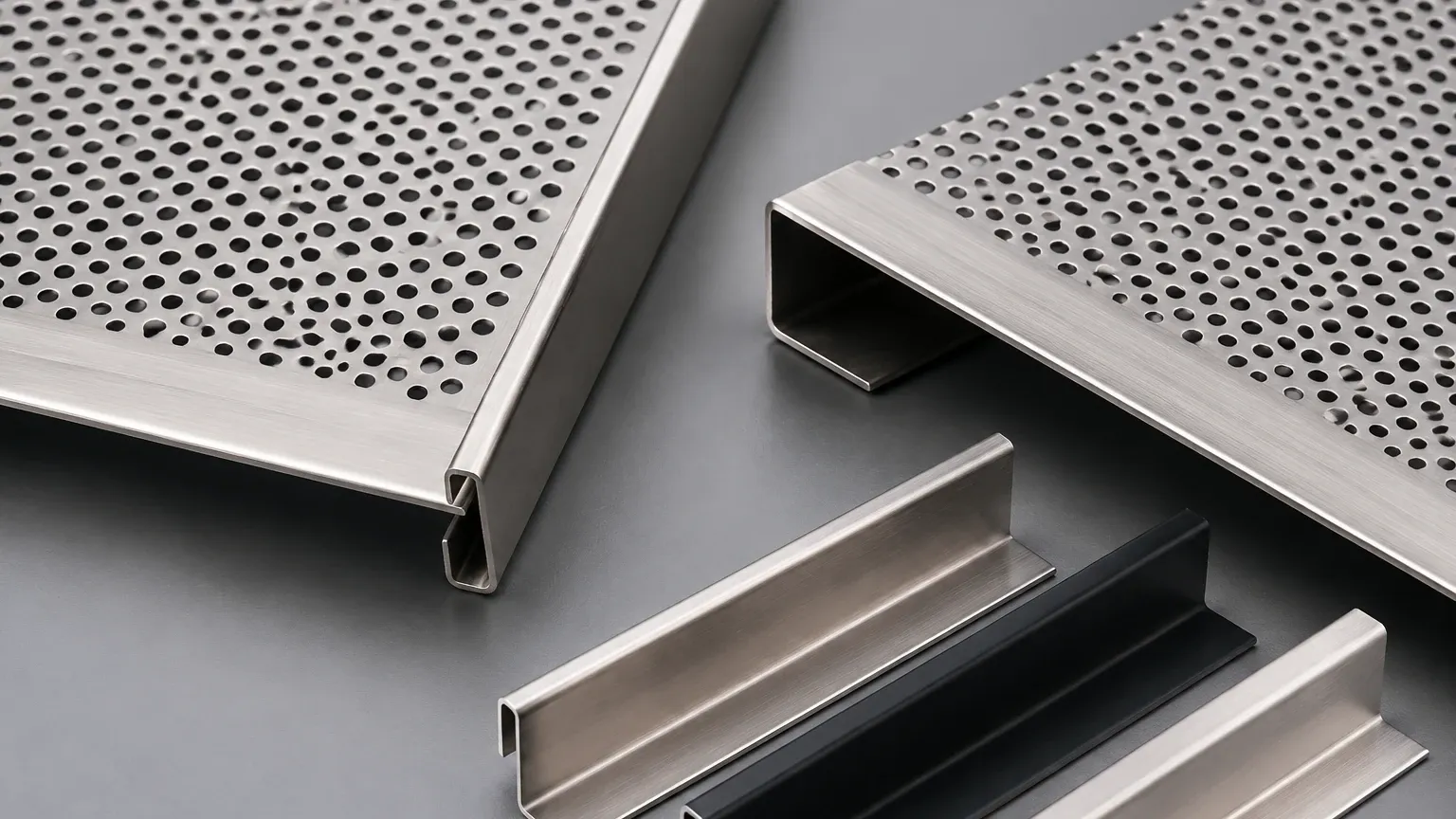
In industrial fabrication and filtration system design, the edge treatment of metal panels is a critical factor influencing both structural integrity and operational safety. Perforated metal j trim serves as a specialized framing component designed to cap the exposed edges of Perforated & Expanded Metal sheets. For engineers and procurement teams, selecting the correct trim profile is not merely an aesthetic choice but a technical requirement to ensure the longevity of the assembly, protect personnel from sharp edges, and provide a secure mounting point for complex filtration units.
As a manufacturer specializing in custom stainless steel filtration solutions, Kaifil understands that the integration of trim components must be precise. This guide examines the technical specifications, material considerations, and engineering applications of J trim in industrial environments.
The Functional Purpose of Perforated Metal J Trim
Perforated metal sheets, particularly those produced through high-speed punching or expanding processes, often possess sharp, irregular edges. Without proper finishing, these edges pose risks during maintenance and can lead to structural failure under vibration or mechanical stress. Perforated metal j trim addresses these issues through three primary functions:
1. Edge Protection and Safety: Industrial filters and screens are frequently handled during cleaning or replacement cycles. J trim encapsulates the sharp "burrs" and jagged edges inherent in perforated patterns, significantly reducing the risk of injury and preventing the metal from snagging on clothing or filter bags.
2. Structural Rigidity: Thin-gauge perforated sheets can be prone to bowing or warping, especially when subjected to high-pressure fluid flow or mechanical loads. The J-shaped profile acts as a perimeter reinforcement, increasing the moment of inertia of the panel and enhancing its overall stiffness.
3. Mounting and Integration: The flat "leg" of the J trim provides a consistent surface for welding or mechanical fastening. This allows for easier integration into larger housings, frames, or support structures without compromising the open area of the filtration media.
Material Engineering: Selecting the Right Alloy
The performance of perforated metal j trim is heavily dependent on the material's compatibility with the primary panel and the operating environment. At Kaifil, we emphasize the use of high-grade alloys to prevent galvanic corrosion and ensure chemical resistance.
Stainless Steel 304 and 316L
Stainless steel is the industry standard for J trim in filtration and chemical processing.
* Grade 304: Suitable for general industrial applications where moisture exposure is moderate. It provides excellent formability and weldability.
* Grade 316L: Recommended for marine environments, pharmaceutical production, and food processing. The addition of molybdenum provides superior resistance to chlorides and pitting. The "L" (low carbon) designation is crucial for components that require extensive welding, as it prevents carbide precipitation and maintains corrosion resistance at the weld zones.
Aluminum and Carbon Steel
In weight-sensitive applications, such as aerospace or portable filtration units, aluminum J trim offers a high strength-to-weight ratio. Conversely, for heavy-duty industrial guards where corrosion is not a primary concern, carbon steel trim provides a cost-effective solution, often finished with powder coating or galvanization to extend its service life.
Technical Specifications and Sizing for Perforated & Expanded Metal
Specifying the correct dimensions for perforated metal j trim requires an understanding of the relationship between the sheet thickness (gauge) and the trim’s internal opening. If the opening is too wide, the sheet will rattle or require excessive welding; if it is too narrow, the sheet will not seat properly.
Key Dimensional Parameters
* Opening Width (Gap): This must be slightly larger than the thickness of the Perforated & Expanded Metal sheet. For example, a 16-gauge sheet (approximately 0.060 inches) typically requires a J trim with an opening of 0.065 to 0.075 inches to allow for ease of assembly and thermal expansion.
* Leg Lengths: J trim is characterized by one leg being longer than the other. The long leg (often 1/2" to 1") provides the primary attachment surface, while the short leg (typically 1/4" to 3/8") caps the edge. The choice of leg length depends on the required weld surface area and the clearance within the installation frame.
* Material Thickness (Trim Gauge): The trim itself must be robust enough to support the panel. Common trim thicknesses range from 22-gauge for light decorative screens to 11-gauge for heavy industrial filtration housings.
Integration Strategies: Installation and Fabrication Methods
How the perforated metal j trim is attached to the panel determines the assembly's durability and suitability for specific environments. Engineers must choose between several fabrication techniques based on the final application.
Welding Techniques
* Spot Welding: A fast and efficient method for securing J trim to perforated sheets. It is ideal for high-volume production but may leave small indentations.
* TIG (Tungsten Inert Gas) Welding: Provides the cleanest and strongest joints, essential for pharmaceutical or food-grade equipment where "dead spots" or crevices must be minimized to prevent bacterial growth.
* MIG (Metal Inert Gas) Welding: Suitable for thicker carbon steel trim where speed and penetration are prioritized over aesthetic finish.
Mechanical Fastening
In environments where welding is not feasible—such as near flammable materials or when using pre-finished/coated metals—mechanical fasteners like rivets or self-tapping screws can be used. In these cases, the J trim must be pre-punched to align with the solid margins of the perforated metal.
Mitered vs. Overlapped Corners
For a professional, high-performance finish, mitered corners (cut at 45 degrees) are preferred. This creates a continuous perimeter that prevents debris from accumulating in the corners. Overlapped corners are simpler to fabricate but may create gaps that are difficult to clean in hygienic applications.
Application-Specific Considerations in Industrial Filtration
In the context of industrial filtration, the use of perforated metal j trim extends beyond simple edging. It plays a vital role in the fluid dynamics and maintenance of the system.
Flow Dynamics and Turbulence
In high-velocity liquid or gas filtration, the profile of the trim can influence flow patterns. A poorly fitted J trim can create turbulence at the edges of the filter element, leading to uneven wear on the filter media or localized erosion. Custom-designed trim profiles can help streamline the transition from the housing wall to the perforated support basket.
Hygiene and Cleanability (CIP/SIP)
For food, beverage, and pharmaceutical applications, the interface between the J trim and the perforated metal must be seamless. Any gaps can trap particulates, leading to contamination. Kaifil recommends full-seam welding and subsequent passivation for these applications to ensure the assembly meets stringent Clean-in-Place (CIP) or Sterilization-in-Place (SIP) requirements.
Vibration Dampening
In hydraulic systems or heavy machinery, perforated panels are often used as guards or strainers. These environments involve significant vibration. J trim, when properly welded, acts as a dampener, preventing the thin edges of the perforated metal from vibrating against the frame, which would otherwise lead to fatigue cracking and eventual failure.
Procurement and Customization Guide for Engineers
When sourcing perforated metal j trim, providing detailed specifications ensures that the final product meets the project's technical requirements. Engineers should confirm the following data points before finalizing an order:
1. Exact Sheet Thickness: Provide the decimal thickness of the metal panel, including any coatings or platings, to ensure the J trim gap is sized correctly.
2. Environmental Conditions: Specify the chemical exposure, temperature ranges, and cleaning protocols. This determines whether 304 or 316L stainless steel is required.
3. Tolerances: Define the allowable variance in leg length and straightness. For precision filtration housings, tighter tolerances are necessary to ensure a proper seal.
4. Finish Requirements: Indicate if the trim requires a specific surface finish, such as 2B mill finish, #4 brushed finish, or electropolishing for enhanced corrosion resistance.
Conclusion
Perforated metal j trim is an essential component for any project utilizing Perforated & Expanded Metal. By providing structural reinforcement, enhancing safety, and facilitating easier installation, J trim ensures that industrial filtration systems and metal assemblies perform reliably over their intended service life.
At Kaifil, we specialize in the manufacturing of custom metal filtration components, offering the technical expertise required to match the right trim profile with your specific application. Whether you are designing a high-pressure hydraulic strainer or a hygienic pharmaceutical filter, understanding the nuances of material compatibility and fabrication techniques is key to achieving optimal results. By focusing on precision engineering and quality materials, you can minimize maintenance costs and maximize the efficiency of your industrial filtration solutions.
