


Perforated Metal Jakarta
In the rapidly expanding industrial landscape of Jakarta and its surrounding manufacturing hubs like Cikarang and Karawang, the demand for high-precision engineering components has never been higher. Among these essential components, perforated and expanded metals serve as the backbone for various industrial processes, ranging from heavy-duty filtration to architectural support and safety screening. For engineers and procurement specialists sourcing perforated metal Jakarta, understanding the technical nuances of material selection, hole geometry, and structural integrity is critical to ensuring long-term operational efficiency and cost-effectiveness.
As a specialized manufacturer of stainless steel filtration solutions, Kaifil provides the technical expertise required to navigate the complexities of metal fabrication. This guide explores the engineering considerations, application-specific requirements, and selection criteria for perforated and expanded metal within industrial environments.
Understanding Perforated and Expanded Metal in Industrial Applications
While often grouped together, perforated metal and expanded metal are manufactured through distinct processes that yield different mechanical properties. Choosing between them depends on the specific requirements of the application, such as the need for precise filtration, weight-to-strength ratios, or airflow characteristics.
Perforated Metal
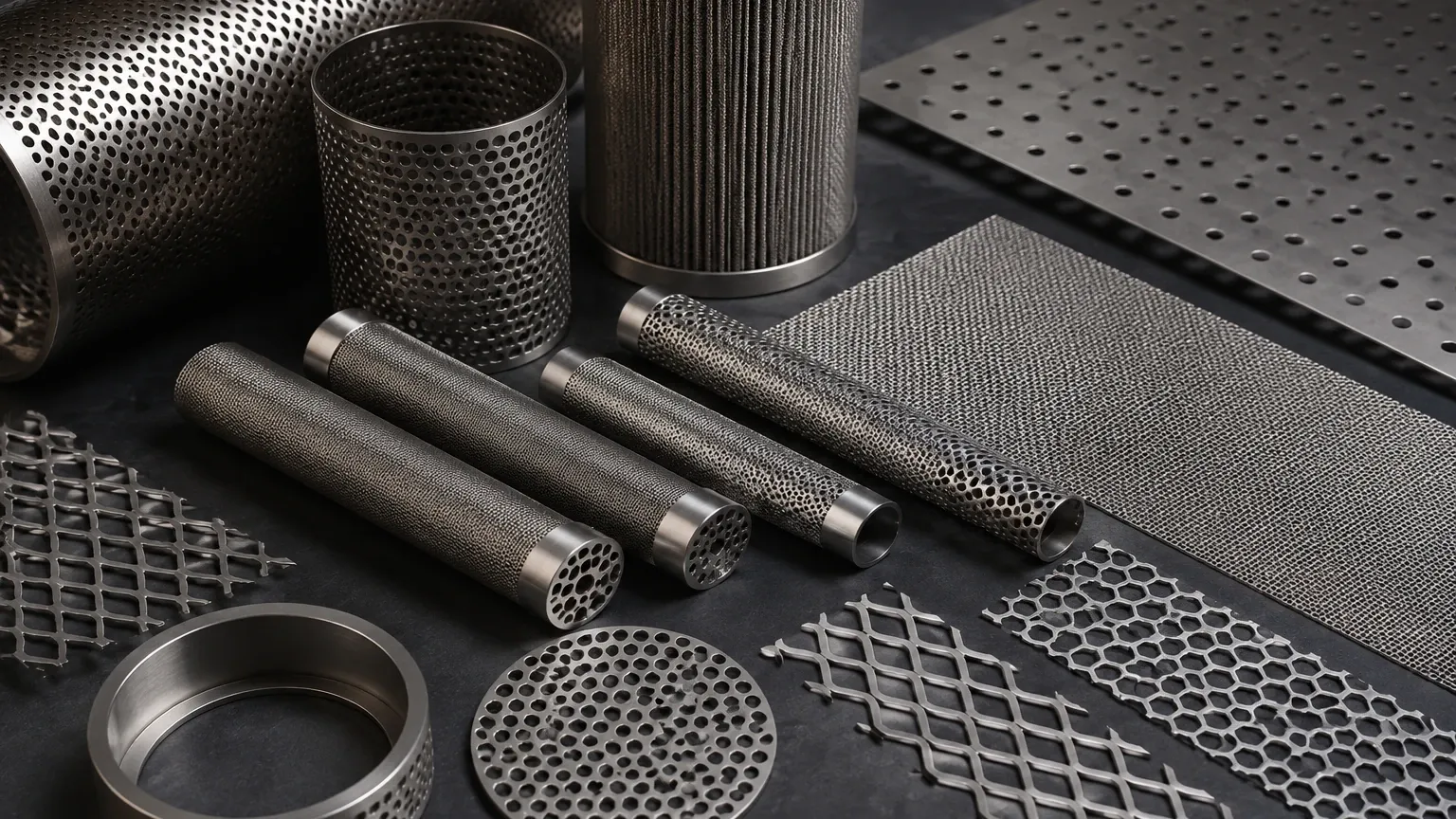
Perforated metal is produced by punching a series of holes into a solid metal sheet. This process allows for extreme precision in hole size, shape, and distribution. In industrial filtration, perforated metal often serves as a support structure for finer wire mesh or as a primary filter for coarse particles. The ability to maintain a flat, smooth surface makes it ideal for applications in the food and beverage industry, where hygiene and ease of cleaning are paramount.
Expanded Metal
Expanded metal is created by simultaneously slitting and stretching a metal sheet, resulting in a diamond-shaped mesh pattern. Because no material is lost during the manufacturing process, it is often a more cost-effective solution for structural reinforcement, walkways, and safety guards. In filtration, expanded metal is frequently used as a rigid outer cage for Perforated & Expanded Metal cartridges, providing the necessary mechanical strength to withstand high-pressure differentials without significantly impeding flow.
Material Selection for Jakarta’s Industrial Environments
Jakarta’s tropical climate, characterized by high humidity and, in coastal areas, high salinity, presents unique challenges for metal components. Selecting the correct alloy is the first step in preventing premature failure due to corrosion or mechanical fatigue.
1. Stainless Steel 304: This is the most common grade used in industrial settings. It offers excellent corrosion resistance and is suitable for most indoor and controlled outdoor environments. It is widely used in Jakarta’s general manufacturing and assembly plants.
2. Stainless Steel 316/316L: For more demanding environments, such as chemical processing plants or facilities near the Tanjung Priok port area, SS316 is the preferred choice. The addition of molybdenum enhances its resistance to chloride-induced pitting and crevice corrosion.
3. Specialty Alloys: In high-temperature or highly acidic environments, such as those found in specific chemical or pharmaceutical processes, specialty alloys may be required to maintain structural integrity and filtration accuracy.
When sourcing perforated metal Jakarta, engineers must confirm the material grade through mill test reports (MTRs) to ensure the alloy meets the specific chemical composition required for the application.
Engineering Specifications: Hole Patterns and Open Area
The performance of a perforated sheet is largely defined by its hole pattern and the resulting "open area" percentage. This calculation is vital for engineers who must balance filtration efficiency with structural strength.
Common Hole Patterns
* Round Holes: The most versatile and common pattern. Round holes offer the best combination of strength and ease of manufacturing. They are typically arranged in a 60-degree staggered pattern, which maximizes the open area while maintaining the sheet's rigidity.
* Square Holes: Often used when a higher open area is required. However, square holes can create stress concentration points at the corners, which may lead to cracking under high-vibration or high-pressure conditions.
* Slotted Holes: Ideal for sorting and grading applications, particularly in the agricultural or food processing sectors. Slotted holes allow for the passage of elongated materials while retaining larger particles.
Calculating Open Area
The open area is the ratio of the total area of the holes to the total area of the sheet, expressed as a percentage. For a 60-degree staggered round hole pattern, the formula is:
Open Area % = (D² × 90.69) / P²
*Where D is the hole diameter and P is the pitch (the distance from the center of one hole to the center of the next).*
An incorrect open area calculation can lead to excessive pressure drops in filtration systems or insufficient airflow in ventilation applications. At Kaifil, we assist technical teams in optimizing these specifications to meet the exact flow requirements of their systems.
Key Applications in Food, Beverage, and Chemical Processing
Jakarta’s industrial sectors, particularly the food and beverage (F&B) and chemical processing industries, rely heavily on perforated metal for both production and waste management.
Food and Beverage Industry
In F&B production, perforated metal is used in grain drying, juice extraction, and as support for fine mesh filters in beverage clarification. The use of high-grade stainless steel ensures compliance with food safety standards, as it does not leach contaminants and can withstand rigorous Clean-in-Place (CIP) cycles. The smooth surface of perforated metal prevents the accumulation of organic matter, reducing the risk of bacterial growth.
Chemical and Pharmaceutical Processing
In these sectors, perforated metal Jakarta components are used in centrifuges, catalyst support grids, and fluid bed dryers. The precision of the perforation is critical here; even minor deviations in hole size can lead to the loss of expensive catalysts or inconsistent product quality. Furthermore, the ability to withstand corrosive chemicals requires strict adherence to material specifications, often necessitating the use of SS316L to minimize carbon precipitation during welding.
Water Treatment and Desalination
With Jakarta’s ongoing focus on water management and industrial wastewater treatment, perforated metals serve as intake screens and primary filtration stages. They protect downstream equipment, such as pumps and membranes, from large debris. In these applications, the durability of the metal and its resistance to biofouling are the primary engineering concerns.
Evaluating Suppliers for Perforated Metal Jakarta
Procuring industrial components in a major metropolitan area like Jakarta requires a rigorous evaluation of suppliers. It is not enough to simply find a vendor; engineers must partner with a manufacturer that understands the technical demands of industrial filtration.
Quality Control and Tolerances
Industrial applications often require tight tolerances. A slight misalignment in the perforation pattern or a deviation in the sheet thickness can cause installation issues or lead to mechanical failure. When evaluating a supplier, confirm their ability to maintain tolerances according to international standards (such as ISO or ASTM).
Customization and OEM Capabilities
Off-the-shelf solutions rarely meet the specific needs of complex industrial systems. Whether it is a unique hole shape, a specific margin (the unperforated area around the edges), or custom forming (such as rolling the sheet into a cylinder for a filter cartridge), the supplier must have the advanced manufacturing capabilities to deliver bespoke components. Kaifil specializes in these custom solutions, working closely with global customers to develop high-performance filtration products.
Technical Support and Documentation
A reliable supplier should provide more than just the physical product. They should offer technical guidance on material compatibility, pressure drop calculations, and installation methods. Furthermore, complete documentation, including material certifications and inspection reports, is essential for quality assurance and regulatory compliance.
Maintenance and Longevity of Stainless Steel Filtration Components
The total cost of ownership for perforated metal components is heavily influenced by their service life and maintenance requirements. While stainless steel is inherently durable, proper care is necessary to prevent issues like tea staining or stress corrosion cracking.
Cleaning Protocols
In filtration applications, the buildup of particulates (blinding) can increase the pressure drop across the metal sheet. Regular cleaning, either through backwashing, ultrasonic cleaning, or chemical soaking, is required to maintain performance. The choice of cleaning agent must be compatible with the metal grade; for example, avoid using cleaners containing chlorides on SS304.
Inspection and Replacement Cycles
Regular inspections should be conducted to check for signs of wear, erosion, or corrosion. In high-flow environments, the edges of the perforations can erode over time, changing the filtration characteristics. Establishing a proactive replacement cycle based on operational data helps prevent unexpected downtime and ensures the integrity of the entire filtration system.
Conclusion: Making Informed Procurement Decisions
For B2B buyers and engineers looking for perforated metal Jakarta, the focus must remain on technical precision and material integrity. By understanding the differences between perforated and expanded metal, calculating the necessary open area, and selecting the appropriate stainless steel grade, organizations can optimize their industrial processes and reduce long-term costs.
Kaifil remains committed to providing the global industrial market with reliable, high-quality filtration solutions. From initial material selection to the production of complex, customized metal components, our focus is on delivering durability and precise performance for the most demanding environments. When your project requires specialized engineering and manufacturing expertise, choosing a partner with a deep understanding of industrial filtration is the key to success.
