


Perforated Metal Jobs
In the landscape of industrial filtration and structural engineering, perforated metal jobs represent a critical intersection of precision manufacturing and functional design. Whether used as a protective outer sleeve for a high-pressure filter cartridge or as a primary screening element in a water treatment facility, the performance of these components depends entirely on the technical accuracy of the fabrication process. For engineers and procurement teams, understanding the variables involved in specifying and managing these projects is essential for ensuring long-term system reliability and cost-efficiency.
Industrial applications for Perforated & Expanded Metal are diverse, ranging from chemical processing and pharmaceutical manufacturing to food and beverage production. Each of these sectors imposes unique demands on material integrity, chemical compatibility, and mechanical strength. This guide examines the technical considerations, material selection criteria, and quality benchmarks that define successful perforated metal jobs in industrial environments.
Technical Specifications and Engineering Calculations
The success of any perforated metal project begins with precise technical specifications. Engineers must balance the requirement for high flow rates with the need for structural rigidity. The primary metrics used to evaluate these components include hole pattern, hole size, pitch, and the resulting open area percentage.
Hole Patterns and Pitch
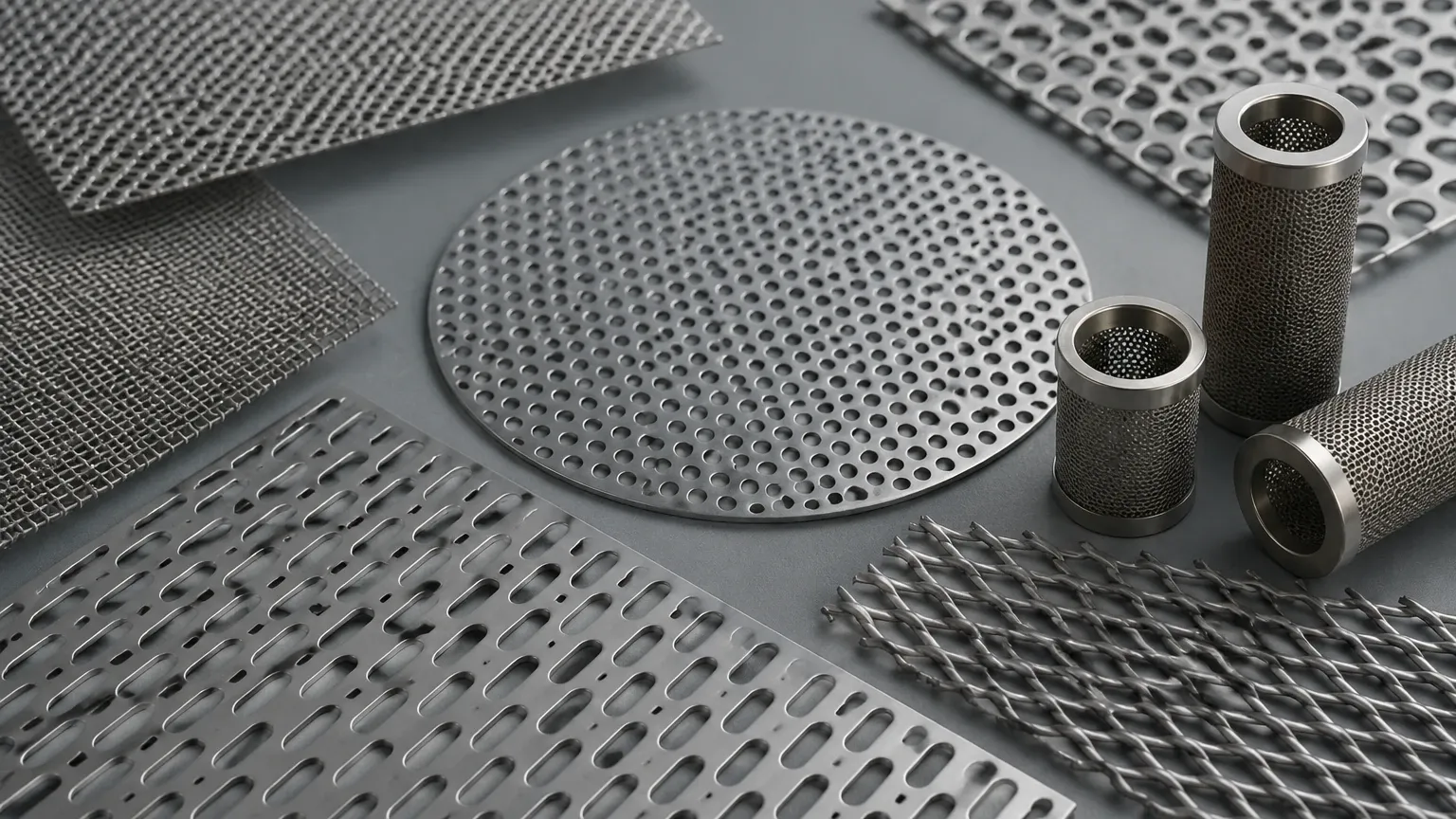
Perforated metal is typically manufactured using three main patterns: staggered, straight, and diagonal. The 60-degree staggered pattern is the most common for industrial filtration because it offers the highest open area and uniform strength across the sheet. The "pitch" refers to the distance from the center of one hole to the center of the adjacent hole. In a staggered pattern, the pitch determines the density of the perforations and directly influences the mechanical stability of the metal.
Calculating Open Area
The open area is the ratio of the total area of the holes to the total area of the sheet, expressed as a percentage. This is a critical calculation for filtration applications, as it dictates the pressure drop across the filter. A higher open area reduces resistance to flow but can compromise the structural integrity of the component, especially under high-pressure conditions. For perforated metal jobs involving support cores for filter cartridges, engineers often specify an open area between 40% and 60% to achieve an optimal balance between flow efficiency and collapse strength.
Material Selection for Demanding Environments
Material choice is perhaps the most significant factor in the longevity of perforated and expanded metal components. In industrial filtration, stainless steel is the industry standard due to its corrosion resistance and mechanical properties.
1. Stainless Steel 304: Suitable for general industrial use, offering good corrosion resistance and excellent formability. It is frequently used in food processing and architectural applications where exposure to highly corrosive chemicals is limited.
2. Stainless Steel 316/316L: The preferred choice for chemical processing, marine environments, and pharmaceutical applications. The addition of molybdenum provides superior resistance to chlorides and pitting corrosion. The "L" (low carbon) variant is essential for perforated metal jobs requiring extensive welding, as it prevents carbide precipitation and ensures the integrity of the heat-affected zone.
3. Specialty Alloys: For extreme environments involving high temperatures or highly acidic media, alloys such as Hastelloy, Monel, or Inconel may be specified. While more costly, these materials are necessary for specialized industrial filtration tasks where standard stainless steels would fail prematurely.
Comparing Perforated and Expanded Metal Processes
When initiating perforated metal jobs, it is important to distinguish between punched (perforated) and expanded metal, as each offers distinct advantages depending on the application.
The Perforation Process
Perforated metal is created by punching a series of holes into a solid sheet or coil. This process allows for extremely high precision in hole size and placement. It also allows for "margins" or blank areas around the edges of the sheet, which are crucial for subsequent welding or mounting. CNC punching and laser cutting are the primary methods used, with laser cutting offering greater flexibility for complex geometries or thicker materials.
The Expansion Process
Expanded metal is produced by simultaneously slitting and stretching a metal sheet. This process creates diamond-shaped openings and results in no material waste, making it a cost-effective alternative for certain applications. Because the metal is stretched rather than punched, the resulting mesh is often stronger per pound than the original sheet. Expanded metal is frequently used for protective grilles, walkways, and as a support layer in multi-stage filtration systems where high structural rigidity is required.
Quality Control and Common Risks in Fabrication
In high-precision perforated metal jobs, minor fabrication errors can lead to significant operational failures. Engineers must be aware of several common risks during the procurement and inspection phases.
Burrs and Surface Finish
The punching process naturally creates burrs on the exit side of the hole. In filtration applications, these burrs can trap contaminants, cause turbulent flow, or even shed metal particles into the process stream. Professional manufacturers utilize secondary processes such as vibratory deburring, chemical polishing, or mechanical sanding to ensure a smooth, clean surface. This is particularly critical in the pharmaceutical and food industries, where "clean-in-place" (CIP) requirements are stringent.
Flatness and Internal Stress
Perforating a metal sheet introduces internal stresses that can cause the material to bow or curl. Leveling is a necessary step to restore the flatness of the sheet. If the material is destined to be rolled into a cylinder for a filter core, consistent flatness is required to ensure that the longitudinal seam can be welded accurately without gaps or misalignment.
Tolerances and Margins
Standard commercial tolerances may not be sufficient for precision engineering projects. Specifying tight tolerances for hole diameter, pitch, and margin width is essential. Margins are the unperforated areas along the edges of the sheet; if these are inconsistent, it can interfere with the assembly of the final product, leading to increased labor costs and potential structural weak points.
Industrial Applications of Perforated Metal
Perforated metal components serve as the backbone for many industrial filtration systems. Their versatility allows them to be adapted for various roles within a fluid or gas processing system.
* Filter Cartridge Support Cores: Perforated tubes provide the internal structure for pleated or depth filter media. They must withstand high differential pressures to prevent the filter media from collapsing.
* Strainers and Baskets: In water treatment and chemical processing, perforated metal baskets are used to remove large particulates from the flow. These are often designed for easy removal and cleaning.
* Diffusers: Perforated plates are used to distribute flow evenly across a large area, preventing channeling in resin beds or protecting sensitive downstream components from high-velocity impact.
* Acoustic Dampening: In industrial machinery, perforated metal is used in silencers and mufflers to reduce noise levels while allowing for the passage of air or exhaust gases.
Optimizing Total Cost and Performance
When managing perforated metal jobs, focusing solely on the initial purchase price can be a mistake. The total cost of ownership is influenced by the component's lifespan, maintenance requirements, and the impact on system efficiency.
For example, choosing a lower-grade material may reduce upfront costs but lead to frequent replacements due to corrosion. Similarly, failing to specify a proper deburring process can result in contaminated product batches, costing far more than the premium for high-quality fabrication. Working with a manufacturer that understands the nuances of industrial filtration allows engineers to optimize the design for both performance and manufacturability.
Customization is often the most effective way to reduce costs in the long run. By tailoring the hole pattern and material thickness to the specific pressure and flow requirements of the application, engineers can avoid over-engineering the component while ensuring it meets all safety and performance standards.
Conclusion for Purchasing and Engineering Teams
Executing successful perforated metal jobs requires a deep understanding of material science, mechanical engineering, and fabrication techniques. By providing clear specifications regarding hole geometry, open area, and material grade, and by verifying the quality of the finished surface and structural integrity, technical professionals can ensure that their filtration systems operate at peak efficiency.
Whether the project involves a standard perforated sheet or a complex, custom-engineered expanded metal component, the focus should always remain on precision and application-specific performance. For those seeking to explore specific product configurations or technical support for their next project, it is advisable to Review product options and application support to ensure all engineering requirements are met with the highest standards of industrial manufacturing.
