


Perforated Metal Kotak
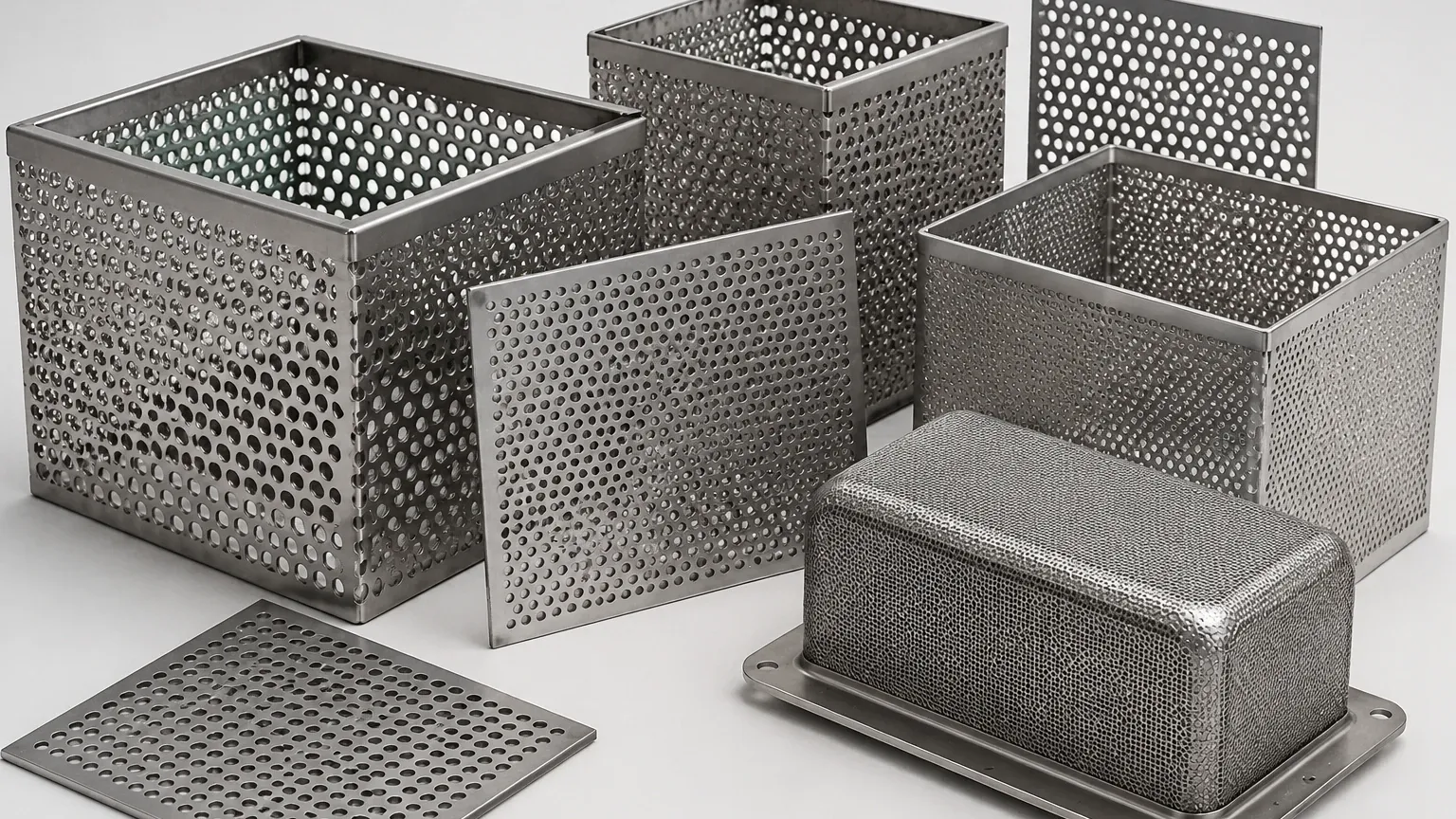
In the landscape of industrial filtration and structural engineering, the selection of the correct hole pattern is a critical decision that influences flow rates, structural integrity, and filtration efficiency. Perforated metal kotak, or square-hole perforated metal, represents a specialized category of Perforated & Expanded Metal used extensively when high open area and specific aesthetic or functional requirements are paramount. Unlike standard round-hole patterns, square perforations provide a unique set of mechanical properties and flow characteristics that are essential for demanding industrial environments.
For engineers and procurement teams, understanding the technical nuances of perforated metal kotak is vital for optimizing system performance. Whether used as a support structure for fine wire mesh filters or as a standalone screening medium in chemical processing, the specifications of the square hole—including its size, pitch, and orientation—must be precisely calculated to ensure long-term reliability.
Technical Specifications of Square-Hole Perforations
Perforated metal kotak is defined by three primary geometric variables: the hole size (c), the bridge width (b), and the pitch (p). The hole size refers to the length of one side of the square. The bridge is the solid metal remaining between adjacent holes, and the pitch is the distance from the center of one hole to the center of the next.
Straight vs. Staggered Patterns
Square holes are typically arranged in two configurations:
1. Straight Row: Holes are aligned vertically and horizontally. This is the most common arrangement for square perforations, offering a clean, linear appearance and consistent flow paths.
2. Staggered Row: Holes are offset in one direction. While less common for square holes than for round ones, staggered patterns can be engineered to provide specific directional strength or to alter the turbulence of fluids passing through the media.
Open Area Calculation
The "Open Area" percentage is perhaps the most important metric for filtration engineers. For a straight-row square hole pattern, the formula is relatively straightforward:
Open Area % = (c² / p²) × 100
Because square holes do not have the "dead space" found at the corners of round holes, they inherently offer a higher percentage of open area for the same hole width. This makes perforated metal kotak an ideal choice for applications where maximum throughput and minimum pressure drop are required, such as in high-volume air ventilation or gravity-fed liquid filtration.
Material Selection for Industrial Durability
As a manufacturer specializing in stainless steel filtration solutions, Kaifil emphasizes the importance of material grade in the performance of perforated components. The choice of alloy determines the product's resistance to corrosion, temperature extremes, and mechanical wear.
Stainless Steel 304 and 316L
Stainless steel is the industry standard for perforated metal kotak due to its excellent strength-to-weight ratio and hygiene properties.
* Grade 304: Suitable for general industrial use, providing good corrosion resistance in most atmospheric conditions and mild chemical environments.
* Grade 316L: The preferred choice for marine environments, pharmaceutical manufacturing, and chemical processing. The addition of molybdenum and a lower carbon content enhances resistance to pitting and crevice corrosion, particularly in chloride-rich environments.
Specialty Alloys
In high-temperature or highly acidic applications, materials such as Duplex stainless steel or Monel may be utilized. These alloys ensure that the perforated metal kotak maintains its structural dimensions and hole integrity even under aggressive operating conditions, preventing bypass or structural failure of the filter assembly.
Engineering Considerations: Strength vs. Flow
When specifying perforated metal kotak, engineers must balance the desire for a high open area with the need for structural rigidity. A higher open area reduces the amount of solid material (the bridges), which can lead to a decrease in the sheet's load-bearing capacity and resistance to internal pressure.
Pressure Drop and Turbulence
Square holes provide a more uniform flow profile for certain types of media. However, the sharp corners of a square hole can induce more turbulence than a round hole in high-velocity gas or liquid streams. In filtration systems, this turbulence must be accounted for in the overall system pressure drop calculations. If the perforated metal is serving as a support core for a pleated filter cartridge, the alignment of the square holes can impact how the outer filter media sits against the core, potentially affecting the effective filtration area.
Tolerance and Precision
Precision manufacturing is essential to ensure that the pitch remains constant across the entire sheet. Inconsistent bridge widths can create weak points that are prone to cracking under cyclic loading or thermal expansion. At Kaifil, we utilize advanced CNC punching technology to maintain tight tolerances, ensuring that every perforated metal kotak sheet meets the exact engineering specifications required for industrial integration.
Key Applications in Industrial Filtration
Perforated metal kotak is utilized across a broad spectrum of industries, often serving roles that require both functionality and durability.
Filter Support Cores and Cages
In many hydraulic and chemical filtration systems, a fine wire mesh or fiber media performs the actual filtration, but it lacks the strength to withstand high differential pressures. Perforated metal kotak is used to create internal support cores or external cages. The square holes provide maximum surface exposure for the primary filter media, ensuring that the flow is not unnecessarily restricted while providing a rigid skeleton.
Food and Beverage Processing
In the food industry, square-hole perforated sheets are frequently used for sorting, drying, and grading. The flat surface and precise hole dimensions allow for the efficient passage of liquids while retaining solids. Stainless steel construction ensures compliance with stringent hygiene standards, as the material can be easily cleaned and sanitized.
Architectural and Protective Guarding
Beyond filtration, perforated metal kotak is used for machinery guards and acoustic panels. The square pattern offers a modern aesthetic while providing high visibility and ventilation. In electronic enclosures, square perforations are often calculated to provide EMI/RFI shielding while allowing for maximum cooling airflow.
Customization and OEM Capabilities
Standard off-the-shelf perforated sheets rarely meet the specific needs of complex industrial systems. Customization is often necessary to optimize performance and simplify installation.
When sourcing Perforated & Expanded Metal, engineers should consider the following customization options:
* Custom Margins: Specifying "no-hole" areas or margins around the edges of the sheet to facilitate welding or mechanical fastening into a frame.
* Forming and Fabrication: Perforated sheets can be rolled into cylinders, folded into trays, or welded into complex shapes. For filter cartridges, the seam welding must be precise to maintain the integrity of the square hole pattern at the junction.
* Surface Finishing: Depending on the application, the metal may require deburring to remove sharp edges, pickling and passivation to enhance corrosion resistance, or electropolishing for a mirror-like, ultra-clean finish required in pharmaceutical applications.
Selection Guide: Confirming Requirements for Procurement
To ensure the successful procurement of perforated metal kotak, technical professionals should confirm several key data points before finalizing an order. This proactive approach reduces the risk of component failure and ensures the product is fit for purpose.
1. Hole Size and Pitch: Define the exact dimensions (e.g., 5mm square on an 8mm pitch). Confirm if the pitch is measured from center-to-center or if you are specifying the bridge width.
2. Material Grade and Thickness: Specify the exact alloy (e.g., SS316L) and the gauge or thickness of the sheet. Remember that thicker materials are harder to punch with very small holes; generally, the hole diameter/width should not be less than the material thickness.
3. Sheet Dimensions and Margins: Provide the overall length and width, along with any required unperforated margins. This is critical for parts that will be welded into larger assemblies.
4. Flow Requirements: If the part is for a filtration application, confirm the required open area percentage to meet your flow rate and pressure drop targets.
5. Environmental Factors: Identify if the part will be exposed to corrosive chemicals, extreme temperatures, or high-pressure cleaning cycles, as this will influence both material choice and finishing requirements.
By focusing on these technical boundaries, engineers can leverage the unique benefits of perforated metal kotak to create more efficient, durable, and reliable industrial systems. Kaifil remains committed to providing the engineering expertise and manufacturing precision necessary to deliver high-performance filtration components tailored to these demanding specifications.
