


Perforated Metal Panel 3d Warehouse
In the contemporary landscape of industrial design and architectural engineering, the transition from conceptual visualization to physical manufacturing is a critical phase. For engineers and procurement specialists, resources like a perforated metal panel 3d warehouse provide a starting point for spatial planning and aesthetic evaluation. However, the gap between a digital representation and a high-performance industrial component is bridged by technical precision, material science, and manufacturing expertise.
When specifying Perforated & Expanded Metal for industrial applications—ranging from chemical filtration to structural acoustic panels—understanding the limitations of digital models and the requirements of physical production is essential. This guide examines the technical considerations necessary to move from a 3D model to a functional, durable filtration or structural solution.
The Role of 3D Modeling in Industrial Filtration and Design
Digital repositories such as a 3D warehouse allow designers to download pre-configured models of perforated sheets. In the context of B2B procurement, these models serve several preliminary functions:
1. Spatial Integration: Determining how a filter housing or a protective screen fits within a larger mechanical assembly.
2. Visual Verification: Assessing the aesthetic impact of different hole patterns in architectural or exposed industrial settings.
3. Airflow and Light Simulation: Using the geometry of the perforations to run basic Computational Fluid Dynamics (CFD) or lighting simulations.
While a perforated metal panel 3d warehouse asset is useful for these early stages, it often lacks the granular data required for industrial manufacturing. A generic model may not account for the specific tolerances, material behaviors during perforation, or the structural integrity required for high-pressure hydraulic or chemical processing environments. For Kaifil, the manufacturing process begins where the 3D model ends, focusing on the metallurgical and mechanical realities of stainless steel.
Technical Specifications: Beyond the Digital Mesh
When transitioning from a digital model to a procurement order, several technical parameters must be defined to ensure the final product meets performance expectations. A visual model in a 3D warehouse might show a pattern of holes, but an industrial specification requires precise data on the following:
Hole Geometry and Patterns
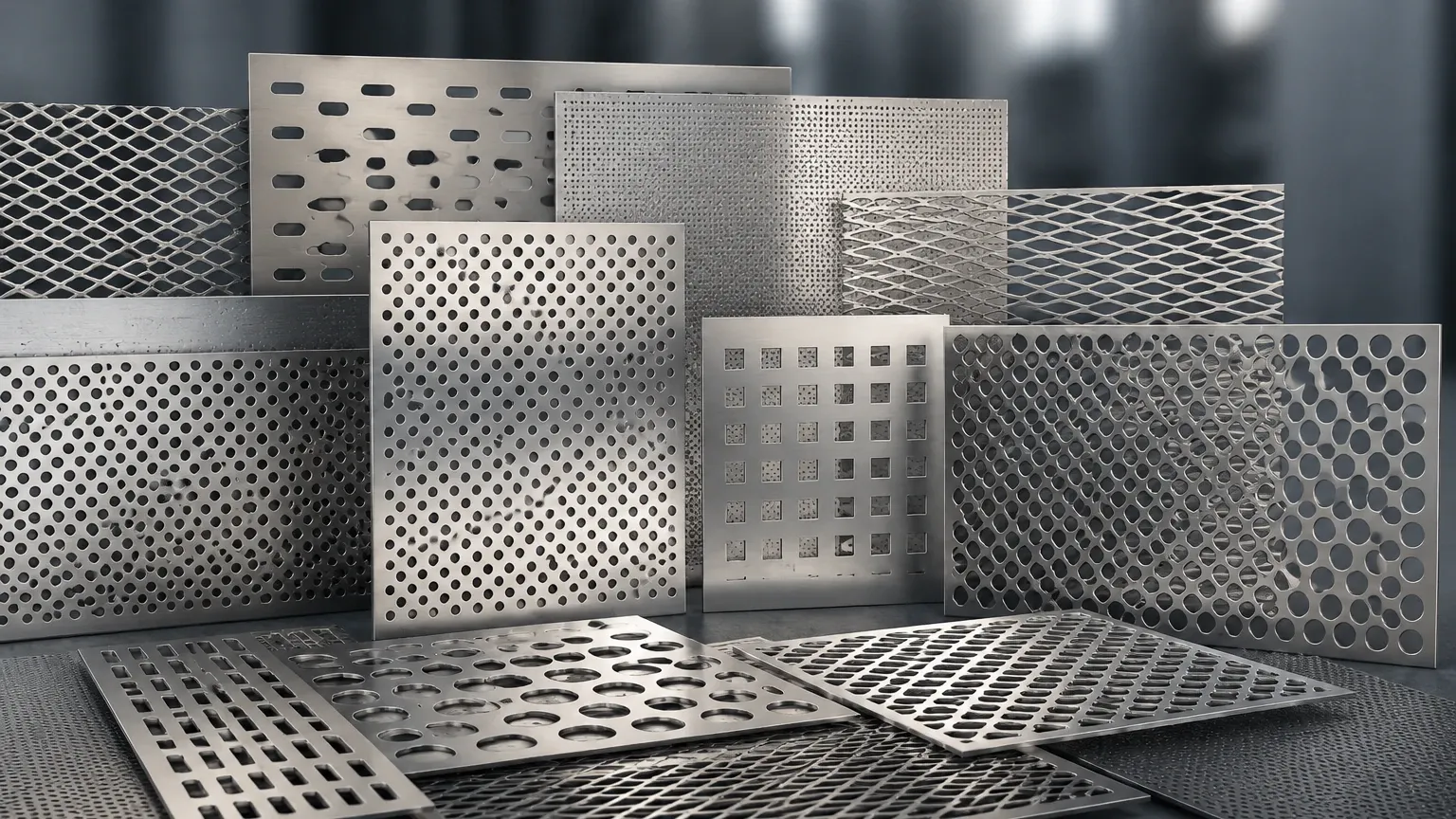
The most common patterns include round, square, slotted, and hexagonal holes. In industrial filtration, the choice of pattern is dictated by the required filtration accuracy and the nature of the media being processed. Round holes are typically preferred for their structural stability and ease of cleaning. The arrangement—whether staggered (usually 60 degrees) or straight—significantly impacts both the open area and the mechanical strength of the panel.
Open Area Calculations
The "open area" is the percentage of the panel that consists of holes. This is perhaps the most critical calculation for engineers. A high open area reduces pressure drop and increases flow rates but can compromise the structural rigidity of the panel. A digital model might visually represent a 50% open area, but the actual manufacturing of such a panel in heavy-gauge stainless steel requires careful consideration of the "bridge" (the distance between holes) to prevent warping or tearing during the punching process.
Material Selection and Gauge
While a 3D model is material-agnostic, the physical application demands specific alloys. Stainless steel (Grades 304, 316, and 316L) is the standard for industrial filtration due to its corrosion resistance and durability. The thickness (gauge) of the metal must be balanced against the hole diameter; a general rule in perforation is that the hole diameter should not be smaller than the material thickness to avoid excessive tool wear and potential material failure.
From 3D Model to Manufacturing Reality
Using a perforated metal panel 3d warehouse file as a reference is helpful, but the manufacturing of Perforated & Expanded Metal involves processes that a static model cannot replicate. At Kaifil, the production process involves several stages that ensure the final component performs reliably in demanding environments.
Precision Punching and CNC Fabrication
Industrial perforation is achieved through high-speed CNC punching presses or all-across perforated presses. Unlike a digital model where holes are perfectly uniform and instantaneous, physical punching involves mechanical stresses. The choice of tooling and the speed of the press are adjusted based on the material's ductility and the required precision. For filtration applications, even a micron-level deviation in hole size can affect the efficiency of the entire system.
Leveling and Degreasing
The perforation process often introduces internal stresses into the metal, causing the sheet to curl or bow. Post-perforation leveling is a necessary step to ensure the panel is perfectly flat for subsequent fabrication or installation. Furthermore, industrial filters must be free of residual oils and lubricants used during punching, especially for food, beverage, and pharmaceutical applications. This requires a thorough degreasing and cleaning process that a 3D model does not specify.
Margins and Blank Areas
A common oversight in generic 3D models is the "margin." In physical manufacturing, panels usually require unperforated borders for welding, bolting, or fitting into a frame. Specifying these margins is essential for the structural integrity of the final assembly. Engineers must define the "end pattern"—whether the holes should be finished or broken at the edges—to avoid sharp points or structural weaknesses.
Engineering Considerations for Industrial Performance
For B2B buyers in the chemical, hydraulic, and water treatment sectors, the performance of the perforated panel is measured by its longevity and efficiency. When evaluating a design derived from a perforated metal panel 3d warehouse, engineers should confirm the following performance factors:
Pressure Drop and Flow Resistance
In filtration systems, the perforated metal often serves as a support structure for finer wire mesh or as a primary coarse filter. The resistance to flow (pressure drop) must be calculated based on the fluid's viscosity, velocity, and the panel's open area. Over-specifying the hole size to reduce pressure drop can lead to insufficient filtration, while under-specifying can lead to system failure or increased energy costs for pumps.
Mechanical Strength and Load Bearing
Perforated panels are frequently subjected to mechanical loads, such as the weight of a catalyst bed or the pressure of a hydraulic fluid. The "ligament" (the metal remaining between the holes) must be thick enough to withstand these forces without deforming. In expanded metal, the strands and bonds provide a unique strength-to-weight ratio that is often superior to perforated sheet of the same weight, making it an excellent choice for protective grilles and heavy-duty supports.
Chemical and Thermal Compatibility
In chemical processing, the perforated metal is exposed to corrosive agents and extreme temperatures. While a 3D model looks the same regardless of the environment, the physical panel must be specified with the correct alloy. For instance, 316L stainless steel is often required for its superior resistance to pitting and crevice corrosion in chloride-rich environments.
Customization and OEM Capabilities
Generic models found in a perforated metal panel 3d warehouse are rarely optimized for specific industrial tasks. This is where Kaifil’s expertise in custom stainless steel filtration solutions becomes vital. Customization allows for the optimization of every variable to suit the specific application.
Tailored Hole Patterns
Beyond standard round holes, custom perforation allows for specialized shapes like bridge slots or conical holes, which are used in specific separation processes to prevent clogging (blinding). These patterns are difficult to find in standard 3D libraries but are essential for specialized industrial equipment.
Secondary Fabrication
Most industrial applications require the perforated sheet to be formed into a specific shape—cylinders, cones, or pleated cartridges. Kaifil provides comprehensive OEM services that include rolling, welding (TIG, MIG, or spot welding), and assembly. A 3D model of a flat panel is only the first step; the engineering challenge lies in maintaining the integrity of the perforation pattern through the forming and welding stages.
Surface Finishing
Depending on the application, the perforated metal may require additional surface treatments such as passivating, electropolishing, or coating. These finishes improve corrosion resistance and ensure that the surface is smooth enough to prevent bacterial growth in food-grade or pharmaceutical applications.
Evaluating Total Cost and Selection Criteria
When moving from a digital design to a procurement phase, B2B buyers must look beyond the initial purchase price and consider the total cost of ownership (TCO). A well-engineered perforated panel can significantly reduce maintenance costs and downtime.
1. Durability vs. Cost: Opting for a higher grade of stainless steel or a thicker gauge may increase the upfront cost but will extend the replacement cycle, especially in abrasive or corrosive environments.
2. Manufacturing Precision: Poorly manufactured panels with burrs or inconsistent hole sizes can lead to premature filter failure or damage to downstream equipment. Choosing a manufacturer with advanced quality control ensures that the product matches the technical specifications exactly.
3. Ease of Maintenance: For filtration systems, the ability to clean the perforated surface (backwashing or manual cleaning) is paramount. The smoothness of the perforation and the quality of the finish directly impact how easily the system can be restored to full capacity.
Conclusion: Bridging the Gap
While a perforated metal panel 3d warehouse is a valuable tool for the initial visualization and conceptualization of industrial projects, it cannot replace the rigorous technical specification required for successful manufacturing. Engineers and purchasing teams must translate these visual models into detailed data sets that account for material properties, mechanical stresses, and filtration requirements.
Kaifil specializes in transforming these technical requirements into high-performance Perforated & Expanded Metal components. By focusing on precision manufacturing, material expertise, and customized OEM solutions, Kaifil ensures that the transition from a 3D design to a physical industrial component results in a product that meets the highest standards of durability and efficiency. When the performance of your filtration or industrial system depends on the integrity of a metal panel, relying on expert manufacturing guidance is the most effective way to ensure long-term success.
