


Perforated Metal Panel Texture
In industrial engineering and filtration design, the term "texture" refers to more than just the tactile feel of a surface. When discussing perforated metal panel texture, engineers are primarily concerned with the geometric configuration, the physical profile of the openings, and the surface finish of the material. These factors collectively determine the component's performance in fluid dynamics, particle retention, and structural load-bearing capacity. For manufacturers like Kaifil, understanding the nuances of these textures is essential for delivering high-performance Perforated & Expanded Metal solutions tailored to demanding industrial environments.
Defining Perforated Metal Panel Texture in Industrial Applications
The texture of a perforated metal panel is defined by the relationship between the solid metal areas and the voids created during the manufacturing process. Unlike decorative architectural panels where texture might be purely aesthetic, in B2B industrial sectors—such as chemical processing or pharmaceutical manufacturing—texture is a functional specification.
Geometric Texture
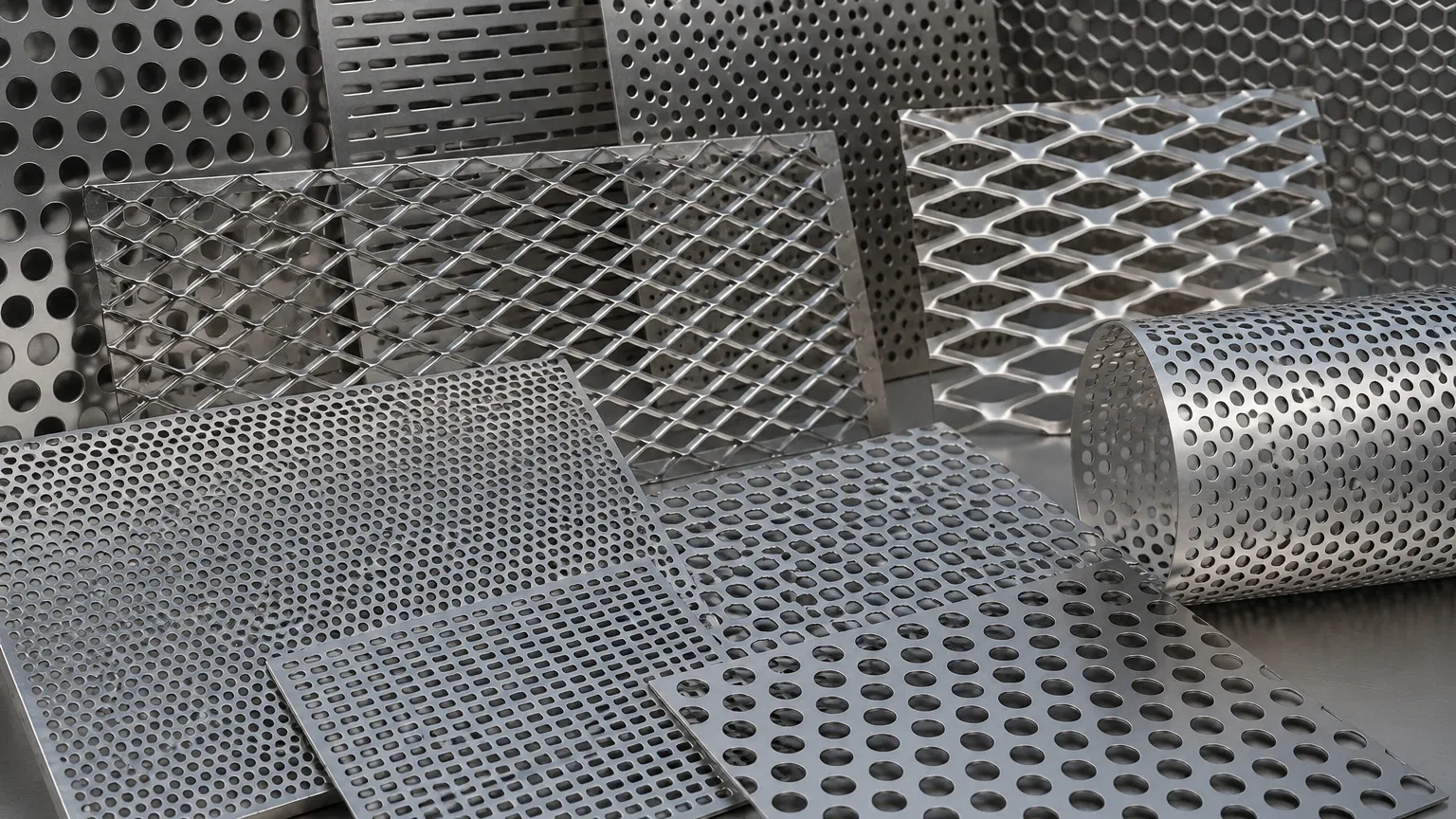
Geometric texture is determined by the hole pattern (round, square, slotted, or hexagonal) and the arrangement (staggered vs. straight). A staggered pattern typically provides higher structural integrity and a more uniform distribution of stress across the panel, whereas a straight pattern may be preferred for specific alignment needs in filtration or sorting machinery.
Surface Topography
The mechanical process of punching or laser-cutting metal introduces specific topographical features. For instance, the "die side" and the "punch side" of a perforated sheet often have different edge characteristics. The punch side may have a slight radius, while the die side might exhibit a small burr. In high-precision filtration, these micro-textures must be managed through secondary processes like deburring or electropolishing to ensure the perforated metal panel texture does not trap contaminants or impede flow.
The Interplay Between Perforated & Expanded Metal
While often grouped together, perforated and expanded metals offer vastly different textural profiles. Choosing between them requires an understanding of how their manufacturing processes affect the final surface.
Perforated Metal Texture
Perforated metal is produced by punching holes into a flat sheet. This results in a relatively flat texture, where the thickness of the panel remains consistent across the surface. This flatness is critical for applications requiring a flush mounting surface or where the panel serves as a support substrate for finer wire mesh filters. The perforated metal panel texture here is characterized by precise, repeatable hole diameters and spacing.
Expanded Metal Texture
Expanded metal is created by simultaneously slitting and stretching the metal sheet. This process creates a three-dimensional, diamond-shaped texture. The strands and bonds are set at a sharp angle to the original plane of the sheet. This "raised" texture provides excellent grip and strength-to-weight ratios but introduces complex flow patterns. For filtration, the three-dimensional texture of expanded metal can act as a pre-filter, catching larger debris before it reaches a secondary filtration stage.
Technical Parameters Influencing Surface Texture
To specify the correct perforated metal panel texture, engineers must evaluate several technical parameters that influence both the look and the function of the material.
Open Area Percentage
The open area is the ratio of the total area of the holes to the total area of the sheet. This is the most critical factor for flow rate and pressure drop. A higher open area results in a "lighter" texture with less solid metal, which may reduce structural rigidity. Conversely, a lower open area creates a "denser" texture, suitable for high-pressure environments where the panel must resist deformation.
Pitch and Center-to-Center Distance
The pitch refers to the distance between the centers of adjacent holes. This measurement dictates the density of the perforated metal panel texture. In filtration applications, a tight pitch allows for more holes per square inch, maximizing throughput without necessarily increasing the hole size.
Margins and Blank Areas
Industrial panels often require unperforated edges, known as margins, for welding or bolting into frames. The transition between the perforated texture and the solid margin is a point of potential mechanical stress. Proper specification of these margins ensures that the panel integrates seamlessly into the final assembly without compromising the integrity of the textured area.
Material Selection and Its Impact on Texture Durability
The choice of material significantly affects how the perforated metal panel texture holds up under operational stress. Kaifil specializes in stainless steel solutions, which are preferred in industrial settings for their balance of workability and durability.
* Stainless Steel 304/304L: The standard choice for general industrial use. It maintains a clean, consistent texture and offers good resistance to atmospheric corrosion.
* Stainless Steel 316/316L: Essential for chemical processing and marine environments. The addition of molybdenum prevents pitting, ensuring that the edges of the perforations—the most vulnerable part of the texture—remain sharp and functional over time.
* Specialty Alloys: For high-temperature or highly acidic environments, alloys like Monel or Inconel may be used. These materials are harder to perforate, requiring specialized tooling to maintain the desired perforated metal panel texture without excessive tool wear or material deformation.
Application-Specific Texture Requirements: From Filtration to Protection
Different industries demand different textural characteristics based on their specific operational challenges.
Chemical and Petrochemical Processing
In these sectors, perforated panels often serve as catalyst supports or intake screens. The texture must be free of burrs and sharp edges to prevent the accumulation of chemical residues. A smooth, electropolished perforated metal panel texture is often specified to facilitate easy cleaning and prevent corrosion initiation sites.
Food and Beverage Industry
Hygiene is the primary concern here. Perforated metal used in food processing must have a texture that does not allow for bacterial growth. This usually means a high-grade stainless steel with a specific surface roughness (Ra) value. The holes must be perfectly cylindrical to prevent food particles from becoming lodged in the texture.
Hydraulic and Water Treatment
In hydraulic systems, perforated metal acts as a strainer or a support for pleated filter media. The texture needs to be robust enough to withstand high-pressure pulses. The "texture" in this context also involves the burr-free nature of the holes to prevent metal fragments from entering the hydraulic fluid and damaging sensitive valves.
Engineering Guidelines for Specifying Custom Textures
When sourcing Perforated & Expanded Metal for a project, engineers should confirm several factors to ensure the resulting texture meets the application's needs:
1. Hole Size vs. Material Thickness: As a rule of thumb, the hole diameter should not be smaller than the material thickness. Attempting to punch holes smaller than the thickness can lead to tool breakage and an inconsistent perforated metal panel texture.
2. Direction of Flow: For slotted or expanded metal textures, the orientation of the openings relative to the fluid flow can significantly impact turbulence and pressure drop. Always specify if the slots should run parallel or perpendicular to the long dimension of the sheet.
3. Secondary Finishing: Determine if the application requires leveling, deburring, or coating. Leveling ensures the panel is perfectly flat, which is vital for the texture to be uniform across large surface areas.
4. Tolerances: Standard commercial tolerances may not be sufficient for precision filtration. Engineers should specify the allowable variance in hole diameter and pitch to maintain the integrity of the filtration texture.
Common Risks and Quality Control
Failure to properly specify or manufacture the perforated metal panel texture can lead to several industrial risks:
* Stress Cracking: If the bridges (the metal between the holes) are too narrow, the texture may fail under vibration or thermal expansion.
* Blinding/Clogging: An inappropriate texture for the particle size being filtered can lead to premature clogging, increasing maintenance costs and downtime.
* Media Migration: In composite filters, if the perforated support texture has sharp edges, it can abrade the finer mesh or fabric layers, leading to filter failure.
To mitigate these risks, Kaifil employs rigorous quality control measures, ensuring that every panel meets the specified dimensions and surface quality. By focusing on the technical details of the perforated metal panel texture, we provide components that are not only durable but also optimized for their specific industrial role.
Conclusion: Selecting the Right Partner for Custom Filtration
The perforated metal panel texture is a fundamental component of industrial design that influences everything from flow dynamics to structural longevity. Whether you are designing a complex chemical reactor or a simple water intake screen, the precision of the perforation is paramount. By understanding the engineering principles behind hole patterns, material behavior, and surface finishes, purchasing teams can make more informed decisions that balance performance with total cost of ownership.
For those requiring specialized designs or high-performance materials, working with a dedicated manufacturer like Kaifil ensures that technical requirements are met with precision. Our expertise in stainless steel filtration solutions allows us to customize the texture of perforated and expanded metals to meet the most stringent industrial standards.
