


Perforated Metal Sheet Nz
In the industrial landscape of New Zealand, the demand for high-precision components is driven by sectors such as dairy processing, marine engineering, and large-scale water treatment. Among these components, the perforated metal sheet stands out as a fundamental element for filtration, separation, and structural support. Selecting the right perforated metal sheet in NZ requires a deep understanding of material properties, hole geometries, and the specific environmental challenges posed by the region’s unique climate and industrial standards.
As a specialized manufacturer, Kaifil provides engineered Perforated & Expanded Metal solutions designed to meet the rigorous demands of global industrial applications. This guide explores the technical considerations, material selection, and application-specific requirements that engineers and procurement teams must evaluate when sourcing perforated metal for the New Zealand market.
Understanding the Technical Fundamentals of Perforated Metal
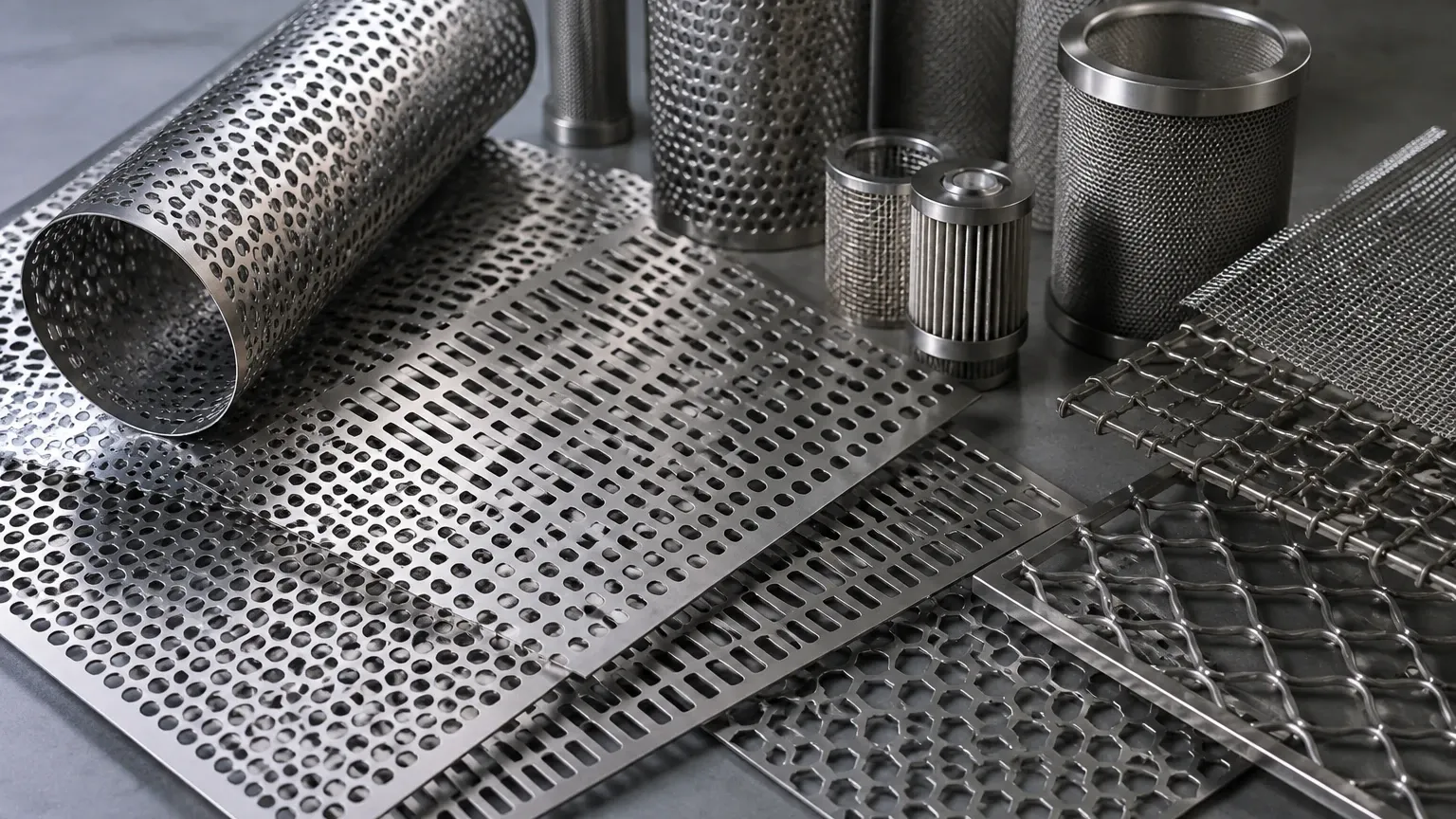
Perforated metal is produced through a mechanical punching or laser-cutting process that creates a pattern of holes, slots, or decorative shapes in a metal sheet. Unlike expanded metal, which is slit and stretched to create a diamond pattern without material waste, perforated metal allows for high precision in hole size and placement. This precision is critical for filtration applications where the "open area" percentage directly impacts flow rates and pressure drops.
The Importance of Open Area Calculations
The open area is the total area of the holes divided by the total area of the sheet, expressed as a percentage. For engineers in the filtration sector, this is the most critical metric. A higher open area allows for greater throughput but may compromise the structural integrity of the sheet. Conversely, a lower open area provides more strength but increases resistance to fluid or air flow.
For a standard staggered round hole pattern, the formula for calculating open area is:
Open Area % = (D² × 90.69) / P²
*(Where D = Hole Diameter and P = Pitch/Center-to-Center distance)*
Understanding these calculations ensures that the perforated metal sheet nz selected for a project will perform predictably under operational stresses.
Material Selection for the New Zealand Environment
New Zealand’s industrial environment is characterized by high humidity, coastal salt spray, and strict sanitary requirements in the food and beverage sector. Consequently, material selection is the primary determinant of a component's service life.
Stainless Steel 304 vs. 316
In most NZ industrial applications, stainless steel is the preferred material due to its corrosion resistance and durability.
* Grade 304: This is the standard "18/8" stainless steel. It is suitable for indoor applications, architectural accents, and general industrial screening where exposure to corrosive agents is minimal.
* Grade 316: Known as marine-grade stainless steel, Grade 316 contains molybdenum, which provides significantly higher resistance to pitting and crevice corrosion in chloride-rich environments. For any perforated metal sheet nz intended for use in coastal regions or chemical processing plants, Grade 316 is the industry recommendation.
Specialty Alloys
For high-temperature applications or highly acidic environments found in chemical processing, specialty alloys like Monel, Inconel, or Hastelloy may be required. Kaifil’s manufacturing capabilities extend to these advanced materials, ensuring that filtration components can withstand extreme thermal and chemical stress.
Key Applications in NZ’s Primary Industries
The versatility of perforated metal allows it to serve multiple functions across New Zealand's core economic sectors.
Dairy and Food Processing
New Zealand is a global leader in dairy exports. Perforated metal sheets are integral to the production of milk powder, cheese, and other dairy products. They are used in vibratory sifters, drying trays, and centrifugal screens. In these applications, the surface finish is as important as the hole pattern. Sheets must be burr-free and often require electropolishing to ensure they meet stringent HACCP (Hazard Analysis and Critical Control Points) and food safety standards, preventing bacterial growth in crevices.
Water Treatment and Irrigation
With extensive agricultural irrigation and municipal water management systems, NZ requires robust filtration media. Perforated metal serves as the primary intake screen or as a support structure for finer wire mesh filters. Its role is to remove large debris while resisting the constant force of water flow and potential impact from solids.
Architectural and Acoustic Solutions
Beyond industrial filtration, perforated metal is increasingly used in New Zealand’s modern architecture. It provides solar shading, aesthetic facades, and acoustic dampening in public spaces. By varying the hole size and pitch, architects can control light transmission and sound absorption while maintaining the structural benefits of metal cladding.
Perforated vs. Expanded Metal: Choosing the Right Structure
When sourcing Perforated & Expanded Metal, it is essential to distinguish between the two based on the application's mechanical requirements.
* Perforated Metal: Offers superior precision. Holes can be as small as the material thickness (1:1 ratio). It is ideal for precise filtration, sorting, and applications requiring specific margins or blank areas for welding and mounting.
* Expanded Metal: Created by slitting and stretching the metal. This process creates a reinforced 3D structure that is exceptionally strong for its weight. It is often used for walkways, safety guards, and heavy-duty screening where exact hole geometry is less critical than overall structural rigidity.
Customization and Engineering Considerations
Off-the-shelf perforated sheets rarely meet the exact needs of complex industrial systems. Customization is often necessary to optimize performance and ease of installation.
Hole Patterns and Orientations
* Round Holes: The most common and economical pattern, offering a balance of strength and open area.
* Square Holes: Provide a higher open area but are more prone to structural deformation under high pressure.
* Slotted Holes: Ideal for sorting elongated materials or for use in drainage systems where directional flow is required.
Margins and Blank Areas
A significant advantage of custom-manufactured perforated metal is the ability to define "margins"—the unperforated areas along the edges of the sheet. These margins are essential for welding the sheet into a frame or bolting it to a support structure without compromising the pattern. Engineers should specify the width of these margins during the design phase to avoid the need for secondary trimming, which can introduce stress and burrs.
Evaluation Criteria for Procurement and Engineering Teams
When evaluating a supplier for a perforated metal sheet nz, technical professionals should look beyond the price per sheet and consider the total cost of ownership and technical compliance.
1. Dimensional Tolerance: In precision filtration, even a 0.1mm deviation in hole diameter can significantly affect the filtration rating. Ensure the manufacturer adheres to international standards (such as ISO or ASTM).
2. Flatness and Tension: The perforation process can introduce internal stresses into the metal, causing it to curl or buckle. High-quality sheets undergo a leveling process to ensure they remain flat for easy integration into larger assemblies.
3. Surface Finish: For many B2B applications, the presence of oils, burrs, or sharp edges is unacceptable. Specify the required finish—whether it be mill finish, degreased, pickled, or polished—to match the end-use environment.
4. Supply Chain Reliability: For NZ-based projects, lead times and shipping logistics are critical. Working with a manufacturer like Kaifil, who understands the global supply chain, ensures that custom components arrive on schedule and meet the specified technical benchmarks.
Maintenance and Longevity in Industrial Systems
To maximize the lifespan of stainless steel perforated components, a proactive maintenance schedule is required. In the food industry, this involves regular Clean-in-Place (CIP) cycles using caustic or acidic cleaners. It is vital to ensure that the material grade (e.g., 316L) is compatible with these cleaning agents to prevent chemical corrosion.
In outdoor or marine applications, regular rinsing with fresh water can prevent the accumulation of salt crystals, which are the primary cause of pitting in stainless steel. If a perforated sheet shows signs of "tea staining" (light brown surface oxidation), it should be cleaned with specialized stainless steel restorers to prevent deeper structural damage.
Conclusion
The selection of a perforated metal sheet nz is a technical decision that impacts the efficiency, safety, and durability of industrial operations. Whether the application is a high-pressure hydraulic filter, a sanitary dairy screen, or an architectural facade, the choice of material, hole pattern, and manufacturing precision is paramount.
By focusing on high-grade materials like 316 stainless steel and utilizing precise engineering calculations for open area and flow, New Zealand industries can ensure their systems operate at peak performance. Kaifil remains committed to supporting these industries with customized, high-performance Perforated & Expanded Metal solutions that meet the most demanding global standards.
