


Perforated Metal Sizes
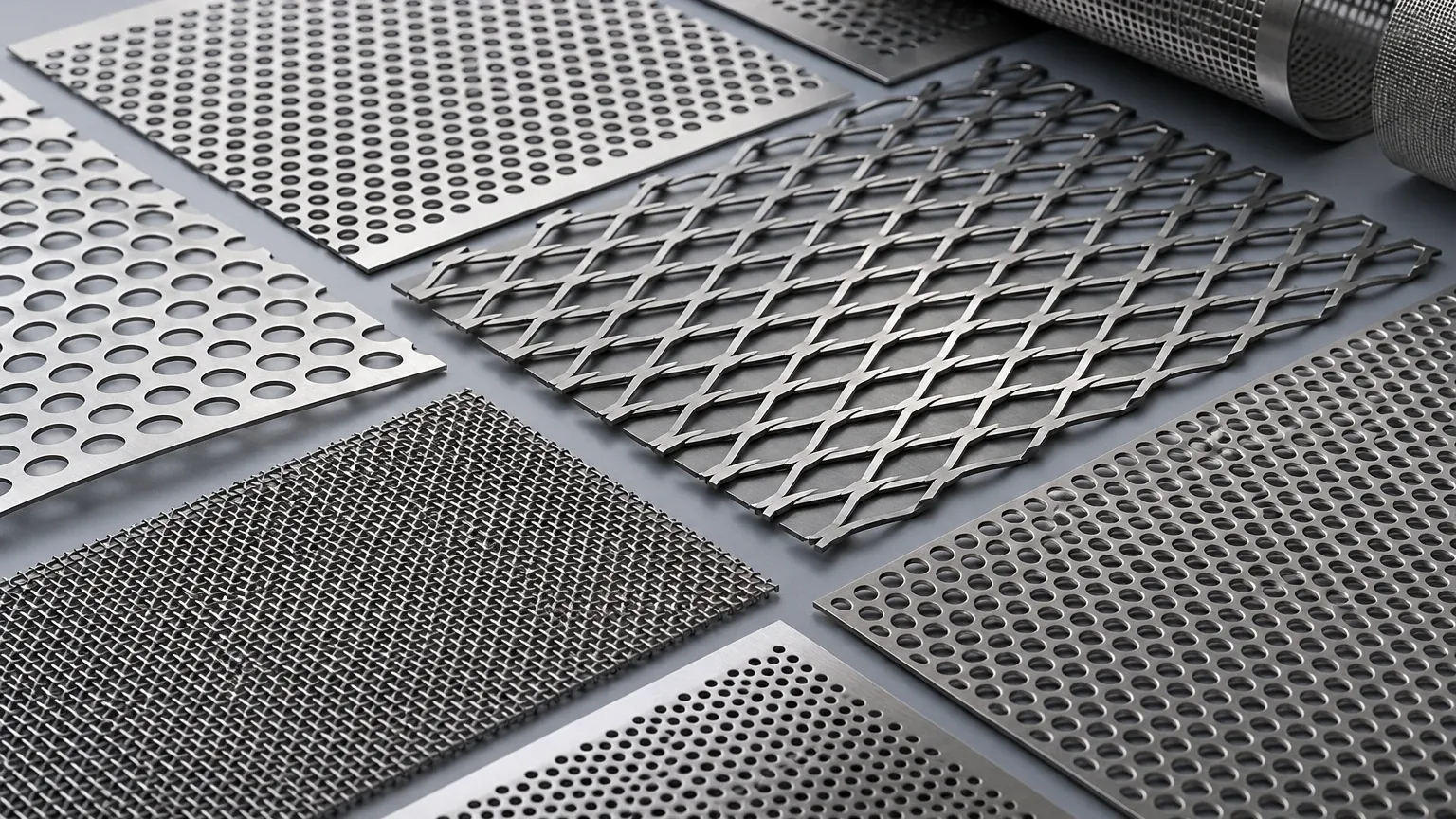
In industrial filtration and structural engineering, the selection of perforated metal is a critical decision that impacts flow dynamics, structural integrity, and the efficiency of the entire system. Understanding the nuances of perforated metal sizes involves more than simply choosing a hole diameter; it requires a comprehensive analysis of the relationship between hole geometry, material thickness, pitch, and the resulting open area. For engineers and procurement specialists, getting these specifications right is essential to ensure that the Perforated & Expanded Metal components perform reliably under demanding conditions, such as high-pressure hydraulic systems or corrosive chemical processing environments.
Defining Key Perforated Metal Sizes and Dimensions
When specifying perforated metal for industrial applications, several geometric variables must be defined. Each of these dimensions contributes to the mechanical properties and the filtration capability of the material.
Hole Diameter (D)
This is the most basic measurement, representing the width of the opening. In industrial filtration, the hole diameter determines the maximum particle size that can pass through the media. While standard perforated metal sizes often range from 0.5mm to 100mm, precision applications in the pharmaceutical or food industries may require much finer tolerances to ensure consistent separation.
Center-to-Center Distance (Pitch/C)
The pitch refers to the distance from the center of one hole to the center of the adjacent hole. This dimension is crucial because it determines the density of the perforations. A smaller pitch with a constant hole diameter results in a higher open area but may compromise the structural rigidity of the sheet.
Material Thickness (T)
Thickness is usually measured in millimeters or gauge. In the context of perforated metal, the thickness of the base material must be balanced against the hole size. A common engineering rule of thumb is the "1:1 ratio," which suggests that the hole diameter should not be smaller than the material thickness. Attempting to punch holes smaller than the thickness increases the risk of tool breakage and can lead to internal stresses in the metal, potentially causing the sheet to warp or the holes to become irregular.
The Relationship Between Hole Size and Material Thickness
The interaction between hole diameter and material thickness is a primary constraint in the manufacturing of perforated components. When the material is thick and the holes are small, the punching process requires significantly more force, which can lead to rapid wear of the dies and inconsistent hole quality.
For high-performance filtration, such as in stainless steel filter cartridges, maintaining a precise ratio is vital. If an application requires a very fine filtration grade (small holes) but also high structural strength (thick material), alternative manufacturing methods like laser drilling or chemical etching might be considered, though these often come at a higher cost than traditional mechanical punching. Engineers must evaluate whether the performance gains of a non-standard thickness-to-diameter ratio justify the additional manufacturing complexity.
Geometric Patterns and Their Influence on Performance
The arrangement of the holes—the pattern—is just as important as the individual perforated metal sizes. The pattern affects how fluid flows through the material and how the material responds to mechanical loads.
Staggered Pattern (60-Degree)
This is the most common industrial configuration. In a 60-degree staggered pattern, the holes are arranged so that each hole is equidistant from its neighbors. This provides the highest degree of structural uniformity and is the standard for most filtration applications because it allows for a high open area while maintaining the strength of the metal bridges (the solid areas between holes).
Straight Pattern
In a straight pattern, holes are aligned in both horizontal and vertical rows. While simpler to design, this pattern is generally weaker than a staggered arrangement and is typically reserved for aesthetic applications or specific conveyor belt designs where linear alignment is required for mechanical tracking.
Slotted and Square Holes
While round holes are the industry standard due to their structural stability, slotted holes are often used in screening applications where the shape of the particles (such as grain or elongated fibers) requires a specific orientation. Square holes offer a higher open area than round holes of the same width but are more prone to stress concentrations at the corners, which can lead to cracking under high-vibration or high-pressure conditions.
Calculating Open Area for Industrial Filtration
The "Open Area" is the percentage of the sheet that is comprised of holes. This is the most critical metric for engineers calculating flow rates and pressure drops across a filter. The formula for calculating the open area depends on the pattern.
For a standard 60-degree staggered round hole pattern, the formula is:
Open Area % = (D² × 90.69) / C²
Where:
* D = Hole Diameter
* C = Center-to-Center Distance (Pitch)
For a straight round hole pattern, the formula is:
Open Area % = (D² × 78.5) / C²
Understanding these calculations allows engineers to predict the "clean pressure drop" of a system. A higher open area reduces resistance to flow but decreases the mechanical strength of the filter element. In high-pressure hydraulic applications, a balance must be struck to ensure the perforated metal does not collapse under the force of the fluid while still providing sufficient throughput.
Custom vs. Standard Perforated Metal Sizes
While many distributors offer standard perforated metal sizes off-the-shelf, industrial OEM requirements often necessitate custom configurations. Standard sizes are cost-effective for general-purpose guards or simple strainers, but they may not meet the exacting needs of specialized chemical processing or pharmaceutical production.
When to Opt for Custom Sizes
1. Specific Micron Ratings: When the filtration requirement falls between standard drill sizes, custom punching ensures the exact particle retention needed.
2. Varying Hole Densities: In some applications, it is beneficial to have different hole densities across a single sheet to manage flow distribution or to provide solid "dead zones" for welding and mounting.
3. Non-Standard Margins: Standard sheets often have "random" margins where the pattern is cut off at the edge. For precision filter cartridges, custom margins (solid edges) are necessary to facilitate clean, strong longitudinal welds without compromising the hole pattern.
Selection Criteria for Demanding Environments
Choosing the right perforated metal sizes requires an understanding of the operating environment. Material selection and size specifications must work in tandem to prevent premature failure.
Food and Beverage Industry
In food processing, the primary concern is hygiene and "clean-in-place" (CIP) capability. Perforated metal must have smooth, burr-free holes to prevent bacterial growth. Large open areas are often preferred to facilitate rapid cleaning, but the hole size must be small enough to retain the specific food solids being processed.
Chemical and Petrochemical Processing
Corrosion is the leading cause of failure in these sectors. While stainless steel (304 or 316L) is standard, the perforated metal sizes must account for potential material loss over time. If a hole is specified at the absolute limit of the required filtration grade, even minor corrosion can enlarge the hole beyond the acceptable tolerance, leading to system contamination.
Hydraulic and Water Treatment
These applications often involve high differential pressures. Here, the "bridge" size (the solid metal between holes) is paramount. If the bridge is too narrow due to an oversized hole or an undersized pitch, the material may undergo plastic deformation or fatigue failure under cyclic pressure loads.
Common Risks and Selection Pitfalls
Specifying perforated metal sizes without considering the manufacturing realities can lead to several common issues:
* Burrs and Sharp Edges: Mechanical punching naturally creates a "breakout" side where the metal is slightly torn rather than cut. In sensitive filtration applications, these burrs can trap debris or shed metallic particles into the fluid stream. Specifying deburring or electropolishing is often necessary.
* Hole Distortion: When punching near the edge of a sheet or using a very high open area, the holes near the perimeter can become oval or distorted. This affects the accuracy of the filtration.
* Blind Spots: In custom-fabricated cylinders, if the margins are not calculated correctly, a "blind spot" (a solid area without holes) may be created where the sheet overlaps. This can cause localized pressure spikes and uneven wear on the filter media.
* Planarity Issues: High-density perforation can introduce internal stresses that cause the metal sheet to curl or bow. For flat-panel applications, specifying a leveling process after perforation is essential to ensure the component fits correctly into its housing.
Engineering Confirmation Checklist
Before finalizing an order for Perforated & Expanded Metal, technical teams should confirm the following data points with their manufacturer:
1. Hole Diameter and Tolerance: What is the acceptable deviation from the nominal hole size?
2. Pitch and Pattern: Is a 60-degree staggered pattern optimal for the required flow and strength?
3. Material Grade and Gauge: Does the thickness support the 1:1 ratio rule for the chosen hole size?
4. Margin Requirements: Are solid borders needed for welding or mechanical fastening?
5. Secondary Operations: Does the application require degreasing, deburring, or specialized coatings to ensure longevity?
By meticulously defining perforated metal sizes and understanding the mechanical trade-offs involved, engineers can optimize their filtration systems for both performance and durability. Whether for a simple strainer or a complex industrial filter cartridge, the precision of the perforation is the foundation of reliable operation.
