


Perforated Metal Vray
In the realms of architectural design and industrial engineering, the digital visualization of components often precedes physical fabrication. The term "perforated metal vray" typically refers to the process of using the V-Ray rendering engine to simulate the appearance, light transmission, and texture of perforated metal sheets. While these digital representations are essential for aesthetic approval and conceptual prototyping, transitioning from a digital shader to a high-performance industrial filtration component requires a deep understanding of material science, mechanical tolerances, and manufacturing constraints.
For engineers and procurement teams, the challenge lies in ensuring that the visual intent captured in a digital model translates into a functional, durable product. At Kaifil, we specialize in bridging this gap, providing custom Perforated & Expanded Metal solutions that meet the rigorous demands of chemical processing, pharmaceutical manufacturing, and hydraulic systems.
Understanding the Transition from Digital Visualization to Physical Fabrication
When a designer creates a "perforated metal vray" material, they are often manipulating opacity maps and displacement settings to mimic the look of holes in a metal substrate. In a digital environment, these holes are infinitely precise and weightless. However, in industrial manufacturing, every perforation affects the structural integrity, weight, and fluid dynamics of the sheet.
Digital Textures vs. Physical Tooling
In V-Ray, a perforated pattern is often a 2D texture applied to a 3D surface. In the factory, this pattern is created through CNC punching, laser cutting, or waterjet cutting. The choice of manufacturing method depends on the material thickness and the required precision. For industrial filtration, the consistency of the hole size is paramount. If the physical product deviates from the design specifications, it can lead to bypass issues or inconsistent pressure drops in a filtration system.
The Importance of Edge Margins
Digital models often overlook "margins"—the solid areas around the edges of a perforated sheet. In physical fabrication, margins are necessary for welding, mounting, or structural stability. When specifying perforated metal based on a digital render, engineers must define the exact width of these unperforated borders to ensure the component can be integrated into larger assemblies, such as filter cartridges or support cages.
Engineering Specifications for Perforated & Expanded Metal
To move beyond a visual concept, several technical parameters must be defined. These specifications determine how the metal will perform under mechanical stress and environmental exposure.
Hole Patterns and Pitch
The arrangement of holes—whether staggered or straight—significantly impacts both the strength of the sheet and its open area. A 60-degree staggered pattern is the most common for industrial applications because it offers the highest open area and uniform strength across different axes. In a digital "perforated metal vray" setup, this is just a tiling setting; in production, it requires precise tool indexing.
Open Area Calculations
The "Open Area" is the percentage of the sheet that is comprised of holes. This is a critical calculation for any application involving fluid or air flow.
* Formula for Round Holes (Staggered): (D² × 90.69) / P²
* Formula for Square Holes (Straight): (D² × 100) / P²
*(Where D is hole diameter and P is pitch)*
An incorrect open area calculation can lead to excessive backpressure in a hydraulic system or inadequate ventilation in electronic enclosures. While V-Ray can simulate the light passing through these openings, Kaifil provides the engineering data to ensure the flow rates meet operational requirements.
Critical Parameters for Industrial Filtration Performance
In industrial filtration, perforated metal often serves as a support medium for finer wire mesh or as a primary coarse filter. The performance of these components is dictated by factors that a digital render cannot fully capture.
Burrs and Surface Finish
Mechanical punching can leave "burrs" or sharp edges on the exit side of the hole. In food and beverage or pharmaceutical applications, these burrs can harbor bacteria or contaminate the process stream. Kaifil utilizes advanced deburring and polishing techniques to ensure that the physical product is as smooth as its digital counterpart. Surface finishes such as electropolishing or passivation are often required to enhance corrosion resistance in stainless steel components.
Flatness and Stress Relief
The process of perforating metal introduces internal stresses into the material, which can cause the sheet to curl or bow. Leveling is a crucial post-perforation step to ensure the sheet remains flat for subsequent forming or welding into filter cylinders. Engineers must specify the required flatness tolerances, especially if the perforated metal is part of a precision-machined assembly.
Material Selection and Durability in Demanding Environments
A "perforated metal vray" material might look like brushed steel, but the actual alloy selection is what determines the component's lifespan. Kaifil works primarily with stainless steel due to its superior mechanical properties and chemical compatibility.
1. Grade 304 Stainless Steel: The standard choice for general industrial use, offering good corrosion resistance and formability.
2. Grade 316L Stainless Steel: Contains molybdenum, providing enhanced resistance to chlorides and acids. This is the preferred material for marine environments, chemical processing, and pharmaceutical filtration.
3. Specialty Alloys: For high-temperature or highly corrosive applications, materials like Monel, Inconel, or Hastelloy may be required.
Material thickness also plays a vital role. While a digital model has no weight, a physical perforated screen must withstand the differential pressure of the fluid passing through it without deforming. We provide guidance on the minimum thickness required based on the expected pressure loads and the unsupported span of the filter element.
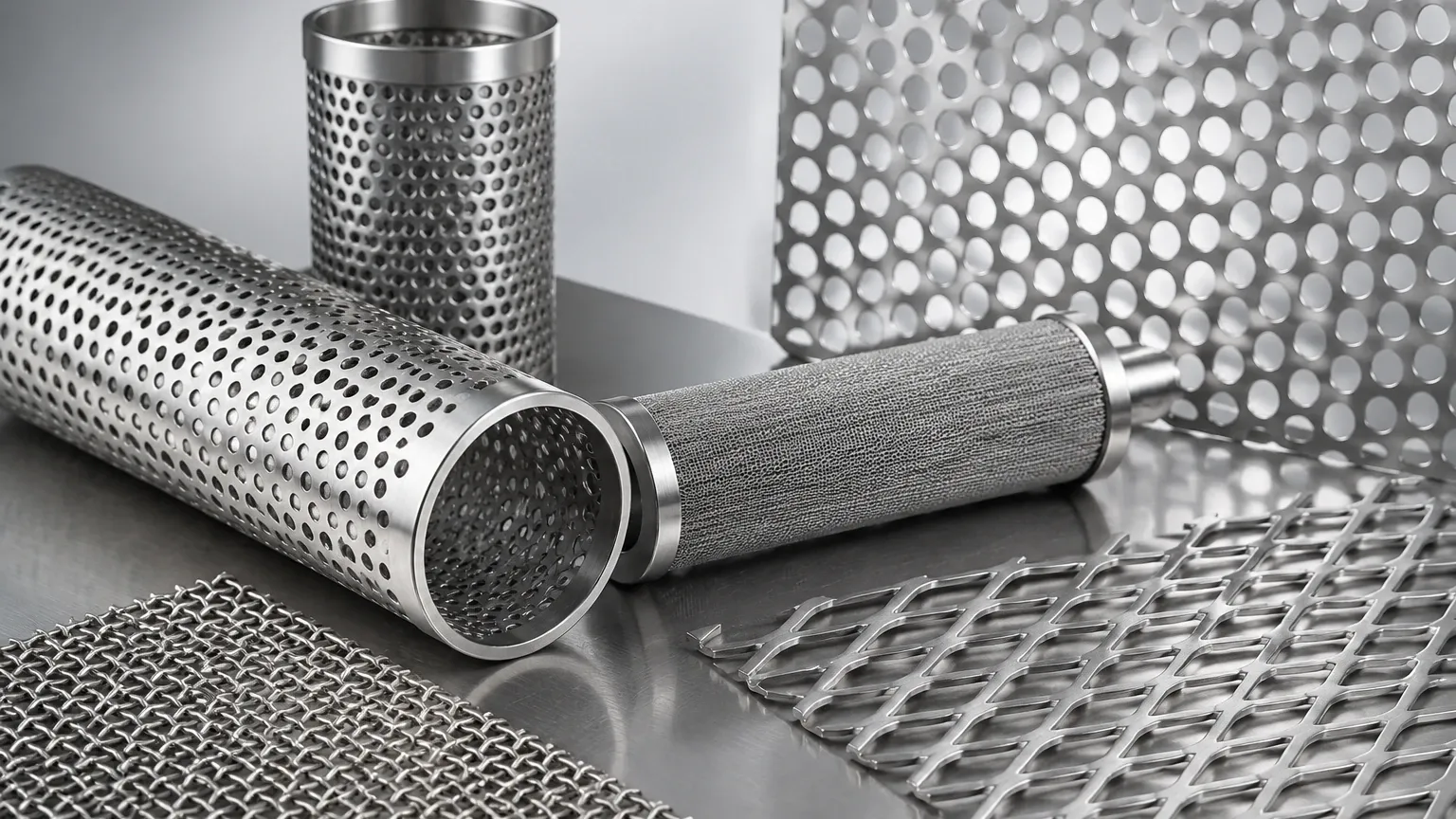
Customization and OEM Capabilities for Complex Designs
Many industrial projects require more than just flat sheets. The transition from a digital design to a finished OEM component often involves complex forming operations.
Cylindrical and Conical Forming
Perforated metal is frequently rolled into cylinders to create the core or outer shroud of a filter cartridge. Achieving a perfect seam—whether through TIG, MIG, or plasma welding—is essential for structural integrity. The alignment of the perforation pattern at the seam is a detail that distinguishes high-quality manufacturing from standard commercial grade products.
Expanded Metal Alternatives
In some cases, expanded metal may be a more efficient choice than perforated metal. Unlike perforation, which involves punching out material (creating waste), expanded metal is slit and stretched, creating a diamond-shaped pattern with no material loss. This results in a high strength-to-weight ratio and a unique 3D geometry that can be useful for specific filtration or architectural tasks. If your "perforated metal vray" project requires a more textured, rigid surface, expanded metal options should be evaluated.
Evaluating Total Cost and Lifecycle of Metal Filtration Components
When moving from the design phase to procurement, it is important to consider the total cost of ownership rather than just the initial purchase price. A cheaper, lower-grade perforated screen may save costs upfront but lead to frequent replacements due to corrosion or mechanical failure.
Replacement Cycles and Maintenance
Industrial filters are subject to fouling and cleaning cycles. The durability of the perforated support is critical during high-pressure backwashing or chemical cleaning. Stainless steel components from Kaifil are designed to withstand repeated cleaning, extending the service life of the entire filtration system.
Technical Support and Selection Advice
Engineers should consult with manufacturers early in the design process. By reviewing the intended application, flow rates, and environmental conditions, we can suggest optimizations in hole size or material thickness that can reduce manufacturing costs without compromising performance. For instance, standardizing hole sizes to match existing tooling can significantly reduce lead times and setup fees.
Conclusion: Realizing Your Digital Vision with Kaifil
Whether you are working with a "perforated metal vray" model for an architectural facade or a complex industrial filter, the success of the project depends on technical accuracy and manufacturing expertise. Kaifil provides the professional guidance and advanced production capabilities needed to turn digital concepts into high-performance metal components.
Our commitment to quality ensures that every perforated and expanded metal product we manufacture meets the exact specifications required for your specific industrial application. By focusing on precision, material integrity, and customized engineering, we help our global partners achieve reliable and cost-effective filtration solutions.
For more information on how to specify the right materials and patterns for your next project, or to request a quote based on your technical drawings, please visit our dedicated product page for Perforated & Expanded Metal and consult with our engineering team.
