


Perforated Metal Walkway
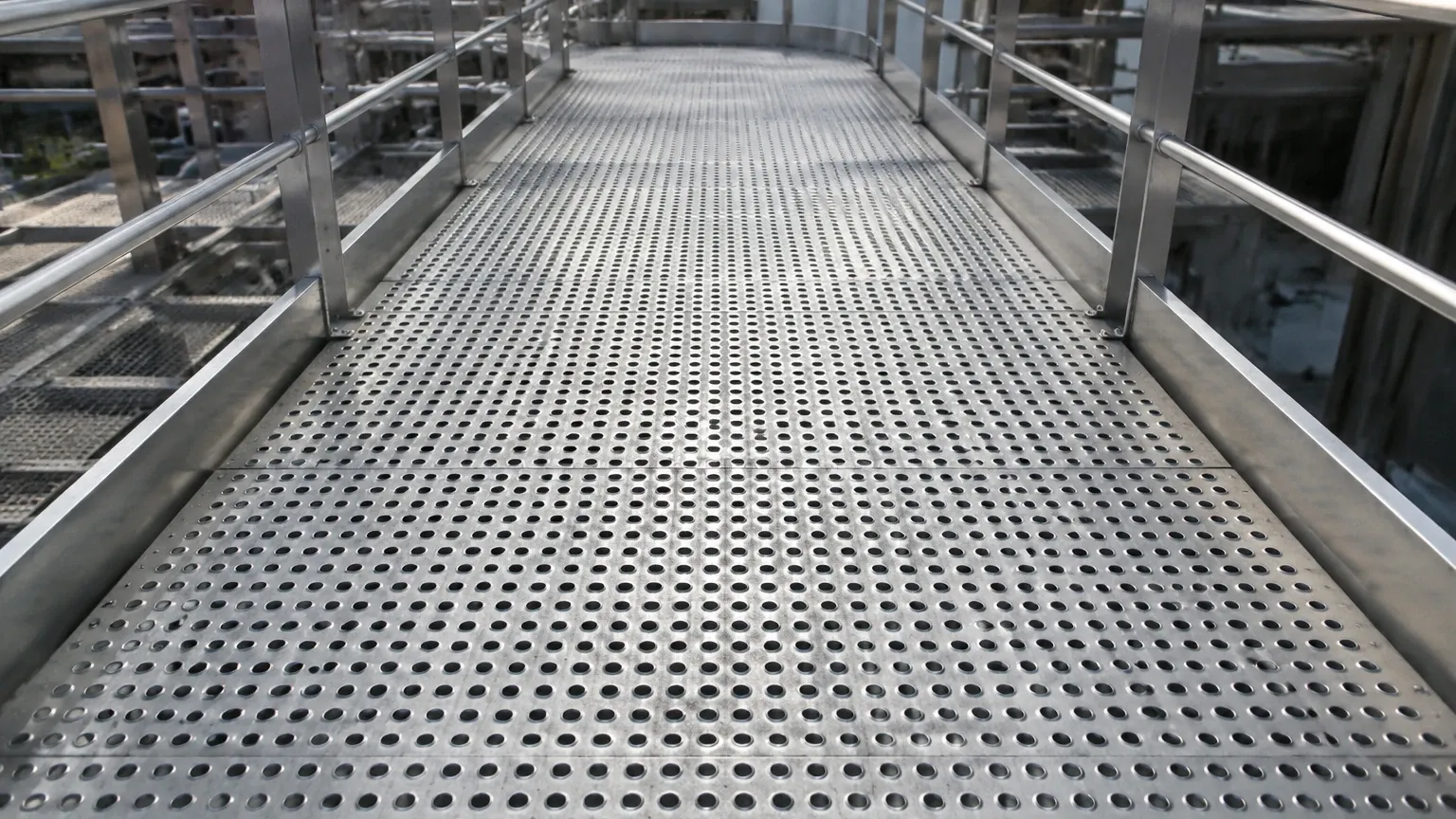
In industrial environments, the structural integrity and safety of flooring systems are paramount. A perforated metal walkway serves as a critical component in facilities ranging from chemical processing plants to water treatment works, providing a stable, slip-resistant surface for personnel while allowing for the passage of light, air, and liquids. Unlike solid plating, these walkways utilize precision-engineered apertures to balance weight, strength, and drainage capabilities.
Selecting the appropriate Perforated & Expanded Metal solution requires a deep understanding of material science, load-bearing requirements, and the specific environmental stressors present in the application. For engineers and facility managers, the choice of walkway material impacts not only immediate safety but also long-term maintenance costs and operational efficiency.
Engineering Fundamentals of Perforated Walkways
The performance of a perforated metal walkway is determined by the interaction between the base material, the hole pattern, and the percentage of open area. In industrial filtration and structural applications, these components must be manufactured to exacting tolerances to ensure they meet safety standards such as OSHA or ISO requirements.
Material Selection and Durability
Most industrial walkways are fabricated from stainless steel, carbon steel, or aluminum. For demanding environments, stainless steel (typically Grade 304 or 316) is the industry standard.
* Grade 304: Offers excellent corrosion resistance and is suitable for most indoor and outdoor industrial applications where exposure to harsh chemicals is limited.
* Grade 316: Contains molybdenum, providing superior resistance to chlorides and marine environments, making it the preferred choice for chemical processing and offshore platforms.
Open Area and Drainage Efficiency
The "open area" refers to the percentage of the sheet that is occupied by holes. In the context of a perforated metal walkway, the open area is a critical engineering metric. A higher open area allows for better drainage of oils, water, and debris, which is essential for maintaining a slip-resistant surface. However, increasing the open area reduces the overall structural rigidity of the panel. Engineers must calculate the optimal ratio to ensure the walkway can support the required live loads while maintaining its self-cleaning properties.
Safety and Slip Resistance in Industrial Design
One of the primary drivers for implementing a perforated metal walkway is the enhancement of workplace safety. In industries where lubricants, water, or particulate matter are frequently present on floor surfaces, traditional solid flooring creates a significant slip hazard.
Anti-Skid Surface Patterns
Perforated panels can be customized with various surface treatments to enhance grip. Common methods include:
* Embossed Dimples: Small raised sections around the perforations provide multi-directional traction.
* Flanged Holes: The edges of the holes are turned upward during the punching process, creating sharp, durable edges that bite into footwear soles.
* Abrasive Coatings: In extreme cases, a secondary coating can be applied, though the inherent geometry of the metal is often sufficient for standard industrial use.
Load-Bearing Capacity and Deflection
When designing a walkway, the "clear span" (the distance between structural supports) must be evaluated against the thickness of the metal. Thicker gauges (such as 10-gauge or 12-gauge stainless steel) are typically required for walkways to prevent excessive deflection. Deflection not only feels unstable to workers but can also cause fatigue in the metal over time, leading to structural failure. Professional manufacturers provide load tables that correlate span distance with permissible weight, ensuring the Perforated & Expanded Metal components meet the safety factors required for the specific installation.
Perforated vs. Expanded Metal for Walkways
While both perforated and expanded metals are used for industrial flooring, they offer different performance characteristics. Understanding these differences is essential for making an informed procurement decision.
Perforated Metal Characteristics
Perforated metal is created by punching holes into a solid sheet. This process allows for high precision in hole placement and size.
* Precision: Ideal for applications requiring specific drainage rates or integration with filtration systems.
* Smoothness: The surface remains relatively flat, which is beneficial for walkways where small-wheeled carts or equipment are frequently moved.
* Customization: Patterns can be varied across a single sheet to include solid margins for easier welding and installation.
Expanded Metal Characteristics
Expanded metal is produced by slitting and stretching a sheet simultaneously, creating a diamond-shaped mesh.
* Material Efficiency: There is virtually no waste in the manufacturing process, making it a cost-effective alternative for large-scale projects.
* Inherent Grip: The strands of expanded metal are naturally set at an angle to the plane of the sheet, providing excellent slip resistance without additional processing.
* Strength-to-Weight Ratio: The interconnected strands provide high structural integrity while remaining lightweight.
Applications Across Industrial Sectors
The versatility of a perforated metal walkway makes it suitable for various sectors where filtration, drainage, and safety intersect.
Chemical and Petrochemical Processing
In these environments, walkways are often exposed to corrosive vapors and liquid spills. Stainless steel perforated walkways allow these substances to pass through to collection systems below, preventing pooling and reducing the risk of chemical burns or slips. The use of high-grade alloys ensures the structure remains intact despite constant exposure to aggressive agents.
Food and Beverage Industry
Hygiene is the priority in food processing. Perforated walkways are preferred because they do not trap bacteria or food particles as easily as solid surfaces. The ability to wash down the entire flooring system with high-pressure water and sanitizing agents—allowing the runoff to pass directly through the perforations—is a significant operational advantage.
Water and Wastewater Treatment
Walkways in water treatment plants are frequently damp. Perforated metal provides the necessary drainage to keep walking surfaces dry. Furthermore, in areas where filtration tanks are located, perforated panels can serve a dual purpose: providing access for technicians while acting as a secondary debris screen for the tanks below.
Technical Specifications and Customization
For engineers, the ability to customize a perforated metal walkway is vital for integrating it into existing infrastructure. Customization options extend beyond material and hole size to include the overall geometry and finishing of the panels.
Precision Manufacturing and OEM Support
Working with an OEM manufacturer like Kaifil allows for the production of components that fit specific spatial constraints. This includes:
* Custom Hole Shapes: While round holes are standard, square, slotted, or hexagonal patterns can be utilized to optimize the balance between open area and strength.
* Edge Treatments: Panels can be supplied with solid borders, notched corners, or pre-drilled bolt holes to simplify the installation process on-site.
* Forming and Bending: Perforated sheets can be formed into "C" channels or "L" shapes to create integrated kickplates or structural supports, reducing the need for secondary fabrication.
Filtration Considerations
In many industrial setups, the walkway is positioned directly above filtration media or fluid reservoirs. In these cases, the perforation pattern must be designed to prevent large debris from falling through and contaminating the process, while still allowing for adequate airflow or liquid drainage. The technical expertise involved in manufacturing Perforated & Expanded Metal ensures that these dual-purpose requirements are met without compromising structural safety.
Installation and Maintenance Best Practices
The longevity of a perforated metal walkway depends heavily on correct installation and a consistent maintenance schedule. Even the highest quality stainless steel can suffer if not handled properly during the construction phase.
Installation Methods
* Welding: Provides a permanent, high-strength connection. However, it requires skilled labor and post-weld treatment (such as pickling and passivating) to restore the corrosion resistance of the stainless steel.
* Mechanical Fasteners: Using clips, bolts, and nuts allows for easier removal of panels for maintenance or cleaning of the substructure. It is critical to use fasteners made of the same material as the walkway to prevent galvanic corrosion.
Maintenance and Inspection
Industrial walkways should be inspected periodically for signs of wear or damage.
1. Debris Accumulation: While perforated designs are self-cleaning to an extent, heavy grease or particulate matter can clog the apertures, reducing drainage and increasing slip risks.
2. Structural Integrity: Check for any signs of permanent deformation (bowing) in the panels, which may indicate that the walkway is being subjected to loads beyond its design capacity.
3. Fastener Tightness: In high-vibration environments, mechanical fasteners may loosen over time and require re-torquing.
Total Cost of Ownership (TCO)
When evaluating the cost of a perforated metal walkway, purchasing teams should look beyond the initial price per square foot. The Total Cost of Ownership includes installation, maintenance, and the projected lifespan of the material.
Investing in high-quality Perforated & Expanded Metal from a specialized manufacturer often results in lower TCO. Stainless steel walkways, while having a higher upfront cost than carbon steel or wood, do not require frequent painting, coating, or replacement due to rot and rust. In a 20-year facility lifecycle, the durability of stainless steel perforated panels typically yields significant savings in both labor and material replacement costs.
Conclusion
The perforated metal walkway is an essential engineering solution for modern industrial facilities. By providing a safe, durable, and highly functional surface, these components support the rigorous demands of chemical, food, and water treatment sectors. When selecting a walkway system, focusing on material grade, open area calculations, and slip-resistance patterns ensures a solution that meets both safety regulations and operational needs. For customized requirements and high-performance filtration-related applications, sourcing from an experienced manufacturer ensures that every panel is engineered for precision and long-term reliability.
