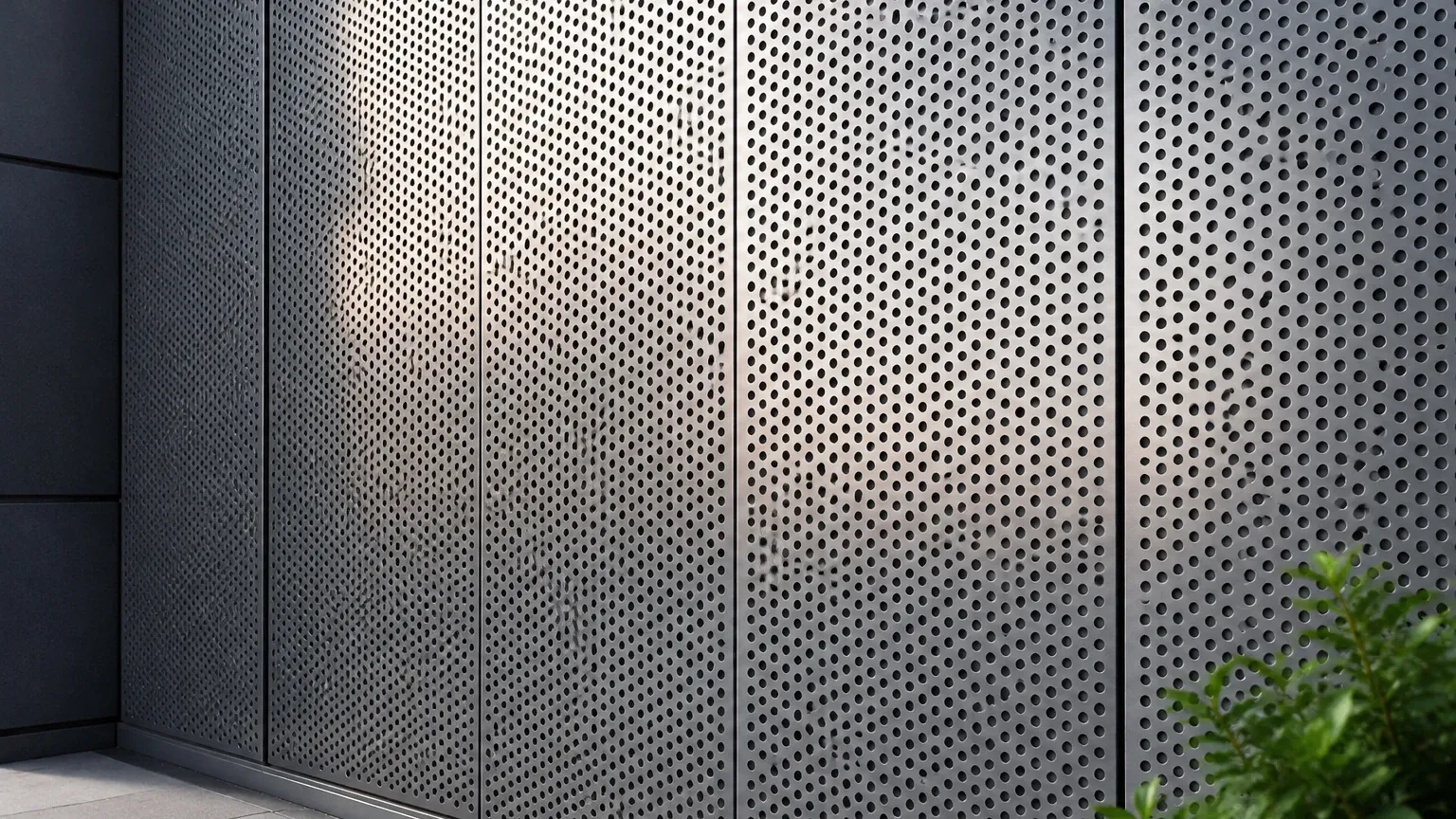
Perforated Metal Wall Panels
In industrial engineering and facility design, perforated metal wall panels serve as critical components that bridge the gap between structural integrity and functional performance. While often associated with architectural aesthetics, these panels are engineered solutions used extensively in chemical processing, pharmaceutical manufacturing, and heavy industrial environments. Understanding the technical specifications, material properties, and manufacturing nuances of Perforated & Expanded Metal is essential for engineers and procurement teams tasked with optimizing filtration, ventilation, and equipment protection.
The Engineering Fundamentals of Perforated Metal
Perforated metal wall panels are produced through a high-precision punching process where specialized machinery creates a pattern of holes, slots, or decorative shapes in a metal sheet. Unlike expanded metal, which is slit and stretched, perforated metal involves the removal of material to achieve a specific open area. This process allows for extreme precision in hole placement and size, which is vital for applications requiring exact airflow or filtration parameters.
From a technical standpoint, the selection of a perforated panel begins with the "open area" calculation. The open area is the percentage of the total sheet area that is occupied by the perforations. For example, in a staggered round hole pattern, the open area is calculated using the formula:
*Open Area % = (D² × 90.69) / P²*
Where *D* is the hole diameter and *P* is the pitch (the distance between the centers of two adjacent holes). This calculation is fundamental for engineers designing ventilation systems or filtration housings, as it directly impacts pressure drop and flow velocity.
Material Selection and Corrosion Resistance
Industrial environments often expose wall panels to corrosive chemicals, high humidity, or extreme temperatures. Consequently, material selection is the most significant factor in determining the lifecycle and total cost of ownership for perforated metal wall panels.
1. Stainless Steel (304 and 316 Grades): Stainless steel is the industry standard for demanding applications. Grade 304 offers excellent corrosion resistance for general industrial use, while Grade 316 contains molybdenum, providing superior resistance to chlorides and acetic acids. In pharmaceutical and food processing facilities, Grade 316L (low carbon) is often preferred to prevent carbide precipitation during welding, ensuring the structural integrity of the filtration or partition system.
2. Aluminum: Known for its high strength-to-weight ratio, aluminum is often used where weight reduction is critical. While it offers natural corrosion resistance through an oxide layer, it is less suitable than stainless steel for high-pressure filtration or highly acidic environments.
3. Carbon Steel: Frequently used in dry, indoor industrial settings where cost is a primary concern. To prevent oxidation, carbon steel panels typically require secondary treatments such as galvanization or powder coating.
Kaifil specializes in custom stainless steel solutions, ensuring that the material grade matches the specific chemical compatibility requirements of the client’s facility.
Perforated vs. Expanded Metal: Technical Distinctions
When evaluating Perforated & Expanded Metal for wall panels, it is important to distinguish between the two manufacturing methods.
* Perforated Metal: Offers a flat surface and precise hole geometry. It is easier to clean, making it ideal for cleanrooms, food processing plants, and pharmaceutical labs where hygiene is paramount. The margins (the solid areas around the edges of the sheet) can be customized to facilitate easier mounting and welding.
* Expanded Metal: Created by slitting and stretching a single sheet, creating a diamond-shaped mesh. This process produces no scrap material, making it a cost-effective choice for heavy-duty security fencing or machine guarding. However, the raised edges of standard expanded metal can trap contaminants, making it less suitable for high-purity filtration applications compared to flattened expanded metal or perforated sheets.
Functional Applications in Industrial Environments
Perforated metal wall panels are rarely used for a single purpose; they often perform multiple functions simultaneously within an industrial layout.
Acoustic Attenuation and Sound Control
In power plants and manufacturing facilities with high-decibel machinery, perforated panels act as the facing for acoustic insulation. Sound waves pass through the perforations and are trapped by sound-absorbing material (such as mineral wool) behind the panel. The hole size and pattern are engineered to target specific sound frequencies, significantly reducing noise pollution and ensuring compliance with occupational safety regulations.
Ventilation and Thermal Management
For electronic enclosures, server rooms, and chemical storage areas, perforated metal wall panels provide essential passive ventilation. By carefully selecting the open area percentage, engineers can ensure sufficient airflow to dissipate heat while maintaining a physical barrier against unauthorized access or large debris. The structural rigidity of the metal allows these panels to span large areas without the sagging associated with plastic or wire mesh alternatives.
Filtration Support and Protection
In complex filtration systems, perforated metal serves as a robust support structure for finer wire mesh filters. The perforated panel provides the mechanical strength required to withstand high-pressure differentials, while the fine mesh handles the actual particulate separation. Additionally, in external applications, these panels protect sensitive filtration equipment from mechanical damage and environmental debris.
Engineering Specifications: Beyond the Hole Pattern
When specifying perforated metal wall panels, technical professionals must look beyond the basic hole pattern. Several secondary factors influence the performance and installation of the panels:
* Pitch and Orientation: Holes can be arranged in a 60-degree staggered, 45-degree staggered, or straight-line pattern. The 60-degree staggered pattern is the most common as it provides the highest strength and most uniform open area.
* Margins: Engineers must specify the width of the unperforated edges. Large margins increase the structural stiffness of the panel and provide a clean surface for bolting or welding to a frame.
* Flatness and Tolerances: Industrial applications often require strict tolerances for flatness and dimensions. The punching process can introduce internal stresses into the metal, causing it to curl. High-quality manufacturers use leveling rollers to ensure the final product meets flatness specifications.
* Surface Finishes: For stainless steel, finishes like electropolishing or passivation are often required to remove surface contaminants and enhance the protective chrome-oxide layer, which is critical in chemical and pharmaceutical applications.
Installation and Structural Considerations
The method of installing perforated metal wall panels is as important as the panel design itself. Because these panels are often used in environments with vibration or thermal cycling, the mounting system must account for movement.
1. Thermal Expansion: Metal panels expand and contract with temperature changes. In outdoor or high-heat industrial settings, slotted mounting holes are used to allow for this movement without causing the panels to buckle.
2. Load-Bearing Capacity: While perforated panels are not typically primary structural members, they must support their own weight and resist external loads such as wind or impact. The thickness (gauge) of the metal and the hole pattern must be calculated to prevent excessive deflection.
3. Fastener Compatibility: To prevent galvanic corrosion, fasteners must be made of the same material as the panel. For example, 316 stainless steel panels should always be secured with 316 stainless steel bolts and washers.
Maintenance and Lifecycle Management
One of the primary advantages of stainless steel perforated metal wall panels is their low maintenance requirement. In filtration and food-grade environments, the smooth surface of the perforated metal allows for efficient "Clean-in-Place" (CIP) or "Steam-in-Place" (SIP) procedures.
Regular inspections should focus on:
* Particulate Buildup: In ventilation applications, dust can accumulate in the perforations, reducing airflow and increasing pressure drop. Periodic pressurized air or water cleaning is usually sufficient to restore performance.
* Structural Integrity: Checking for signs of fatigue or stress cracking around the holes, especially in high-vibration environments.
* Surface Condition: Monitoring for signs of pitting or localized corrosion, which may indicate that the environment has become more aggressive than the material was originally rated for.
Conclusion: Selecting the Right Solution
Perforated metal wall panels are versatile engineering tools that provide essential services in industrial facilities. From controlling acoustics to supporting high-pressure filtration systems, the performance of these panels depends on precise manufacturing and informed material selection. Engineers should prioritize manufacturers who offer deep technical expertise in Perforated & Expanded Metal and can provide customized solutions tailored to the specific rigors of their industry.
By focusing on technical parameters such as open area, material grade, and structural tolerances, purchasing teams can ensure that their perforated metal wall panels contribute to a safe, efficient, and durable industrial environment. Kaifil remains committed to providing the precision-engineered components necessary for these demanding applications, ensuring that every panel meets the highest standards of industrial quality.