


Perforated Z Metal
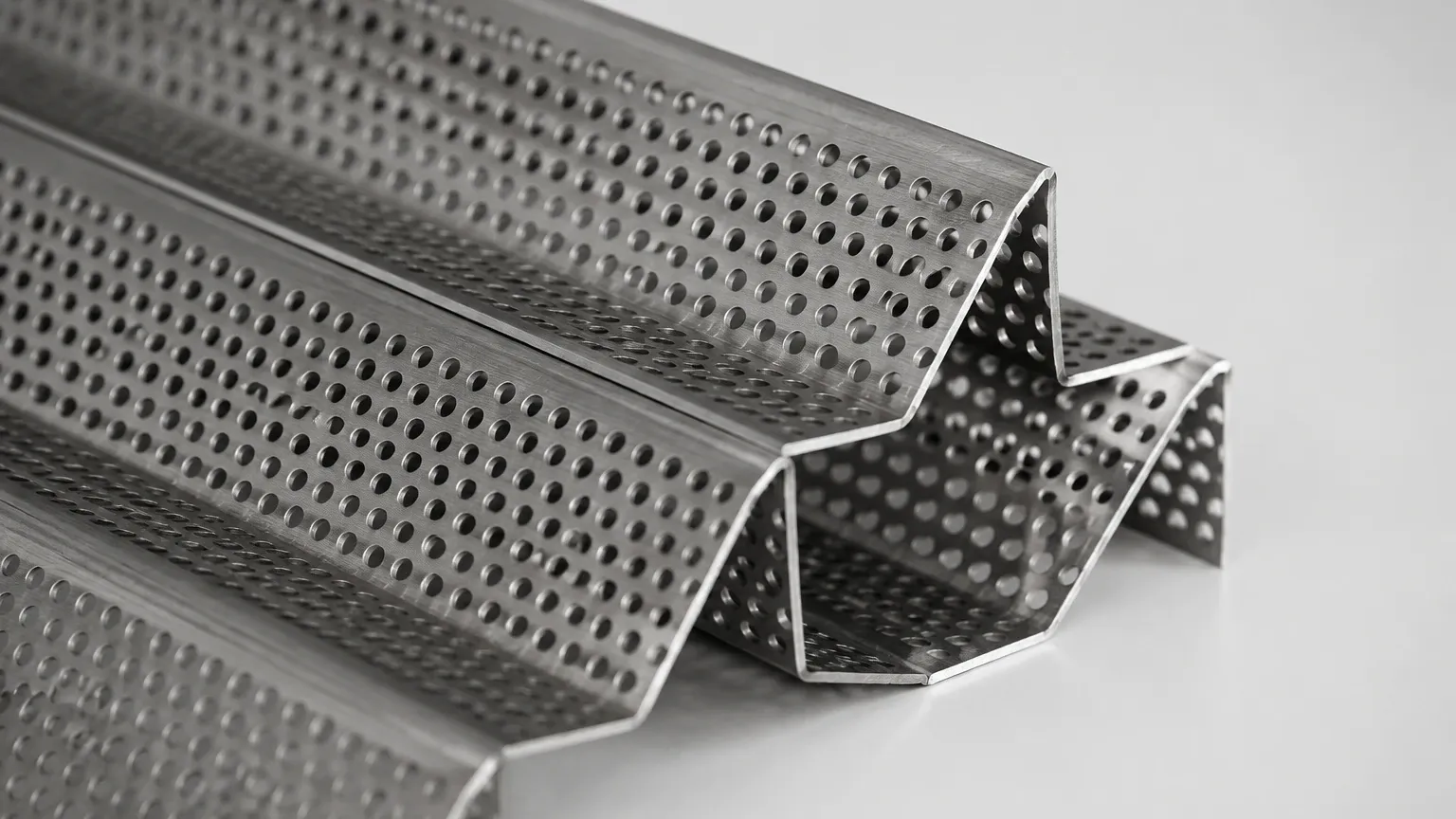
In industrial engineering and filtration design, the structural integrity of a filter medium is as critical as its micron rating. While flat perforated sheets are common, many complex industrial applications require specific geometries to handle high-pressure differentials, provide structural reinforcement, or facilitate unique flow paths. One such specialized configuration is perforated z metal, which refers to perforated metal sheets formed into a "Z" profile or used within Z-shaped structural assemblies. These components are essential in demanding environments where standard flat or cylindrical filters may lack the necessary rigidity or surface area.
As a specialized manufacturer, Kaifil provides precision-engineered Perforated & Expanded Metal solutions designed to meet the rigorous standards of the chemical, pharmaceutical, and food processing industries. Understanding the technical nuances of perforated z metal—from material selection to mechanical properties—is vital for engineers tasked with optimizing filtration performance and equipment longevity.
Understanding the Geometry and Function of Perforated Z Metal
The term "Z metal" typically describes a metal profile with two parallel flanges projecting in opposite directions from a central web, resembling the letter "Z". When this profile is manufactured from perforated material, it combines the benefits of a high-strength structural shape with the functional capabilities of a filter or vent.
In industrial filtration, perforated z metal is frequently utilized in the following capacities:
1. Support Pleats: In heavy-duty air or liquid filtration, perforated Z-sections can act as internal supports for pleated media, preventing the pleats from collapsing under high flow rates.
2. Structural Framing: For large-scale filtration banks, Z-profiles provide a high strength-to-weight ratio, allowing for the construction of rigid frames that do not obstruct airflow or fluid passage.
3. Baffles and Deflectors: In multi-stage separation tanks, perforated Z-shaped baffles help manage turbulence and distribute flow evenly across the primary filter elements.
4. Acoustic and Ventilation Louvers: In industrial machinery enclosures, these profiles allow for heat dissipation and noise attenuation while maintaining a physical barrier against debris.
Technical Specifications and Material Selection
The performance of perforated z metal is fundamentally dictated by the base material and the specific perforation pattern. Choosing the correct alloy is the first step in ensuring the component can withstand the chemical and thermal stresses of its intended environment.
Material Options
* Stainless Steel (304/304L): The industry standard for general-purpose industrial applications. It offers excellent formability and good corrosion resistance.
* Stainless Steel (316/316L): Preferred for marine environments, chemical processing, and pharmaceutical applications due to its superior resistance to pitting and chloride-induced corrosion.
* Duplex Stainless Steel: Utilized in high-pressure hydraulic systems or highly corrosive chemical environments where higher mechanical strength is required.
* Aluminum: Selected for applications requiring lightweight components with moderate corrosion resistance, often in HVAC or aerospace filtration.
Perforation Parameters
The efficiency of a perforated component is measured by its open area percentage. For perforated z metal, engineers must balance the need for high flow (high open area) with the need for structural stiffness (low open area). Common patterns include:
* Round Holes (Staggered or Straight): The most versatile and cost-effective pattern, providing the best balance of strength and open area.
* Square Holes: Often used when a higher open area is required, though square corners can act as stress concentrators during the forming process.
* Slotted Holes: Ideal for applications involving the filtration of elongated particles or where specific flow directionality is required.
Engineering Considerations: Bending and Structural Integrity
Fabricating perforated z metal involves more than simple mechanical punching. Because the material already contains a pattern of holes, the bending process must be carefully managed to avoid deformation or structural failure at the radii.
The Impact of the "Hole-to-Bar" Ratio
When a perforated sheet is bent into a Z-shape, the metal "bars" (the material remaining between the holes) take the brunt of the mechanical stress. If the holes are too close to the bend line, the bars may stretch or crack. Experienced manufacturers calculate the minimum bend radius based on the material thickness and the percentage of open area to ensure the structural integrity of the Z-profile remains intact.
Work Hardening and Springback
Stainless steel, particularly the 300-series, is prone to work hardening during the forming process. When creating perforated z metal, the presence of perforations changes how the material responds to the press brake. Engineers must account for "springback"—the tendency of the metal to return to its original shape after bending—which is more unpredictable in perforated materials than in solid sheets.
Applications in Industrial Filtration Systems
Perforated z metal is a critical component in various high-performance filtration assemblies. Its ability to provide multi-directional support makes it indispensable in complex system designs.
Chemical and Petrochemical Processing
In catalytic reactors and large-scale separation towers, perforated Z-profiles are used to support catalyst beds. These components must withstand extreme temperatures and aggressive chemical vapors. The Z-shape allows for thermal expansion without compromising the structural alignment of the internal filter components.
Food and Beverage Production
Sanitary design is paramount in food processing. Perforated z metal used in these environments must be burr-free and polished to prevent bacterial growth. These profiles are often found in rotary vacuum filters and centrifugal separators, where they provide the rigid skeleton for fine wire mesh overlays.
Hydraulic and Lubrication Systems
In high-pressure hydraulic circuits, perforated Z-sections serve as diffusers. By breaking up high-velocity fluid streams, they prevent cavitation and protect sensitive downstream filter elements from mechanical erosion. The Z-profile is particularly effective here because it can be integrated into the corners of rectangular reservoirs to optimize space.
Quality Assurance and Precision Manufacturing
When sourcing perforated z metal, technical professionals must prioritize manufacturers who adhere to strict quality control protocols. Because these components often serve as the primary support for more expensive filter media, a failure in the Z-profile can lead to catastrophic system failure.
Key quality metrics to confirm include:
* Dimensional Accuracy: Tolerance levels for the flange lengths and the web height of the Z-profile.
* Flatness and Straightness: Ensuring the component does not twist or bow over long spans, which is common in perforated materials due to internal stresses from the punching process.
* Burr Removal: In filtration, even microscopic burrs can shed metal particles into the filtrate or damage the secondary filter mesh. Precision leveling and deburring processes are essential.
* Material Certification: Full traceability of the alloy composition (MTRs) to ensure compliance with industry standards like ASTM or ISO.
Total Cost of Ownership and Selection Advice
While the initial purchase price of perforated z metal is a factor, engineers should evaluate the total cost of ownership (TCO). A cheaper, poorly manufactured component may suffer from premature fatigue or corrosion, leading to frequent downtime and replacement costs.
Customization vs. Standard Profiles
Standard perforated sheets are readily available, but the forming of a Z-profile is almost always a custom process. Providing your manufacturer with detailed CAD drawings that specify the hole pattern orientation relative to the bends can significantly reduce lead times and scrap rates.
Maintenance and Cleaning
In many industrial applications, perforated z metal components are designed to be permanent or semi-permanent. Selecting high-grade stainless steel allows for aggressive cleaning cycles, including Clean-in-Place (CIP) and Steam-in-Place (SIP) protocols. The durability of the Z-profile ensures it can withstand the mechanical stresses of high-pressure backwashing without deforming.
Conclusion
Perforated z metal represents a sophisticated intersection of structural engineering and filtration technology. By choosing the right material, hole pattern, and fabrication partner, engineers can implement solutions that enhance the efficiency and reliability of their industrial processes. Whether used as a support structure in a chemical reactor or a flow distributor in a water treatment plant, these precision components are foundational to modern industrial filtration.
For technical teams seeking reliable, high-performance filtration components, Kaifil offers extensive expertise in the manufacture of Perforated & Expanded Metal. By focusing on precision manufacturing and material integrity, we help our global partners achieve optimized filtration results in the most demanding environments. Before proceeding with your next project, ensure you have confirmed the mechanical load requirements, chemical compatibility, and precise dimensional tolerances required for your specific application.
