


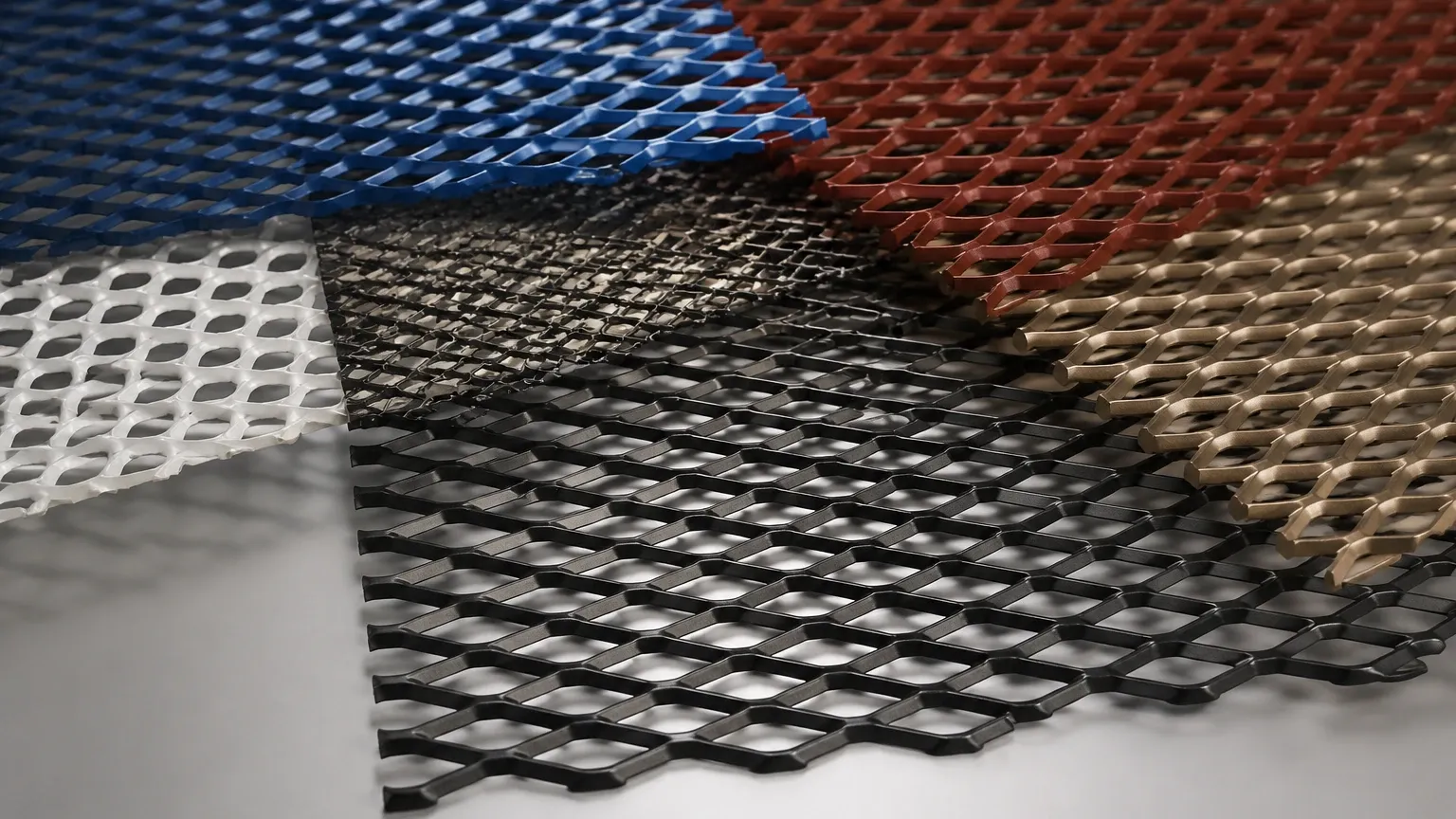
Powder Coated Expanded Metal
In the landscape of industrial filtration and structural engineering, material selection often dictates the longevity and efficiency of a system. Powder coated expanded metal represents a specialized category of processed metal that combines the structural integrity of expanded mesh with the advanced protective properties of thermosetting polymers. For engineers and procurement professionals, understanding the technical nuances of this material—from its manufacturing origins to its performance in corrosive environments—is essential for optimizing filtration systems and industrial components.
While raw stainless steel or aluminum may suffice for certain applications, the addition of a powder coating provides a barrier that significantly enhances chemical resistance, dielectric strength, and mechanical durability. This article examines the technical specifications, manufacturing processes, and engineering considerations for integrating powder coated expanded metal into industrial workflows.
The Role of Powder Coated Expanded Metal in Industrial Applications
Expanded metal is unique because it is not woven or welded; it is produced from a single sheet of metal that is slit and stretched simultaneously. This process creates a continuous piece of material with no joints or weak points, offering an exceptional strength-to-weight ratio. When this base structure is treated with a powder coating, it becomes a versatile component used across various demanding sectors.
In the context of industrial filtration, powder coated expanded metal often serves as a support structure. It provides the rigid "skeleton" required to hold fine wire mesh or filter media in place against high-pressure differentials. In hydraulic systems, chemical processing plants, and water treatment facilities, these components must withstand both mechanical stress and chemical exposure. The coating ensures that the underlying metal—often carbon steel or aluminum—does not succumb to oxidation or galvanic corrosion when in contact with fluids or dissimilar metals.
Beyond filtration, this material is utilized in safety guards, ventilation grilles, and acoustic damping panels. The ability to specify both the mesh geometry (diamond or hexagonal) and the coating chemistry allows engineers to tailor the component to specific environmental challenges, such as UV exposure, high humidity, or abrasive particulate flow.
Manufacturing Fundamentals: From Raw Coil to Expanded Mesh
To understand the performance of the final product, one must first understand the "expanded" nature of the substrate. Unlike Perforated & Expanded Metal produced by punching holes (which results in significant material waste), expanded metal is manufactured through a cold-forming process.
The Expansion Process
1. Slitting and Stretching: A machine equipped with reciprocating knives slits the metal sheet at precise intervals while stretching it. This creates the characteristic diamond-shaped openings.
2. Strands and Bonds: The resulting mesh consists of "strands" (the metal sides of the diamond) and "bonds" (the intersections where the strands meet). The thickness of the strand and the width of the bond are critical variables that determine the mesh's open area and structural rigidity.
3. Flattened vs. Raised: Expanded metal can be left in its "raised" state, where the strands are at an angle to the plane of the sheet, providing maximum grip and rigidity. Alternatively, it can be passed through a cold-rolling mill to create "flattened" expanded metal, which is smoother and thinner, making it ideal for applications where a flush surface is required for coating adhesion.
Material Selection
For powder-coated applications, the choice of base metal is usually determined by the required mechanical properties and budget. Carbon steel is the most common substrate for powder coating because the coating provides the necessary corrosion resistance that the raw steel lacks. However, aluminum and stainless steel are also used when the application requires an extra layer of protection or specific aesthetic qualities.
The Powder Coating Process: Enhancing Durability and Performance
The transition from raw mesh to powder coated expanded metal involves a sophisticated multi-stage finishing process. Unlike liquid paint, powder coating is a dry finishing process that uses finely ground particles of pigment and resin.
Pre-treatment: The Critical Step
For industrial-grade components, the pre-treatment phase is the most vital. The expanded metal must be thoroughly cleaned to remove mill scale, oils, and oxidation. This typically involves:
* Degreasing: Alkaline or acidic baths to remove surface contaminants.
* Pickling: To remove heavy scale from hot-rolled steel.
* Phosphating: Applying a zinc or iron phosphate layer to the metal. This layer acts as a bonding agent for the powder and provides a secondary line of defense against corrosion if the coating is ever scratched.
Electrostatic Application
The cleaned mesh is grounded, and the powder is applied using an electrostatic spray gun. The gun imparts a positive electric charge to the powder particles, which are then attracted to the grounded metal mesh. This ensures an even wrap-around effect, covering the complex geometries of the strands and bonds—areas that are notoriously difficult to reach with traditional liquid spray painting.
Curing and Cross-linking
The coated mesh is placed in a curing oven, typically heated to between 160°C and 210°C (320°F to 410°F). During this stage, the powder melts and flows into a continuous film. A chemical reaction called cross-linking occurs, changing the molecular structure of the polymer into a hard, durable finish that will not re-melt upon subsequent heating.
Technical Advantages: Corrosion Resistance and Structural Integrity
Engineers specify powder coated expanded metal because it solves several technical challenges simultaneously. The synergy between the mesh geometry and the polymer finish offers advantages that are difficult to replicate with other materials.
Superior Corrosion Protection
Powder coatings are significantly thicker than electroplated finishes (such as galvanization). While a standard galvanized layer might be 5–15 microns thick, an industrial powder coating typically ranges from 60 to 120 microns. This thickness provides a robust physical barrier against moisture, salts, and industrial chemicals. For filtration components used in marine or wastewater environments, this prevents the structural failure of the filter support caused by localized pitting.
Impact and Abrasion Resistance
In high-flow industrial environments, the particulate matter in the fluid stream can be abrasive. Powder coatings, particularly those based on epoxy or polyester-TGIC resins, offer high pencil hardness and impact resistance. This prevents the mesh from eroding over time, maintaining the integrity of the filtration system.
Electrical Insulation and Thermal Stability
Certain powder coatings provide dielectric insulation, which is essential in applications where the metal mesh must be electrically isolated from other components. Furthermore, specialized heat-resistant powders allow the expanded metal to operate in environments with constant temperatures up to 200°C without degrading or off-gassing.
Selection Criteria for Engineering and Procurement
When sourcing powder coated expanded metal for industrial projects, several technical parameters must be confirmed to ensure the component meets performance expectations.
1. Mesh Dimensions (LWD and SWD)
* LWD (Long Way of Diamond): The distance from the center of one bond to the center of the next bond across the long axis.
* SWD (Short Way of Diamond): The distance across the short axis.
These dimensions, along with the strand width and thickness, determine the Open Area Percentage. For filtration and ventilation, the open area must be calculated precisely to avoid excessive pressure drops across the system.
2. Powder Chemistry
Selecting the right polymer is as important as selecting the metal substrate:
* Polyester: Best for UV resistance and outdoor applications.
* Epoxy: Offers the best chemical and corrosion resistance but can "chalk" when exposed to sunlight.
* Hybrids: Combine epoxy and polyester for a balance of properties in indoor industrial settings.
* Fluoropolymers: Used for extreme chemical resistance in specialized processing plants.
3. Coating Thickness and Uniformity
In filtration, the coating thickness must be controlled. If the coating is too thick, it may reduce the effective open area of the mesh, altering the flow dynamics. If it is too thin, the "edges" of the strands—which are sharp in expanded metal—may not be fully encapsulated, leading to early corrosion at those points.
4. Tolerances and Flatness
Engineers must specify the required flatness of the sheet. For use in automated assembly lines or as internal components in filter cartridges, high-precision flattening and shearing are necessary to ensure the mesh fits within tight tolerances.
Maintenance and Life Cycle Considerations
One of the primary B2B drivers for choosing powder coated expanded metal is the reduction in total cost of ownership (TCO). While the initial cost may be higher than raw carbon steel, the extended service life and reduced maintenance requirements provide a better return on investment.
Inspection Protocols
In industrial settings, powder-coated components should be inspected periodically for mechanical damage. While the coating is durable, a deep gouge that reaches the substrate can lead to "under-film corrosion." However, because of the phosphating pre-treatment mentioned earlier, the corrosion is usually contained to the site of the damage rather than spreading across the entire sheet.
Cleaning Procedures
In filtration applications, the smooth surface of the powder coating often makes the mesh easier to clean than raw metal. Particulates are less likely to adhere to the polymer surface, allowing for more efficient backwashing or chemical cleaning of the filter assembly.
Engineering Support and Customization
For complex industrial requirements, off-the-shelf solutions are rarely sufficient. Manufacturers like Kaifil specialize in providing customized filtration solutions that integrate precision metal components with specific coating requirements. Whether the application demands a specific mesh geometry for a hydraulic filter or a high-durability coating for a chemical separator, engineering collaboration is key.
When evaluating a supplier, technical teams should confirm the manufacturer's ability to provide:
* Material certifications (MTRs).
* Coating thickness reports (DFT – Dry Film Thickness).
* Salt spray test data for corrosion resistance validation.
* Custom shearing and forming to integrate the mesh into existing hardware.
By focusing on these factual boundaries and technical requirements, procurement teams can ensure they receive a product that not only meets the immediate design specifications but also survives the rigors of the industrial environment.
For more information on technical specifications and custom options for industrial mesh, engineers can Review product options and application support to find the optimal balance of material, geometry, and finish for their specific filtration needs.
