


Pre Stressing Expanded Metal Components
In the field of industrial filtration and structural engineering, the performance of a component is often dictated by its ability to maintain dimensional integrity under operational loads. Expanded metal, a versatile material created by simultaneously slitting and stretching metal sheets, is widely utilized as a support medium, a primary filter, or a protective screen. However, in demanding environments—such as high-pressure hydraulic systems or large-scale chemical reactors—standard expanded metal may require additional engineering interventions. One of the most critical processes for optimizing these materials is the application of pre-stressing.
Pre stressing expanded metal components involves the intentional introduction of internal stresses into the material before it is placed into service. This technique is employed to counteract the external forces the component will encounter, ensuring that the filter or support structure remains rigid, flat, and efficient throughout its lifecycle. For engineers and procurement teams, understanding the mechanics of pre-stressing is essential for selecting the right Perforated & Expanded Metal solutions for specialized applications.
The Mechanics of Expanded Metal and Residual Stress
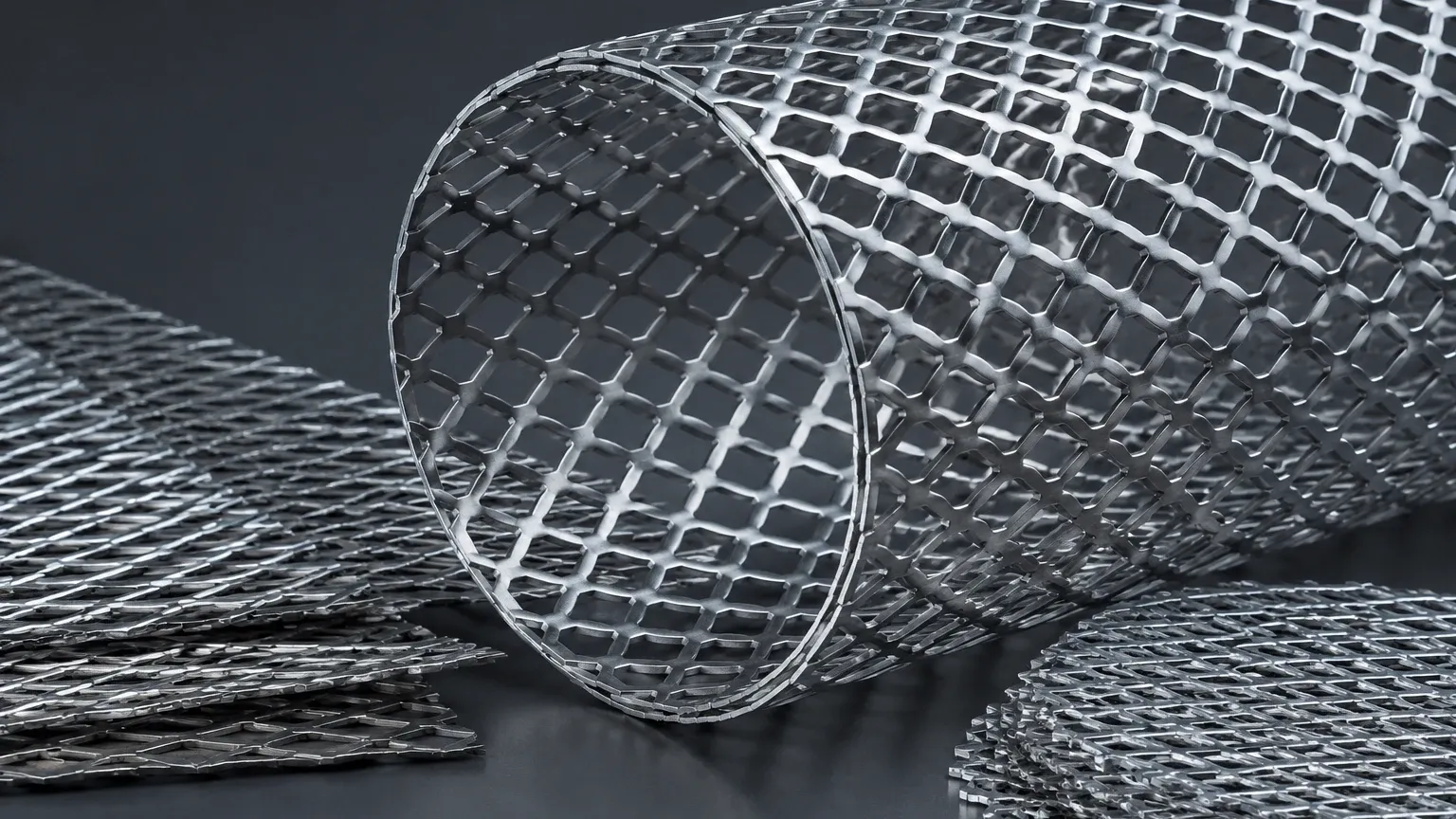
To understand why pre-stressing is necessary, one must first examine the manufacturing process of expanded metal. Unlike perforated metal, which is created by punching holes and removing material, expanded metal is produced by a shearing and stretching process. This results in a unique structure composed of "strands" and "bonds" (the points where strands intersect).
During the expansion process, the metal undergoes significant cold working. This creates inherent residual stresses within the diamond-shaped pattern. In its "raised" or standard form, the strands are set at an angle to the original plane of the sheet. While this provides excellent strength-to-weight ratios, it also introduces a level of flexibility that may be undesirable in high-precision filtration. When these components are flattened (cold-rolled), additional stresses are introduced.
Pre-stressing acts as a secondary engineering step to manage these forces. By applying controlled tension or compression during the assembly of a filter cartridge or frame, manufacturers can "set" the material, preventing it from deforming or sagging when subjected to fluid pressure or thermal cycles.
Engineering Objectives for Pre Stressing Expanded Metal Components
When specifying pre-stressed components, engineers typically target three primary performance improvements: structural rigidity, dimensional stability, and fatigue resistance.
1. Enhancing Structural Rigidity
In large filtration panels or cylindrical filter cores, the expanded metal must support the weight of the filter media (such as fine wire mesh) and the accumulated filter cake. Without pre-stressing, the material may exhibit a "drumming" effect or bowing under the weight. By pre-stressing the expanded metal against a rigid frame, the component achieves a higher modulus of stiffness, allowing it to withstand higher differential pressures without mechanical failure.
2. Dimensional Stability Under Thermal Load
Many industrial processes in the chemical and pharmaceutical sectors operate at elevated temperatures. Metals naturally expand when heated, which can lead to buckling if the component is constrained. Pre-stressing allows engineers to account for this thermal expansion. By applying a pre-load that anticipates the thermal shift, the component remains taut and functional even as temperatures fluctuate.
3. Mitigating Vibration and Fatigue
In hydraulic applications, fluid pulsation can cause high-frequency vibrations in the filter assembly. If the expanded metal support is loose or improperly tensioned, these vibrations can lead to work-hardening and eventual stress fractures at the bonds. Pre-stressing shifts the natural frequency of the component, reducing the amplitude of vibration and significantly extending the fatigue life of the filtration system.
Technical Methods for Applying Pre-Stress
There are several methods used to achieve the desired stress state in expanded metal components. The choice of method depends on the material grade, the thickness of the strands, and the final application of the filter.
* Mechanical Tensioning: This is the most common method for flat panels. The expanded metal sheet is gripped at the edges and stretched to a specific percentage of its yield strength before being welded or mechanically fastened to a rigid perimeter frame. This ensures the "diamonds" are fully extended and the panel remains flat.
* Radial Compression: For cylindrical filter cartridges, the expanded metal core may be slightly oversized and then compressed into a retaining ring or end cap. This creates a circumferential pre-stress that helps the core resist collapsing under external pressure (inward flow).
* Thermal Pre-stressing: In specific high-precision applications, the frame and the expanded metal are heated to different temperatures during assembly. As the components cool and contract at different rates, a controlled level of tension is locked into the assembly.
Impact on Filtration Performance and Accuracy
The primary goal of any filtration component is to maintain a consistent micron rating. In expanded metal, the "aperture" or the size of the diamond opening defines its filtration capability. If the material is not properly pre-stressed, the apertures can distort under pressure.
When pre stressing expanded metal components, the geometry of the diamond is stabilized. This prevents the "gaping" of the mesh, which would otherwise allow larger particles to pass through the system. Furthermore, a pre-stressed, flat surface improves the uniformity of the filter cake build-up. An uneven surface leads to preferential flow paths (channeling), which reduces the overall efficiency of the filter and shortens the time between cleaning or replacement cycles.
Material Selection and Compatibility Considerations
The effectiveness of pre-stressing is heavily dependent on the base material. Stainless steel is the preferred choice for industrial filtration due to its excellent mechanical properties and corrosion resistance. When selecting materials for pre-stressed applications, engineers should consider the following:
* Stainless Steel 304/304L: Suitable for general-purpose industrial applications with moderate corrosion risks. It offers good ductility for tensioning.
* Stainless Steel 316L: The industry standard for chemical processing and marine environments. Its molybdenum content provides superior resistance to pitting and crevice corrosion, which is vital because stressed metals can be more susceptible to Stress Corrosion Cracking (SCC) in certain environments.
* Yield Strength vs. Tensile Strength: It is critical to apply pre-stressing forces that remain within the elastic region of the material. If the stress exceeds the yield point, the metal will undergo permanent plastic deformation, which can weaken the bonds and lead to premature failure.
Evaluation Criteria for Purchasing Teams
When sourcing Perforated & Expanded Metal for projects requiring pre-stressed components, purchasing teams should verify several technical parameters with the manufacturer to ensure long-term reliability.
1. Flattening Tolerances: If the project requires flattened expanded metal, confirm the thickness tolerances. Variations in thickness can lead to uneven stress distribution during the tensioning process.
2. Bond Integrity: Inspect the quality of the bonds. In pre-stressed applications, the bonds act as the primary load-bearing points. Any micro-cracks or shearing defects from the expansion process will be magnified under pre-stress.
3. Open Area Calculations: Pre-stressing (especially mechanical tensioning) can slightly alter the percentage of open area. Engineers must confirm that the final tensioned state still meets the required flow rate and pressure drop specifications.
4. Edge Treatment: For pre-stressed panels, the method of edge termination is vital. Whether the edges are "closed diamond" or "random cut" will affect how the tension is transferred to the frame.
Integration and Maintenance in Industrial Systems
Once a pre-stressed expanded metal component is installed, its maintenance requirements are generally lower than those of non-stressed components, provided the initial engineering was accurate. Because the material is held in a stable state, there is less movement and, consequently, less mechanical wear at the contact points between the filter media and the support structure.
However, during routine maintenance and cleaning, it is important to inspect the tension. In systems subject to extreme thermal cycling, the pre-stress may gradually diminish over several years (a phenomenon known as stress relaxation). If a filter panel begins to show signs of sagging or if the filter cartridge core shows visible bowing, it may indicate that the pre-stress has been compromised, necessitating a replacement to prevent bypass or structural collapse.
Conclusion: The Value of Precision Engineering
Pre stressing expanded metal components is a sophisticated approach to solving common industrial filtration challenges. By moving beyond simple material selection and incorporating mechanical pre-conditioning, engineers can create filtration solutions that are more durable, more accurate, and more cost-effective over their total service life.
For manufacturers like Kaifil, providing high-performance filtration components involves a deep understanding of these mechanical nuances. Whether it is ensuring the rigidity of a stainless steel filter cartridge or the flatness of a large-scale industrial screen, the application of pre-stressing techniques ensures that the Perforated & Expanded Metal performs exactly as intended under the most demanding conditions. When evaluating filtration options, confirming these technical details with your manufacturing partner is the most reliable way to achieve optimized, long-term filtration performance.
