


Princess Auto Expanded Metal
Expanded metal is one of the most versatile materials in the industrial and fabrication sectors, offering a unique combination of structural integrity, open area for ventilation, and cost-effectiveness. For many small-scale fabricators, maintenance teams, and DIY enthusiasts, retail options like princess auto expanded metal serve as a primary introduction to this material. These retail-grade products are typically used for utility trailers, safety guards, and general-purpose workshop projects. However, when transitioning from general utility to precision industrial applications—particularly in filtration, chemical processing, and high-pressure hydraulic systems—the requirements for material consistency, alloy purity, and dimensional tolerance become significantly more stringent.
Understanding the distinction between general-purpose utility metal and precision-engineered Perforated & Expanded Metal is critical for engineers and procurement professionals. While retail products fulfill a vital role in the consumer market, industrial filtration demands a level of customization and technical performance that only specialized manufacturing can provide.
The Fundamentals of Expanded Metal Manufacturing
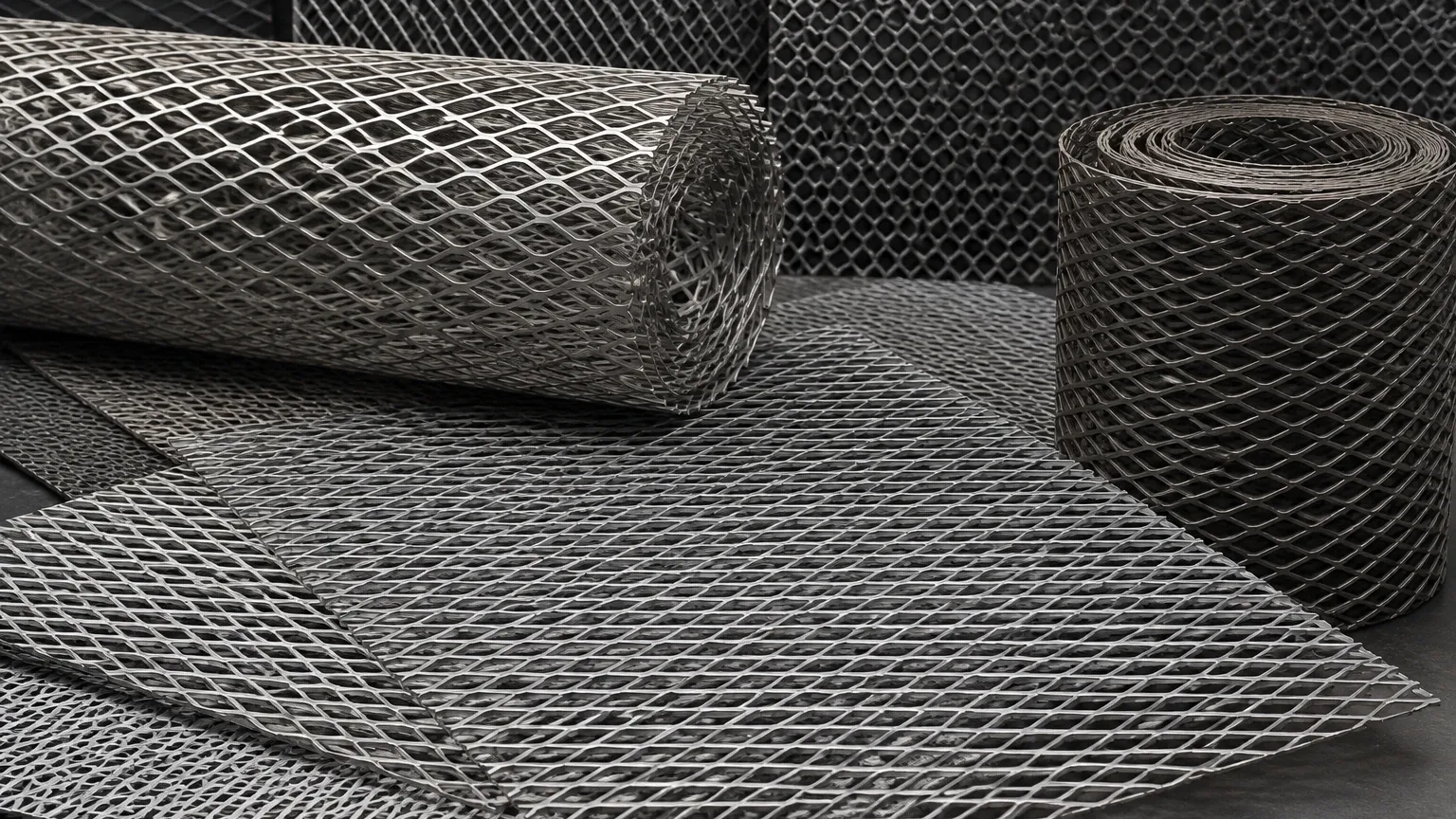
Expanded metal is produced through a process of simultaneous slitting and stretching. Unlike perforated metal, which involves punching holes out of a solid sheet and creating scrap material (slugs), expanded metal is manufactured with virtually no waste. A solid sheet or coil is fed through a machine equipped with a reciprocating knife that slits the metal while stretching it outward. This creates the characteristic diamond-shaped openings.
In an industrial context, the geometry of these openings is not merely aesthetic. The angle of the strands and the size of the diamond determine the flow characteristics, pressure drop, and particle retention capabilities of the mesh. For engineers evaluating princess auto expanded metal for a project, it is important to note that retail specifications are often broad. In contrast, industrial-grade expanded metal is manufactured to tight tolerances to ensure that every square inch of the material performs predictably within a filtration system.
Key Terminology for Technical Selection
To accurately specify expanded metal for industrial use, engineers must move beyond general descriptions and use standardized terminology:
* SWD (Short Way of Design): The distance from the center of one bond to the center of the next bond measured across the short diamond diagonal.
* LWD (Long Way of Design): The distance from the center of one bond to the center of the next bond measured across the long diamond diagonal.
* Strand Width: The amount of metal fed under the knives to produce one strand.
* Strand Thickness: The thickness of the base metal.
* Bond: The intersection where two strands meet.
Comparing Retail Utility and Industrial Filtration Requirements
When a maintenance manager searches for princess auto expanded metal, they are often looking for a quick solution for a non-critical barrier or a simple reinforcement. Retail-grade expanded metal is frequently made from standard carbon steel, which may or may not be galvanized. While suitable for a trailer floor or a window guard, these materials lack the specialized properties required for demanding industrial environments.
Material Integrity and Alloy Selection
In industries such as chemical processing, food and beverage, and pharmaceuticals, the choice of alloy is paramount. While retail outlets may offer basic steel or aluminum, industrial manufacturers like Kaifil specialize in high-grade stainless steel (304, 316, and 316L) and specialty alloys. Stainless steel expanded metal provides the corrosion resistance necessary for filtration systems that handle aggressive fluids or undergo rigorous Clean-in-Place (CIP) cycles.
316L stainless steel, in particular, is preferred in pharmaceutical and marine applications due to its low carbon content and superior resistance to pitting and crevice corrosion. These technical nuances are rarely addressed in retail-grade product descriptions but are essential for the longevity of an industrial filter cartridge.
Surface Finish and Cleanliness
Industrial filtration components require a high degree of surface cleanliness. Retail expanded metal often retains oils from the manufacturing process or may have sharp burrs at the bond points. In a B2B environment, particularly in food processing, these burrs represent a risk of contamination and can cause turbulence in fluid flow. Industrial-grade expanded metal undergoes secondary processes such as degreasing, pickling, and deburring to ensure the material is safe for contact with sensitive products and does not introduce mechanical failure points into a system.
Engineering Considerations for Filtration Systems
Using expanded metal as a support structure or a primary filtration medium requires careful calculation of mechanical loads and fluid dynamics. Engineers must consider how the mesh will interact with the media it is intended to filter or support.
Open Area and Flow Rates
The percentage of open area is a critical metric for any filtration component. It determines the velocity of the fluid passing through the mesh and the resulting pressure drop across the filter. Retail products like princess auto expanded metal may not provide certified open area percentages, making it difficult for an engineer to model the system's performance. Industrial suppliers provide precise data on the open area, allowing for accurate calculations of flow resistance and energy efficiency.
Structural Support for Filter Media
In many high-pressure hydraulic or water treatment applications, expanded metal serves as the "skeleton" for finer wire mesh or synthetic filter membranes. The expanded metal must be strong enough to resist deformation under high differential pressure. The "raised" version of expanded metal, where the strands are at an angle to the plane of the sheet, provides excellent mechanical grip for pleated media. Conversely, "flattened" expanded metal, which is passed through a cold-rolling mill after expansion, provides a smooth surface that prevents abrasion of delicate filter layers.
Customization and OEM Capabilities
One of the primary limitations of purchasing retail products like princess auto expanded metal is the lack of customization. Retailers stock standard sheet sizes and a limited range of mesh patterns. In contrast, B2B procurement of Perforated & Expanded Metal allows for tailored solutions that meet specific application needs.
Dimensional Precision and Secondary Processing
Industrial manufacturers can provide expanded metal cut to exact dimensions, often with specialized borders or margins that facilitate easy integration into a filter housing. Furthermore, Kaifil offers secondary processing capabilities that are not available through retail channels:
1. Cylindrical Forming: Rolling expanded metal into precise diameters for use as filter cores or outer guards.
2. Welding: Utilizing advanced TIG, MIG, or spot welding to join expanded metal components without compromising the structural integrity or corrosion resistance of the alloy.
3. Custom Mesh Patterns: Developing unique SWD and LWD combinations to achieve specific filtration or aesthetic goals.
4. Surface Treatments: Providing electropolishing or specialized coatings to enhance the performance and lifespan of the component.
Applications of Industrial Expanded Metal
While princess auto expanded metal might be found in a local repair shop, industrial-grade expanded metal is found in the heart of complex manufacturing plants. Its applications are diverse and critical to global supply chains.
Chemical and Petrochemical Processing
In chemical reactors, expanded metal is used as catalyst support grids. The material must withstand extreme temperatures and corrosive atmospheres. The ability to specify high-nickel alloys or specialized stainless steels ensures that the support structure does not fail prematurely, which could lead to costly downtime or safety hazards.
Food and Beverage Filtration
For the food industry, expanded metal is used in strainers, vibratory screens, and juice extraction equipment. Here, the focus is on hygiene. The mesh must be easy to clean and free of crevices where bacteria could proliferate. Industrial manufacturers provide materials that meet stringent regulatory standards for food contact.
Water Treatment and Desalination
In water treatment facilities, expanded metal serves as a pre-filter to remove large debris before the water reaches more sensitive reverse osmosis membranes. The durability of the material is essential, as it is constantly exposed to moisture and varying flow rates. Selecting a material with the correct gauge and alloy ensures a long replacement cycle, reducing the total cost of ownership for the facility.
Transitioning from Retail to Professional Procurement
For engineers and purchasing agents, the decision to move from a general utility product to a professional filtration solution involves evaluating the total cost of ownership. While a retail product like princess auto expanded metal may have a lower initial price point, the risks associated with material failure, contamination, and lack of technical support can be significant in an industrial setting.
Confirming Specifications Before Purchase
Before finalizing a procurement order for expanded metal components, technical teams should confirm the following:
* Material Certification: Request Mill Test Reports (MTRs) to verify the chemical composition and mechanical properties of the alloy.
* Dimensional Tolerances: Define the acceptable variance in sheet size, mesh opening, and flatness.
* Application Environment: Disclose the operating temperature, pressure, and chemical exposure to the manufacturer to ensure the correct material selection.
* Compliance Standards: Ensure the product meets industry-specific standards, such as those set by the American Society for Testing and Materials (ASTM) or international equivalents.
By partnering with a professional manufacturer like Kaifil, companies gain access to engineering expertise that extends far beyond a simple product catalog. Whether the requirement is for a standard mesh pattern or a highly customized filter component, the focus remains on delivering reliable, durable, and high-performance filtration solutions that meet the demanding needs of modern industry.
