


Round Expanded Metal
In industrial filtration and structural engineering, the selection of media is dictated by the balance between structural integrity, open area, and material efficiency. Round expanded metal represents a specialized geometry within the broader category of Perforated & Expanded Metal, offering a unique combination of the strength inherent in expanded mesh and the specific flow characteristics often associated with circular apertures. For engineers and procurement teams, understanding the technical nuances of this material is essential for optimizing the performance of filtration systems, protective guards, and industrial components.
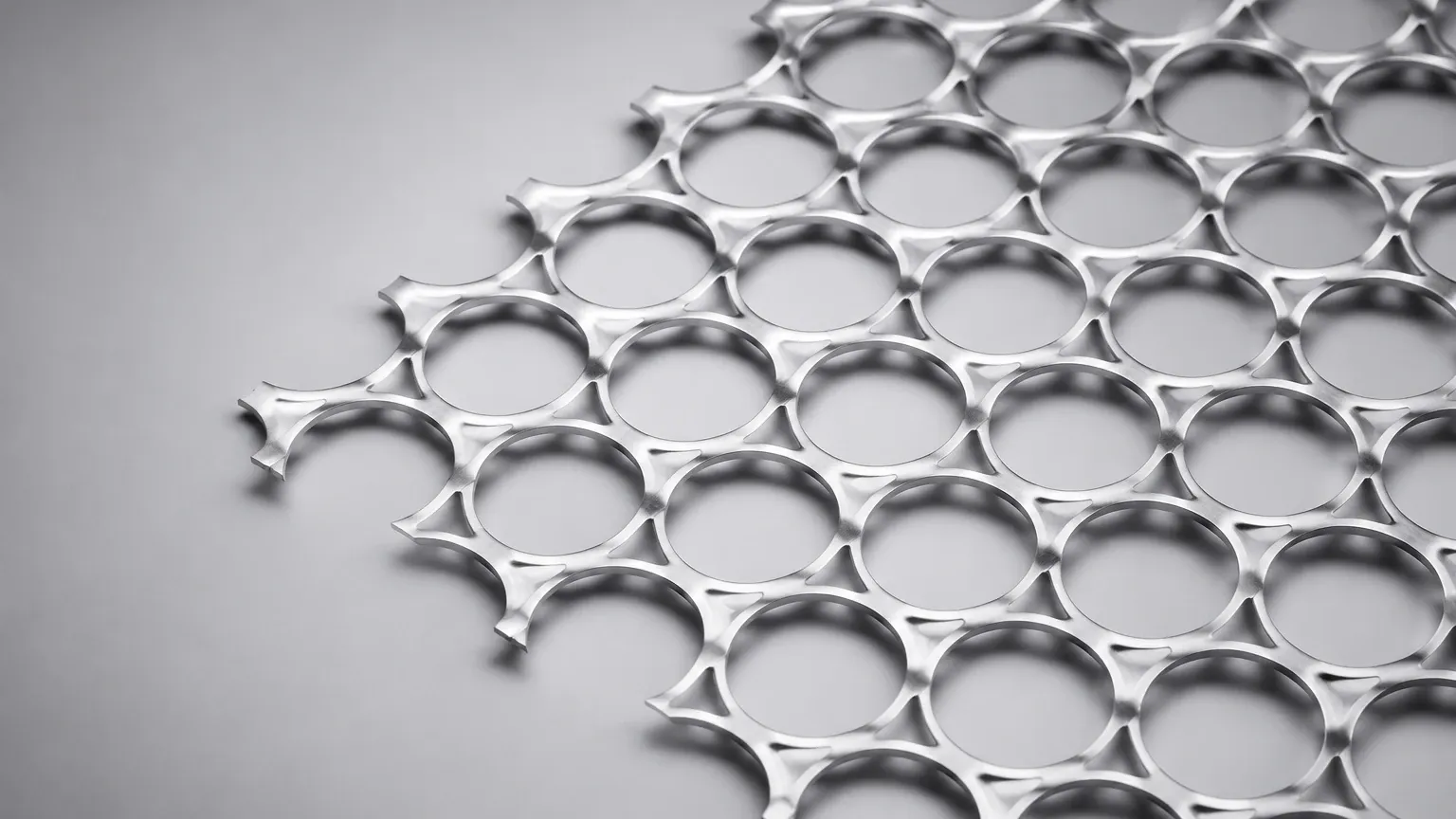
Unlike standard diamond-shaped expanded metal, round expanded metal is produced using specific tooling that creates a more rounded or elliptical opening. This geometry is frequently utilized in applications where the sharp angles of a traditional diamond mesh might cause turbulence in fluid flow or where a specific aesthetic and tactile profile is required without the material waste associated with traditional perforation.
The Manufacturing Process and Structural Integrity
Round expanded metal is manufactured through a process of simultaneous slitting and stretching. A solid metal sheet—most commonly stainless steel in high-performance industrial contexts—is fed through a machine equipped with specialized knives. These knives create a series of staggered slits while the machine pulls the metal, expanding the slits into open apertures.
In the case of round expanded metal, the geometry of the knife and the degree of the stroke are calibrated to produce a curved opening. Because the material is stretched rather than punched, there is zero scrap or waste produced during the expansion process. This makes expanded metal a more sustainable and often more cost-effective alternative to perforated metal, where the "slugs" or circular cutouts are discarded as waste.
From an engineering perspective, the most critical attribute of this process is that the resulting mesh remains a single, continuous piece of metal. There are no welds, joins, or woven intersections that can fray or break under mechanical stress. This continuity ensures excellent conductivity and structural rigidity, allowing the material to maintain its shape even when subjected to high-pressure differentials in hydraulic or chemical processing environments.
Material Selection for Industrial Environments
As a manufacturer specializing in stainless steel filtration solutions, Kaifil emphasizes the importance of material grade in determining the service life of round expanded metal. While carbon steel and aluminum are available for architectural or light-duty applications, industrial filtration typically demands the corrosion resistance and thermal stability of stainless steel.
Stainless Steel 304 and 304L
Grade 304 is the standard industrial choice, providing excellent resistance to atmospheric corrosion and many organic and inorganic chemicals. It is widely used in food and beverage processing and general industrial screening. The "L" (low carbon) variant is preferred when the expanded metal must be welded into a filter housing or frame, as it prevents carbide precipitation during the welding process.
Stainless Steel 316 and 316L
For more demanding environments, such as marine applications, pharmaceutical production, or highly acidic chemical processing, Grade 316 is required. The addition of molybdenum enhances resistance to pitting and crevice corrosion, particularly in chloride-rich environments. In high-precision filtration, 316L is often the default specification to ensure maximum durability and compliance with hygiene standards.
Specialty Alloys
In specific high-temperature or highly corrosive niche applications, materials such as Monel, Inconel, or Hastelloy may be used to produce expanded metal. These are typically reserved for aerospace, oil and gas, or specialized chemical reactors where standard stainless steels would fail.
Key Technical Parameters for Engineering Specifications
When specifying round expanded metal for a project, engineers must define several critical dimensions that dictate the material's performance. These parameters influence the filtration rating, pressure drop, and mechanical strength.
1. LWD (Long Way of Design): The distance from the center of one joint to the center of the next joint across the long axis of the opening.
2. SWD (Short Way of Design): The distance from the center of one joint to the center of the next joint across the short axis of the opening.
3. Strand Width: The amount of metal between the openings. This is determined by the amount of material fed into the machine between each stroke.
4. Strand Thickness: The original thickness of the base metal sheet.
5. Opening Size: The actual clear space through which fluid or air passes. In round expanded metal, this is often measured as the diameter of the inscribed circle or the major/minor axes of the ellipse.
6. Overall Thickness: In "raised" expanded metal, the strands are tilted at an angle, making the overall thickness of the sheet significantly greater than the strand thickness. If a flat profile is required, the material undergoes a secondary "flattening" process.
Applications in Industrial Filtration and Support
Round expanded metal serves a dual purpose in industrial settings: acting as a primary filtration medium for coarse particles and providing structural support for finer filtration layers.
Filter Cartridge Support Cores
In the construction of stainless steel filter cartridges, round expanded metal is frequently used as the inner core or the outer protective cage. Its high strength-to-weight ratio allows it to withstand significant collapse pressure, protecting the delicate pleated wire mesh or sintered fiber felt that performs the actual fine filtration. The rounded edges of this specific mesh type are less likely to abrade or puncture the finer media layers compared to standard diamond mesh.
Intake Screens and Strainers
For water treatment and pump protection, round expanded metal acts as a robust strainer. The rounded apertures are effective at shedding debris and preventing the accumulation of fibrous materials that might otherwise hook onto the sharp corners of diamond-shaped openings.
Heat and Flame Shielding
The continuous nature of expanded metal makes it an excellent conductor of heat. In industrial ovens or chemical reactors, round expanded metal can be used as a heat shield or a flame arrestor component, where the specific open area is calculated to manage airflow while providing a physical barrier.
Round Expanded Metal vs. Perforated Metal: A Comparative Analysis
Engineers often weigh the pros and cons of expanded metal versus perforated metal. While both fall under the umbrella of Perforated & Expanded Metal solutions, their functional characteristics differ.
* Material Efficiency: Expanded metal is more efficient. Because it is stretched, one square meter of raw sheet can produce several square meters of expanded mesh. Perforated metal involves punching out holes, which can result in up to 40% material waste.
* Weight vs. Strength: For the same open area, expanded metal is generally stronger and lighter than perforated metal because the strands are oriented at an angle (in the raised version), acting like structural trusses.
* Flow Dynamics: Perforated metal offers a more precise circular hole, which may be required for specific laminar flow calculations. However, round expanded metal provides a "3D" flow path that can be advantageous in certain mixing or diffusion applications.
* Cost: Due to the lack of waste and the speed of the expansion process, expanded metal is typically the more cost-effective choice for large-scale industrial applications.
Customization and OEM Considerations
For B2B buyers and engineers, the ability to customize round expanded metal is critical for integrating it into complex machinery. Kaifil provides extensive OEM capabilities to meet these specific requirements.
Flattened vs. Raised
Raised expanded metal provides a non-slip surface and higher rigidity. However, many filtration applications require flattened expanded metal. The flattening process passes the raised mesh through a cold-rolling mill, reducing the thickness to that of the original sheet and creating a smooth, level surface. This is essential when the mesh must be bonded or layered with other materials.
Surface Treatments
Depending on the application, stainless steel expanded metal may undergo passivating to remove surface contaminants and enhance the chromium-oxide protective layer. For other materials, options such as galvanizing, powder coating, or anodizing are available to provide additional corrosion resistance or specific surface properties.
Precision Cutting and Forming
Industrial filters often require the mesh to be cut into specific circles, rectangles, or cylinders. Advanced CNC cutting and rolling equipment ensure that the round expanded metal fits perfectly within the intended housing, maintaining tight tolerances that prevent bypass in filtration systems.
Evaluation Criteria for Procurement Teams
When evaluating a supplier for round expanded metal, procurement teams should confirm the following to ensure long-term reliability and total cost efficiency:
* Dimensional Accuracy: Ensure the supplier can maintain consistent SWD and LWD measurements across the entire sheet, as variations can lead to inconsistent flow rates.
* Edge Quality: In filtration, burrs or sharp edges can lead to contamination or damage to other filter components. Confirm that the finishing process includes deburring where necessary.
* Material Certification: Always request Mill Test Reports (MTRs) to verify the chemical composition of the stainless steel, ensuring it meets the required ASTM or ISO standards for the specific application.
* Load-Bearing Requirements: If the metal is used as a support structure, provide the supplier with the expected pressure drop and mechanical load to ensure the strand width and thickness are sufficient to prevent deformation.
Conclusion
Round expanded metal is a versatile, efficient, and robust material that addresses many of the challenges found in modern industrial filtration and engineering. By providing the structural benefits of an expanded mesh with the functional advantages of a rounded aperture, it offers a high-performance alternative to traditional perforated sheets. Whether used as a support core in a stainless steel filter cartridge or as a protective screen in a chemical reactor, the key to success lies in precise material selection and a deep understanding of the technical parameters involved in its manufacture.
