


Round Hole Perforated Metal Sheet
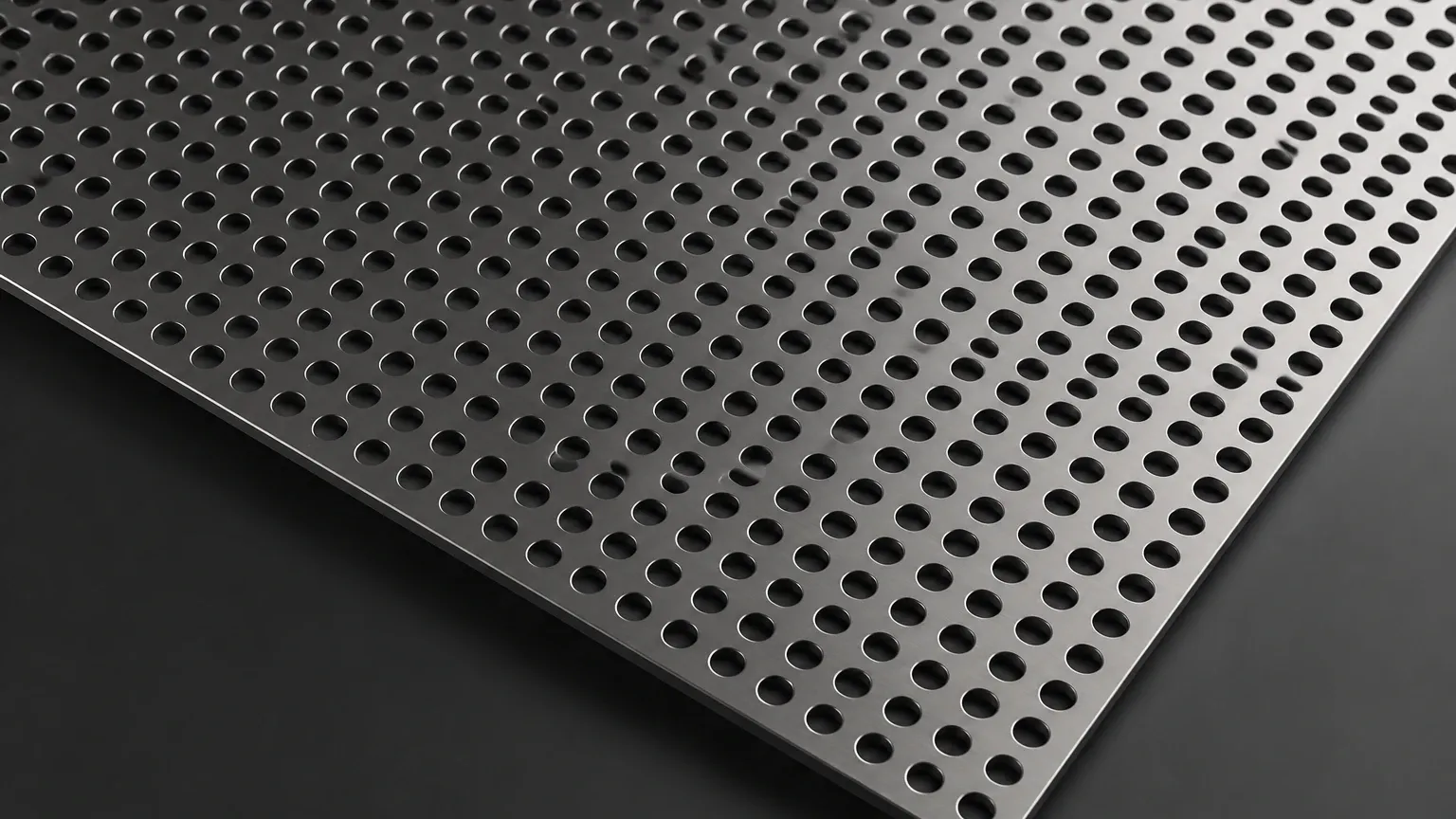
In industrial filtration and structural engineering, the round hole perforated metal sheet is recognized as one of the most versatile and efficient components for fluid dynamics, mechanical support, and particle separation. As a fundamental element in the broader category of Perforated & Expanded Metal, these sheets are engineered to meet precise specifications that dictate the performance of filter cartridges, strainers, and architectural screens. For engineers and procurement teams, understanding the technical nuances of hole patterns, material properties, and manufacturing tolerances is essential to ensuring the longevity and efficiency of their filtration systems.
Engineering Fundamentals of Round Hole Perforation
The round hole pattern is the industry standard for perforated materials primarily because of its structural integrity and the uniformity it provides. Unlike square or hexagonal patterns, round holes distribute mechanical stress more evenly across the metal bridge (the area between the holes), reducing the likelihood of fatigue failure under high-pressure conditions.
Staggered vs. Straight Patterns
When specifying a round hole perforated metal sheet, the orientation of the holes is a critical engineering decision.
1. Staggered Pattern (60-Degree): This is the most common configuration. The holes are offset so that each hole is equidistant from the surrounding holes. This creates a highly stable structure and allows for the highest possible open area percentage without compromising the sheet's rigidity. In filtration, the 60-degree staggered pattern ensures a uniform flow of media and prevents "dead zones" where particles might accumulate unevenly.
2. Straight Pattern: In this configuration, holes are aligned in parallel rows and columns. While easier to align for certain aesthetic or specific mechanical indexing applications, straight patterns generally offer lower structural strength and a lower maximum open area compared to staggered designs. They are typically reserved for applications where the sheet must align with specific internal components or where flow uniformity is less critical than alignment.
Material Selection for Industrial Environments
The performance of a round hole perforated metal sheet is heavily dependent on the alloy from which it is manufactured. In industrial filtration, where exposure to corrosive chemicals, high temperatures, and high-pressure differentials is common, stainless steel is the preferred material.
* Stainless Steel 304: This is the standard grade for general industrial use. It offers excellent corrosion resistance and formability, making it suitable for food and beverage processing, water treatment, and general machinery guards.
* Stainless Steel 316L: For more demanding environments, such as pharmaceutical manufacturing or chemical processing, 316L is the superior choice. The addition of molybdenum provides enhanced resistance to pitting and crevice corrosion, particularly in chloride-rich environments. The "L" (low carbon) designation ensures better weldability, which is vital when the perforated sheet is rolled and welded into filter cartridge cores.
* Specialty Alloys: In extreme cases involving high-temperature oxidation or highly acidic media, alloys like Monel, Inconel, or Hastelloy may be used to ensure the filtration component does not degrade prematurely.
Calculating Open Area and Filtration Efficiency
The "Open Area" percentage is perhaps the most important metric for a filtration engineer. It represents the ratio of the total area of the holes to the total area of the sheet. This figure directly influences the flow rate and the pressure drop (delta P) across the filter.
For a standard 60-degree staggered round hole pattern, the formula for calculating open area is:
Open Area % = (D² × 90.69) / P²
*(Where D = Hole Diameter and P = Pitch/Center-to-Center distance)*
A higher open area allows for greater flow rates and lower energy consumption for pumps, but it also reduces the mechanical strength of the sheet. Engineers must find the "sweet spot" where the sheet is porous enough to allow efficient fluid passage but thick and rigid enough to withstand the operational pressure without deforming.
The Role of Round Hole Sheets in Filter Construction
Within the scope of Perforated & Expanded Metal solutions, round hole sheets serve several distinct roles in industrial filtration assemblies:
1. Internal Support Cores
In high-pressure hydraulic or chemical filters, fine wire mesh or pleated media lack the structural strength to resist collapsing under pressure. A round hole perforated metal sheet is rolled into a cylinder and welded to act as the internal core. This core provides the necessary hoop strength to support the primary filtration media.
2. Protective Outer Sleeves
Conversely, perforated sheets can be used as outer guards to protect delicate filter media from large debris or mechanical damage during installation and maintenance. The round holes ensure that the protective layer does not significantly impede the flow of the process fluid.
3. Primary Coarse Filtration
In applications like intake strainers or basket filters for the food industry, the perforated sheet itself acts as the filter. The hole size is chosen to capture large contaminants (such as fruit pits, scale, or plastic fragments) while allowing the main product to pass through. Because the surface is smooth and the holes are uniform, these filters are much easier to clean via backwashing or manual scraping than woven wire mesh.
Manufacturing Precision and Customization
Quality manufacturing of a round hole perforated metal sheet involves more than just punching holes. Precision at the OEM level ensures that the final component integrates seamlessly into complex systems.
* Margins and Borders: Industrial applications often require "blank" areas along the edges of the sheet for welding or clamping. Customizing the side and end margins ensures that the punching pattern does not interfere with the structural integrity of the weld seams.
* Flatness and Stress Relieving: The punching process introduces significant internal stress into the metal, which can cause the sheet to curl or bow. High-quality perforated sheets undergo leveling processes to ensure they meet strict flatness tolerances, which is critical for automated rolling and welding operations.
* Deburring and Surface Finish: In industries like pharmaceuticals and food processing, any burrs or sharp edges left by the punching process can trap bacteria or shed metal particles. Electropolishing or mechanical deburring is often required to ensure a smooth, sanitary surface.
Performance Evaluation: Pressure Drop and Clogging
When integrating a round hole perforated metal sheet into a system, engineers must account for the "clean pressure drop" and the "clogging factor."
* Pressure Drop: As fluid passes through the holes, there is an inevitable loss of pressure. If the hole diameter is too small relative to the fluid's viscosity, the pressure drop will be excessive, leading to system inefficiency.
* Clogging and Blinding: Round holes are less prone to "blinding" (where particles get wedged in the opening) than square holes, but the risk still exists. The smooth internal surface of a punched round hole allows for more effective cleaning compared to the complex geometry of expanded metal or woven mesh. For applications with high solids loading, a larger open area is often specified to extend the time between cleaning cycles.
Total Cost of Ownership and Maintenance
While the initial cost of a round hole perforated metal sheet is influenced by material grade and thickness, the total cost of ownership is defined by its durability. Unlike synthetic filters, stainless steel perforated components are designed for long-term reuse.
Maintenance Considerations:
* Cleaning Cycles: Depending on the media, these sheets can be cleaned using ultrasonic baths, high-pressure steam, or chemical solvents. The choice of material (e.g., 316L) must be compatible with the intended cleaning agents.
* Replacement Indicators: Sheets should be inspected for signs of "oil-canning" (permanent deformation) or erosion around the hole edges. If the holes begin to elongate, the filtration accuracy is compromised, and the structural integrity of the filter cartridge may be at risk.
Technical Checklist for Procurement
To ensure the successful delivery of a custom filtration solution, purchasing teams and engineers should confirm the following technical details before production:
1. Material Grade: (e.g., SS304, SS316L, Carbon Steel).
2. Hole Diameter: Precise measurement of the required opening.
3. Pitch: The distance from the center of one hole to the center of the next.
4. Pattern Orientation: Staggered (60-degree) or Straight.
5. Sheet Thickness: Measured in gauge or millimeters.
6. Margins: Specific dimensions for unperforated borders.
7. Post-Processing: Requirements for leveling, deburring, or specialized coatings.
By focusing on these technical parameters, industries can leverage the inherent strengths of the round hole perforated metal sheet to achieve reliable, high-performance filtration. Whether used as a standalone strainer or as a critical support component in a multi-stage filtration system, the precision and durability of these metal components remain foundational to modern industrial processing.
