


Seamless Perforated Metal Texture
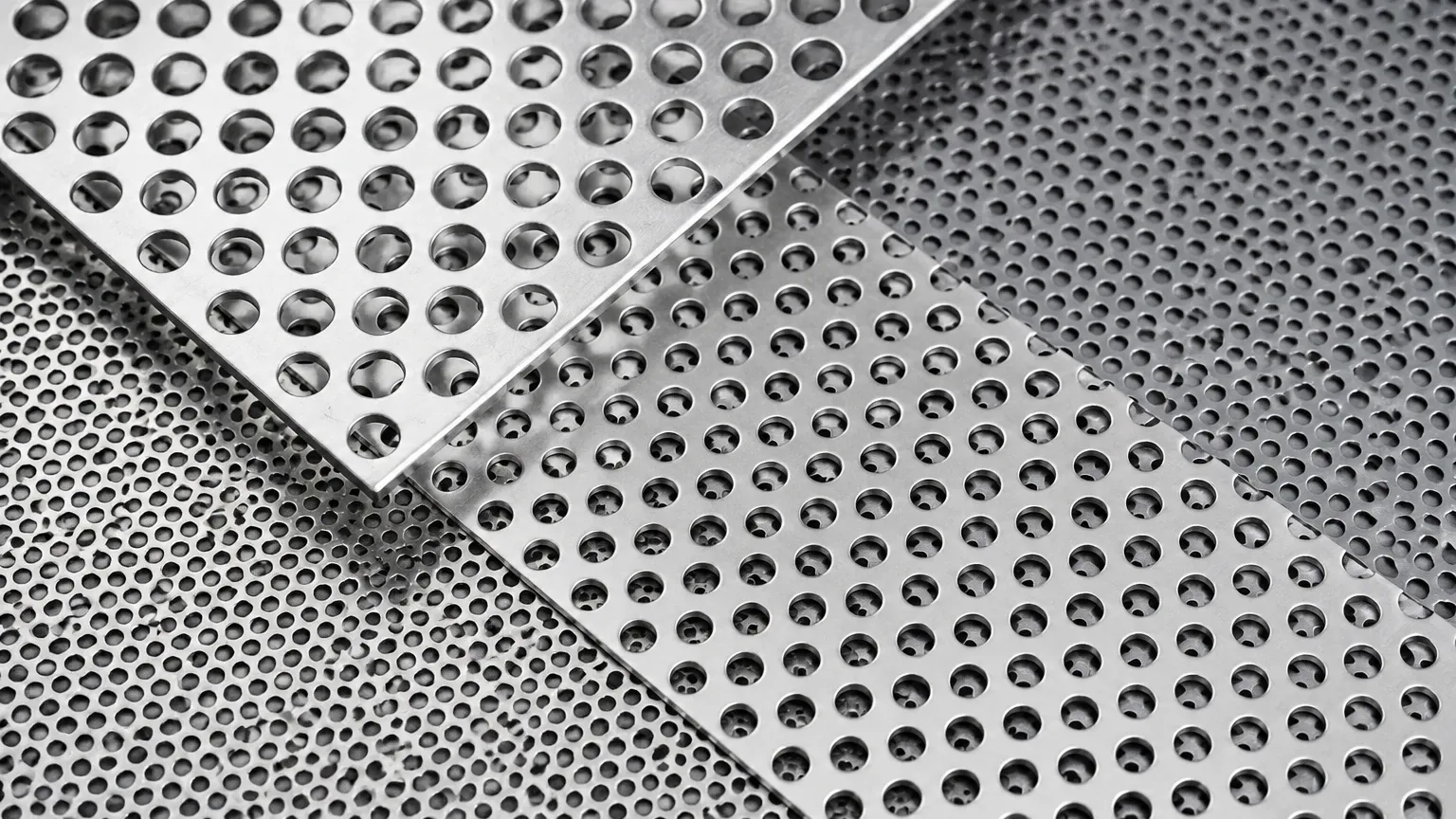
In industrial design and engineering, the term "seamless perforated metal texture" carries a dual significance. For architectural designers and CAD engineers, it refers to a tileable digital pattern used for high-fidelity rendering. However, for mechanical engineers and procurement specialists in the filtration industry, it represents a physical manufacturing standard where patterns remain consistent across large surface areas, joints, and cylindrical welds. Achieving a seamless appearance in Perforated & Expanded Metal requires precise control over hole alignment, margin width, and fabrication techniques.
For industrial applications—ranging from high-pressure hydraulic filters to chemical processing screens—the continuity of the perforation pattern is not merely an aesthetic choice. It impacts structural integrity, flow dynamics, and the overall efficiency of the filtration system. This guide explores the technical parameters, manufacturing processes, and selection criteria essential for specifying seamless perforated metal components.
Engineering the Seamless Pattern: Geometry and Pitch
The foundation of a seamless perforated metal texture lies in the mathematical calculation of the pattern. When a pattern is described as "seamless," it implies that the geometric arrangement of holes (the "texture") continues without interruption across the entire workpiece, even when multiple sheets are joined or when a sheet is rolled into a tube.
Hole Arrangements and Staggering
Industrial perforation typically follows three primary arrangements:
1. 60-Degree Staggered: The most common and efficient pattern, providing maximum open area and structural strength. In a seamless application, the pitch (the distance from the center of one hole to the next) must be calculated to ensure that when the edges meet, the stagger remains consistent.
2. 45-Degree Staggered: Used for specific aesthetic and flow requirements, offering a different visual texture while maintaining high durability.
3. Straight Row: Holes are aligned vertically and horizontally. While simpler to align, this pattern generally offers lower structural rigidity compared to staggered configurations.
To achieve a seamless transition at the seam of a filter cartridge, manufacturers must calculate the "circumferential pitch." If the circumference of the filter is not a perfect multiple of the pitch, the pattern will break at the weld, creating a visible seam that can lead to uneven stress distribution and localized turbulence in fluid flow.
Manufacturing Techniques for Pattern Continuity
Producing a seamless perforated metal texture involves more than just punching holes in a sheet. It requires advanced CNC machining and specialized tooling to ensure that margins (the unperforated areas at the edges) are either eliminated or perfectly matched.
Full-Pattern Punching vs. Margin Control
In standard perforated sheets, a "safe margin" is often left at the edges to prevent sheet distortion during the punching process. However, for a seamless texture, engineers specify "perforation to the edge." This requires precise tool indexing where the punch dies are synchronized with the sheet feeder to ensure the pattern terminates exactly where the next sheet or the opposite edge begins.
Welding and Joining for Seamlessness
When fabricating stainless steel filter cartridges, the method of joining the metal determines the final texture continuity:
* Spiral Welding: This technique involves winding a strip of perforated metal into a tube. By carefully controlling the angle of the wind and the width of the strip, the perforated pattern can be made to appear continuous across the spiral seam.
* Longitudinal Butt Welding: The edges of the perforated sheet are brought together and welded. To maintain a seamless texture, the holes must be perfectly aligned across the joint. Advanced TIG or laser welding is used to minimize the heat-affected zone, preventing the pattern from warping near the seam.
Perforated vs. Expanded Metal: Structural Differences
While the main keyword Perforated & Expanded Metal covers two distinct products, they both contribute to the concept of seamless industrial textures in different ways.
Perforated Metal
Perforated metal is created by punching holes out of a solid plate. This allows for total customization of the hole shape (round, square, slotted, or decorative). The "seamless" quality here is a result of precision alignment. It is the preferred choice for applications requiring specific open area percentages and precise filtration ratings.
Expanded Metal
Expanded metal is manufactured by simultaneously slitting and stretching a metal sheet. This process creates a diamond-shaped mesh that is inherently seamless because it is formed from a single piece of metal without any joins or welds within the main body. The texture of expanded metal is three-dimensional, which can be advantageous for capturing particulate matter in air filtration or providing non-slip surfaces in industrial walkways. Because there is no scrap material produced during expansion, it is often a more cost-effective solution for large-scale applications.
Technical Specifications for Engineers
When specifying a seamless perforated metal texture for industrial use, several technical variables must be confirmed to ensure the component performs as expected in demanding environments.
Open Area Calculation
The open area determines the flow capacity and pressure drop across the filter. For a standard 60-degree staggered round hole pattern, the formula is:
Open Area % = (D² × 90.69) / P²
*Where D = Hole Diameter and P = Pitch.*
For a seamless appearance, the open area must remain constant across the entire surface. Any variation, especially at the seams, can create "blind spots" in the filtration process, leading to premature clogging or structural failure under high pressure.
Material Selection: Stainless Steel Focus
For most industrial filtration and chemical processing applications, stainless steel is the material of choice due to its corrosion resistance and mechanical strength.
* Grade 304: Suitable for general industrial use, providing good resistance to oxidation and many organic chemicals.
* Grade 316L: The preferred choice for pharmaceutical, food and beverage, and marine applications. The addition of molybdenum and a lower carbon content provides superior resistance to pitting and chloride-induced corrosion.
Surface Finishes and Burr Removal
A true seamless texture is not just about hole alignment; it is also about surface consistency. Industrial perforation can leave burrs (small fragments of metal) on the exit side of the punch. For high-precision filtration, these must be removed via electropolishing or mechanical deburring. A clean, burr-free finish ensures that the "texture" does not trap unwanted particles or interfere with the flow of the medium.
Applications of Seamless Perforated Metal
The requirement for seamless pattern continuity is prevalent in several high-stakes industrial sectors:
1. Precision Filtration
In hydraulic and fuel systems, filter cartridges often utilize perforated metal as a support core or as the primary filtration element. A seamless pattern ensures that the mechanical stress is distributed evenly across the cylinder, preventing the filter from collapsing under high differential pressure. Furthermore, it allows for a uniform application of wire mesh overlays, which are often sintered to the perforated base.
2. Food and Beverage Processing
In the food industry, "seamlessness" is a sanitary requirement. Gaps, misaligned holes, or rough seams in perforated screens can become harborages for bacteria and organic buildup. A perfectly aligned, smoothly welded perforated texture allows for effective Clean-in-Place (CIP) procedures, ensuring compliance with strict hygiene standards.
3. Acoustic Dampening and Ventilation
In power generation and large-scale HVAC systems, perforated metal is used to attenuate noise and manage airflow. A seamless texture prevents the generation of "whistling" noises that can occur when air passes through irregular or misaligned openings at the seams of ductwork or enclosures.
Evaluation Criteria and Common Risks
When sourcing Perforated & Expanded Metal components, procurement teams should evaluate suppliers based on their ability to maintain tight tolerances and pattern integrity.
Common Risks in Non-Seamless Fabrication
* Pattern Drift: Over long sheets, small errors in the feeding mechanism can lead to the pattern "drifting," making it impossible to achieve a seamless joint during assembly.
* Edge Bowing: Improper tension during the perforation process can cause the edges of the sheet to curve (camber). This makes it difficult to align the texture during welding, resulting in a visible and structurally weak seam.
* Inconsistent Margins: If the margins are not specified correctly, the transition between perforated and solid areas will be uneven, disrupting both the flow and the visual continuity of the component.
Questions to Confirm Before Production
Before proceeding with a custom order, engineers should confirm the following with their manufacturer:
1. What is the tolerance for hole alignment across the seam?
2. Can the pattern be punched "edge-to-edge" to eliminate margins?
3. What welding method will be used to ensure the joint does not disrupt the flow texture?
4. Are the dies sharp enough to ensure a burr-free finish on both sides of the sheet?
The Role of Customization in Achieving Seamlessness
Standard off-the-shelf perforated sheets rarely meet the requirements for a truly seamless industrial texture. Customization is essential. This involves engineering the sheet dimensions around the pattern pitch rather than trying to fit a pattern into a pre-cut sheet size.
At Kaifil, the focus is on providing tailored solutions that address these specific engineering challenges. By integrating advanced manufacturing capabilities with a deep understanding of filtration dynamics, it is possible to produce perforated components where the texture remains uninterrupted, providing both the structural reliability and the precise performance required by modern industrial applications.
Whether the application involves stainless steel filter cartridges, precision metal screens, or expanded metal gratings, the goal is to achieve a balance between the physical texture's functionality and its structural continuity. By adhering to strict manufacturing standards and precise geometric calculations, engineers can ensure that their filtration systems operate with maximum efficiency and minimal maintenance requirements over their operational lifespan.
