


Slotted Perforated Metal
In the field of industrial separation and filtration, the geometry of the aperture is often as critical as the material itself. Slotted perforated metal, characterized by its elongated, rectangular, or oblong openings, serves as a specialized solution for applications where standard round-hole patterns fail to meet specific mechanical or fluid-dynamic requirements. Unlike circular perforations, slotted patterns offer a unique combination of high open-area percentages and directional screening capabilities, making them indispensable in sectors ranging from chemical processing to food and beverage production.
For engineers and procurement professionals, selecting the correct slotted perforated metal involves a detailed analysis of material properties, hole orientation, and structural integrity. As a professional manufacturer, Kaifil specializes in providing custom stainless steel filtration solutions that leverage these precise geometries to optimize industrial performance.
Understanding Slotted Perforated Metal in Industrial Applications
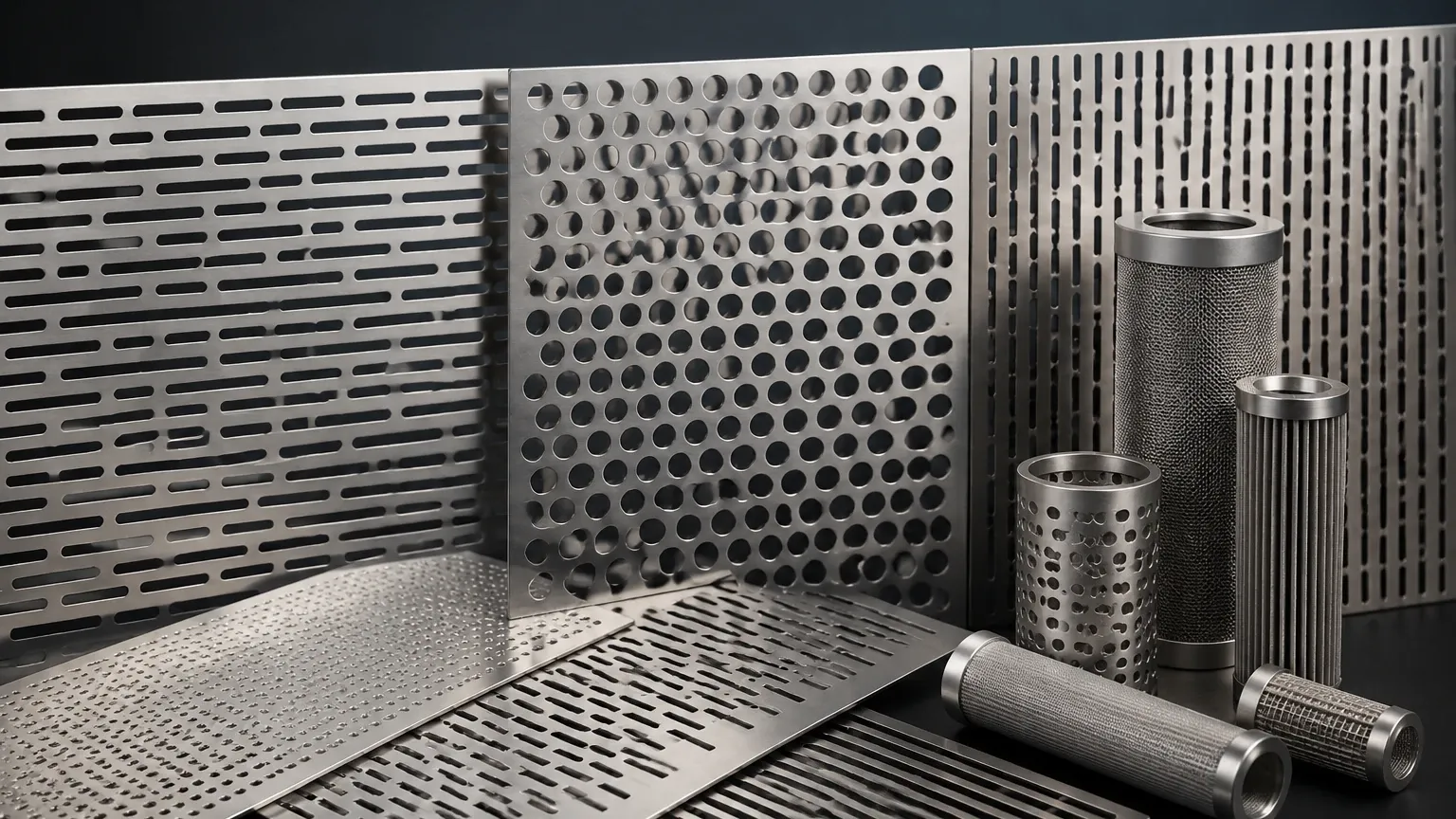
Slotted perforated metal is produced by punching or laser-cutting elongated holes into metal sheets. These slots can be designed with round ends (oblong) or square ends (rectangular). The primary advantage of a slotted aperture is its ability to allow the passage of materials based on their width while restricting them based on their length or orientation. This is particularly useful in sifting and sorting processes where particles are not perfectly spherical.
In industrial filtration, slotted patterns are frequently used in vibrating screens, centrifuge liners, and drainage systems. The elongated shape reduces the likelihood of "blinding" or clogging, a common issue with round holes when dealing with fibrous or irregularly shaped materials. By providing a longer path for fluid or air to pass through, slotted metal can maintain higher flow rates under pressure, which is essential for high-throughput environments like pulp and paper mills or large-scale water treatment facilities.
Engineering Specifications: Dimensions and Patterns
When specifying slotted perforated metal, engineers must define several key parameters to ensure the component performs correctly within a larger assembly. These specifications include the slot width, slot length, and the arrangement of the holes.
Hole Orientation and Arrangement
There are three primary arrangements for slotted holes:
1. Side-Staggered: The slots are arranged in rows where the holes in one row are offset from the holes in the adjacent row. This is the most common configuration as it provides high structural strength and a uniform distribution of the open area.
2. End-Staggered: Similar to side-staggered, but the offset occurs at the ends of the slots. This is often used for specific sorting requirements where material flows across the width of the sheet.
3. Straight-Line: The slots are aligned perfectly in both rows and columns. While this offers the most direct path for flow, it results in lower mechanical strength compared to staggered patterns, as the "bridges" (the metal between the holes) are aligned in a way that can lead to bending or tearing under high stress.
Open Area Calculations
The percentage of open area is a vital metric for determining flow capacity and pressure drop. For slotted patterns, the calculation is more complex than for round holes. It involves the slot width (W), slot length (L), and the centers (the distance from the center of one slot to the center of the next). A higher open area generally improves filtration efficiency but decreases the physical durability of the sheet. Engineers must find the optimal balance between these two factors based on the operating pressure and the viscosity of the medium being filtered.
Material Selection for Corrosive and High-Temperature Environments
The performance of slotted perforated metal is heavily dependent on the alloy used. Because these components are often exposed to harsh chemicals, high temperatures, or abrasive materials, material selection is a primary engineering consideration.
* Stainless Steel (304 and 316L): These are the industry standards for most filtration applications. Grade 304 offers excellent corrosion resistance for general industrial use, while 316L contains molybdenum, providing superior resistance to chlorides and pitting. This makes 316L the preferred choice for pharmaceutical and marine applications.
* Carbon Steel: Used in less corrosive environments where cost-effectiveness is a priority. It is often galvanized or coated to provide a basic level of protection against oxidation.
* Specialty Alloys: For extreme environments involving high-temperature oxidation or highly acidic fluids, alloys such as Monel, Inconel, or Hastelloy may be required.
Kaifil’s expertise in stainless steel manufacturing ensures that the chosen material is processed without compromising its metallurgical properties, maintaining the integrity of the Perforated & Expanded Metal components throughout their service life.
Performance Advantages: Flow Dynamics and Clogging Resistance
One of the most significant technical reasons to choose slotted perforated metal over other media is its behavior in fluid dynamics. The elongated slot creates a different shear environment than a round hole. In applications involving high-viscosity liquids, the slot allows for a more laminar flow, reducing the turbulence that can lead to foaming or degradation of sensitive fluids.
Furthermore, slotted metal is highly effective in "dewatering" applications. In the food processing industry, for example, slotted screens are used to separate solids from liquids in fruit and vegetable processing. The slots allow water to drain rapidly while the solid material is conveyed across the surface. Because the slots are narrower than they are long, they provide a "self-cleaning" effect; particles that might get wedged in a round hole are more likely to be pushed through or washed away by the flow along the length of the slot.
Key Evaluation Criteria for Procurement and Design
Before finalizing a design or placing a purchase order for slotted perforated metal, technical teams should evaluate the following criteria to ensure the product meets the application’s demands:
1. Micron Rating vs. Slot Width: While round holes are measured by diameter, slotted holes are defined by their narrowest dimension (the width). This width determines the effective filtration rating. It is crucial to confirm that the slot width is tight enough to retain the target particles while remaining wide enough to prevent excessive pressure build-up.
2. Sheet Thickness and Gauge: The thickness of the metal affects both the durability and the "aspect ratio" of the hole. A hole that is too deep (thick metal) relative to its width can become a trap for debris, making the filter difficult to clean via backwashing.
3. Edge Margins: Unperforated borders, or margins, are often required for welding or mounting the sheet into a frame. Specifying the exact dimensions of these margins is necessary to ensure a proper fit within the housing.
4. Flatness and Tolerances: Industrial filters often require high precision. Specifying the allowable camber and flatness ensures that the slotted sheet can be integrated into automated machinery without causing mechanical interference.
Common Risks and Mitigation in Slotted Metal Selection
There are several risks associated with the improper specification of slotted perforated metal. One common issue is "burr" formation during the punching process. If the punches are not maintained or if the material is too thick, small metal fragments (burrs) can remain on the edges of the slots. In pharmaceutical or food-grade applications, these burrs can break off and contaminate the product. Kaifil mitigates this risk through precision manufacturing and secondary finishing processes such as deburring and electropolishing.
Another risk is mechanical fatigue. In vibrating screens, the metal is subjected to constant cyclic loading. If the bridges between the slots are too narrow, the metal will eventually crack. Engineers should perform stress analysis to ensure that the bridge width is sufficient to withstand the operational G-forces and material load.
Customization and OEM Capabilities for Precision Filtration
Every industrial environment presents unique challenges, which is why a one-size-fits-all approach to filtration is rarely effective. Customization is at the core of high-performance filtration. From specific hole geometries to custom sheet sizes and specialized coatings, the ability to tailor the perforated metal to the application is essential.
Kaifil provides comprehensive OEM services, working closely with global customers to develop filtration components that meet exact application requirements. This includes selecting the optimal grade of stainless steel, determining the most efficient slot pattern for specific flow rates, and manufacturing the components to rigorous quality standards. Whether the requirement is for a single custom prototype or large-scale production runs, the focus remains on durability, precision, and total cost of ownership.
Pre-Purchase Checklist for Engineers
To streamline the procurement process and ensure technical accuracy, engineers should confirm the following information before proceeding with a custom order:
* Fluid/Material Compatibility: Does the selected alloy resist the chemical profile of the medium?
* Operating Temperature: Will the material maintain its structural integrity at peak temperatures?
* Pressure Requirements: What is the maximum differential pressure the screen must withstand?
* Cleaning Method: Will the filter be cleaned via manual scraping, backwashing, or ultrasonic cleaning? (This influences the required surface finish).
* Regulatory Compliance: Does the material and manufacturing process meet industry-specific standards (e.g., FDA for food, or ASME for pressure vessels)?
By addressing these factors, purchasing teams can avoid costly downtime and ensure that their filtration systems operate at peak efficiency. Slotted perforated metal, when engineered correctly, provides a robust and reliable solution for the most demanding industrial separation tasks.
For more information on material options and technical support for your filtration projects, you can explore the full range of Perforated & Expanded Metal solutions available for industrial applications. Choosing the right partner in manufacturing ensures that your precision metal components deliver the performance and longevity required in today’s competitive industrial landscape.
