


Used Expanded Metal Machine for Sale
For industrial manufacturers and engineering firms, the decision to bring expanded metal production in-house often begins with a search for a used expanded metal machine for sale. While the capital expenditure of a new high-speed expansion press can be significant, the secondary market offers a pathway to acquire heavy-duty machinery at a lower entry cost. However, evaluating these machines requires a deep understanding of mechanical tolerances, hydraulic systems, and the specific material requirements of the final application.
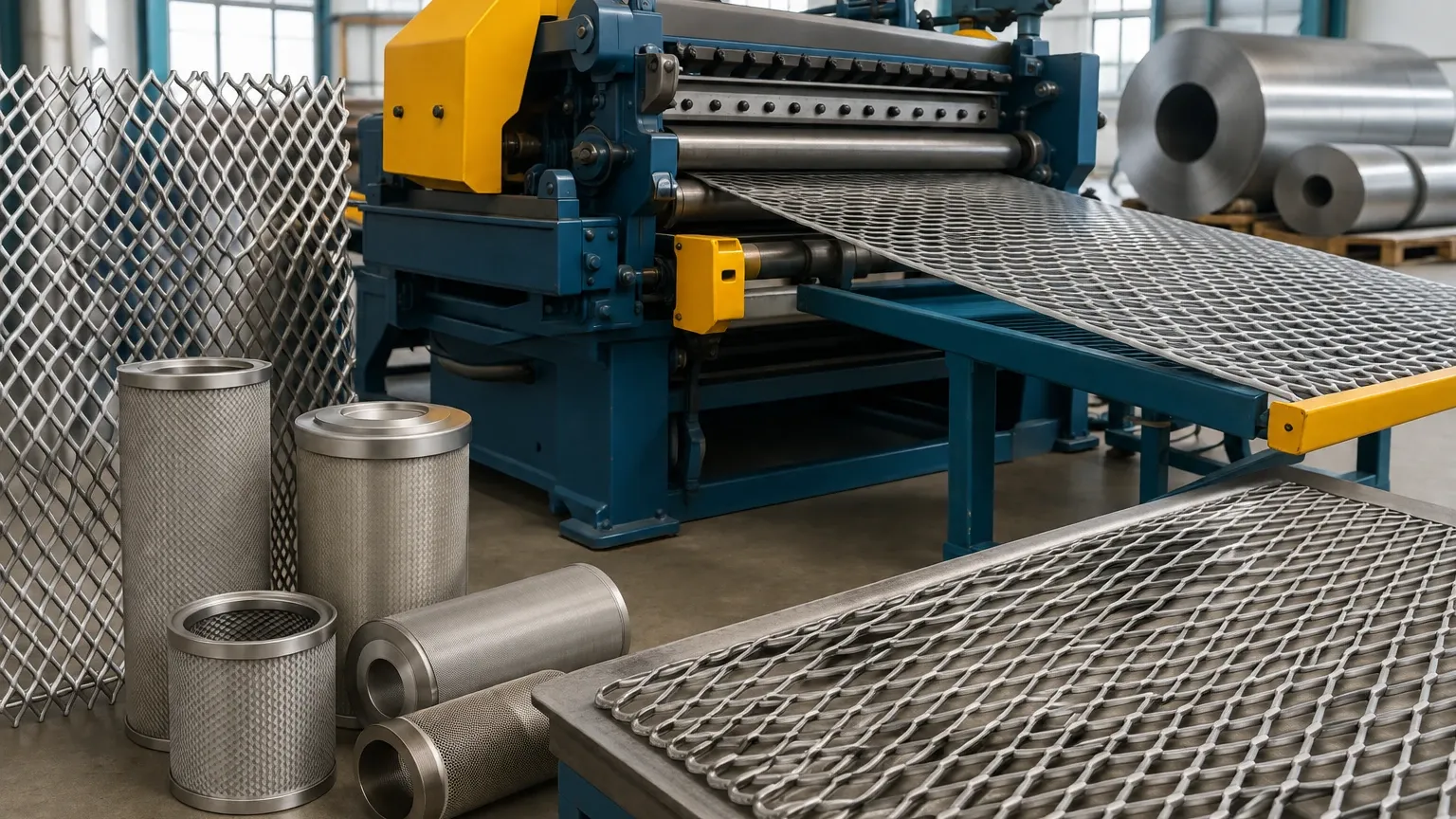
Expanded metal is a unique material produced by simultaneously slitting and stretching a solid sheet or coil of metal. Unlike Perforated & Expanded Metal processes that involve punching holes and creating scrap, expansion is a chipless process that increases the surface area of the original material. This makes it highly efficient for filtration, architectural, and structural applications. When sourcing a used machine, the goal is to ensure that the equipment can still maintain the precision necessary for industrial-grade specifications.
Understanding the Mechanics of Expanded Metal Production
To properly evaluate a used expanded metal machine for sale, one must first understand the engineering principles behind the expansion process. The machine operates using a reciprocating upper blade and a stationary lower blade. As the metal sheet feeds through, the upper blade descends, slitting the metal and then stretching it into the characteristic diamond pattern.
There are two primary types of machines found on the secondary market:
1. Mechanical Expansion Presses: These utilize a flywheel and crankshaft mechanism to drive the upper blade. They are known for high-speed production and are ideal for thinner gauges and lighter meshes used in standard filtration.
2. Hydraulic Expansion Machines: These use hydraulic cylinders to provide the force required for slitting and stretching. While generally slower than mechanical presses, they offer significantly higher tonnage, making them suitable for heavy-duty expanded metal used in walkways, gratings, or thick-gauge industrial screens.
Engineers must determine if the machine's drive system aligns with their production volume and material thickness requirements. A machine designed for light aluminum mesh will not survive the stresses of expanding 316L stainless steel for chemical processing filters.
Key Technical Specifications to Verify Before Purchase
When reviewing a listing for a used expanded metal machine for sale, technical data sheets are more important than visual condition. The following specifications dictate the machine's utility in a B2B production environment:
Tonnage and Press Force
The tonnage determines the maximum thickness and tensile strength of the material the machine can process. For stainless steel applications, which are common in the filtration industry, higher tonnage is required compared to carbon steel or aluminum of the same thickness.
Maximum Sheet Width
Expanded metal machines are built to handle specific widths, typically ranging from 600mm to 3000mm. If your project requires wide-format architectural panels or large-diameter filter cylinders, the machine's bed width is a non-negotiable constraint.
Stroke Frequency (SPM)
Strokes per minute (SPM) define the production speed. Older used machines may operate at 60-120 SPM, while modern high-speed units can exceed 500 SPM. For high-volume OEM supply chains, a slower machine may create a bottleneck in production.
Material Feed Precision
The accuracy of the diamond pattern—specifically the Long Way of Diamond (LWD) and Short Way of Diamond (SWD)—depends on the precision of the feeding mechanism. Inconsistent feeding leads to "camber" or uneven mesh, which is unacceptable in precision filtration components.
Critical Inspection Points for Pre-Owned Equipment
Acquiring a used expanded metal machine for sale involves inherent risks. A physical inspection, preferably by a mechanical engineer or a specialized technician, should focus on several high-wear areas:
* Blade Seat and Alignment: The precision of the slit depends on the clearance between the upper and lower blades. Inspect the blade seats for signs of warping or uneven wear. If the seats are damaged, the machine will consistently produce burred edges and irregular diamonds.
* Main Bearings and Bushings: In mechanical presses, the main crankshaft bearings are subject to immense cyclical loads. Listen for knocking sounds during a dry run, which indicate bearing failure.
* Hydraulic Circuit Integrity: For hydraulic models, check for leaks in the cylinders and hoses. Inspect the pump's pressure output to ensure it meets the original manufacturer’s specifications. Pressure drops during the stroke will result in incomplete stretching.
* Control Systems (PLC): Many older machines use proprietary or obsolete control systems. If the PLC (Programmable Logic Controller) fails, finding replacement parts or software can be nearly impossible. It is often necessary to budget for a complete electrical retrofit when buying older used equipment.
Evaluating the Economic Viability: Used Machine vs. Outsourcing
For many firms, searching for a used expanded metal machine for sale is a response to rising costs from external suppliers. However, the total cost of ownership (TCO) must be calculated before committing to the purchase. Beyond the initial price, consider the following:
1. Tooling Costs: Expanded metal requires specific blade sets for different diamond sizes. If the used machine does not come with a full suite of tooling, the cost of custom-grinding new blades can reach thousands of dollars.
2. Maintenance Expertise: Operating these machines requires skilled setup technicians who understand how to adjust the "over-feed" and "under-feed" to achieve the desired mesh density. If this expertise is not available in-house, the machine may sit idle.
3. Scrap Rates: An older machine with less precise controls will naturally have a higher scrap rate during setup and production runs. In industries using expensive alloys like Monel or Inconel, even a 5% increase in scrap can negate the savings of owning the machine.
In many cases, partnering with a specialized manufacturer like Kaifil for Perforated & Expanded Metal components is more cost-effective than managing the complexities of in-house expansion, especially for high-precision filtration applications.
Common Pitfalls in the Secondary Market for Metalworking Machinery
Buyers often encounter issues that are not apparent in a simple "used expanded metal machine for sale" advertisement. One major pitfall is the "as-is" sale. Without a performance guarantee, the buyer assumes all risk for internal cracks in the frame or hydraulic manifold issues.
Another consideration is the logistics of relocation. These machines are heavy, often requiring specialized rigging and heavy-haul transport. Once on-site, they must be leveled and anchored to a reinforced concrete foundation to prevent vibration-induced inaccuracies. These "hidden" installation costs can sometimes equal 20-30% of the machine's purchase price.
Furthermore, ensure that the machine complies with current safety standards (such as OSHA or CE). Older machines often lack light curtains, emergency stop synchronization, or proper guarding, requiring additional investment to bring them up to code for a modern industrial facility.
Integrating Expanded Metal into Industrial Filtration Systems
From an engineering perspective, the choice of expanded metal—whether produced on a new machine, a used machine, or sourced from a specialist—must be driven by the filtration requirements. Expanded metal serves two primary roles in filtration:
* Support Media: It provides a rigid structure for finer wire mesh or non-woven filter media, preventing collapse under high differential pressure.
* Primary Filter Element: In coarse filtration or grease traps, the expanded metal itself acts as the filter. The "bond" (where the diamonds meet) and the "strand" (the width of the metal) must be consistent to ensure predictable flow rates and particle retention.
When evaluating a used expanded metal machine for sale, consider if it can produce the specific strand widths and bond lengths required for your filter designs. Precision is paramount; even slight variations in the expansion ratio can alter the open area percentage, directly impacting the pressure drop across the filter element.
Conclusion: Making an Informed Procurement Decision
Finding a used expanded metal machine for sale can be a strategic move for companies looking to expand their manufacturing capabilities or control their supply chain. However, the technical complexities of metal expansion mean that a "bargain" machine can quickly become a liability if not properly vetted.
For engineers and procurement teams, the decision should be based on a rigorous assessment of the machine’s mechanical state, the availability of replacement parts, and the specific tolerances required by the end-use application. If the goal is to produce high-performance Perforated & Expanded Metal for demanding environments like chemical processing or pharmaceutical filtration, the precision of the equipment is the single most important factor. By following a structured evaluation process, businesses can ensure they acquire a tool that enhances their production rather than hindering their quality standards.
