


Used Expanded Metal Near Me
For procurement managers and project engineers, sourcing materials often involves a balance between immediate availability and cost-efficiency. The search for "used expanded metal near me" typically arises when a project requires heavy-duty mesh for non-critical structural applications, such as security fencing, walkway gratings, or equipment guards, where the aesthetics and precise tolerances of new material may seem secondary to budget constraints. However, in industrial environments—particularly those involving filtration, chemical processing, or high-stress mechanical components—the decision to use reclaimed or surplus metal requires a rigorous technical evaluation.
While local scrap yards and industrial liquidation auctions are common sources for used materials, understanding the engineering implications of utilizing pre-owned Perforated & Expanded Metal is essential for maintaining operational safety and equipment longevity. This guide examines the technical criteria for evaluating used expanded metal and explores why precision-manufactured new components are often the more cost-effective choice for long-term industrial performance.
Common Sources for Used Expanded Metal
When searching for used expanded metal locally, several channels typically emerge. Each source carries different levels of risk regarding material traceability and structural integrity:
1. Industrial Scrap Yards: These facilities often stock offcuts or reclaimed panels from demolished industrial sites. While prices are low, the material grade is rarely certified, and the metal may have been exposed to unknown chemical environments.
2. Surplus Liquidators: Companies that buy overstock from large construction projects or manufacturing plant closures. This is often "new-old stock" (NOS), which may be in better condition but has been stored in uncontrolled environments.
3. Local Fabrication Shops: Small-scale shops often have remnants from larger jobs. This is generally the highest quality of "used" metal, as the shop may still have the original material mill reports.
4. Online Industrial Marketplaces: Platforms focusing on used machinery often list secondary architectural or structural components, though shipping costs can quickly negate any savings found on the unit price.
Technical Evaluation Criteria for Used Metal
Before integrating used expanded metal into an industrial system, engineers must perform a multi-point inspection to ensure the material can handle the intended load and environmental stressors.
Structural Integrity and Deformation
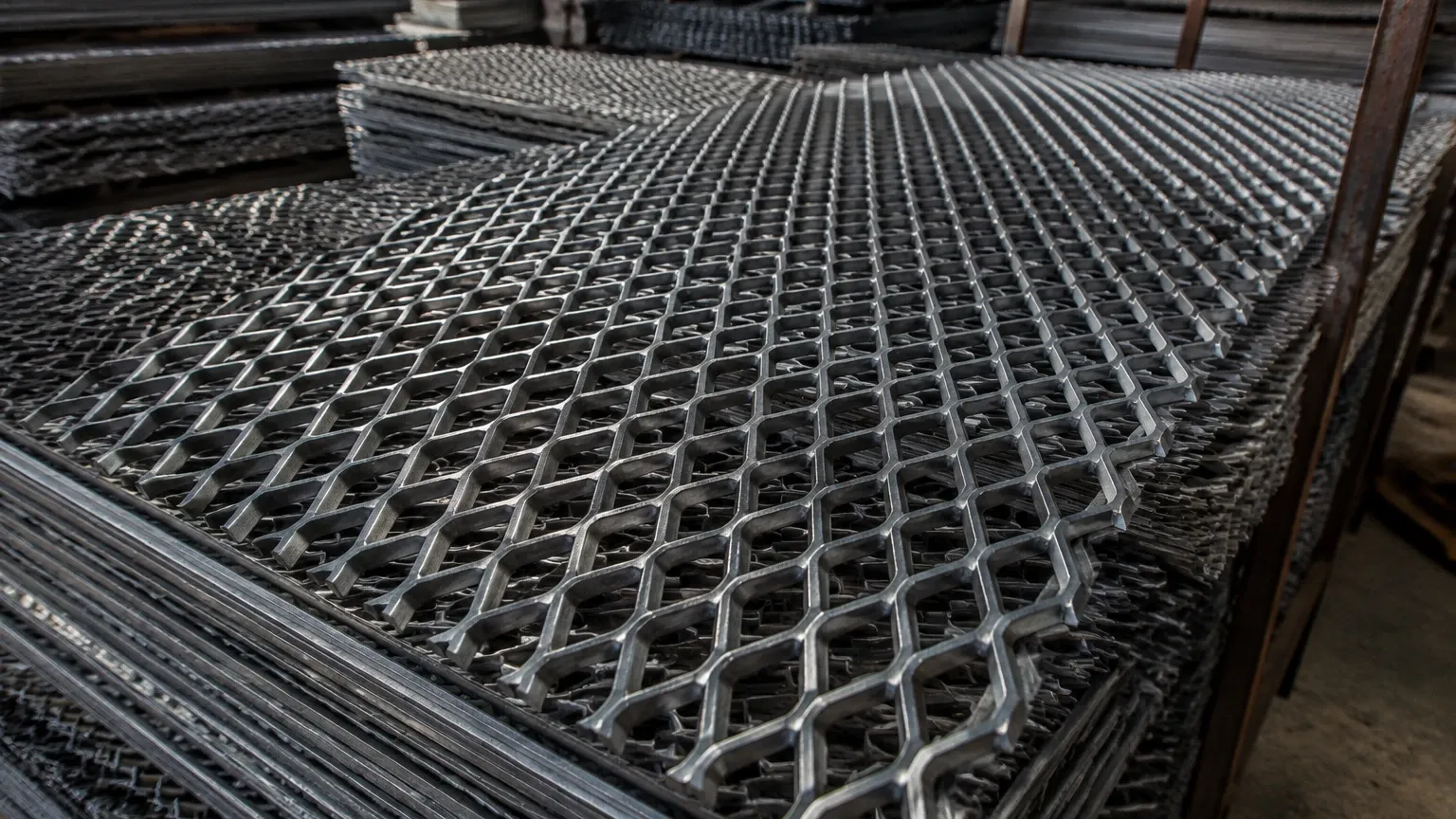
Expanded metal is created by simultaneously slitting and stretching a solid sheet. This process creates a series of "bonds" (where the strands meet) and "strands" (the sides of the diamond opening). In used material, these bonds are the primary points of failure. Inspect for:
* Fractured Bonds: Micro-cracks at the intersection of strands indicate the material has been overstressed or subjected to vibration fatigue.
* Camber and Bowing: If a panel does not lay flat, it suggests it has been subjected to uneven loading or improper removal, which can make it impossible to weld or frame correctly.
* Strand Thinning: Erosion or heavy cleaning (such as sandblasting) can reduce the cross-sectional area of the strands, significantly lowering the mesh's load-bearing capacity.
Corrosion and Material Degradation
For B2B applications in chemical or marine environments, material grade is paramount. Used expanded metal often lacks the documentation required to distinguish between Grade 304 and Grade 316 stainless steel.
* Pitting Corrosion: Small holes on the surface of the metal can act as stress concentrators, leading to sudden failure under pressure.
* Intergranular Corrosion: If the metal was previously welded or exposed to high heat, the area around the bonds may be compromised, even if the surface appears clean.
The Risks of Using Pre-owned Metal in Industrial Filtration
In the context of filtration—a core specialty at Kaifil—the use of reclaimed expanded metal is generally discouraged. Expanded metal often serves as the rigid support structure for fine wire mesh or filter media. If this support layer fails, the entire filtration system is compromised.
Contamination Risks
Used metal may harbor residual oils, chemicals, or biological contaminants within the diamond apertures. In food and beverage or pharmaceutical applications, this poses an unacceptable risk of cross-contamination. Even with industrial cleaning, the complex geometry of expanded metal makes it difficult to guarantee a sterile surface.
Inconsistent Pore Geometry
Filtration efficiency relies on precise flow dynamics. Used expanded metal that has been slightly stretched or compressed during its previous life will have inconsistent Open Area Ratios. This leads to uneven pressure distribution across the filter media, causing "hot spots" where the media may tear or clog prematurely.
Technical Comparison: New vs. Used Expanded Metal
| Feature | New Precision Expanded Metal | Used/Surplus Expanded Metal |
| :— | :— | :— |
| Material Certification | Full traceability (MTRs) provided. | Rarely available; requires lab testing. |
| Dimensional Accuracy | Strict adherence to SWD and LWD specs. | Likely distorted from previous use. |
| Surface Finish | Clean, degreased, and ready for welding. | May have rust, paint, or scale. |
| Fatigue Life | Predictable based on engineering data. | Unknown; may be near end-of-life. |
| Customization | Tailored to specific flow or load needs. | Limited to available stock sizes. |
Engineering Considerations for Selection
When specifying Perforated & Expanded Metal for a project, engineers must look beyond the initial purchase price. The following factors are critical for ensuring the component performs as intended:
Material Selection
Stainless steel is the standard for industrial longevity. Grade 304 offers excellent corrosion resistance for general applications, while Grade 316 is required for high-chloride or acidic environments. When buying used, the risk of receiving a lower-grade alloy can lead to rapid system failure in corrosive settings.
SWD and LWD Specifications
The Short Way of Design (SWD) and Long Way of Design (LWD) determine the size of the diamond opening. In precision filtration and screening, even a 1mm deviation can alter the flow rate and pressure drop. New manufacturing ensures these dimensions remain constant across the entire panel, whereas used panels often show "necking" or elongation near the edges where they were previously fastened.
Flattened vs. Raised Expanded Metal
* Raised (Standard): The strands are canted at an angle, providing maximum strength and a slip-resistant surface.
* Flattened: The raised sheet is passed through a cold-roll reducing mill, resulting in a smooth, flat surface.
Used flattened metal often loses its structural stiffness if it has been re-rolled or subjected to heavy impacts, making it unsuitable for precision enclosures or support grids.
Total Cost of Ownership (TCO) Analysis
While the search for "used expanded metal near me" is driven by a desire to reduce costs, the Total Cost of Ownership often tells a different story. For a B2B operation, the costs associated with used metal include:
* Inspection Labor: Man-hours spent verifying the quality and dimensions of reclaimed panels.
* Cleaning and Prep: The cost of removing old coatings, rust, or grease to make the metal weldable.
* Waste Factor: Higher scrap rates due to unusable sections of used panels.
* Premature Failure: The cost of downtime, emergency repairs, and potential damage to downstream equipment if a used component fails.
In contrast, ordering custom-manufactured components allows for "just-in-time" delivery of materials that are ready for immediate integration, with guaranteed performance metrics and a full manufacturer's warranty.
Customization: The Kaifil Advantage
As a professional manufacturer, Kaifil provides more than just raw material. We specialize in custom stainless steel filtration solutions where expanded metal serves as a critical component. By choosing new, custom-fabricated metal over used alternatives, engineers gain access to:
* Precision Tolerances: Ensuring the metal fits perfectly into filter housings or mechanical assemblies.
* Specialized Alloys: Sourcing specific materials like Duplex stainless steel or Monel for extreme environments.
* Integrated Design: We can combine expanded metal with fine wire mesh or perforated layers to create a multi-stage filtration component in a single unit.
Conclusion: Making the Informed Choice
For temporary projects, low-stakes landscaping, or basic structural repairs, sourcing used expanded metal locally may be a viable option. However, for industrial applications where reliability, hygiene, and structural safety are non-negotiable, the risks associated with used materials far outweigh the initial savings.
Engineers and purchasing teams should prioritize materials that come with documented performance characteristics and material certifications. By selecting high-quality Perforated & Expanded Metal, you ensure that your filtration systems and industrial structures are built to withstand the rigors of demanding environments, ultimately providing a lower total cost of ownership and greater operational peace of mind.
For technical assistance in selecting the right material grade and mesh configuration for your specific application, Kaifil offers engineering support and custom manufacturing capabilities to meet the most stringent industrial requirements.
