


Webforge Perforated Metal
In the landscape of industrial infrastructure and precision filtration, perforated metal serves as a foundational component for safety, ventilation, and material separation. Engineers and procurement specialists often look for webforge perforated metal when seeking robust, high-performance solutions for walkways, architectural cladding, or industrial screening. Understanding the technical nuances of these materials is essential for ensuring long-term durability and operational efficiency in demanding environments.
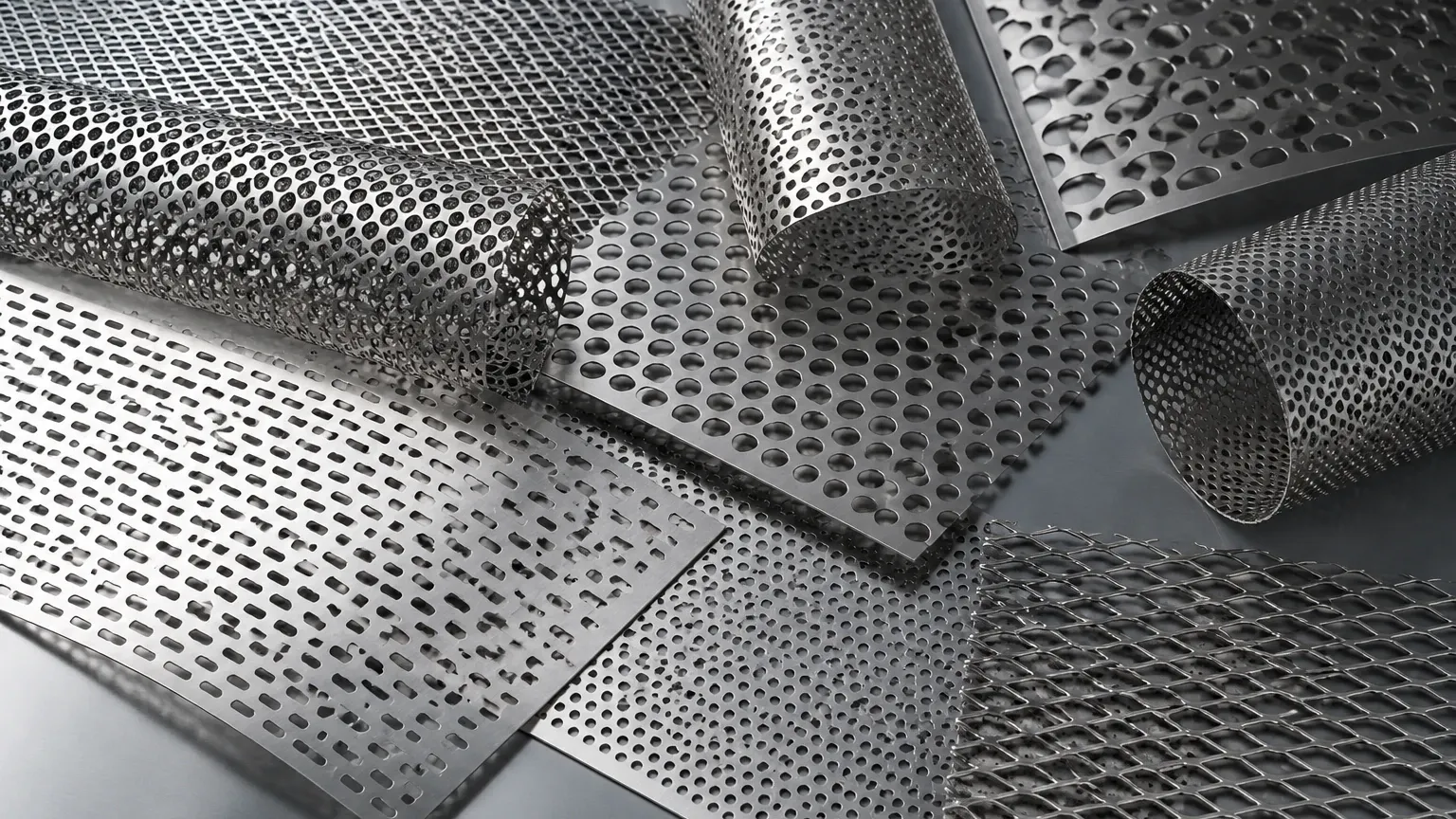
Industrial perforated metal is produced by mechanically punching or laser-cutting holes into metal sheets. While the term is often associated with specific branding or standard patterns used in heavy-duty flooring and safety applications, the broader category of Perforated & Expanded Metal encompasses a wide range of custom-engineered solutions designed to meet specific filtration and structural requirements.
Technical Specifications and Hole Patterns
The performance of perforated metal is primarily dictated by its geometry. Selecting the right pattern is not merely an aesthetic choice but a critical engineering decision that affects flow rates, pressure drop, and structural integrity.
Round Hole Patterns
Round holes are the most common configuration due to their versatility and structural stability. They are typically arranged in either a 60-degree staggered pattern or a straight-line pattern. The 60-degree staggered orientation is generally preferred in industrial applications because it provides the highest strength-to-weight ratio and uniform open area, which is vital for consistent filtration and fluid dynamics.
Square and Slotted Holes
Square holes offer a higher open area percentage compared to round holes, making them suitable for applications requiring high visibility or maximum airflow. Slotted holes, often used in sorting and sieving, are designed to facilitate the passage of specific particle shapes while retaining others. In filtration contexts, slotted perforated metal is frequently used as a support core for finer mesh layers in stainless steel filter cartridges.
Calculating Open Area
The "Open Area" is the percentage of the total sheet area occupied by the perforations. This is a critical metric for engineers calculating the throughput of a system. For a 60-degree staggered round hole pattern, the formula is:
Open Area % = (D² × 90.69) / P²
*Where D = Hole Diameter and P = Pitch (center-to-center distance between holes).*
Accurate calculation ensures that the perforated component does not become a bottleneck in the system, particularly in high-velocity hydraulic or gas filtration applications.
Material Selection for Industrial Environments
While webforge perforated metal is often associated with carbon steel or galvanized finishes for structural use, industrial filtration and chemical processing require more resilient materials. Kaifil specializes in utilizing high-grade alloys to withstand corrosive environments and extreme temperatures.
1. Stainless Steel (304/316L): The industry standard for food and beverage, pharmaceutical, and chemical processing. Grade 316L offers superior resistance to chlorides and pitting, making it essential for marine or high-acid environments.
2. Aluminum: Chosen for its lightweight properties and natural resistance to atmospheric corrosion. It is frequently used in architectural applications and HVAC systems.
3. Galvanized Steel: Provides a cost-effective solution for outdoor structural applications where basic rust protection is required, though it is less suitable for precision filtration due to the risk of coating flakes contaminating the process stream.
4. Specialty Alloys: For high-temperature or highly aggressive chemical applications, materials such as Monel, Inconel, or Hastelloy may be specified.
Perforated vs. Expanded Metal: Engineering Trade-offs
When evaluating Perforated & Expanded Metal, it is important to distinguish between the two manufacturing processes and their resulting physical properties.
Perforated Metal Characteristics
Perforated metal is created by removing material (the "slugs"). This allows for extremely precise hole sizes and placements. It is the preferred choice when specific filtration ratings or exact open area percentages are required. Furthermore, perforated sheets can be produced with "safe margins"—unperforated borders that simplify welding and installation into frames or filter housings.
Expanded Metal Characteristics
Expanded metal is produced by slitting and stretching a single sheet of metal. This process involves no waste, as no material is removed. The resulting diamond-shaped openings are structurally rigid because they are part of a continuous piece of metal. However, expanded metal lacks the precision of perforated metal in terms of hole diameter and is generally less suited for fine-particle filtration. It is, however, an excellent choice for safety guards, walkways, and heavy-duty support structures where grip and high strength are prioritized.
Applications in Industrial Filtration and Beyond
In the B2B sector, the utility of perforated metal extends far beyond simple screening. Its structural rigidity makes it an ideal component in complex filtration systems.
Filter Element Support
In high-pressure hydraulic and water treatment systems, fine wire mesh filters often lack the structural strength to withstand the differential pressure. Perforated metal tubes act as the internal core or external cage, providing the necessary mechanical support to prevent the mesh from collapsing or bursting.
Acoustic Dampening
Perforated metal is widely used in industrial silencers and acoustic panels. By allowing sound waves to pass through the holes and into sound-absorbing material behind the sheet, it helps manage noise levels in power plants and manufacturing facilities.
Heat and Air Management
In data centers and electronic enclosures, perforated panels are essential for thermal management. They provide a precise balance between electromagnetic interference (EMI) shielding and the airflow required to cool sensitive components.
Customization and Manufacturing Precision
Standard off-the-shelf perforated sheets rarely meet the exact needs of specialized engineering projects. Customization is often required in several areas:
* Custom Hole Geometries: Beyond standard round and square, custom shapes can be engineered to meet specific flow characteristics or aesthetic requirements.
* Secondary Processing: Industrial applications often require more than just a flat sheet. Capabilities such as precision rolling (to create filter tubes), welding, degreasing, and deburring are essential for producing a ready-to-install component.
* Edge Treatments: Specifying the width of margins is crucial for ensuring that the perforated sheet fits perfectly into its intended housing without the need for on-site modifications, which can compromise the material's integrity.
Procurement Checklist for Engineers
When specifying webforge perforated metal or custom perforated solutions, engineers should confirm the following details to ensure the product meets the application's demands:
1. Material Grade: Does the alloy match the chemical compatibility requirements of the process fluid?
2. Hole Size and Pitch: Are these optimized for the required filtration rating or airflow?
3. Sheet Thickness (Gauge): Is the material thick enough to handle the mechanical load or pressure drop without deforming?
4. Flatness and Tolerances: For precision machinery, what are the acceptable deviations in flatness and hole alignment?
5. Surface Finish: Does the application require electropolishing (common in pharma/food), powder coating, or simple deburring?
Quality Assurance and Compliance
In industries such as food processing and pharmaceuticals, the quality of the metal surface is as important as the hole pattern. Burrs or sharp edges on perforated metal can trap contaminants or cause turbulence in fluid flow. High-quality manufacturing processes ensure that the sheets are thoroughly cleaned and deburred. At Kaifil, the focus remains on providing reliable, precision-engineered components that adhere to strict industrial standards, ensuring that every Perforated & Expanded Metal product performs predictably under operational stress.
Conclusion
Selecting the appropriate perforated metal involves a detailed analysis of material science, fluid dynamics, and mechanical engineering. Whether the requirement is for a standard webforge perforated metal style for industrial flooring or a highly customized stainless steel support core for a pharmaceutical filter, the choice of manufacturer and specification is paramount. By focusing on precision, material integrity, and application-specific design, engineers can achieve filtration and structural solutions that offer both high performance and a low total cost of ownership.
