


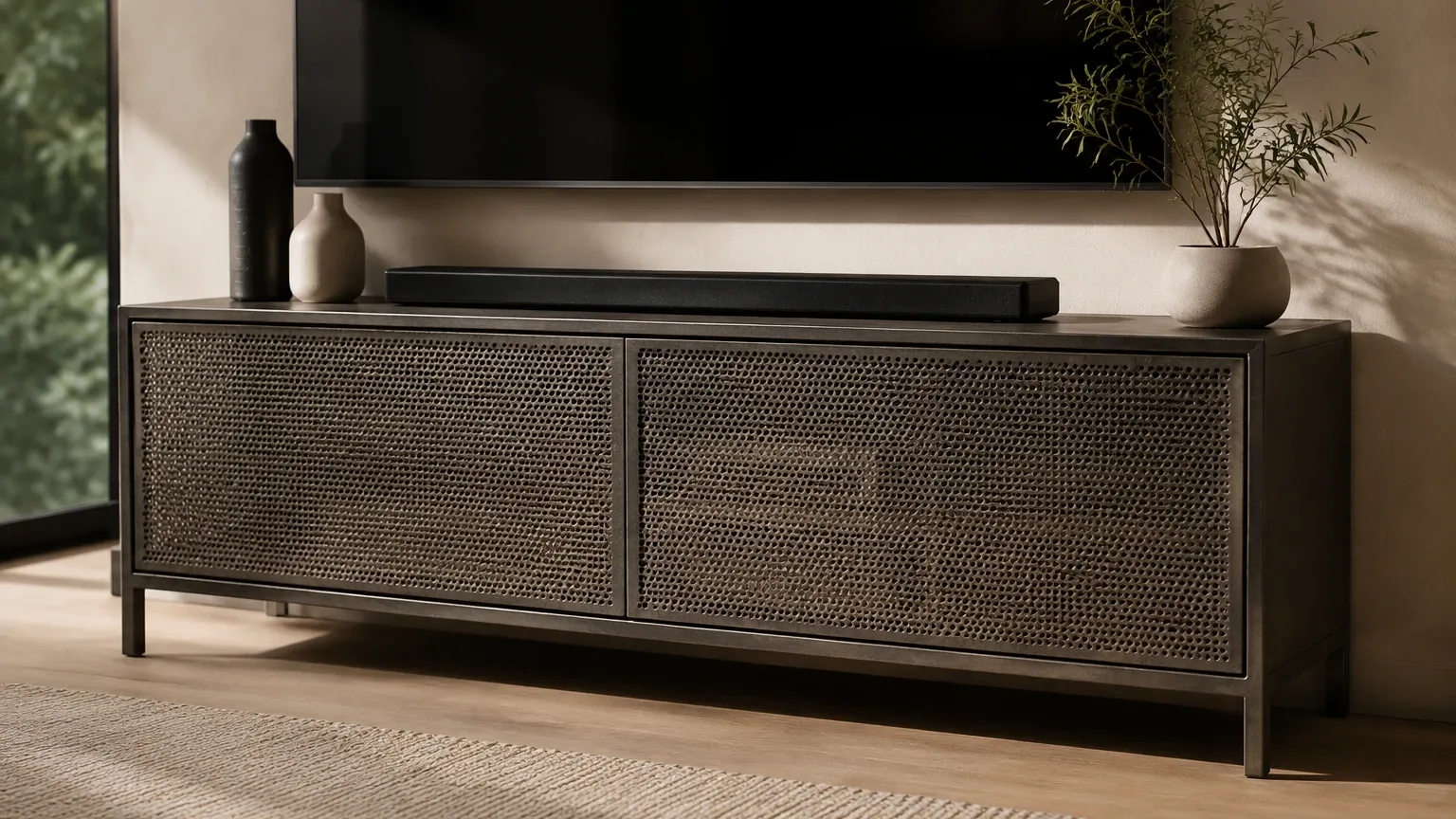
West Elm Perforated Metal Media Console
In the intersection of industrial engineering and modern interior design, materials originally developed for rigorous filtration and structural applications are increasingly utilized for their functional and aesthetic properties. The West Elm perforated metal media console serves as a prominent example of how perforated metal—a staple in industrial filtration and screening—can be adapted to solve specific engineering challenges within a commercial or residential environment. For engineers and procurement specialists, understanding the technical specifications of such components provides insight into the broader applications of Perforated & Expanded Metal in demanding sectors like electronics housing, HVAC, and industrial cabinetry.
From a technical perspective, the choice of perforated metal for a media console is not merely stylistic. It addresses critical requirements for thermal management, signal transparency, and structural durability. This article examines the engineering principles behind perforated metal components, the material selection process, and the manufacturing considerations that ensure high-performance outcomes in both industrial and high-end commercial applications.
Engineering Principles of Perforated Metal in Media Applications
The primary functional driver for using perforated metal in media consoles and electronic enclosures is thermal management. High-performance audio-visual equipment and networking hardware generate significant heat during operation. In a closed wooden cabinet, this heat can accumulate, leading to hardware degradation or failure.
Perforated metal provides a passive cooling solution by allowing for continuous airflow. The "open area percentage" is the critical metric here. This is the ratio of the total area of the holes to the total area of the sheet. For media applications, an open area of 40% to 60% is typically targeted to ensure sufficient air exchange while maintaining the structural rigidity required to support heavy equipment. Engineers must calculate the airflow requirements based on the total wattage of the components housed within the console to determine the optimal hole size and pitch.
Furthermore, perforated metal is uniquely suited for media environments because it allows Infrared (IR) and Radio Frequency (RF) signals to pass through. Unlike solid metal or thick wood, a properly engineered perforated pattern allows remote control signals and Wi-Fi waves to penetrate the cabinet doors, enabling the operation of devices while they remain concealed and protected.
Material Selection: Stainless Steel vs. Mild Steel
When specifying perforated metal for industrial or high-end commercial use, the choice of base material is the first step in ensuring longevity and performance. While consumer-grade furniture may utilize mild steel with a powder-coated finish, industrial applications often demand the superior properties of stainless steel.
1. Stainless Steel (304 and 316 Grades): Stainless steel is the gold standard for perforated components due to its inherent corrosion resistance and high strength-to-weight ratio. In environments where humidity or chemical exposure is a factor—such as in food processing or pharmaceutical filtration—stainless steel ensures that the perforations remain clean and free of oxidation, which could otherwise restrict airflow or contaminate the environment.
2. Mild Steel: Mild steel is more cost-effective and offers excellent formability. However, it requires a protective coating, such as powder coating or galvanization, to prevent rust. In the context of a media console, powder coating provides both the necessary protection and the desired aesthetic finish, but for industrial filtration, the risk of coating failure often makes stainless steel the preferred choice.
3. Aluminum: For applications where weight is a primary concern, aluminum perforated sheets offer a lightweight alternative with natural corrosion resistance, though they lack the extreme structural stiffness of steel.
Perforation Patterns and Open Area Calculations
The performance of a perforated metal sheet is dictated by its pattern. The most common configurations include round, square, and hexagonal holes, each offering different mechanical properties.
* Round Holes (Staggered Pattern): This is the most popular configuration for industrial filtration and ventilation. A 60-degree staggered pattern provides the highest strength-to-open-area ratio, ensuring the metal remains rigid even when a large portion of the material has been removed.
* Square Holes: Square holes offer a higher open area percentage (often exceeding 60%), which is excellent for maximum visibility and airflow. However, square holes can create stress concentration points at the corners, making them less ideal for structural load-bearing components compared to round holes.
* Hexagonal Holes: Often referred to as "honeycomb" patterns, these provide a very high open area and are frequently used in high-end architectural and media applications where a modern aesthetic is required alongside maximum ventilation.
Engineers must also consider the "margins"—the solid areas around the edges of the perforated sheet. In custom manufacturing, maintaining precise margins is essential for the subsequent welding or assembly of the console frame. Inconsistent margins can lead to structural weaknesses or aesthetic defects during the final assembly stage.
Manufacturing Process: Precision and Customization
Producing high-quality perforated metal components, such as those found in a West Elm media console or an industrial filter housing, requires advanced manufacturing capabilities. The process typically involves several key stages:
1. CNC Punching and Laser Cutting
Modern perforation is achieved through high-speed CNC (Computer Numerical Control) punching presses. These machines can punch thousands of holes per minute with extreme precision. For complex patterns or thicker materials, fiber laser cutting is used to ensure clean edges and intricate designs that would be difficult to achieve with traditional mechanical dies.
2. Leveling and Flattening
The punching process often introduces internal stresses into the metal sheet, causing it to curl or warp. Industrial-grade leveling rollers are used to flatten the sheets, ensuring they meet strict flatness tolerances required for seamless integration into a cabinet frame or a filtration assembly.
3. Deburring and Surface Finishing
Perforation can leave sharp edges or "burrs" on the exit side of the hole. For a consumer-facing product like a media console, or for filtration components that must be handled frequently, deburring is a critical quality control step. This is followed by surface treatments such as pickling and passivation (for stainless steel) or electrostatic powder coating to achieve the final finish.
Comparing Perforated Metal and Expanded Metal
While the West Elm media console primarily utilizes perforated metal, it is important for procurement teams to understand the distinction between perforated and expanded metal, as both are used in industrial enclosures and filtration.
Perforated Metal is created by punching holes in a solid sheet. This allows for precise control over the hole size, shape, and spacing. It is the preferred choice when specific airflow calculations or signal transparency requirements must be met.
Expanded Metal is produced by simultaneously slitting and stretching a metal sheet. This process creates a diamond-shaped mesh without any material waste. Expanded metal is exceptionally strong and provides a high level of security, making it ideal for industrial walkways, machine guards, and heavy-duty shelving. However, it lacks the smooth surface and precise open-area control of perforated metal, which is why perforated sheets are more commonly selected for high-end cabinetry and precision filtration.
Quality Standards and Procurement for Industrial-Grade Components
When sourcing perforated metal components for industrial applications, engineers must look beyond the surface aesthetics. The reliability of a filtration system or an electronic enclosure depends on several technical factors that must be confirmed with the manufacturer:
* Dimensional Tolerances: Ensure that the sheet thickness, hole diameter, and pitch adhere to ISO or ASTM standards. Even minor deviations can impact the filtration efficiency or the assembly of the final product.
* Material Certification: For industries like food processing or pharmaceuticals, manufacturers must provide material certifications (MTRs) to verify the grade and composition of the stainless steel.
* Customization Capabilities: In many B2B scenarios, standard off-the-shelf sheets are insufficient. Manufacturers like Kaifil provide OEM services, allowing for custom hole patterns, specific margins, and integrated mounting features that simplify the final production process.
* Total Cost of Ownership: While mild steel may have a lower initial purchase price, the long-term costs associated with corrosion and replacement often make stainless steel a more cost-effective solution for industrial environments.
Conclusion: The Value of Precision Perforation
The use of perforated metal in products like the West Elm media console highlights the material's versatility and functional superiority. By balancing the need for airflow, signal transparency, and structural integrity, perforated metal proves to be an indispensable material in both the design and industrial worlds.
For engineers and purchasing teams, the key to a successful project lies in selecting a manufacturing partner capable of delivering high-precision components that meet specific application requirements. Whether the goal is to protect sensitive electronics in a media console or to provide reliable filtration in a chemical processing plant, the technical specifications of the Perforated & Expanded Metal used will ultimately determine the performance and lifespan of the final product. By focusing on material quality, precise open-area calculations, and advanced manufacturing techniques, organizations can ensure they achieve the optimal balance of form and function in their filtration and enclosure solutions.
