


Where Can I Buy Perforated Metal Sheets
For procurement managers and mechanical engineers, sourcing the right industrial components is rarely about finding the lowest price and more about finding the right technical fit. When asking "where can i buy perforated metal sheets," the answer depends heavily on whether you are looking for standard architectural panels or high-precision components designed for industrial filtration and fluid dynamics.
In the industrial sector, perforated and expanded metal serve as the backbone for various filtration systems, protective guards, and structural supports. Finding a supplier that understands the nuances of hole patterns, open area percentages, and material integrity is critical to the longevity of your equipment. This guide explores the supply landscape and the technical criteria necessary for a successful B2B purchase.
Understanding the Supplier Landscape
When searching for where to buy perforated metal sheets, industrial buyers typically encounter three main types of suppliers. Each serves a different niche within the market.
1. Local Metal Service Centers
Local distributors often stock standard sheets of perforated metal in common materials like carbon steel or 304 stainless steel. These are ideal for quick-turnaround projects where precision is secondary to availability. However, service centers rarely offer customization beyond basic shearing and may lack the technical expertise to advise on complex filtration applications.
2. Online Industrial Marketplaces
General industrial e-commerce platforms provide a convenient way to compare prices for small quantities. These are suitable for prototyping or MRO (Maintenance, Repair, and Operations) needs where a single sheet is required. The risk here lies in the lack of material traceability and the difficulty in verifying tolerances for high-performance industrial environments.
3. Specialized Manufacturers and OEM Partners
For specialized applications—such as chemical processing, pharmaceutical manufacturing, or high-pressure hydraulic systems—working directly with a manufacturer like Kaifil is the preferred route. Specialized manufacturers provide Perforated & Expanded Metal tailored to exact engineering specifications. This includes custom hole geometries, specific margins for welding, and advanced finishing processes that generalists cannot provide.
Technical Specifications to Confirm Before Purchase
Buying perforated metal for industrial use requires more than just selecting a material. Engineers must define several variables to ensure the component performs as expected within a larger system.
Hole Pattern and Geometry
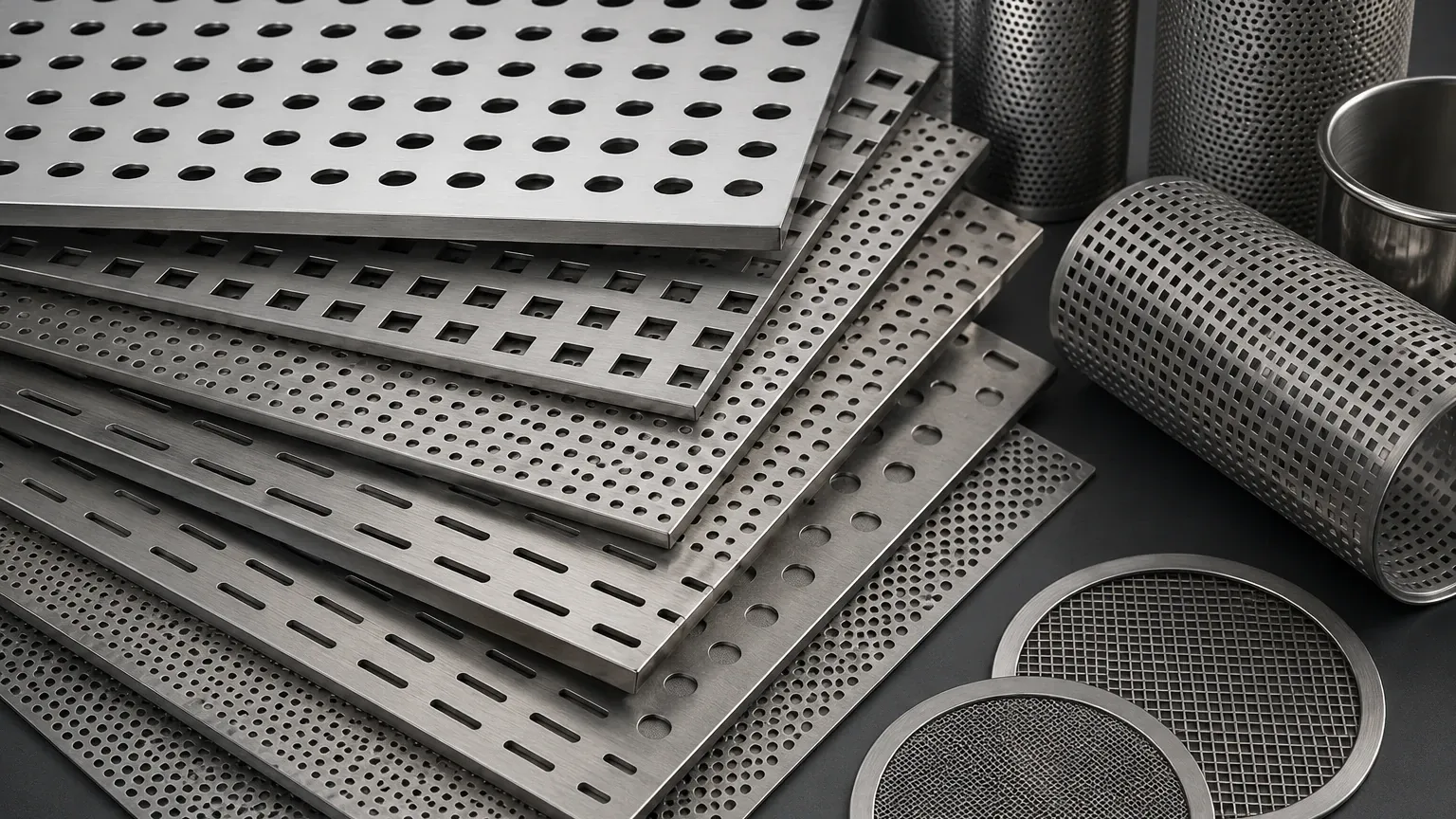
The most common pattern is the 60-degree staggered round hole, which offers the best balance of structural strength and open area. However, depending on the viscosity of the fluid being filtered or the size of the particulates, you may require straight-row patterns, square holes, or slotted perforations. Slotted holes are particularly useful in applications where elongated particles must be oriented or blocked.
The Open Area Calculation
The "open area" is the percentage of the sheet that is comprised of holes. This is a critical metric for engineers calculating flow rates and pressure drops. A higher open area allows for better flow but reduces the structural integrity of the sheet. A professional manufacturer can help you calculate the optimal balance between these two competing factors.
Pitch and Bridge
The pitch is the distance from the center of one hole to the center of the next. The bridge is the amount of solid material between the holes. If the bridge is too narrow, the sheet may warp during the perforation process or fail under the mechanical stress of a high-pressure hydraulic system.
Perforated vs. Expanded Metal: Which Do You Need?
While often grouped together, perforated and expanded metals are manufactured differently and serve different mechanical purposes.
* Perforated Metal: Created by punching holes into a solid sheet. This process allows for extremely high precision and a wide variety of hole shapes. It is the standard for filter support cores and precision screening.
* Expanded Metal: Created by simultaneously slitting and stretching the metal sheet. This process produces no waste (unlike perforation, which creates "slugs") and results in a 3D diamond-shaped pattern. Expanded metal is often used for heavy-duty support or as a coarse pre-filter where high structural rigidity and low weight are required.
When determining where can i buy perforated metal sheets, ensure the supplier also has capabilities in expanded metal if your project requires the unique structural properties of stretched mesh.
Material Selection for Industrial Environments
In B2B industrial procurement, the environment dictates the material. At Kaifil, we focus on stainless steel solutions because of their superior performance in demanding conditions.
1. 304 Stainless Steel: The standard for general industrial use, offering good corrosion resistance and excellent formability.
2. 316L Stainless Steel: Essential for marine environments, chemical processing, and pharmaceutical applications. The addition of molybdenum and a lower carbon content provides superior resistance to pitting and intergranular corrosion.
3. Specialty Alloys: For extreme temperatures or highly acidic environments, materials like Monel, Inconel, or Hastelloy may be required.
Before finalizing a purchase, confirm that the supplier can provide Mill Test Reports (MTRs) to verify the chemical composition of the alloy. This is a non-negotiable requirement for industries with strict compliance standards, such as food and beverage or aerospace.
The Importance of Finishing and Secondary Operations
Raw perforated sheets straight from the press often have sharp edges, oil residue, and slight burrs. For industrial filtration, these imperfections can lead to system contamination or premature wear of secondary filter media (like wire mesh).
When evaluating where to buy, ask about the following secondary services:
* Deburring: Removing the sharp edges created by the punching process.
* Degreasing: Cleaning the residual lubricants used during manufacturing, which is vital for food-grade or pharmaceutical applications.
* Leveling/Flattening: Ensuring the sheet is perfectly flat after the internal stresses of perforation have been introduced.
* Custom Margins: Leaving solid (unperforated) areas around the edges of the sheet to facilitate easier welding into a filter housing or frame.
Evaluating Supplier Reliability and Quality Control
For B2B buyers, the total cost of ownership includes the risk of a part failing in the field. To mitigate this risk, evaluate potential suppliers based on their quality control protocols.
* Dimensional Accuracy: Does the supplier use automated optical inspection or manual gauging to ensure hole diameters and pitches are within tolerance?
* Consistency: In a production run of 1,000 sheets, is the first sheet identical to the last? Inconsistent perforation can lead to uneven flow distribution in a filter assembly.
* OEM Experience: If you are integrating perforated metal into a proprietary product, look for a supplier with a track record of OEM partnership. They will be more likely to understand the need for strict adherence to technical drawings and long-term supply stability.
Why Customization Matters in Industrial Filtration
Off-the-shelf perforated sheets are rarely optimized for industrial filtration. A custom-engineered solution allows you to specify the exact thickness, hole size, and pattern required to protect downstream equipment. For example, in a multi-stage filtration system, the perforated metal often acts as a support cage for a finer stainless steel wire mesh. If the perforated holes are too large, the mesh may migrate or tear under pressure; if they are too small, the system will suffer from excessive pressure drop.
By working with a specialist, you can design a component that fits perfectly into your housing, reducing assembly time and eliminating the need for on-site modifications.
Conclusion: Making an Informed Purchase
Deciding where can i buy perforated metal sheets is a choice between a commodity product and an engineered component. For industrial applications where performance, durability, and precision are paramount, sourcing directly from a specialized manufacturer is the most cost-effective strategy in the long run.
At Kaifil, we provide precision-engineered Perforated & Expanded Metal designed to meet the rigorous demands of global industries. Whether you need support cores for hydraulic filters, screens for food processing, or custom components for chemical reactors, our focus on quality and technical expertise ensures your filtration systems operate at peak efficiency. When evaluating your next procurement cycle, prioritize suppliers who offer not just the raw material, but the engineering support and secondary operations necessary to deliver a ready-to-use industrial solution.
