


Where to Buy Expanded Metal Near Me
For procurement managers, project engineers, and maintenance teams, finding a reliable source for industrial materials is a critical step in maintaining operational efficiency. When searching for "where to buy expanded metal near me," the objective is often a balance between immediate availability, logistical convenience, and technical precision. Expanded metal is a versatile material used across various sectors—from architectural facades and safety grating to high-precision industrial filtration. However, the requirements for a local hardware store purchase differ significantly from the specifications needed for industrial-grade applications.
This guide explores the landscape of expanded metal sourcing, detailing how to evaluate suppliers, the technical nuances of the material, and why the closest option may not always be the most cost-effective for long-term industrial use.
Understanding Local vs. Global Sourcing for Expanded Metal
The search for expanded metal often begins with local distributors or metal service centers. Understanding the tiers of suppliers is essential for making an informed decision based on your project’s specific needs.
Local Metal Service Centers
Local service centers are the most common destination for those looking for "where to buy expanded metal near me." These facilities typically stock standard sizes and common materials, such as carbon steel or aluminum. They are excellent for small-scale projects, emergency repairs, or general construction needs where standard tolerances are acceptable. The primary advantage here is the reduction in lead times and shipping costs.
Specialized Industrial Manufacturers
For applications requiring specific alloys, such as 304 or 316L stainless steel, or precise filtration characteristics, local general-purpose distributors may fall short. Specialized manufacturers, such as Kaifil, focus on Perforated & Expanded Metal designed for demanding environments like chemical processing, pharmaceutical manufacturing, and water treatment. While these suppliers may not be physically located in your immediate vicinity, their ability to provide custom dimensions, specific mesh openings, and material certifications often outweighs the convenience of a local generalist.
Online Industrial Marketplaces
Modern procurement often utilizes B2B marketplaces that aggregate inventory from various regional warehouses. This can help identify stock closest to your facility. However, buyers must be cautious regarding the consistency of the material and the lack of direct technical support when purchasing through a third-party aggregator.
Key Evaluation Criteria for Expanded Metal Suppliers
When evaluating a supplier—whether local or international—engineers must look beyond the price per sheet. The following criteria are essential for ensuring the material meets industrial standards:
1. Material Traceability: Does the supplier provide Mill Test Reports (MTRs)? For industries like food and beverage or aerospace, knowing the exact chemical composition of the stainless steel is non-negotiable.
2. Manufacturing Tolerances: Expanded metal is produced by slitting and stretching metal sheets. This process can result in variations. A high-quality supplier will provide specific tolerances for the Long Way of Design (LWD) and Short Way of Design (SWD).
3. Finishing Capabilities: Industrial applications often require post-production treatments such as degreasing, pickling, passivating, or electro-polishing to ensure corrosion resistance and cleanliness.
4. Customization Options: Can the supplier provide custom sheet sizes to minimize scrap? Can they adjust the strand width to meet specific structural or filtration requirements?
Technical Specifications to Confirm Before Purchasing
Before finalizing a purchase from a local or regional vendor, it is vital to define the technical parameters of the expanded metal. Miscalculating these specifications can lead to structural failure or inefficient filtration performance.
SWD and LWD (Short and Long Way of Design)
These measurements define the diamond-shaped openings. SWD is the distance from the center of a bond to the center of the next bond across the short axis, while LWD is the same across the long axis. These dimensions dictate the open area percentage, which is a primary factor in flow rates for filtration applications.
Standard vs. Flattened Expanded Metal
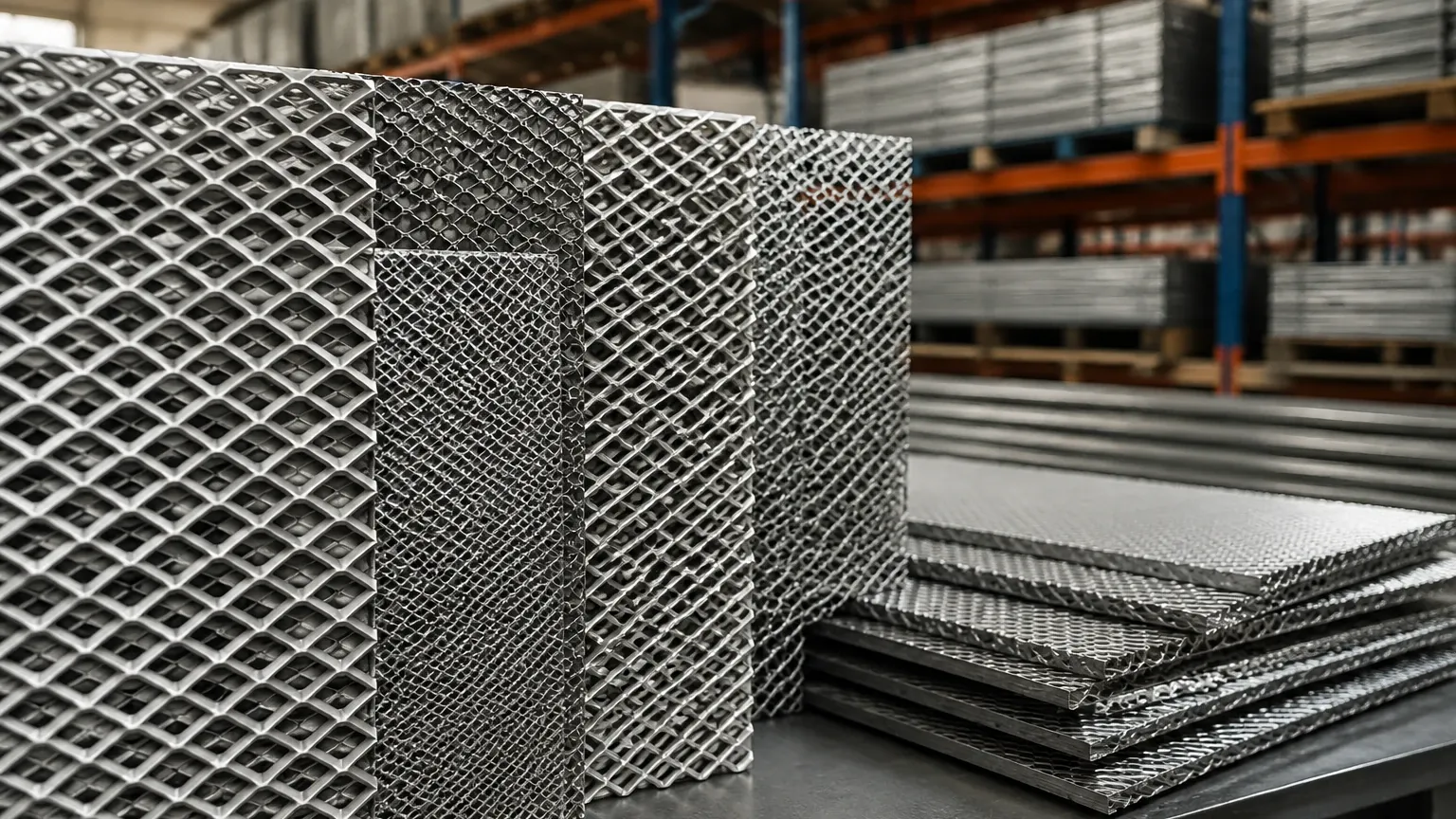
* Standard (Raised) Expanded Metal: The strands and bonds are set at a uniform angle to the plane of the sheet. This provides maximum strength and rigidity, making it ideal for walkways or heavy-duty guards.
* Flattened Expanded Metal: The raised mesh is passed through a cold-roll reducing mill, resulting in a smooth, flat surface. Flattened metal is often preferred for filtration components or decorative panels where a consistent thickness is required.
Strand Width and Thickness
The strand width refers to the amount of metal between the openings, while the thickness refers to the gauge of the original base material. These two factors combined determine the weight per square foot and the overall durability of the mesh.
Common Risks in Selecting an Expanded Metal Vendor
Searching for "where to buy expanded metal near me" can sometimes lead to compromises if the buyer is focused solely on proximity. Several risks are associated with selecting the wrong vendor:
* Inconsistent Mesh Openings: In lower-quality manufacturing, the stretching process can be uneven, leading to inconsistent diamond sizes. In filtration, this results in bypass or premature clogging.
* Burrs and Sharp Edges: Poorly maintained tooling during the slitting process can leave significant burrs. For filtration systems, these burrs can break off and contaminate the process fluid or damage delicate filter membranes.
* Material Fatigue: If the metal is over-stretched or if the base material is of poor quality, the bonds (where the strands intersect) may develop micro-cracks, leading to structural failure under pressure or vibration.
* Corrosion Vulnerability: If a supplier provides "stainless steel" that has been contaminated with carbon steel particles during the manufacturing process (common in shops that handle both), the material will develop rust spots, compromising its integrity in sterile or corrosive environments.
Customization and OEM Capabilities in Metal Filtration
In many B2B scenarios, expanded metal serves as a support structure for finer filter media or as a primary coarse filter. Standard off-the-shelf sheets found at local distributors rarely meet the exact needs of an engineered filtration system. This is where working with a specialized manufacturer becomes advantageous.
Customization allows for:
* Variable Open Areas: Tailoring the mesh to allow for specific flow velocities.
* Unique Alloys: Sourcing Monel, Inconel, or Titanium expanded metal for extreme chemical or thermal environments.
* Forming and Welding: Many industrial applications require the expanded metal to be rolled into cylinders or welded into frames. A manufacturer with OEM capabilities can provide these finished components, reducing the workload on your internal production team.
Engineers should seek out partners who understand the relationship between the physical structure of the metal and the fluid dynamics of the application. A supplier that offers technical consultation can help optimize the selection process, ensuring that the Perforated & Expanded Metal chosen is fit for purpose.
Total Cost of Ownership: Beyond the Initial Quote
While a local supplier might offer the lowest shipping cost, the total cost of ownership (TCO) involves several other factors. When deciding where to buy, consider the following:
Durability and Replacement Cycles
High-quality stainless steel expanded metal from a specialized manufacturer may have a higher upfront cost than galvanized steel from a local yard. However, in a corrosive chemical environment, the stainless steel may last five times longer, significantly reducing the TCO by minimizing downtime and replacement labor.
Processing and Waste
Buying standard 4'x8' sheets locally often results in significant material waste if your project requires specific circular or small rectangular pieces. A manufacturer that provides precision-cut-to-size pieces or custom-stamped components can eliminate scrap costs and reduce your secondary processing time.
Quality Assurance and Compliance
For industries governed by strict regulations (such as the FDA for food contact or ASME for pressure vessels), the cost of a component failure due to non-compliant material is astronomical. Investing in material from a supplier that provides full documentation and adheres to ISO quality standards is a form of risk management that saves money in the long run.
How to Select the Right Source
To determine the best place to buy expanded metal for your specific needs, follow these steps:
1. Define Your Environment: Is the material exposed to moisture, chemicals, or high temperatures? If yes, prioritize stainless steel specialists over general metal yards.
2. Determine Structural Requirements: Will the metal be load-bearing? If so, standard (raised) expanded metal is likely required. If it needs to be part of a multi-layer filter, flattened is usually better.
3. Calculate the Required Open Area: Ensure the SWD/LWD dimensions provide the necessary flow or visibility.
4. Request Samples: Before a large-scale procurement, request a sample to inspect the quality of the bonds, the presence of burrs, and the flatness of the sheet.
5. Verify Certifications: Ask for MTRs and ISO certifications upfront to ensure the supplier can meet your industry's regulatory demands.
Conclusion
Finding "where to buy expanded metal near me" is a task that requires balancing the convenience of proximity with the necessity of technical performance. For general construction or simple guarding, a local metal service center is often the most efficient choice. However, for industrial filtration, chemical processing, and precision engineering, the expertise and quality control offered by specialized manufacturers like Kaifil are indispensable.
By focusing on material grade, manufacturing precision, and total cost of ownership, procurement professionals can ensure they receive a product that not only fits their immediate budget but also provides long-term reliability in demanding industrial applications. Whether you require standard sheets or custom-engineered filtration components, choosing a supplier with a deep understanding of Perforated & Expanded Metal is the key to project success.
