


22mm Y Strainers
In industrial fluid handling systems, the protection of sensitive downstream equipment is a primary engineering concern. Components such as pumps, control valves, flow meters, and heat exchangers are susceptible to damage from suspended solids and particulate matter. The Y-strainer, named for its characteristic shape, serves as a critical mechanical filter that removes these contaminants from pipelines. Among the various sizes utilized in precision industrial applications, 22mm Y strainers are frequently specified for medium-to-small scale process lines where space efficiency and reliable filtration are paramount.
As a specialized manufacturer of stainless steel filtration solutions, Kaifil understands that selecting the correct strainer involves more than just matching pipe diameters. It requires a comprehensive evaluation of material compatibility, filtration accuracy, and the mechanical stresses of the operating environment. This guide explores the technical parameters and engineering considerations for 22mm Y strainers within industrial contexts.
The Role of 22mm Y Strainers in Industrial Systems
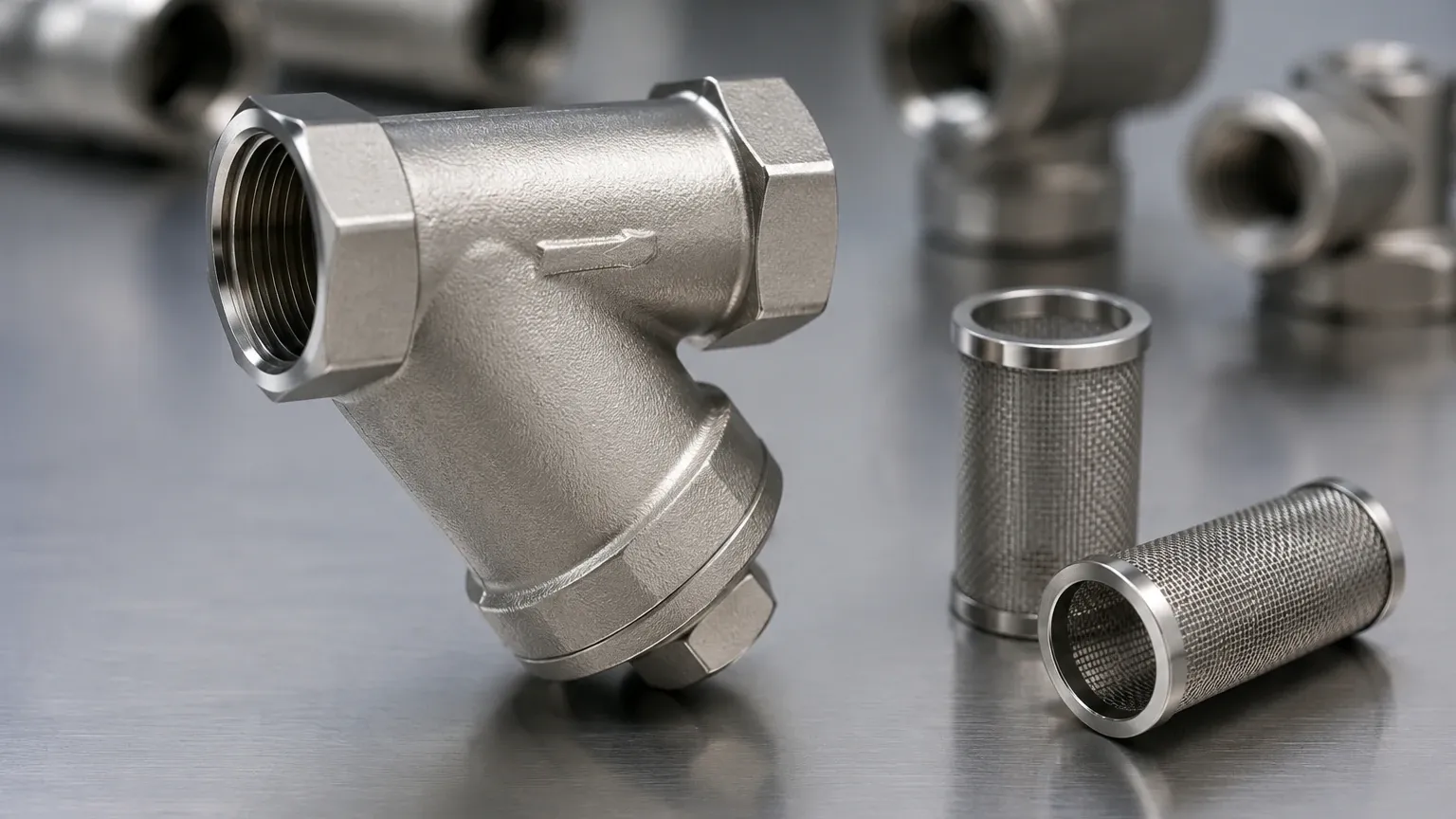
A Y-strainer is a device that provides a means of mechanically removing solids from a flowing fluid (liquid or gas) by utilizing a perforated or wire mesh straining element. The "Y" configuration allows the strainer to be installed in either a horizontal or vertical (downward flow) orientation, provided the "leg" of the Y—where the debris is collected—is pointing downward to prevent backflow of contaminants during cleaning.
In the context of 22mm Y strainers, these components are often integrated into systems where flow rates are moderate but the requirement for purity or equipment protection is high. They act as the first line of defense, capturing scale, rust, jointing compound, and weld metal that may be present in the piping system. By isolating these particles, the strainer prevents abrasive wear on valve seats and protects the internal mechanisms of precision machinery.
Material Selection: The Engineering Foundation
The performance and longevity of a 22mm Y strainer are largely determined by the materials used for both the housing and the internal filtration element. In industrial environments involving corrosive chemicals, high temperatures, or strict hygiene requirements, stainless steel is the preferred choice.
Stainless Steel 304 vs. 316
* Stainless Steel 304: This is the most common grade for general industrial use. It offers excellent resistance to atmospheric corrosion and is suitable for most water-based applications and mild chemicals. It provides a cost-effective solution for systems where extreme chemical resistance is not required.
* Stainless Steel 316/316L: For more demanding environments, such as chemical processing, pharmaceutical manufacturing, or marine applications, 316 stainless steel is specified. The addition of molybdenum enhances its resistance to pitting and crevice corrosion, particularly in chloride-rich environments. For applications involving welding, the low-carbon variant (316L) is often used to prevent sensitization and maintain corrosion resistance at the weld joints.
Selecting the right material ensures that the strainer does not become a source of contamination itself due to corrosion or material degradation. Kaifil specializes in these high-grade alloys to ensure that Strainers & Baskets meet the rigorous standards of modern industrial processing.
Internal Filtration Media: Screens and Baskets
The heart of the 22mm Y strainer is the internal element, which can be constructed as a perforated metal screen or a wire mesh basket. The choice between these depends on the required filtration fineness and the nature of the debris.
Perforated Screens
Perforated screens are typically used for "coarse" straining. They are made by punching a large number of holes in a flat sheet of metal, which is then rolled into a cylinder. These are robust and can withstand significant pressure differentials, making them ideal for removing larger debris like stones or metal fragments.
Wire Mesh Filters
For finer filtration, a wire mesh is used, often supported by a perforated metal backing for structural integrity. Wire mesh allows for much smaller micron ratings, capable of capturing fine sand, silt, and other microscopic particulates. In a 22mm Y strainer, the mesh count must be carefully selected to balance filtration efficiency with the risk of clogging.
When specifying the internal element, engineers must consider the "open area ratio." This is the ratio of the total area of the holes in the screen to the area of the inlet pipe. A higher ratio generally results in a lower pressure drop and longer intervals between cleanings.
Engineering Considerations: Pressure Drop and Flow Capacity
One of the most critical factors in strainer selection is the pressure drop (ΔP). Every component added to a pipeline introduces resistance to flow. As fluid passes through the 22mm Y strainer, the velocity changes and the mesh element creates friction, leading to a loss of pressure.
Factors Affecting Pressure Drop:
1. Viscosity: Higher viscosity fluids require more energy to pass through the mesh, resulting in a higher pressure drop.
2. Flow Velocity: Pressure drop increases with the square of the flow velocity.
3. Mesh Size: Finer meshes create more resistance than coarse screens.
4. Contamination Level: As the strainer collects debris, the available open area decreases, causing the pressure drop to rise exponentially.
Engineers must ensure that the system's pump capacity can handle the maximum expected pressure drop across the strainer, especially when it is partially fouled. Monitoring the differential pressure across the strainer is a standard practice for determining when maintenance is required.
Installation and Maintenance Protocols
Proper installation is essential for the effective operation of 22mm Y strainers. While they are versatile, following best practices ensures longevity and ease of service.
Installation Best Practices
* Orientation: In horizontal lines, the strainer leg should point downward. In vertical lines, the flow must be downward so that gravity assists in directing debris into the collection leg.
* Accessibility: Ensure there is sufficient clearance to remove the strainer cap and the internal basket for cleaning. If the strainer is installed in a tight space, maintenance may be neglected, leading to system failure.
* Upstream Placement: The strainer should be placed as close as possible to the equipment it is intended to protect.
Maintenance and Cleaning
Unlike automated filtration systems, Y-strainers typically require manual cleaning. This involves shutting down the flow (or bypassing the section), depressurizing the line, removing the cap, and cleaning the screen. In many industrial settings, a "blow-down" valve is installed on the strainer cap. This allows the operator to flush out accumulated debris using the system's own pressure without having to disassemble the unit, significantly reducing downtime.
Customization and OEM Solutions for 22mm Y Strainers
Standard off-the-shelf strainers may not always meet the specific needs of a unique industrial process. Customization is often required to address specific challenges such as non-standard connection types, extreme pressure ratings, or specialized filtration media.
Kaifil provides comprehensive OEM capabilities for 22mm Y strainers, allowing engineers to specify:
* Custom Mesh Configurations: Tailoring the micron rating to the specific particulate size of the process fluid.
* Advanced Materials: Utilizing specialized alloys for highly aggressive chemical environments.
* Reinforced Elements: Designing internal baskets that can withstand high differential pressures without collapsing.
* Connection Types: Offering NPT, BSP, flanged, or socket-weld connections to match existing piping infrastructure.
By working closely with a manufacturer that understands the nuances of precision metal filtration, purchasing teams can ensure they receive a component that is optimized for their specific application, rather than a generic compromise.
Total Cost of Ownership (TCO)
When evaluating 22mm Y strainers, it is important to look beyond the initial purchase price. The Total Cost of Ownership includes installation costs, maintenance labor, the cost of replacement parts, and the potential cost of system downtime. A high-quality stainless steel strainer from a reputable manufacturer may have a higher upfront cost but will typically offer a longer service life, lower maintenance requirements, and better protection for expensive downstream equipment.
Investing in durable Strainers & Baskets reduces the frequency of replacement and ensures that the filtration system remains a reliable part of the industrial infrastructure for years to come.
Conclusion
The 22mm Y strainer is a small but vital component in the landscape of industrial filtration. Whether it is protecting a high-pressure hydraulic system or ensuring the purity of a food-grade liquid, its role in maintaining system integrity cannot be overstated. By focusing on high-quality materials like 304 and 316 stainless steel, understanding the technical implications of pressure drop, and adhering to strict maintenance protocols, engineers can optimize their fluid handling processes for maximum efficiency and reliability.
For technical professionals and purchasing teams, partnering with a manufacturer like Kaifil provides the assurance of engineering expertise and customized solutions. From initial material selection to the final design of the filtration media, every aspect of the 22mm Y strainer can be tailored to meet the most demanding industrial requirements.
