


28mm Strainers
In industrial fluid handling and processing, the reliability of downstream equipment often depends on the precision of primary filtration components. 28mm strainers represent a specific class of compact filtration solutions designed to remove coarse particles, debris, and contaminants from liquid or gas streams. These components are critical in protecting sensitive valves, pumps, and instrumentation from mechanical damage and clogging. As a specialized manufacturer, Kaifil provides engineered Strainers & Baskets that meet the rigorous demands of chemical, hydraulic, and pharmaceutical environments.
Selecting the correct 28mm strainer requires a deep understanding of material properties, filtration mechanics, and the specific hydraulic conditions of the application. This guide explores the technical considerations necessary for engineers and procurement teams to optimize their filtration systems.
Understanding the Role of 28mm Strainers in Industrial Systems
The designation of a "28mm" strainer typically refers to the outer diameter of the filter element or the specific fitting size of the housing it occupies. These are often utilized in mid-to-small scale piping systems where space is a constraint but filtration integrity cannot be compromised. Unlike fine filters or membranes, strainers are designed to handle higher dirt-loading capacities and are frequently the first line of defense in a multi-stage filtration process.
In industrial settings, 28mm strainers are employed to:
* Protect Rotating Equipment: Preventing solids from entering pump impellers or turbine blades.
* Maintain Valve Integrity: Ensuring that seat surfaces in solenoid or control valves remain free of debris that could cause leakage.
* Pre-filtration: Removing large particulates before the fluid reaches high-precision secondary filters, thereby extending the service life of more expensive consumables.
Material Engineering for 28mm Filtration Components
Material selection is the most critical factor in determining the longevity and performance of a 28mm strainer. In industrial B2B applications, stainless steel is the industry standard due to its mechanical strength and chemical resistance.
Stainless Steel 304 vs. 316L
* SS304: This is the standard grade for general industrial use. It offers excellent durability and resistance to oxidation. It is commonly used in water treatment, hydraulic oil filtration, and non-corrosive chemical processing.
* SS316L: For applications involving chlorides, acids, or high-salinity environments, SS316L is preferred. The addition of molybdenum provides superior resistance to pitting and crevice corrosion. This grade is essential for pharmaceutical and marine applications where material purity and corrosion resistance are paramount.
Specialized Alloys
In extreme environments involving high temperatures or highly aggressive chemicals, Kaifil can manufacture strainers using Hastelloy, Monel, or Inconel. These materials ensure that the 28mm strainers maintain their structural integrity under conditions that would cause standard stainless steel to fail.
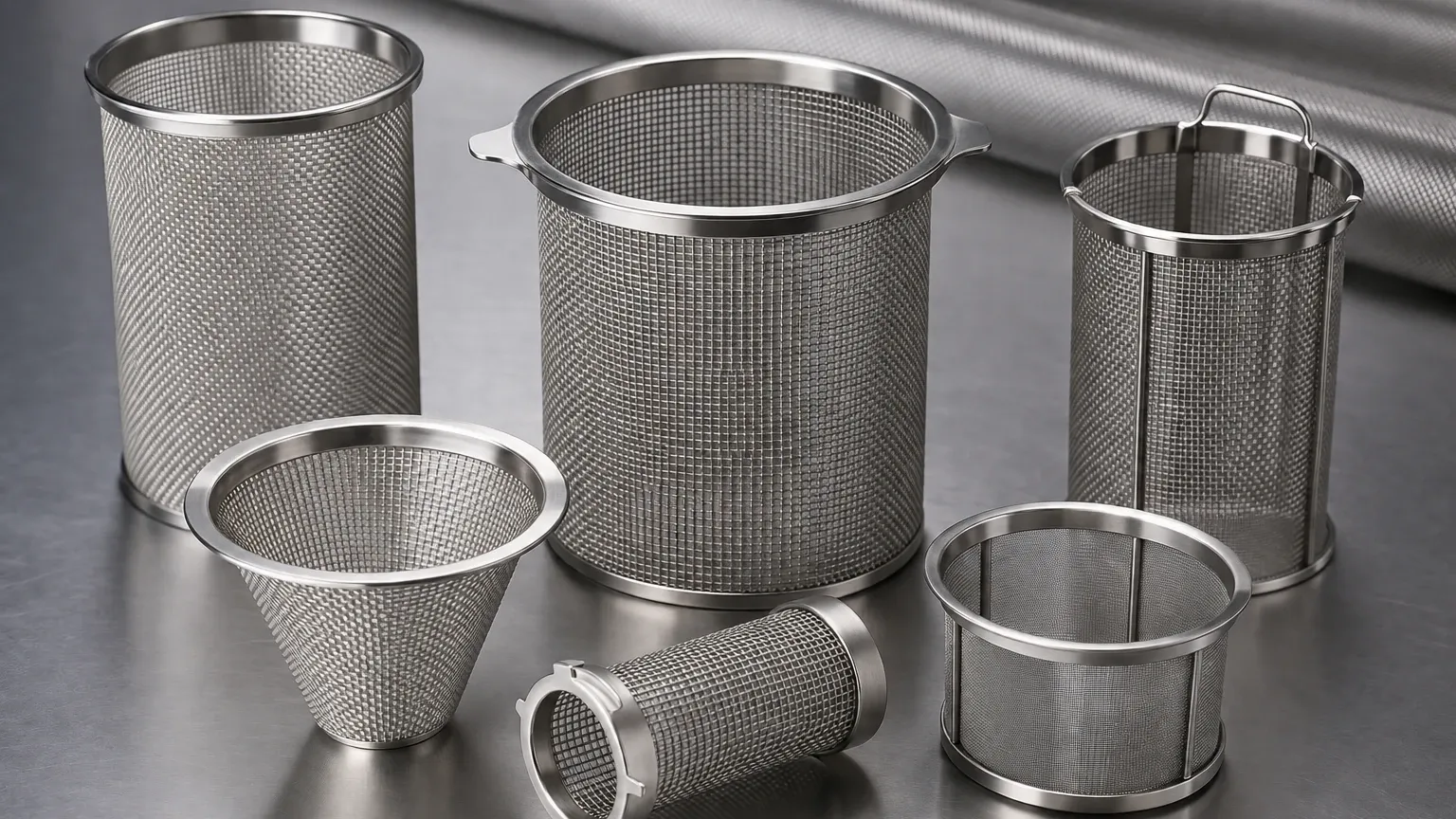
Design Variations: Basket vs. Cone vs. Cylindrical 28mm Strainers
The geometry of the strainer determines its flow characteristics and dirt-holding capacity. Depending on the housing design and the flow direction, engineers must choose the appropriate structural configuration.
28mm Basket Strainers
Basket strainers are designed for systems where the flow is from the inside out. The "basket" shape allows for a larger surface area compared to a simple cylindrical screen. This design is ideal for applications with high solids loading, as the basket can be easily removed and cleaned without disturbing the piping.
28mm Cone (Witch's Hat) Strainers
Cone strainers are often used during the commissioning phase of a plant to capture construction debris (welding slag, scale, etc.). Their aerodynamic shape allows them to handle high-velocity flows with minimal pressure drop. While often considered temporary, high-quality stainless steel cone strainers can be used permanently in specific inline applications.
Cylindrical and Pleated Elements
For 28mm applications requiring higher precision, cylindrical mesh elements are common. If the application demands a very high filtration area within the 28mm diameter constraint, pleated designs are employed. Pleating increases the effective surface area by 3 to 5 times, significantly reducing the frequency of cleaning cycles.
Technical Performance Metrics: Flow Rate and Pressure Drop
When integrating 28mm strainers into a system, engineers must calculate the clean pressure drop (ΔP) to ensure the system pump can maintain the required flow rate. The pressure drop is influenced by several factors:
1. Open Area Ratio: This is the ratio of the total area of the holes in the mesh to the total surface area of the strainer. A higher open area results in a lower pressure drop. Generally, a ratio of 4:1 (straining area to pipe cross-section area) is recommended for industrial strainers.
2. Mesh Count and Wire Diameter: Finer meshes (higher mesh counts) use thinner wires and have smaller openings, which increases resistance to flow.
3. Fluid Viscosity: Heavier fluids, such as hydraulic oils or syrups, require larger openings or increased surface area to maintain acceptable flow rates through a 28mm diameter component.
Kaifil's engineering team utilizes these metrics to customize the mesh weave—whether plain, twill, or dutch weave—to balance filtration accuracy with hydraulic efficiency.
Customization and OEM Capabilities for Precision Filtration
Off-the-shelf filtration components rarely meet the exact needs of specialized industrial machinery. Customization is often necessary to ensure a perfect fit and optimal performance. For 28mm strainers, customization options include:
* End Fittings: Custom flanges, NPT/BSP threads, or specialized O-ring grooves for high-pressure sealing.
* Reinforcement: In high-pressure applications, the 28mm mesh element may require an internal or external perforated support core to prevent collapsing or bursting.
* Filtration Ratings: Precision manufacturing allows for micron ratings ranging from 5 microns to 5000 microns (5mm), depending on the particle size distribution of the contaminant.
* Surface Finishes: For food and beverage or pharmaceutical applications, strainers can be electro-polished to achieve a specific Ra (roughness average) value, preventing bacterial growth and facilitating easier cleaning.
Industry-Specific Applications for 28mm Strainers
The versatility of the 28mm size makes it a staple in various sectors. Understanding the specific challenges of each industry helps in selecting the right Strainers & Baskets.
Chemical Processing
In chemical plants, strainers must withstand aggressive solvents and varying pH levels. The 28mm size is frequently used in sampling lines and small-batch processing units where chemical purity is vital.
Hydraulic and Lubrication Systems
Protecting hydraulic pumps from metal shavings and environmental dust is essential for preventing system failure. 28mm strainers are often installed in the suction line or the return line of hydraulic reservoirs to maintain fluid cleanliness levels according to ISO 4406 standards.
Food and Beverage Production
In this sector, strainers are used to remove pulp, seeds, or undissolved ingredients. The use of food-grade SS316L and sanitary welds ensures that the 28mm strainers meet FDA and 3A standards for hygiene and cleanability.
Selection and Procurement Checklist for Engineers
Before finalizing a purchase order for 28mm strainers, technical teams should confirm the following parameters to ensure the product is fit for purpose:
1. Operating Pressure and Temperature: What are the maximum and normal operating conditions? This dictates the material thickness and reinforcement requirements.
2. Contaminant Characteristics: Are the particles hard, soft, fibrous, or abrasive? This influences the choice of mesh weave and wire material.
3. Allowable Pressure Drop: What is the maximum ΔP the system can tolerate before performance degrades?
4. Cleaning Protocol: Will the strainer be cleaned manually, via backwashing, or is it a disposable component? For reusable 28mm stainless steel strainers, the ease of access for cleaning is a major design consideration.
5. Chemical Compatibility: Does the fluid contain agents that could cause stress corrosion cracking or general thinning of the stainless steel?
Maintenance and Total Cost of Ownership
While the initial purchase price of a 28mm strainer is a factor, the total cost of ownership (TCO) is driven by durability and maintenance requirements. Low-quality strainers may suffer from wire migration, seam failure, or rapid clogging, leading to frequent downtime.
By investing in precision-manufactured stainless steel strainers from Kaifil, companies benefit from:
* Reduced Downtime: High-strength welds and quality mesh ensure the strainer survives repeated cleaning cycles.
* Equipment Longevity: Superior filtration accuracy prevents wear on expensive downstream components.
* Sustainability: Unlike plastic or low-grade metal filters, high-quality stainless steel strainers are fully recyclable and can be cleaned and reused for years, reducing waste.
In conclusion, the 28mm strainer is a small but vital component in the industrial landscape. Whether you require a standard design or a highly customized OEM solution, focusing on material integrity and engineering precision will ensure your filtration system operates at peak efficiency. For more detailed technical specifications and to explore customization options, engineers are encouraged to review the available Strainers & Baskets configurations.
