


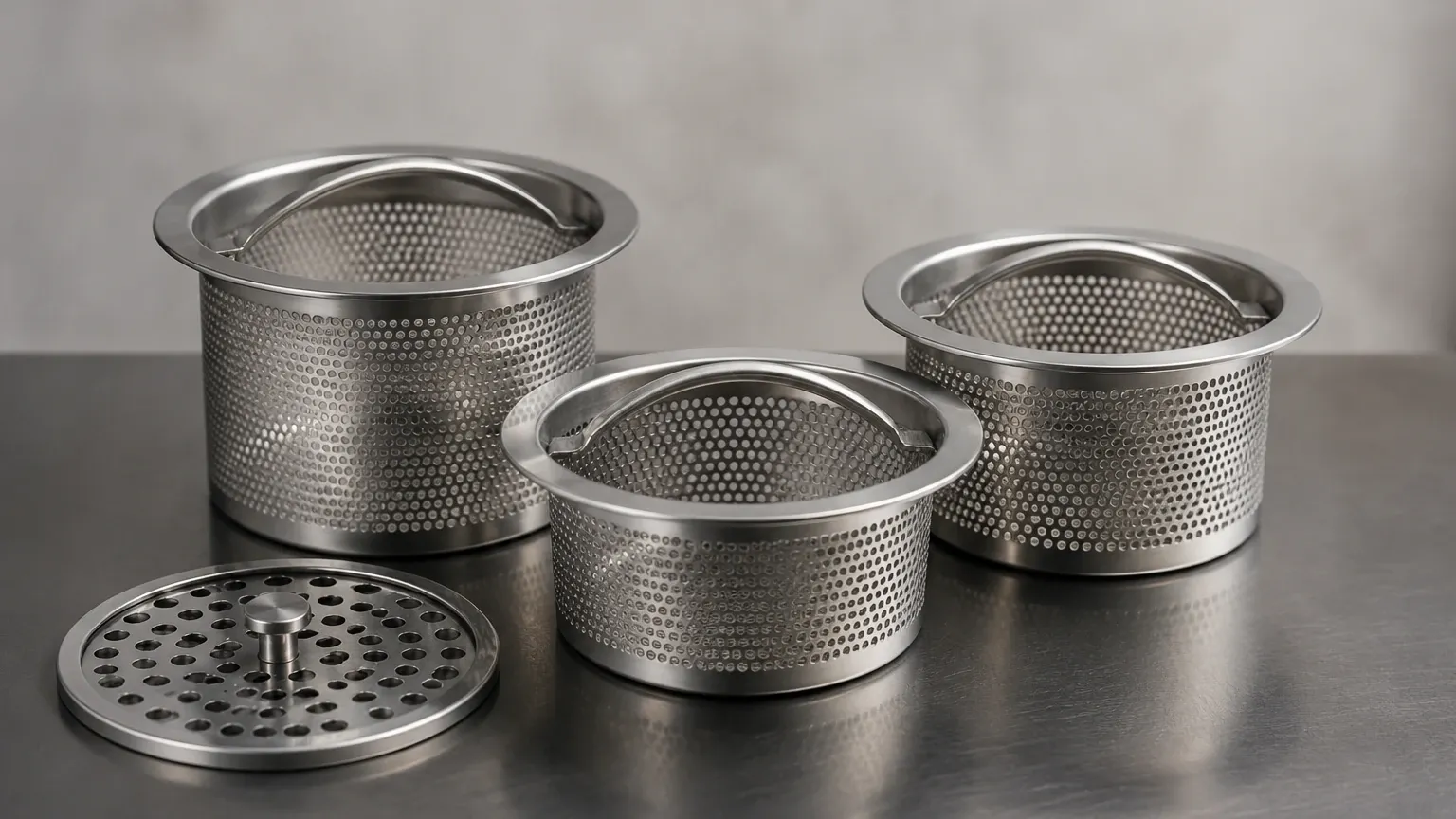
3 Piece Basket Strainer Set
In industrial fluid handling and processing, the protection of downstream equipment—such as pumps, valves, and heat exchangers—is paramount. A 3 piece basket strainer set represents a specific configuration of filtration hardware designed for modularity, ease of maintenance, and high-capacity debris removal. Unlike simpler inline filters, these assemblies are engineered to handle significant solids loading while allowing for rapid cleaning without extensive downtime.
For engineers and procurement teams, understanding the technical nuances of Strainers & Baskets is essential for maintaining system integrity. This guide explores the engineering considerations, material requirements, and application-specific selection criteria for industrial basket strainer sets.
Technical Configuration of a 3 Piece Basket Strainer Set
In an industrial context, a "3 piece" designation typically refers to the modular assembly of the filtration unit. While specific designs vary by manufacturer, a standard set generally comprises three core components: the outer housing or body, the internal removable basket, and the sealing cover or closure mechanism. This modularity is critical for high-pressure or high-flow environments where the filter media must be frequently inspected or replaced.
1. The Strainer Housing
The housing is the pressure-vessel component of the set. It is designed to be plumbed directly into the piping system via flanged, threaded, or welded connections. In industrial applications, the housing must be rated for the specific operating pressure and temperature of the process fluid. Common materials include stainless steel (304 or 316) for corrosion resistance and durability.
2. The Removable Basket
The basket is the heart of the filtration process. It is a perforated or wire mesh component that captures suspended solids. The "set" often includes multiple baskets or a specific basket design that fits precisely within the housing. The baskets are typically designed with a handle for easy extraction. The ratio of the basket's open area to the pipe's cross-sectional area is a key engineering metric, often aiming for a 6:1 or 8:1 ratio to minimize pressure drop.
3. The Cover and Sealing Assembly
The third piece is the closure. In a 3 piece basket strainer set, the cover must provide a leak-proof seal while remaining accessible. Quick-opening covers, such as swing-bolt or clamp designs, are preferred in processes where frequent cleaning is required. The choice of gasket material (EPDM, Viton, or PTFE) within this assembly is determined by the chemical compatibility of the fluid being processed.
Material Selection and Durability
When selecting a 3 piece basket strainer set, material science plays a decisive role in the longevity and performance of the unit. Industrial environments often involve corrosive chemicals, high temperatures, or abrasive particles that can degrade inferior metals.
Stainless Steel 304 vs. 316
* Stainless Steel 304: Suitable for general-purpose applications, including water treatment and food processing. It offers excellent strength and basic corrosion resistance.
* Stainless Steel 316/316L: Recommended for chemical processing, marine environments, and pharmaceutical applications. The addition of molybdenum provides superior resistance to chlorides and pitting corrosion.
Mesh and Perforation Specifications
The internal basket of the set can be customized with various filtration layers. A coarse perforated metal basket provides structural support, while a fine inner lining of stainless steel wire mesh achieves the required micron rating. For high-viscosity fluids, the basket may require reinforced ribbing to prevent collapse under high differential pressure.
Engineering Considerations for Flow and Pressure
An improperly specified 3 piece basket strainer set can lead to significant operational inefficiencies. Engineers must calculate the "clean pressure drop" to ensure the system's pump capacity is sufficient to overcome the resistance of the strainer.
Flow Velocity and Turbulence
High flow velocities can cause turbulence within the strainer housing, potentially leading to erosion of the basket or bypass of particles. It is standard practice to size the strainer so that the fluid velocity does not exceed 5 to 10 feet per second for liquids. A larger housing size relative to the pipe diameter can reduce velocity and extend the time between cleaning cycles.
Dirt Holding Capacity
The primary advantage of a basket-style strainer over a Y-strainer is the increased dirt holding capacity. The 3 piece basket strainer set allows for a deeper basket design, which is essential for processes with high solids concentration. Monitoring the differential pressure across the set using gauges is the most reliable method for determining when the basket requires cleaning.
Application-Specific Requirements
Different industries impose unique demands on filtration hardware. A 3 piece basket strainer set must be configured to meet these specific regulatory and functional standards.
Food and Beverage Industry
In food processing, the strainer set must adhere to sanitary standards. This involves using 316L stainless steel with a high-polish finish (Ra < 0.8 µm) to prevent bacterial growth. The 3-piece design is particularly valued here because it allows for complete disassembly and thorough cleaning-in-place (CIP) or manual scrubbing.
Chemical and Petrochemical Processing
For chemical applications, the focus shifts to chemical compatibility and pressure ratings. The seals and gaskets in the 3 piece basket strainer set must be resistant to the specific solvents or acids in the line. Furthermore, the housing may need to be stamped according to ASME Section VIII standards for pressure vessels.
Water Treatment and Desalination
In large-scale water treatment, strainers are used to protect membranes and spray nozzles. The 3 piece basket strainer set is often used as a pre-filter. In desalination, where seawater is highly corrosive, specialized alloys or high-grade 316 stainless steel are mandatory to prevent rapid failure.
Maintenance and Operational Life Cycle
The total cost of ownership (TCO) for a 3 piece basket strainer set is influenced more by maintenance requirements than by the initial purchase price. A well-designed set facilitates rapid servicing, which reduces labor costs and prevents production bottlenecks.
Cleaning Procedures
To clean the set, the flow is diverted or the system is shut down. The closure is opened, and the basket is lifted out. Because it is a 3-piece assembly, the housing remains in the line, and only the internal basket and lid are handled. The basket should be cleaned using a high-pressure water jet or ultrasonic bath, depending on the nature of the contaminants.
Identifying Wear and Tear
During routine maintenance, the following should be inspected:
* Basket Integrity: Check for broken wires in the mesh or deformation of the perforated metal.
* Sealing Surfaces: Ensure the housing flange and cover are free of scratches that could cause leaks.
* Gaskets: Replace gaskets if they show signs of compression set, hardening, or chemical degradation.
Customization and OEM Solutions
Standard off-the-shelf strainer sets may not meet the requirements of specialized industrial equipment. Customization of the 3 piece basket strainer set allows for optimization of the filtration performance. Manufacturers like Kaifil provide OEM services to tailor the dimensions, connection types, and filtration accuracy of the components.
Customization options often include:
* Variable Micron Ratings: Fitting the basket with specific mesh counts (from 20 mesh down to 5 microns).
* Specialty Coatings: Applying PTFE or other coatings to the basket to reduce adhesion of sticky substances.
* Magnetic Inserts: Adding magnetic rods to the basket to capture fine ferrous particles that might otherwise pass through the mesh.
Conclusion: Selecting the Right Strainer Set
Choosing a 3 piece basket strainer set requires a balance between filtration efficiency, flow requirements, and ease of maintenance. By focusing on high-quality materials like stainless steel and ensuring the assembly is correctly sized for the process flow, engineers can significantly enhance the reliability of their fluid systems.
When evaluating suppliers, it is important to confirm the manufacturing standards, material certifications, and the availability of replacement baskets. A robust 3 piece basket strainer set is not just a consumable part; it is a critical piece of engineering hardware that ensures the continuous operation of industrial infrastructure.
For technical assistance in selecting the appropriate filtration components for your specific application, you can Review product options and application support to ensure your system meets the necessary performance and durability benchmarks.
