


4 Y Strainers
In industrial fluid handling and piping systems, the protection of sensitive downstream equipment is a critical engineering priority. Components such as pumps, control valves, meters, and spray nozzles are highly susceptible to damage or clogging from entrained solids. The Y strainer is the most common mechanical device used to remove these unwanted particles from liquid, gas, or steam lines by means of a perforated or wire mesh straining element. When discussing 4 y strainers, we are specifically addressing the 4-inch nominal pipe size (NPS) variant, a versatile and widely utilized dimension in medium-to-high flow industrial applications.
As a specialized manufacturer of stainless steel filtration solutions, Kaifil provides precision-engineered Strainers & Baskets designed to meet the rigorous demands of chemical processing, water treatment, and food production. Understanding the technical nuances of 4-inch Y strainers—from material selection to pressure drop calculations—is essential for engineers and procurement teams tasked with maintaining system integrity and operational efficiency.
Understanding the Role of 4-Inch Y Strainers in Industrial Piping
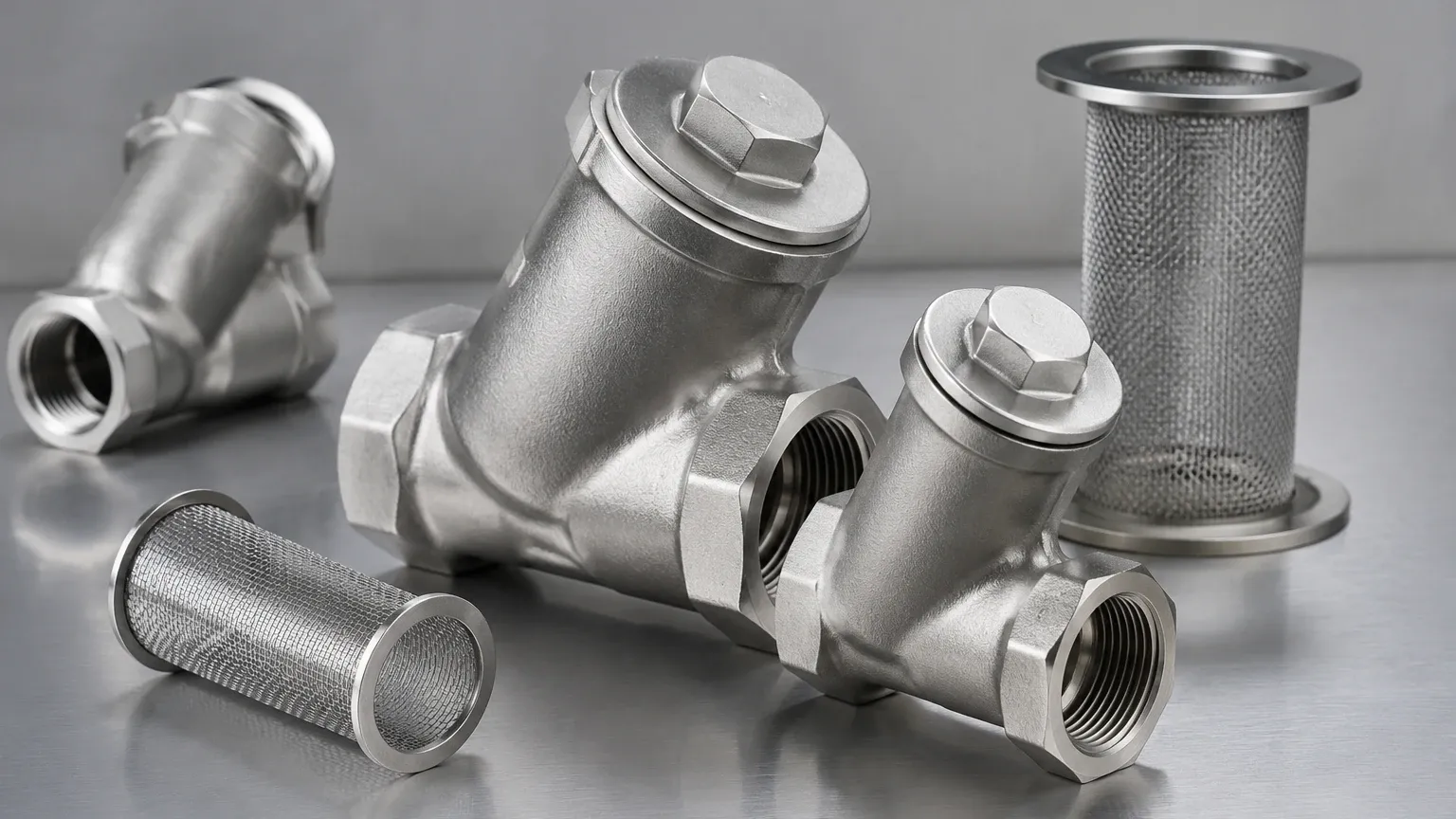
The "Y" strainer derives its name from its physical configuration, where the straining leg intersects the main flow pipe at an angle, typically 45 degrees. This design allows for the collection of debris in the leg without significantly obstructing the flow of the primary fluid. In a 4-inch system, the volume of fluid handled is substantial, making the efficiency of the strainer's internal geometry paramount.
Unlike T-type strainers or basket strainers, Y strainers are prized for their compact footprint and their ability to be installed in either horizontal or vertical (downward flow) orientations. For a 4-inch line, the Y-pattern offers a balance between debris-holding capacity and ease of installation in tight piping galleries. The primary function of the 4 y strainers is to act as a "police" filter, capturing larger particulates that could cause mechanical failure or process contamination.
Material Engineering: Why Stainless Steel is Preferred
In the context of industrial filtration, the choice of material for the strainer body and the internal screen determines the component's lifespan and compatibility with the process media. Kaifil specializes in high-grade stainless steel constructions, which offer several engineering advantages over cast iron or carbon steel alternatives:
Corrosion Resistance
Stainless steel (primarily Grades 304 and 316L) provides exceptional resistance to oxidation and chemical attack. In 4-inch systems handling corrosive chemicals or treated water, 316L stainless steel is often the standard due to its molybdenum content, which enhances resistance to pitting and crevice corrosion.
Structural Integrity
Industrial systems often operate under high pressure and temperature fluctuations. Stainless steel maintains its mechanical properties across a wide thermal range, ensuring that the 4-inch Y strainer body does not warp or fail under stress. This is particularly important in steam applications where thermal expansion is a factor.
Hygiene and Cleanability
For the food, beverage, and pharmaceutical industries, the non-porous surface of stainless steel prevents bacterial growth and allows for thorough CIP (Clean-In-Place) or SIP (Steam-In-Place) procedures. The smooth internal finish of a Kaifil-manufactured strainer reduces the risk of particle entrapment in the body itself.
Key Technical Specifications for Strainers & Baskets
Selecting the correct 4 y strainers requires a detailed analysis of the internal filtration element. The performance of the strainer is not just about the pipe size, but about the ratio of the open area of the screen to the cross-sectional area of the pipe.
Perforated vs. Mesh Screens
* Perforated Screens: These are typically used for coarser filtration (removing larger stones, scale, or weld slag). They consist of a stainless steel sheet with punched holes, ranging from 1/32" to 1/2".
* Wire Mesh Screens: For finer filtration requirements, a wire mesh is layered over a perforated backup screen. This allows for filtration down to the micron level (e.g., 40 mesh, 100 mesh, or finer).
Open Area Ratio (OAR)
An essential metric for engineers is the Open Area Ratio. A well-designed 4-inch Y strainer should ideally have an OAR of 4:1 or higher. This means the total open area of the holes in the screen is four times the area of the inlet pipe. A high OAR ensures that the strainer can accumulate a significant amount of debris before the pressure drop becomes unacceptable, thereby extending the time between cleaning cycles.
Evaluating Flow Dynamics and Pressure Drop
One of the most common questions engineers face when integrating 4 y strainers is the impact on system pressure. Every component in a fluid path introduces a pressure drop ($ΔP$), and strainers are no exception.
The Cv Factor
The flow coefficient (Cv) represents the volume of water in gallons per minute that will flow through the strainer with a pressure drop of 1 psi. For a 4-inch Y strainer, the Cv value is a critical data point provided by the manufacturer. If the Cv is too low, the pump must work harder to maintain the required flow rate, leading to increased energy costs and potential cavitation.
Clean vs. Dirty Pressure Drop
Calculations must account for both the "clean" pressure drop (when the screen is new or just cleaned) and the "dirty" pressure drop. It is a standard engineering practice to schedule a cleaning or blow-off when the pressure drop across the strainer reaches a predetermined limit, often 5 to 10 psi above the clean drop. Many 4-inch Y strainers are equipped with differential pressure gauges to monitor this in real-time.
Industrial Applications and Compatibility
The versatility of the 4-inch size makes these strainers suitable for a wide array of sectors. At Kaifil, we see these components deployed in various demanding environments:
* Chemical Processing: Protecting flow meters and sensitive instrumentation from polymer build-up or undissolved solids in 4-inch transfer lines.
* Water Treatment: Used in pre-filtration for membrane systems or to protect high-pressure pumps in desalination and municipal water plants.
* Food and Beverage: Straining pulp, seeds, or crystalline solids in liquid sugar, juices, or dairy processing lines where 4-inch piping is standard for bulk transport.
* Hydraulic Systems: Removing metallic wear particles from large-scale hydraulic return lines to prevent valve sticking and cylinder damage.
* Steam Systems: Capturing pipe scale and condensate debris to protect steam traps and heat exchangers.
Maintenance and Operational Longevity
To ensure the long-term reliability of 4 y strainers, maintenance protocols must be established based on the solids loading of the process fluid.
The Blow-off Connection
Most 4-inch Y strainers feature a threaded or flanged blow-off port in the cap of the straining leg. By installing a blow-off valve, operators can flush out accumulated debris without shutting down the system or dismantling the strainer. This is effective for loose, non-fibrous debris.
Manual Cleaning
For more thorough cleaning, the system must be depressurized. The strainer cap is removed, and the element is extracted. Engineers should inspect the element for signs of "blinding" (where particles are wedged in the mesh) or structural damage. Using a stainless steel element from a reputable manufacturer like Kaifil ensures that the screen can withstand repeated cleaning without losing its filtration accuracy.
Gasket and Seal Replacement
Every time the strainer is opened for manual cleaning, the gasket or O-ring should be inspected. Common materials include PTFE for chemical resistance or EPDM for water applications. Ensuring a proper seal is vital to prevent external leaks and to ensure that fluid does not bypass the straining element.
Customization Options for Specialized Filtration
Standard off-the-shelf strainers may not always meet the specific needs of a complex industrial process. This is where Kaifil’s expertise in custom manufacturing becomes an asset. When sourcing 4 y strainers, engineers should consider the following customization options:
1. Custom Mesh Liners: Tailoring the micron rating to the specific particle size distribution of the process fluid.
2. Magnetic Inserts: Adding magnetic rods to the strainer basket to capture fine ferrous particles that might otherwise pass through a standard mesh.
3. Specialized Coatings: For extremely aggressive environments, additional surface treatments or electropolishing can be applied to the stainless steel.
4. Flange Standards: Ensuring the 4-inch connections match the existing piping standards, whether ANSI, DIN, or JIS.
Conclusion: Selecting the Right 4-Inch Y Strainer
The selection of a 4-inch Y strainer is a balance of filtration precision, flow capacity, and material compatibility. By focusing on high-quality stainless steel constructions and ensuring the internal element is engineered for the specific application, facilities can significantly reduce downtime and maintenance costs.
For engineers and purchasing teams, confirming the required micron rating, the expected flow rate, and the chemical properties of the fluid is the first step toward an optimized filtration solution. Kaifil remains committed to providing technical support and high-performance Strainers & Baskets that stand up to the most challenging industrial environments. Whether you are replacing an existing unit or designing a new piping system, prioritizing the quality of the filtration component is an investment in the longevity of the entire process line.
